
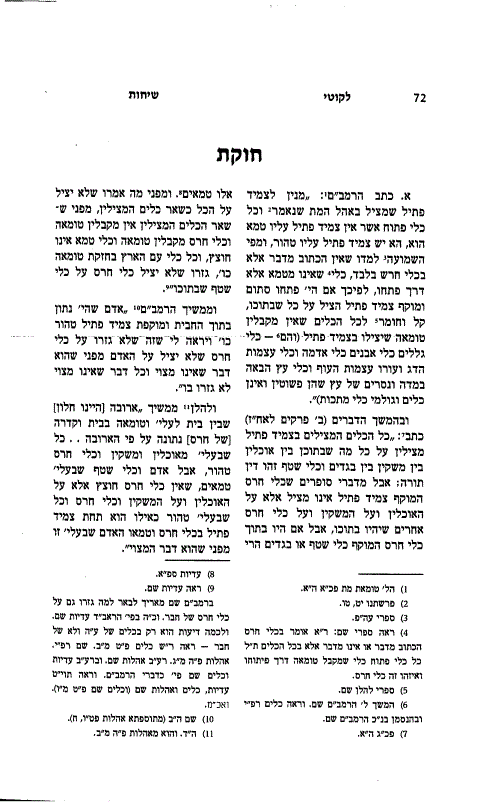
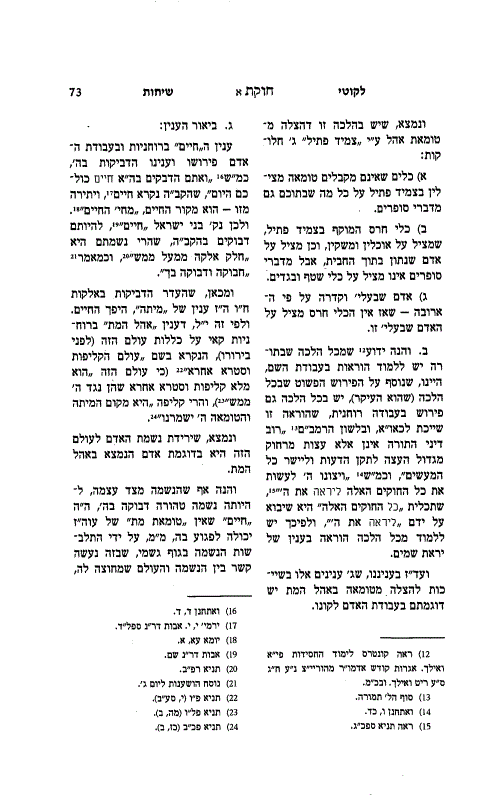
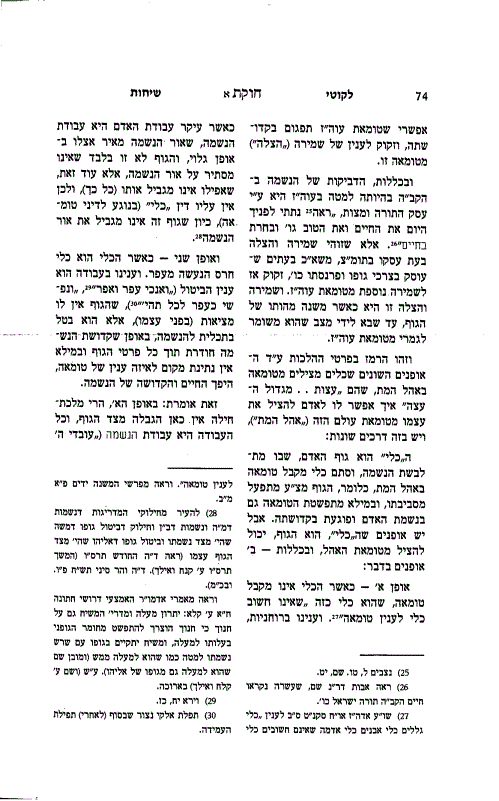
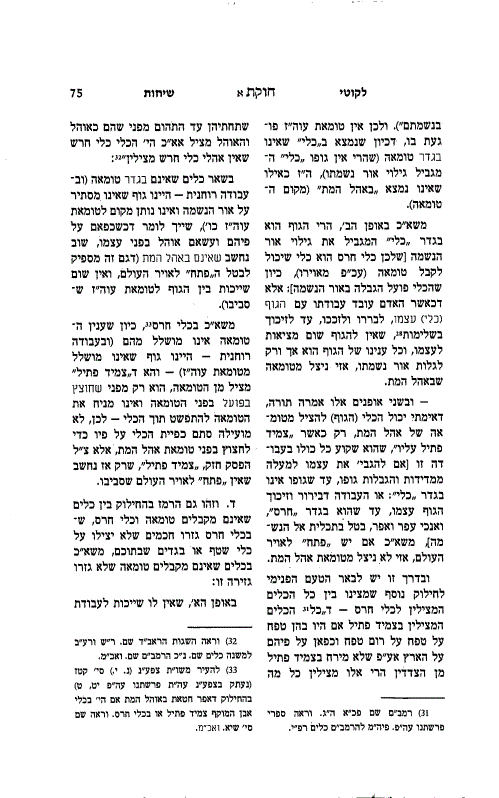
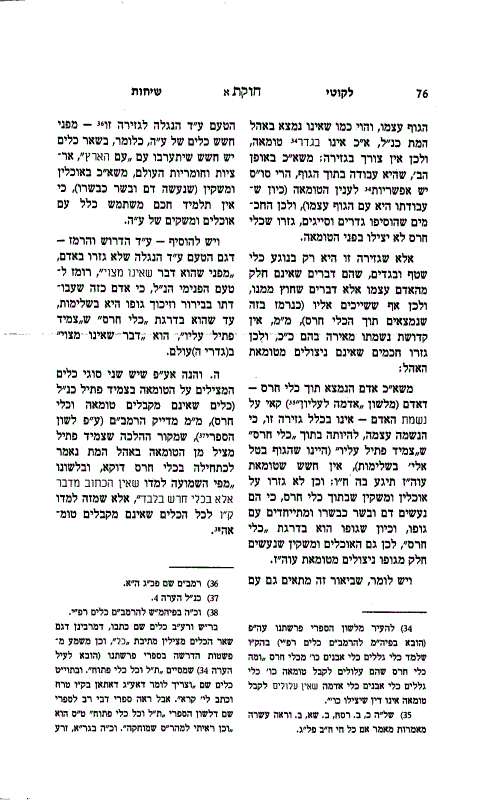
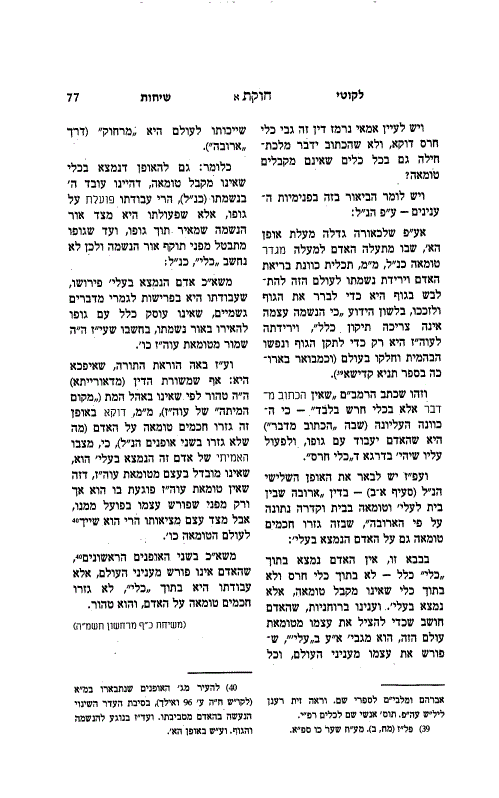
In the laws of ritual impurity, the Rambam explains that regarding protection from the impurity of a corpse through a sealed covering (tzamid pasil), there are three categories:
- Vessels that cannot contract impurity protect their contents through a tzamid pasil, even according to Rabbinic law.
- An earthenware vessel (kli cheres) sealed with a tzamid pasil protects everything within it according to Torah law. However, Rabbinically it protects only food, drink, and a person.
- A person in an upper chamber, with an earthenware vessel covering the opening below, is protected according to Torah law, but Rabbinically the earthenware vessel does not protect the person in the upper chamber.
These laws can be understood on a deeper spiritual level.
G‑dliness is life, while the impurity of a corpse represents separation from holiness.
The “tent of death” alludes to the physical world itself. Living in this world requires special protection, because a person is constantly exposed to influences that conceal G‑dliness.
When engaged in Torah and mitzvos, a person does not contract spiritual impurity. However, in order to remain protected even while involved with physical needs and worldly affairs, he must transform the nature of his body.
There are two primary ways this can occur.
1. A Vessel That Cannot Contract Impurity
This corresponds to the first category.
The “vessel”—the body—does not contract impurity because the person's primary focus is the soul.
The body neither conceals nor limits the soul's expression. Since it offers no resistance to holiness, it is not susceptible to impurity.
2. The Earthenware Vessel
This corresponds to the second category.
An earthenware vessel is made from dust, alluding to the attitude:
“May my soul be like dust to all.”
In its natural state, the body conceals the soul and is therefore capable of contracting impurity.
However, through spiritual refinement, a person purifies and elevates the body until it becomes completely surrendered to holiness. The body remains a body, yet its entire purpose becomes the revelation of the soul.
In both of these approaches, the Torah requires a tzamid pasil—a complete seal.
Spiritually, this means that a person must be totally immersed in his mode of Divine service.
If there remains an opening to the outside atmosphere—if worldly influences are allowed unrestricted entry—he is no longer fully protected from the impurity symbolized by the “tent of death.”
Why the Rabbis Differentiated
In the second category, since the body still belongs to the realm that can theoretically contract impurity, the Sages imposed additional restrictions.
They decreed impurity regarding garments and movable vessels, which represent things external to the person. The soul's holiness does not shine within these objects as intensely as it does within the person himself.
Food and drink, however, become part of the person's flesh and blood. Since they unite with the body—which has itself become an earthenware vessel fully surrendered to holiness—they remain protected.
Why Is Earthenware the Source of the Law?
The Torah derives the law of tzamid pasil specifically from an earthenware vessel, even though the first category—vessels that never contract impurity—appears spiritually higher.
The reason is that the ultimate purpose of the soul's descent into this world is not to escape the body but to refine it.
Therefore, as the Rambam emphasizes:
“The verse speaks only of an earthenware vessel.”
The highest Divine intention is fulfilled when a person works with the body itself and transforms it into a vehicle for holiness.
The Person in the Upper Chamber
This explains the third category.
The person in the upper chamber is not within a vessel at all.
Unlike the first category, where the soul illuminates the body and one's portion of the world, this individual seeks to avoid impurity by separating himself from worldly involvement altogether.
He believes that the only way to remain pure is to retreat from the world.
Therefore, although Torah law regards him as protected, the Sages nevertheless decreed impurity in this case.
Why?
Because his condition is not the ultimate ideal. He has not fundamentally transformed the world or his relationship to it. He has merely withdrawn from it.
By contrast, in the first two categories, the person remains within the world while being sealed against impurity through a complete commitment to holiness.
Such a person fulfills the Divine purpose of creation. He does not flee the world; he transforms it.
The Lesson
The Torah does not seek spiritual escape from the world.
The highest form of Divine service is to refine the body and one's surroundings until they themselves become vessels for holiness. When a person is fully devoted to this mission—like a vessel sealed with a tzamid pasil—he remains protected from spiritual impurity while fulfilling the purpose for which the soul descended into the world.