
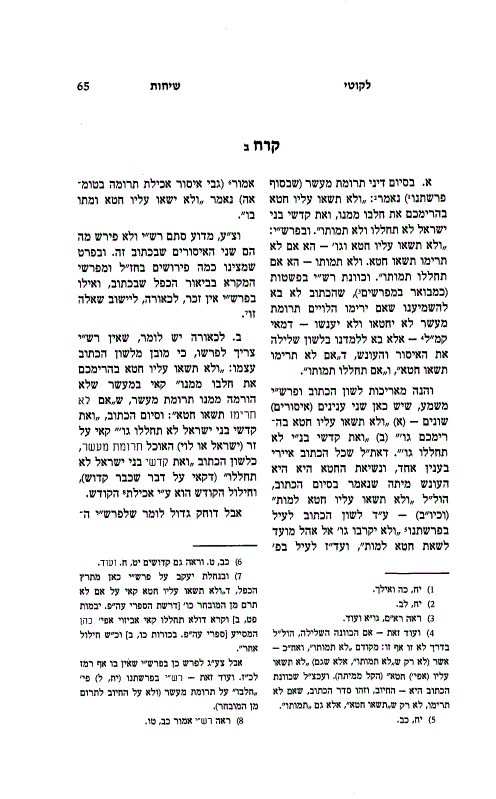
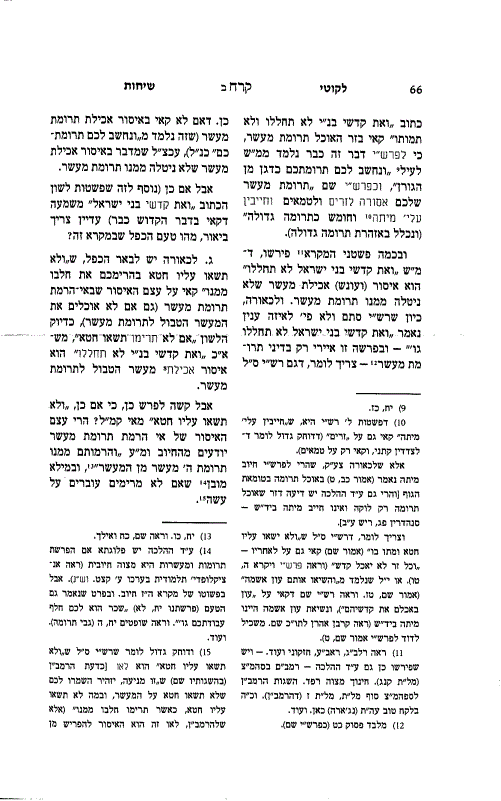
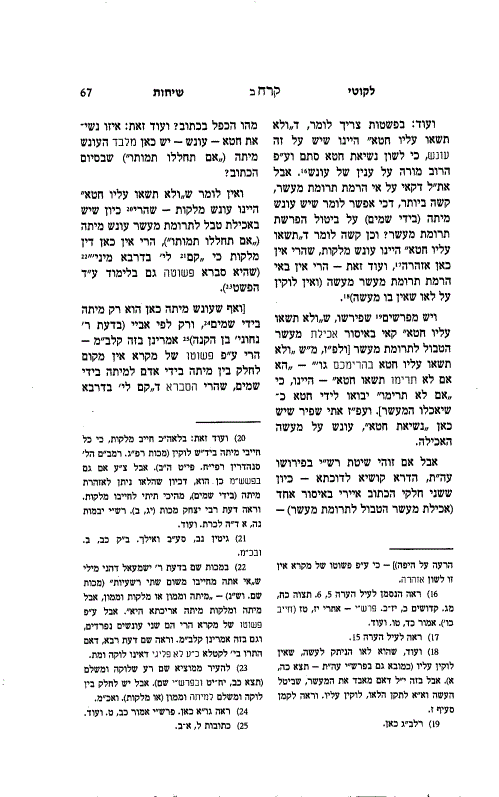
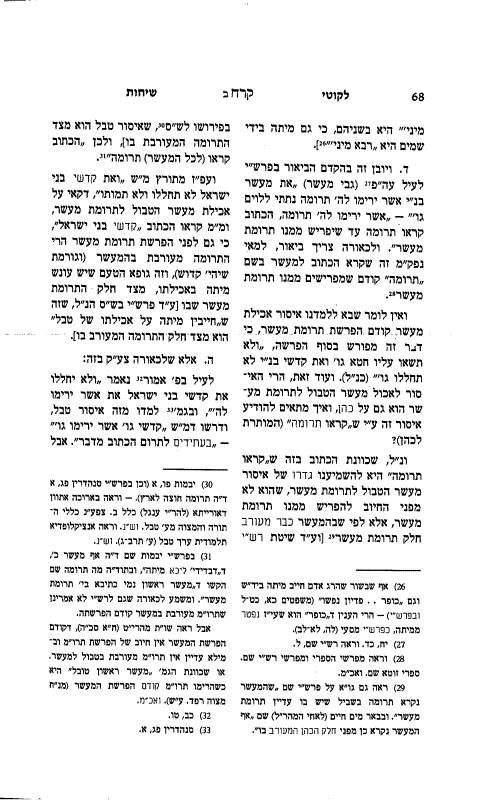
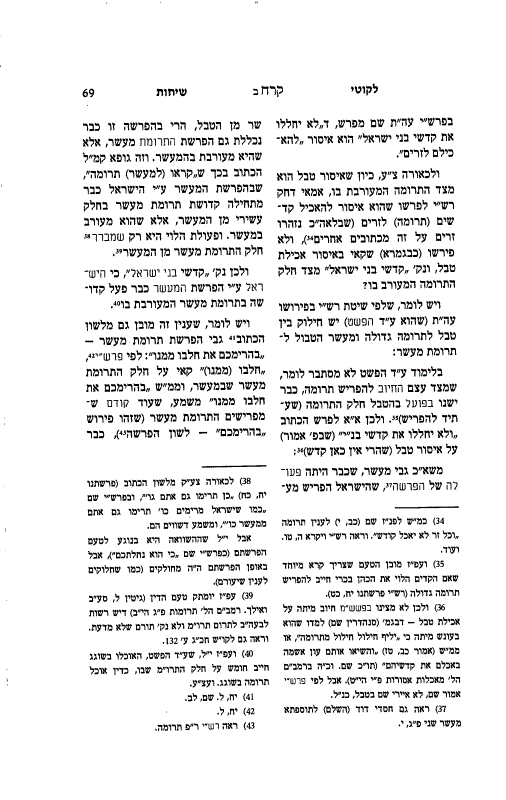
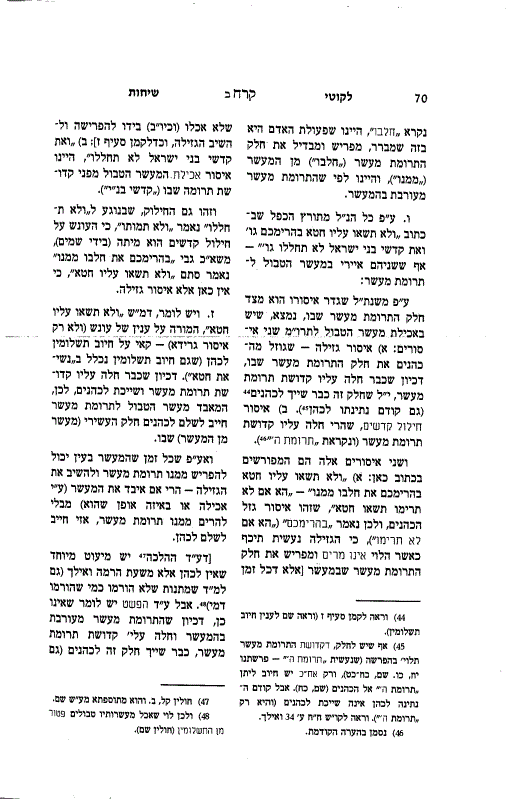
Regarding the consumption of maaser from which terumas maaser has not yet been separated, there are two prohibitions: (1) depriving the Kohanim of their rightful portion, and (2) eating terumah. These are the two matters referred to in our verse: “If you do not separate it, you shall bear sin” refers to depriving the Kohanim, while “if you profane it, you shall die” refers to eating terumah.
At the end of our Parshah it states: “And you shall not bear sin because of it when you separate its choicest part from it; and the holy things of the Children of Israel you shall not profane, lest you die.” Rashi comments: “ ‘And you shall not bear sin because of it’—implying that if you do not separate it, you will bear sin. ‘And you shall not die’—implying that if you profane it, you will die.”
This requires explanation. The lengthy wording of both the verse and Rashi suggests that there are two distinct prohibitions involved. What are these two prohibitions, and why does Rashi not identify them explicitly, as other commentators do?
This can be understood by first examining Rashi’s earlier comment on the verse (18:24): “Which they shall raise up to Hashem as a terumah.” Rashi explains: “Scripture calls it terumah until the terumas maaser has been separated from it.” It can be suggested that Rashi’s intention is to teach the status of maaser that is still obligated in terumas maaser. Its prohibition is not merely because one has not yet fulfilled the obligation to separate the terumah, but because the terumah portion itself is considered mixed within the produce.
Based on this, we can explain that eating maaser from which terumas maaser has not yet been separated involves two prohibitions:
- Depriving the Kohanim of their rightful portion (gezeilas Kohanim).
- Eating terumah, since the terumah portion remains mixed within the maaser.
These are the two concepts alluded to in our verse:
- “If you do not separate it, you shall bear sin” refers to the deprivation of the Kohanim’s portion caused by failing to separate it.
- “If you profane it, you shall die” refers to the prohibition of consuming the terumah itself.