
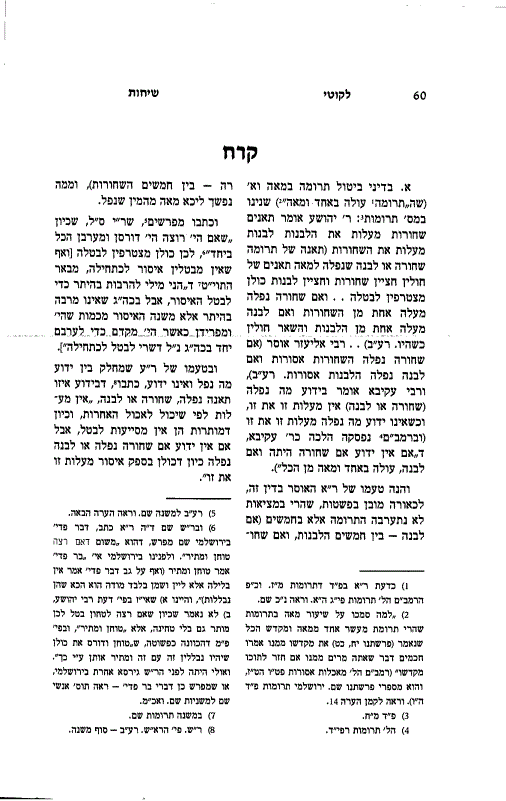
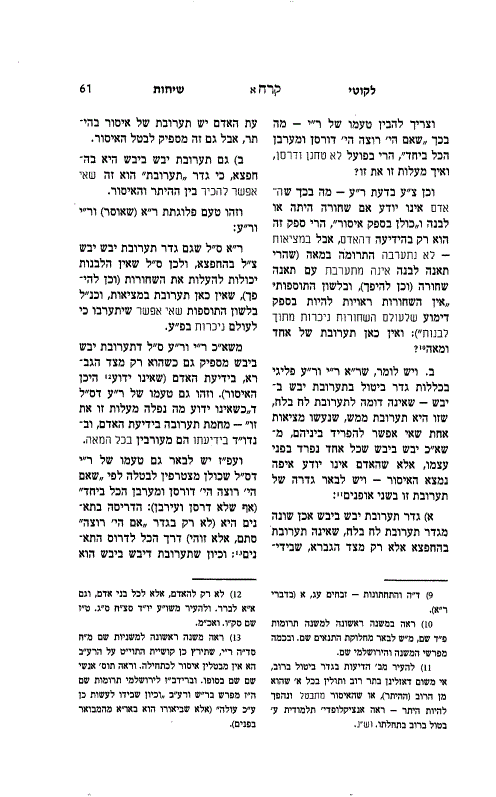
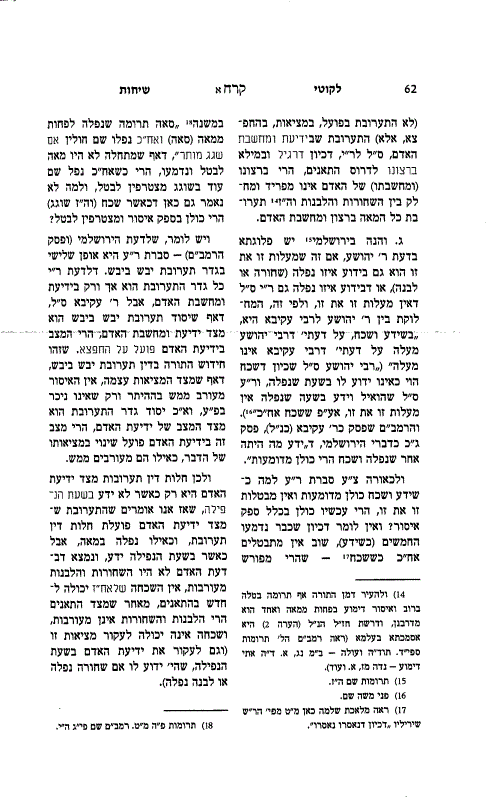

Rabbi Yehoshua, Rabbi Eliezer, and Rabbi Akiva dispute the laws of nullification in a dry mixture. According to Rabbi Eliezer, nullification is a law affecting the object itself (cheftza). Therefore, black figs and white figs do not combine, and the fact that a person does not know which fig is the terumah has no significance. According to Rabbi Yehoshua and Rabbi Akiva, however, nullification in a dry mixture is a law relating to the person (gavra). Therefore, if the figs are mixed from the perspective of human knowledge, they can combine for nullification.
We learn in Tractate Terumos: “Rabbi Yehoshua says that black figs can nullify white figs and white figs can nullify black figs. Rabbi Eliezer prohibits this. Rabbi Akiva says that if it is known which fig fell in, they do not nullify one another, but if it is not known which fig fell in, they do nullify one another.”
The explanation is as follows: According to Rabbi Eliezer, the concept of nullification in a dry mixture is a law concerning the object itself, similar to the nullification of liquids, where the substances actually blend together. Since black and white figs do not truly mix, they cannot combine for nullification. Therefore, the mixture that exists only in a person’s awareness—where he does not know whether the terumah fig is black or white—does not create nullification.
According to Rabbi Yehoshua and Rabbi Akiva, however, nullification in a dry mixture is a law concerning the person. Therefore, if the items are mixed in the awareness of the individual, they can combine and effect nullification.
The Jerusalem Talmud explains that Rabbi Akiva holds that if a person originally knew which fig was the terumah and later forgot, the figs do not combine for nullification (and this is also the ruling of the Rambam). Rabbi Yehoshua, by contrast, maintains that even if one knew and later forgot, they do combine.
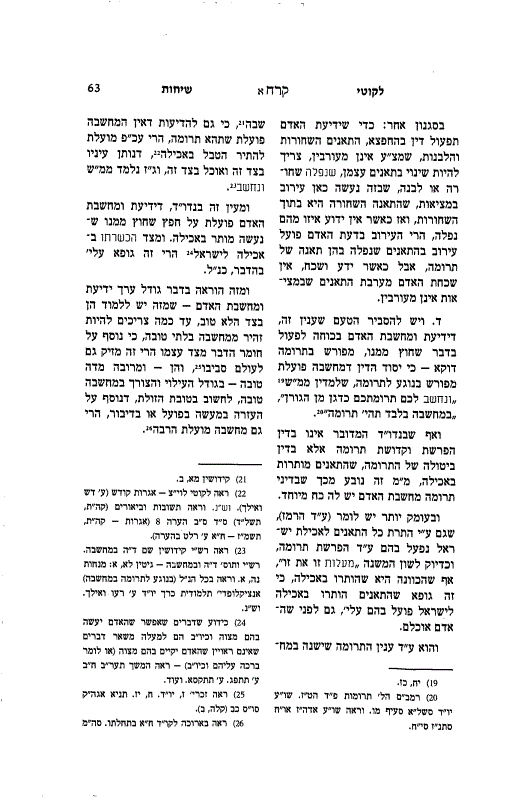
The reasoning behind Rabbi Akiva’s view is that although the mixture exists in the mind of the person, it nevertheless has an effect upon the object itself. Such an effect on the object can only occur if, at the moment the fig fell into the mixture—an event involving the object itself—the person did not know which fig it was. If he knew at that time and only later forgot, no change occurred in the object when the forgetting took place.
From this we learn a powerful lesson regarding the significance of thought. Human thought has the ability to affect the reality of the world. If this is true regarding undesirable matters, it is certainly true regarding positive and holy matters.