

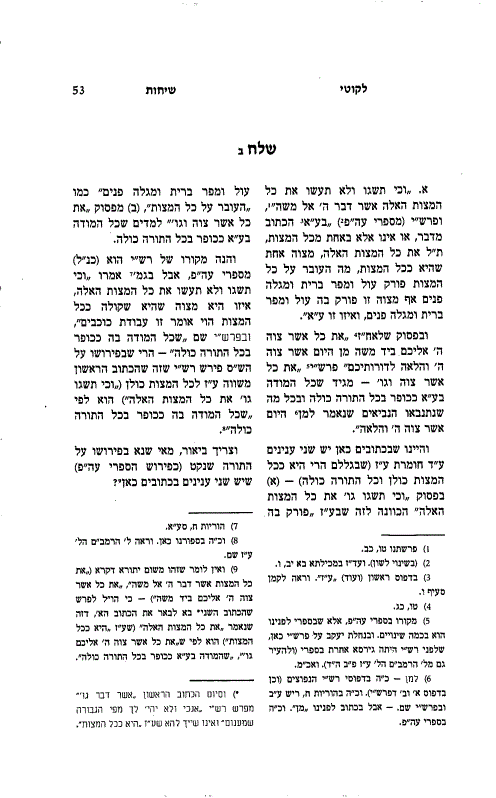
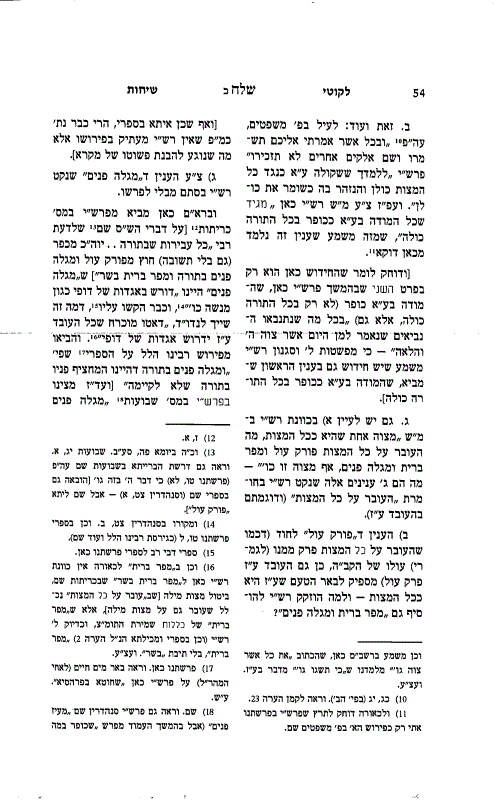
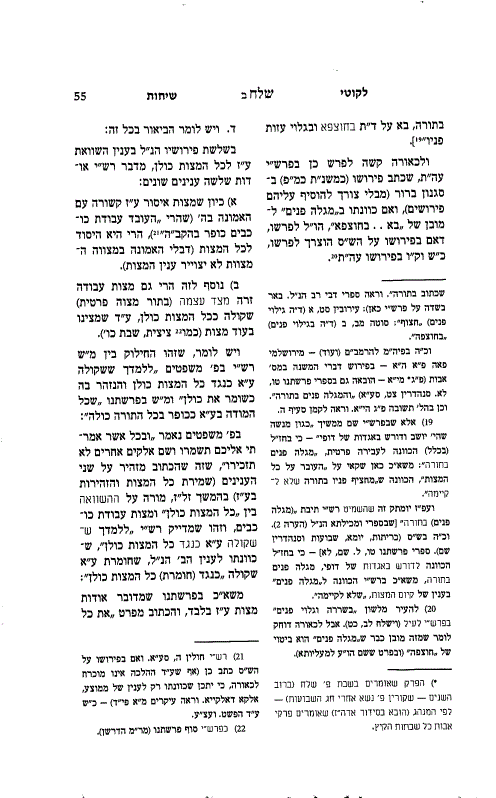
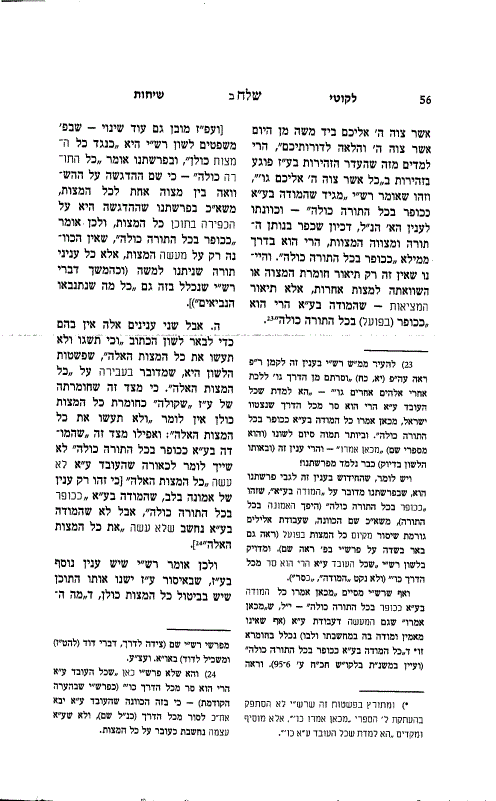
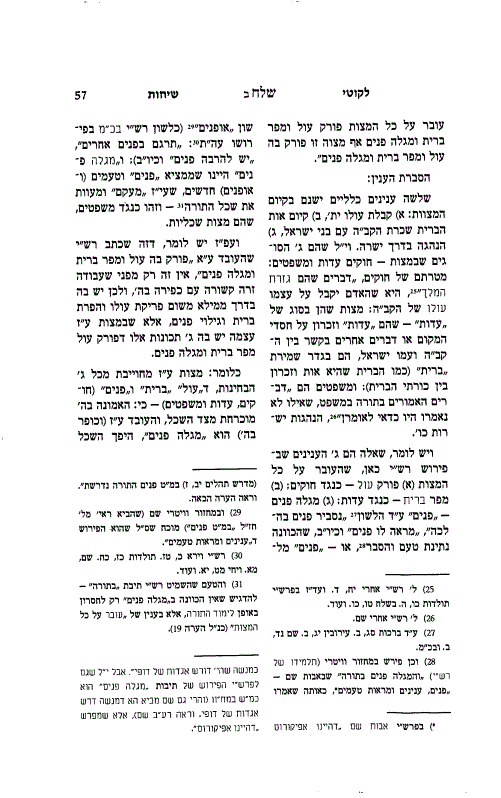
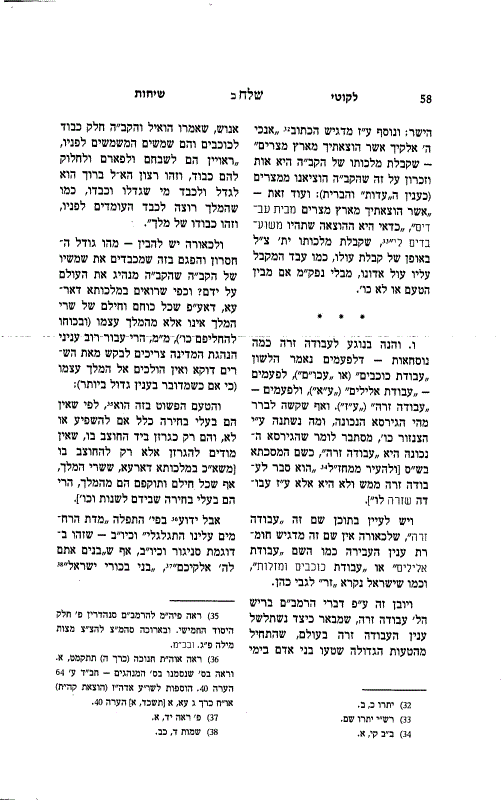
With regard to idolatry, there are three distinct concepts:
- Faith in G‑d is the foundation of all the mitzvos. Since idolatry undermines faith in G‑d, it strikes at the foundation of the entire Torah.
- The prohibition of idolatry is itself a specific mitzvah that is equivalent to all the mitzvos, similar to the mitzvah of Shabbos.
- The very content of idolatry contains within it the negation of all the mitzvos. Therefore, when one serves idols, it is considered as though he has violated the entire Torah.
On the verse (Numbers 15:22):
“And if you err and do not perform all these commandments...”
Rashi comments:
“Scripture is speaking about idolatry... a single commandment that is equivalent to all the commandments. Just as one who transgresses all the commandments casts off the yoke of Heaven, breaks the covenant, and acts brazenly, so too one who violates this commandment casts off the yoke, breaks the covenant, and acts brazenly.”
On the following verse:
“All that the L‑rd has commanded you... from the day that the L‑rd commanded you and onward throughout your generations,”
Rashi comments:
“This teaches that whoever acknowledges idolatry is considered as though he denied the entire Torah and everything the prophets prophesied.”
Earlier, in Parshas Mishpatim (Exodus 23:13), on the verse:
“And in all that I have said to you, take heed; and the name of other gods you shall not mention,”
Rashi explains that idolatry is equivalent to all the mitzvos.
This raises two questions:
What is the difference between these various explanations?
And why does Rashi say here:
“This teaches” (magid)—
implying that this concept is learned from our verse—when the idea was already stated earlier in Parshas Mishpatim?
Explanation
There are three dimensions to the prohibition of idolatry.
1. Faith in G‑d is the foundation of all mitzvos
Since all mitzvos rest upon faith in G‑d, and idolatry directly opposes that faith, the prohibition of idolatry serves as the foundation of all the mitzvos.
This corresponds to Rashi's second comment in our parshah:
“Whoever acknowledges idolatry is considered as though he denied the entire Torah.”
Rashi uses the term:
“This teaches”
because this specific concept is derived from the verses in our parshah.
2. Idolatry is a specific mitzvah equivalent to all the mitzvos
Just as Shabbos is described as equivalent to all the mitzvos, so too idolatry is a particular prohibition that is equal in weight to the entire Torah.
This is the concept already taught earlier in Parshas Mishpatim.
3. Idolatry contains within itself the negation of all mitzvos
However, neither of the first two explanations fully accounts for the wording of our verse:
“And you do not perform all these commandments.”
This language implies that when a person commits idolatry, it is as though he has failed to perform all the commandments.
Therefore, Rashi introduces a third idea.
The prohibition of idolatry contains within itself the very essence of rejecting the entire Torah, because idolatry encompasses all three categories of mitzvos:
- “Casting off the yoke” (porek ol) corresponds to chukim (supra-rational decrees).
- “Breaking the covenant” (mefer bris) corresponds to edus (testimonies and covenantal signs).
- “Acting brazenly” (megaleh panim) corresponds to mishpatim (rational laws), because the idolater twists his reasoning and invents distorted arguments.
Thus, idolatry is not merely one prohibition among many.
Its content includes the rejection of every dimension of Torah observance.
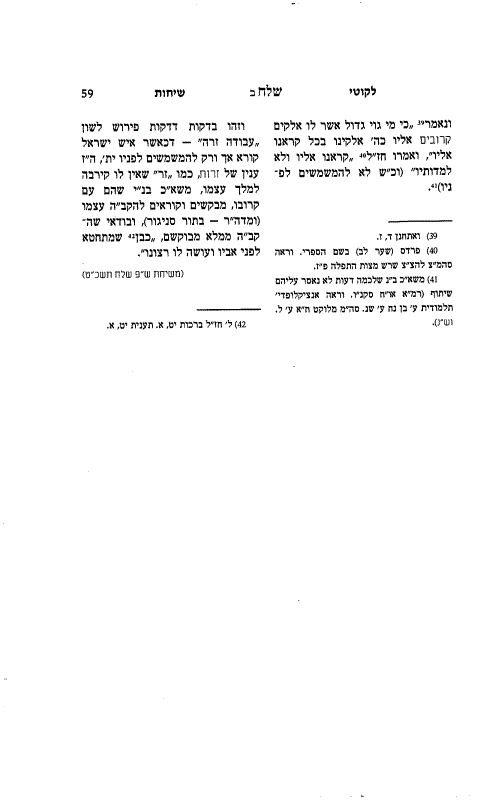
Therefore, when one worships idols, it is as though he has “not performed” (lo ta'asu) all the commandments and has effectively nullified the entire Torah.
This explains the wording of the verse and Rashi's comment: idolatry is unique not only because it is equal to all the mitzvos, but because its very nature embodies the denial of all the principles upon which the mitzvos rest.