

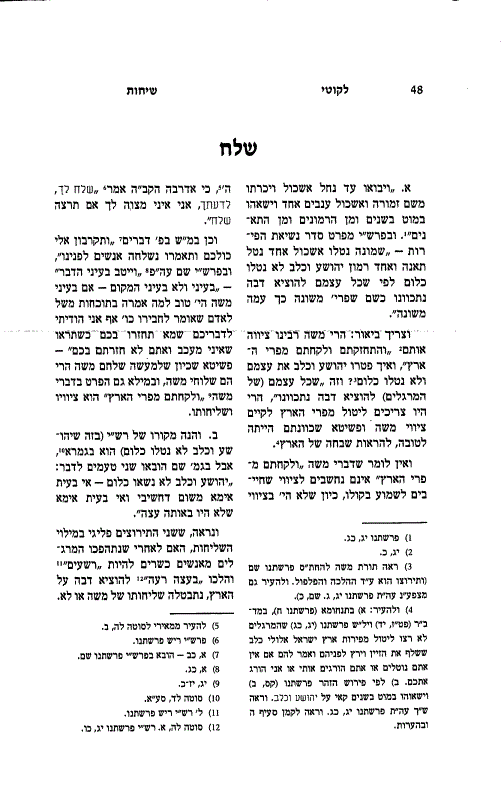
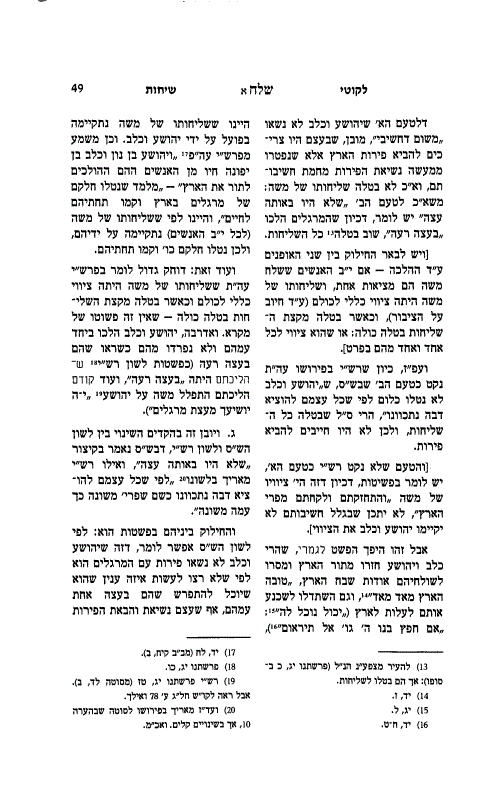
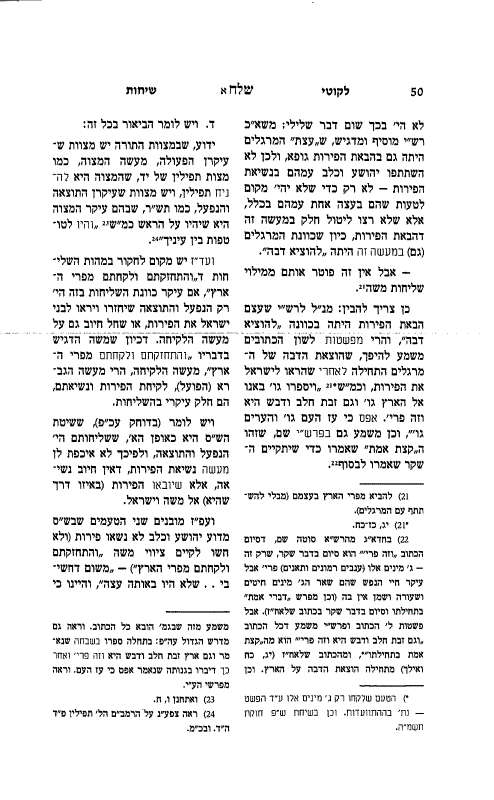
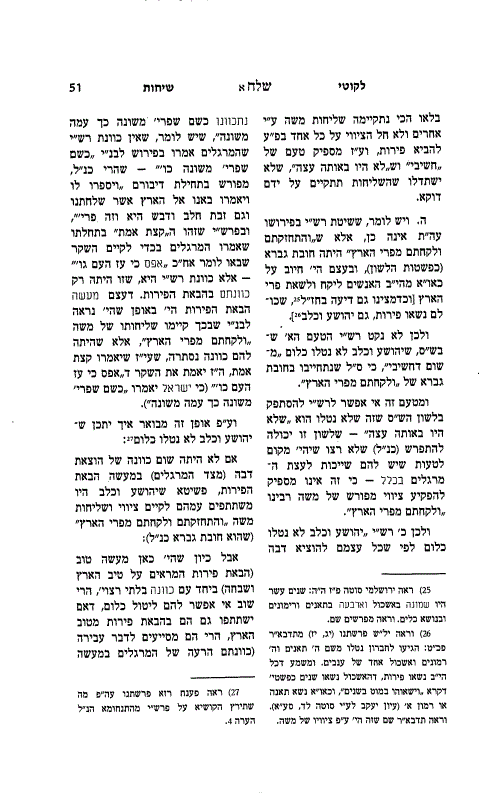
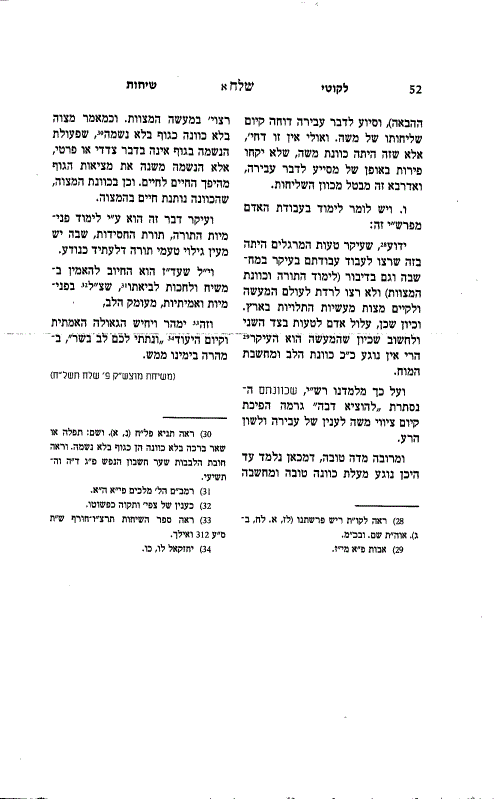
“Joshua and Caleb took nothing” because the spies carried the fruit with improper intentions. This emphasizes that although the story of the spies teaches the primacy of action, intention is also of great importance.
On the verse (Numbers 13:23):
“They came to the Valley of Eshkol and cut down from there...”
Rashi comments:
“Joshua and Caleb took nothing, because the others intended solely to bring forth a slanderous report. Their reasoning was: just as its fruit is unusual, so too its people are unusual.”
This requires explanation.
How could Joshua and Caleb refrain from participating in part of Moses' mission? If Moses sent the spies to bring back information and produce from the Land, how could they avoid carrying any of the fruit?
The Gemara gives two reasons why Joshua and Caleb did not carry the fruit:
- Because the fruit was exceptionally heavy and important (chashivi).
- Because they were not part of the spies' scheme and agenda.
Rashi, however, elaborates on the second explanation and presents it differently.
Explanation
Rashi's point is that although the physical act of carrying the fruit was not inherently wrong, the spies' intention transformed the significance of the act.
Their purpose was not simply to fulfill Moses' instructions and demonstrate the goodness of the Land.
Rather, they intended to use the fruit as evidence for their slander.
Their argument was:
“Just as its fruit is extraordinary and abnormal, so too its inhabitants are extraordinary and abnormal.”
Thus, even when they truthfully reported:
“This is its fruit,”
that truthful statement served as a preparation for the false conclusions and slander they intended to spread afterward.
Since their act of carrying the fruit was part of a broader scheme to discredit the Land, Joshua and Caleb could not participate in it.
One may therefore say that Moses' mission never included bringing fruit in such a manner. An act that becomes part of a campaign of slander is no longer a fulfillment of Moses' instruction.
Accordingly, Joshua and Caleb refrained from carrying the fruit because they refused to associate themselves with the spies' distorted purpose.
The Lesson
Chassidus explains that the spies' fundamental mistake was that they failed to appreciate the primary importance of action.
They preferred a life of spiritual contemplation in the wilderness rather than the practical service involved in entering the Land and transforming the physical world.
Nevertheless, this episode teaches the complementary lesson: the importance of intention.
In the case of carrying the fruit, the physical action itself was proper.
The problem lay in the intention behind it.
From this we see that although action is primary, intention is also essential.
Indeed, the positive measure is greater than the negative one.
Just as improper intention can undermine an otherwise proper act, proper intention elevates and perfects a mitzvah.
The intention of a mitzvah is like the soul within the body.
The action provides the physical reality of the mitzvah, while the intention gives it life, vitality, and inner meaning. Thus, the complete service of G‑d requires both: correct action and proper intention.