
Introduction
In this session, we will be reviewing a sicha from Likkutei Sichos, volume 28—the second sicha on Parshas Beha’aloscha. This learning is dedicated in memory of Rav Levi Yitzchok ben Rav Chaim Tzvi, a devoted and successful shliach who was taken in the prime of his life. May this study be a merit for his soul—tehei nishmaso tzerurah b’tzror hachaim.
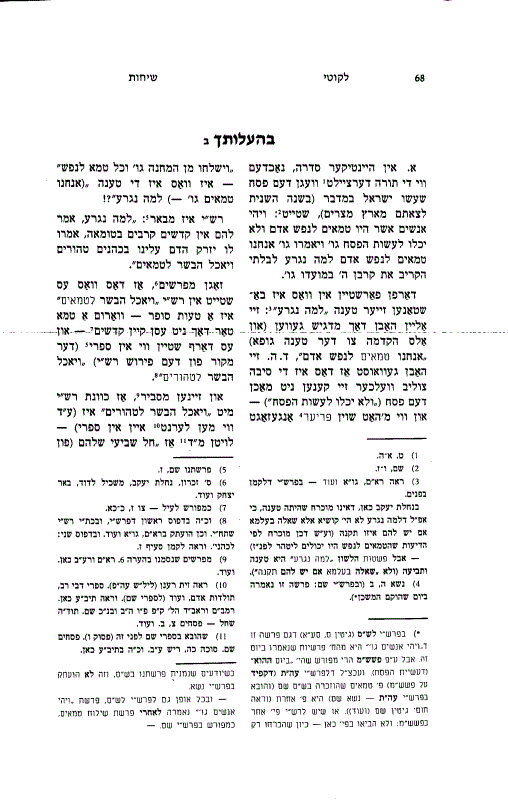
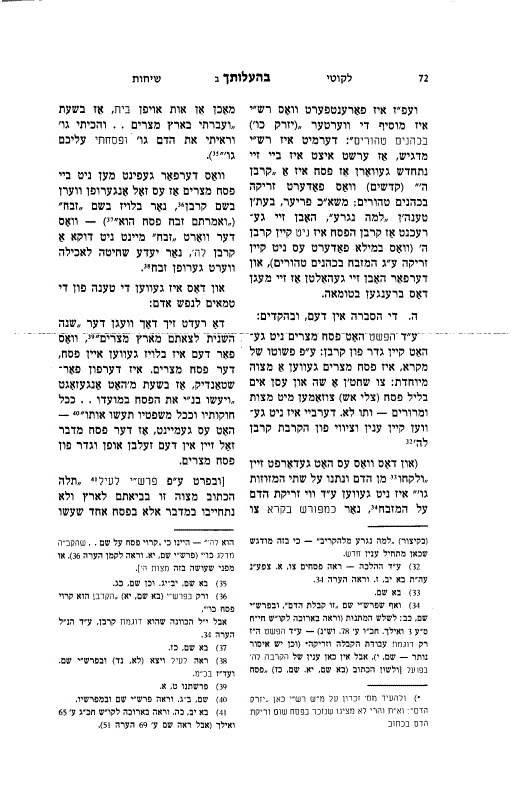
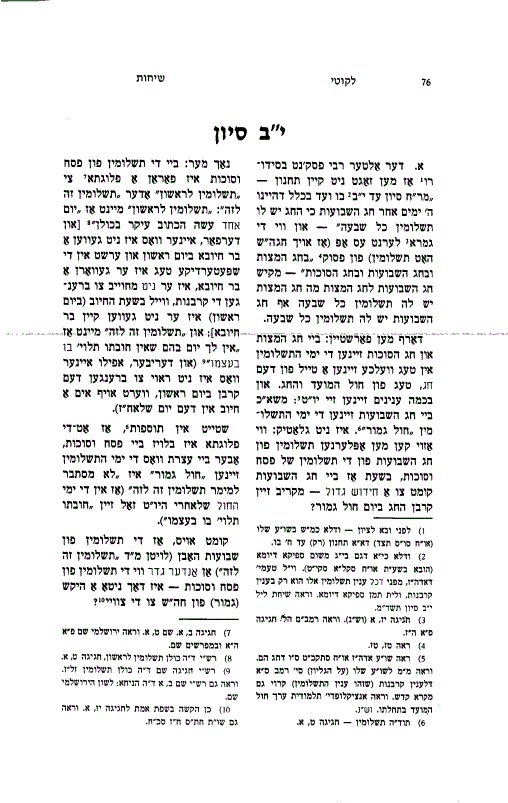
This sicha is primarily a Rashi sicha, but the Rebbe presents an innovative and striking explanation. On the surface, Rashi’s commentary regarding the Korban Pesach seems difficult to understand—so much so that most commentaries actually attempt to amend Rashi’s wording.
The issue centers on how the Korban Pesach should be brought or eaten by those who are tamei—ritually impure. Rashi appears to say that the Pesach should be eaten by those who are tamei, but everyone knows that someone who is tamei cannot eat from the Korban Pesach. Why would Rashi say this? This also differs from what is found in the Sifri.
The Rebbe’s chiddush here is that at the first time, what was brought wasn’t really a Korban Pesach in the full halachic sense. When it comes to Parshas Beha’aloscha—the second time Bnei Yisrael brought the Pesach offering—it was similar to the first: it did not yet have full korban status. Therefore, just as someone who is tamei can eat matzah and maror, they might have thought that perhaps they could also eat from this “Pesach,” since it wasn’t fully a korban yet.
The Rebbe notes that throughout these verses, the Torah uses the phrase ma’aseh Pesach—the act or procedure of Pesach—instead of calling it korban Pesach. Only later does it refer to it as a korban. This subtlety hints at a different status for these offerings during those years.
In this sicha, we will go step by step through how the Rebbe explains every aspect of Rashi’s commentary here and clarifies what was really happening with these early Pesach offerings.
Saif Aleph
The Torah describes an event during the second year after the Exodus, on the 14th of Nisan. The Jewish people were in the desert, and it was time to bring the Korban Pesach. However, there were individuals who had become impure through contact with a dead body and were therefore unable to participate in bringing the Korban Pesach due to their state of impurity.
These people approached Moshe Rabbeinu and said, “We are impure because we have touched a dead body. Why should we lose out—not to bring the offering of Hashem at its appointed time?” This is what the verse says: they acknowledged their impurity and questioned why they should be excluded from bringing the korban.
The Rebbe begins by analyzing their argument. They say, “Why should we lose out?”—Lama nigara. But they themselves state the reason: “We are impure.” If so, what is their complaint? They know exactly why they cannot bring the Korban Pesach; it is because of their impurity. So what do they mean by asking, “Why should we lose out?”
Rashi addresses this question. He explains that there was a discussion between these individuals and Moshe Rabbeinu. Rashi elaborates that when they said lama nigara, Moshe responded, “You cannot offer holy sacrifices while you are impure.” As if this was not already known to them! The discussion continues: perhaps the blood could be sprinkled for us by kohanim who are pure, and then we—the impure—could eat the meat.
According to the simple reading of the verse, it seems that although these people were impure, perhaps there was a way for them to participate in the korban. The suggestion is that pure kohanim would sprinkle the blood at the time of offering, and then those who had been impure would eat the meat at night.
This seems strange—how could someone who is impure eat from a korban? It is well established that one who is impure may not eat sacrificial meat. Some suggest that perhaps there is a scribal error here, but that cannot be; a person who is impure simply cannot eat holy offerings.
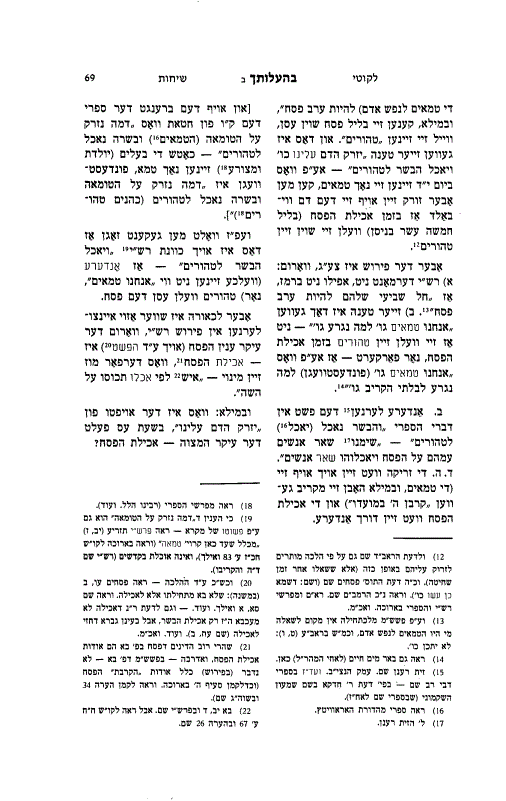
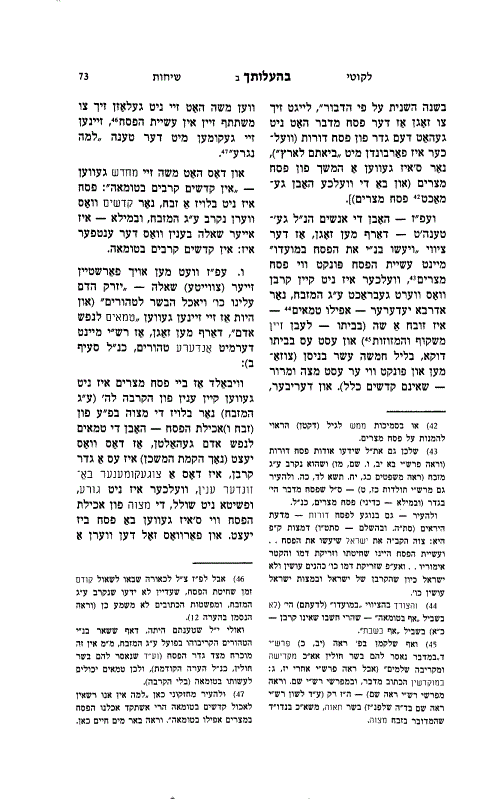
The real explanation comes from Sifri—the source for Rashi’s commentary. The argument was not that those who were still impure would eat; rather, by nighttime they would already be pure. Their seventh day of purification coincided with Erev Pesach—the 14th of Nisan—so while they were still impure during the day (when the blood was sprinkled), by nightfall (when it was time to eat), they would have completed their purification process and become pure.
Therefore, their request was: let us be included in bringing the Korban Pesach! Let pure kohanim sprinkle the blood on our behalf during our final day of impurity, since when it comes time to eat (at night), we will already be pure and able to partake in eating it.
This interpretation fits with Sifri’s explanation: these individuals were involved in burying a corpse and were on their seventh day of purification on Erev Pesach. By nighttime—the beginning of Pesach—they would be able to eat as pure individuals.
So what was their argument? They wanted to be included in offering and eating the Korban Pesach by having pure kohanim perform the sprinkling while they themselves completed purification before eating at night.
However, this interpretation raises several questions about Rashi’s intent. If Rashi means this—that their seventh day coincided with Erev Pesach—why does he not mention it explicitly or even hint at it?
Saif Beis
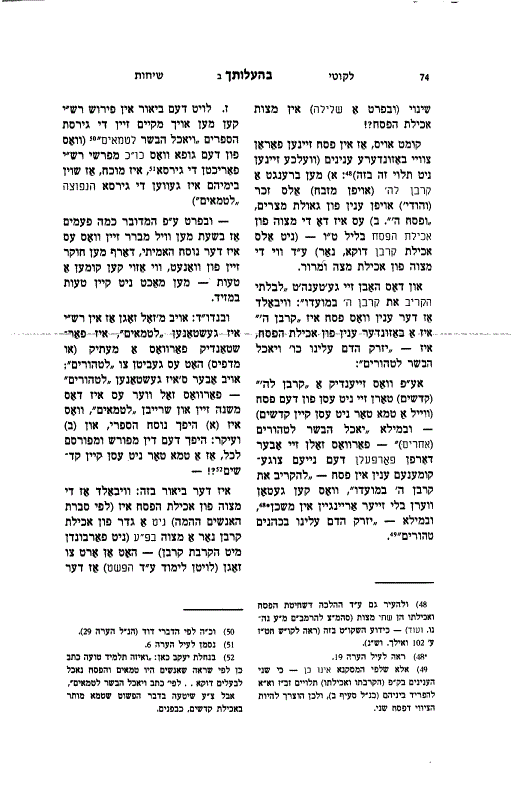
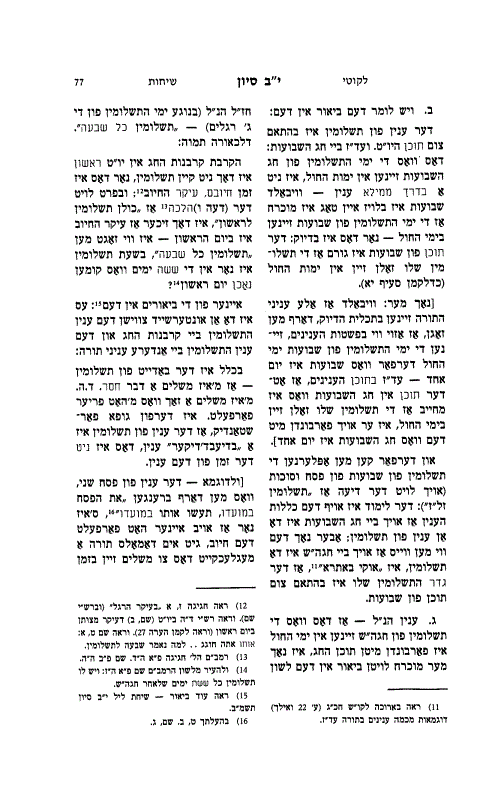
The discussion here revolves around the argument presented by those who were impure at the time of bringing the Korban Pesach. They stated, “Why should we be left out?”—not because they would become pure in time to eat the offering, but rather, even as people who were currently impure, they felt they should not be excluded. Their claim was not that they would become pure by the time of eating; instead, they acknowledged their impurity and still questioned why they should miss out.
This challenges some commentators’ explanations that these individuals argued they would be pure by nightfall and thus able to eat the Korban Pesach. The Rebbe points out that if this were their argument, they should have said, “We will be pure,” not “We are impure.” Furthermore, there is no indication in the text that they would indeed become pure on the seventh day. Therefore, this cannot be Rashi’s simple reading.
Another interpretation brought by the Rebbe is that when it says “the pure will eat it,” it means others—such as the Kohanim or other people—would eat the offering on behalf of those who are impure. According to this view, even if someone is impure and cannot eat from the Korban Pesach themselves, others could partake in its consumption and it would still count for those who are impure.
Some understand the Sifri’s statement—that “the meat will be eaten by those who are pure”—to mean that others join with them in being counted for the Korban Pesach. The sprinkling of blood is done for all included in this group, and while only those who are pure can actually eat from it, it is considered as if all participated.
The Sifri later draws a parallel to a Korban Chatos (sin offering), where even if the owners are impure, the Kohanim can sprinkle the blood and eat the meat. In such cases, although those bringing the offering (like a woman after childbirth or a metzora) remain impure and cannot eat from it themselves, others—the Kohanim—can consume it on their behalf.
Based on this approach to Sifri, one might suggest Rashi means something similar: that even if these individuals are impure and cannot eat from the Pesach themselves, others can eat it for them. However, the Rebbe argues that this logic does not fit with Korban Pesach. The main aspect of Pesach is eating it; participation requires being able to actually consume from it. Unlike a Chatos—where bringing and sprinkling suffice—the mitzvah of Pesach centers on its consumption.
If Rashi meant that others could simply eat for them while they themselves could not partake at all, how could these individuals be counted among those registered for a particular lamb? The Torah requires each person to be counted based on their ability to eat; if someone cannot eat due to impurity, what purpose does their registration serve?
Therefore, someone who cannot eat from the Korban Pesach due to impurity cannot even be counted among its participants. This also means that blood cannot be sprinkled on their behalf—they are simply not part of this mitzvah at all.
This distinction explains why Moshe Rabbeinu did not accept their argument based on a Kal Vachomer (a fortiori reasoning) from Chatos offerings. With Chatos offerings, only Kohanim must eat; owners do not need to partake at all. Thus, it is possible for an owner who is impure to bring a Chatos whose meat will be eaten by Kohanim alone.
Even with offerings classified as kodshim kalim—lesser sanctity sacrifices like shelamim—where both owners and Kohanim may partake in eating portions of the sacrifice, there remains a fundamental difference: with Korban Pesach specifically, eating by each registrant is essential to fulfilling its mitzvah.
Saif Gimmel
The Rebbe begins by addressing the idea that the eating of the korban does not prevent the sprinkling of the blood. In other words, if the blood is sprinkled and the owners do not eat from the korban, it is still considered a valid offering. Therefore, in the case of korban Pesach, where the main aspect is for the owners to eat, one might think that as long as someone can eat it—even if not all owners are fit—the korban could be brought. However, this reasoning does not hold up for korban Pesach, since its primary fulfillment is through the eating by its owners.
Thus, Moshe Rabbeinu did not accept their argument. For a chatas, where the kohanim eat it, there is more room to allow sprinkling even if some cannot eat. But for korban Pesach, which centers on akhilas baalim—the eating by its owners—if they cannot eat it, you cannot sprinkle its blood. This undermines the suggestion that Rashi’s explanation of “Loma Nigara” is about enabling others to eat; such an approach does not fit with how korban Pesach operates.
Furthermore, there is no indication in Rashi that “Loma Nigara” refers to having others fulfill the mitzvah through their eating. Rashi does not mention or even hint at this idea—that they would be yotzei through others eating on their behalf. Therefore, this explanation cannot be accepted.
The Rebbe proposes to clarify Rashi’s intent by first raising several questions on Rashi’s language itself. These questions will help uncover what Rashi truly means in his commentary.
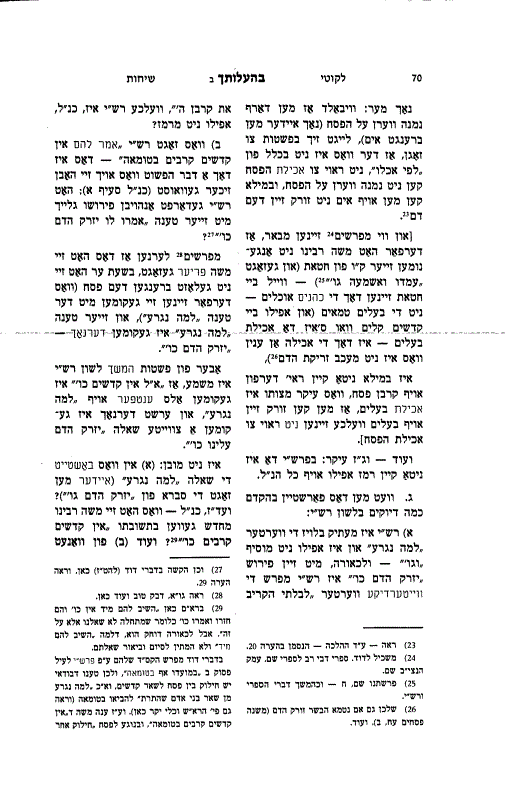
First: Rashi only quotes the words “Loma Nigara”—“Why should we lose out?”—and does not even add “vegoimer,” meaning “etc.” Why does Rashi limit his citation just to these words? In his explanation, Rashi discusses bringing the blood and refers to later words in the verse—“li bilti hakravas korban Hashem”—yet he only cites “Loma Nigara.” Why?
Second: When Bnei Yisrael say “Loma Nigara,” Moshe responds that they cannot bring a korban Hashem while impure. But surely they already knew this! They themselves said they were tamei le-nefesh adam—impure from contact with a corpse—and thus disqualified from bringing a korban. Why would Moshe need to tell them something so obvious? Shouldn’t Rashi have started with their argument—“Amru lo yizrok adam chulu”—that let the blood be sprinkled by pure kohanim? The whole discussion seems to start after it’s already clear they cannot bring it betumah.
Some commentaries suggest that Moshe Rabbeinu had already told them before this episode that they could not bring korban Pesach while impure. The verse here records their subsequent argument—“Loma Nigara”—after being told no. Their claim was: why should we lose out? Let there be a way for us to participate—perhaps by having pure kohanim sprinkle the blood on our behalf.
However, from Rashi’s wording it seems otherwise. The phrase “Amar lahem ein kodshim kreivim betumah”—Moshe’s response—is presented as an answer to their question of “Loma Nigara,” not as something he told them beforehand. The debate unfolds as follows: first comes their question (“Loma Nigara”), then Moshe answers (“ein kodshim kreivim betumah”), and then comes their follow-up argument about sprinkling via pure kohanim.
This suggests there are two distinct stages in their dialogue: first, Bnei Yisrael ask “Loma Nigara”—why should we lose out?—before raising any technical solution like sprinkling by others. Only after Moshe responds do they propose letting pure kohanim sprinkle for them.
The Rebbe points out that we must understand what exactly was their initial question with “Loma Nigara,” before suggesting any workaround like sprinkling via others. What were they really asking at first? And how does Rashi know there are two separate arguments here?
Rashi seems to indicate a back-and-forth—a debate between Bnei Yisrael and Moshe Rabbeinu—with each side presenting questions and answers in turn. The Torah records only one phrase (“Loma Nigara”), but from context and language, Rashi deduces there was an extended exchange: first a general protest (“why should we lose out?”), then Moshe’s halachic response (“ein kodshim kreivim betumah”), followed by Bnei Yisrael’s technical suggestion (sprinkling via pure kohanim).
The third question relates to why Rashi specifies “by pure kohanim.” The halacha always requires sprinkling by kohanim who are tahor; this was never in doubt or under discussion here. So what new point are Bnei Yisrael making when they suggest letting pure kohanim sprinkle for them? If this is standard procedure anyway, what are they adding?
The Rebbe notes that these words—“by pure kohanim”—do not appear in Sifrei (the midrashic source), but are unique clarifications added by Rashi himself. This indicates that there is something specific about this suggestion that needs explanation within peshat—the plain meaning of the text.
In summary: There are several unresolved issues in understanding both Bnei Yisrael’s initial question and their follow-up proposal regarding korban Pesach while impure. The Rebbe will use these questions as keys to unlock Rashi’s true intent and clarify how these verses should be understood according to peshat.
Saif Daled
The question at hand is: what does Rashi mean with the phrase “b’kohanim tehorim”? All these details are foundational for the Rebbe’s insight and explanation that follows.
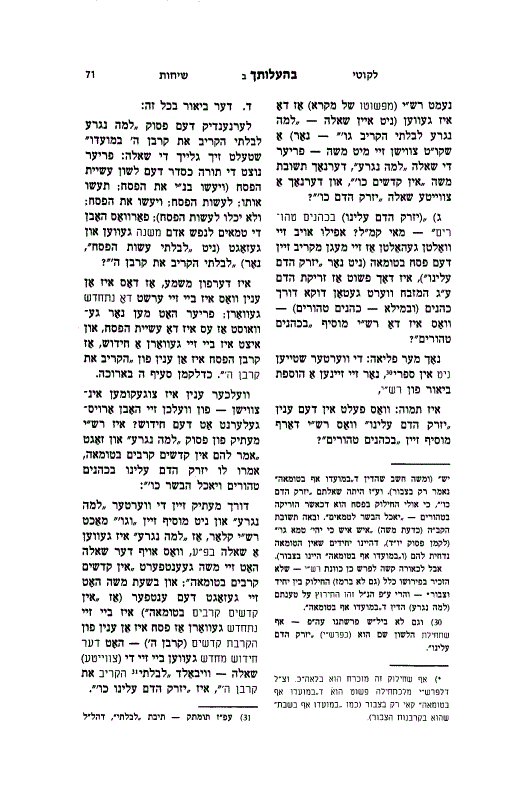
The Rebbe explains that, in truth, the verse is telling us two things. First, there is a pause—one aspect. Then, the Rebbe points out that throughout the discussion, the Torah speaks about “making Pesach”—asiyas haPesach—rather than calling it korban Pesach. The focus seems to be on simply making Pesach, as the Rebbe will elaborate later. The people thought this was not a korban; it was just an act of making Pesach. Therefore, they reasoned that being impure should not prevent them from eating it, since it was not a korban but rather a maiseh Pesach.
Moshe Rabbeinu responds to them: no, this is indeed a korban. That’s Moshe’s answer. This leads to a second issue: why can they still not bring the korban Hashem even if only the blood is sprinkled by those who are pure? As the Rebbe will explain, this question arises from their reading of the verse: “Why should we lose out and not bring the offering of Hashem in its appointed time?”
Immediately, there’s a noticeable shift in language in the verse. The Torah uses “making Pesach,” not “bringing a korban.” It repeatedly refers to making or doing Pesach. Yet those who were impure changed their wording—they now speak about bringing the korban Hashem. Something has shifted between their earlier understanding of asiyas haPesach and their new recognition that this is about a korban Hashem.
This suggests that something new has emerged here. Previously, they only knew about making Pesach; they did not realize there was such a thing as korban Pesach. Now it becomes clear that korban haPesach is actually an offering to Hashem—a full-fledged korban. As will be explained further from the words of Baruchah, in Egypt there was no concept of korban; they were simply told to take a sheep, tie it to their bedposts, and sprinkle its blood on their doorposts—not as an offering on an altar.
The Torah now commands them to make it again in the desert as they did before. They thought this was merely repeating what happened in Egypt—not realizing it had now become an actual korban with all its laws and requirements.
This change in understanding is how Rashi knows there was an ongoing discussion among them. What brought about this new realization? Where did they learn this novelty? Suddenly, they are saying: this isn’t just about making Pesach—it’s about bringing a korban Hashem.
Rashi quotes from the verse “Lama nigara”—“Why should we lose out?”—without adding any further direction. Rashi makes it clear: “Lama nigara” stands alone as its own question because until now they didn’t know it was considered a korban Hashem.
Once Moshe tells them that you cannot bring holy offerings (kodshim) while impure, now we’re talking about actual offerings—kodshim. This is Moshe’s response: you can’t bring kodshim when you’re impure.
This answer enlightens them—they now understand that Pesach is indeed considered kodshim. This new awareness leads them to their second question: if it’s really kodshim and requires purity for certain parts of its service (like sprinkling), then perhaps at least let those who are pure sprinkle the blood and let those who are pure eat the meat—or as will be discussed further by the Rebbe.
This also clarifies why Rashi adds “with kohanim tehorim”—because before this point, sprinkling by pure kohanim wasn’t necessary since it wasn’t considered a real korban. Now that it is recognized as such, Rashi emphasizes that sprinkling must be done by pure kohanim because it has become clear that Pesach is indeed kodshim.
This entire concept—that only now did they realize Pesach is truly a korban Hashem requiring pure kohanim for sprinkling—is newly established through this discussion. Beforehand, when arguing “lama nigara,” they assumed korban haPesach was not like other offerings to Hashem; therefore, purity requirements did not apply.
If it isn’t an offering to Hashem—if it isn’t kodshim—it doesn’t require sprinkling on the altar by pure kohanim. That’s why they thought they could bring and eat it even while impure; they didn’t realize its status as a true korban.
Moshe Rabbeinu clarifies: no, this is indeed a korban Hashem! But once established as such, another argument arises—they accept that sprinkling requires purity but suggest perhaps at least some part could be performed by those who are pure while others partake in eating (as will be explained).
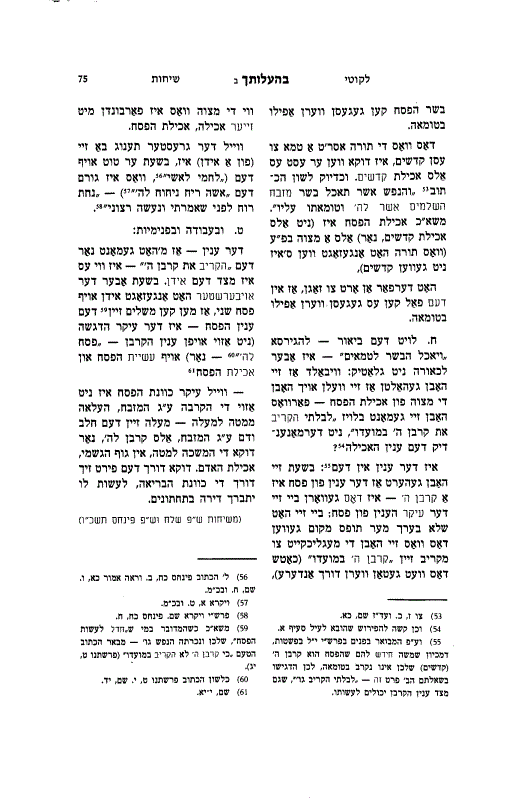
The Rebbe then sets up his main argument: The original offering brought in Egypt—the Pesach Mitzrayim—was not actually considered a korban Hashem at all. The people assumed that subsequent observances would follow its precedent—that these too would not be true offerings but rather special mitzvos involving slaughtering and eating lamb with matzah and bitter herbs on Pesach night.
The simple meaning of those verses shows no commandment for an actual offering to Hashem; rather, there was only instruction to slaughter and eat together with matzah and maror—nothing more than fulfilling a mitzvah meal. There was no requirement or concept of bringing an animal as an offering on an altar for Hashem at all during Pesach Mitzrayim.
The blood placed on doorposts served only as a sign so that when Hashem passed through Egypt He would see it and spare those homes—it had nothing to do with ritual sprinkling like other sacrifices.
The Torah never calls what happened in Egypt a “korban.” Instead, terms like zevach, meaning slaughtering or sacrifice (which can refer even to ordinary slaughter for eating), are used—but never specifically “korban,” which denotes something consecrated for divine service.
This distinction underlies their argument: since in Egypt there was no real korban but only slaughtering for eating with symbolic blood on doorposts, perhaps even now impurity should not disqualify participation—since maybe nothing has changed from then until now.
This context sets up what follows: until this point—the second year after leaving Egypt—the only precedent was Pesach Mitzrayim. There had been no other observances of Pesach yet; thus their entire understanding hinged on whether or not what they were being commanded now truly constituted bringing an actual korban or simply repeating what had been done in Egypt.
Saif Hei
The Pesach offering brought in the desert—the Pesach Midbar—was intended to be similar to the Pesach Mitzrayim, the original Pesach in Egypt. It should have been brought in the same manner and with the same definition as that first Pesach. The Pesach Mitzrayim was not a standard korban, and likewise, this one was not a regular korban Hashem either.
Rashi notes earlier that Hashem established the mitzvah of korban Pesach primarily for when the Jewish people would enter Eretz Yisrael. In the desert, they were only obligated to bring it once, based on a special command from Hashem. This uniqueness further supports the idea that the desert Pesach did not have the full status of later generations’ korban Pesach, which is connected to entering the land and is truly a korban Hashem. Instead, it was more a continuation of the Pesach Mitzrayim.
Those who participated in the original Pesach in Egypt continued with this approach for the second year’s Pesach in the desert. They argued that when the Torah commands us to bring the Pesach “in its time,” it means to bring it just as it was done in Egypt—without it being a korban Hashem. It was simply an act of shechting and eating, not an offering on an altar.
Even if someone was impure (tamei), he would still bring his sheep, slaughter it, place its blood on his lintel and doorposts, and eat it at home—not at a mizbeach or any central location. Just as eating matzah is obligatory for everyone regardless of status, so too this shechita was not considered kodshim (sanctified offerings) and could be eaten even by those who were tamei.
When Moshe told those who were tamei that they could not participate in bringing the korban, he meant they could not offer it as kodshim. But their argument was: why should we lose out? Why should we miss out on eating the Pesach? If we cannot bring it as a korban Hashem due to our impurity, at least let us fulfill what we did before—eating the meat of Pesach as we did in Egypt.
This led them to suggest: let others sprinkle the blood on our behalf so that those who are tahor (pure) can eat from it. Since Rashi does not specify that these people were on their seventh day of purification or anything similar, it implies that others ate their portion because they themselves were tamei.
In Egypt there was no concept of hakrava leHashem—offering to Hashem—since there was no mizbeach; it was simply about slaughtering and eating. Those who were tamei believed that now, even though there is a mishkan and an altar, this new aspect of korban does not take away from what existed before—the mitzvah of eating Pesach meat regardless of purity status.
They reasoned: why should this new element negate what we had previously? Why should we lose out on eating just because now there is also an aspect of korban? Let us at least retain what we had before—the mitzvah of eating—even if we cannot participate in bringing a korban due to impurity.
This led them to see two distinct aspects within Pesach: one is bringing a korban Hashem on the mizbeach; another is simply eating the meat as part of remembering and thanking Hashem for redemption from Egypt. These two aspects do not necessarily depend on each other.
Therefore, their claim was: even if we cannot bring or eat kodshim due to impurity, why should we lose out entirely? Let us fulfill at least part of what Pesach represents by having others sprinkle blood and eat for us—or allow us some participation in eating where possible.
Their argument essentially separated between two elements: bringing a korban (which requires purity) and fulfilling achilas haPesach—the act of eating—which they felt should remain accessible even for those who are tamei.
The Rebbe now explains how this understanding helps clarify various textual versions regarding whether “they shall eat” refers to those who are pure or impure. Many early commentators wrote “let them eat” referring specifically to those who are tamei. The prevalence of this version among early sources suggests its authenticity.
The Rebbe points out that when determining which version is correct, one must consider which reading makes sense contextually. If a version does not make sense or presents difficulties, scribes would naturally change it to something more logical; thus, if “let them eat” referring to tamei individuals persisted despite seeming difficulties, it likely reflects an authentic tradition.
He further explains that understanding how errors arise can help identify authentic readings. If people changed “let them eat” because they thought it didn’t make sense (since kodshim cannot be eaten by those who are tamei), then its persistence indicates authenticity—it reflects an earlier reality where such distinctions between korban and achila existed.
This distinction also clarifies why their claim focused so much on participation in eating rather than just bringing an offering—they saw achila as an independent mitzvah rooted in their experience from Egypt.
Thus, according to their perspective—and supported by many early sources—the original text meant “let them eat,” referring even to those who were tamei. This reflects their belief that achilas haPesach could remain separate from hakravas haKorban (the sacrificial aspect), especially since historically there had been times when only achila applied without any sacrifice involved.
Their request was therefore consistent: allow us at least some connection through eating if we cannot participate fully through bringing or consuming kodshim due to impurity.
This entire discussion highlights how within mitzvos like Korban Pesach there can be multiple layers—sometimes independent—from each other: one focused on sacrifice and another focused on communal remembrance through eating together.
Key Points
1. The central issue of the sicha is Rashi’s commentary on the Korban Pesach and the puzzling suggestion that those who are tamei (ritually impure) could eat from it, despite the clear halacha that impure individuals may not consume sacrificial meat.
2. The initial argument of those who were tamei—“Lama nigara” (“Why should we lose out?”)—reflects their confusion about being excluded from the mitzvah, even though they themselves acknowledge their impurity as the reason for disqualification.
3. The Rebbe clarifies that, according to Sifri, these individuals’ request was based on the timing of their purification; they would be pure by nightfall and thus able to eat, but this explanation is not explicit in Rashi’s wording or in the simple reading of the verses.
4. The possibility that others could eat on behalf of those who are tamei is rejected for Korban Pesach, since its primary mitzvah is eating by each registered participant—unlike other korbanos where consumption by others can suffice.
5. The dialogue between Bnei Yisrael and Moshe Rabbeinu unfolds in two stages: first a general protest about exclusion, then a technical suggestion to allow participation via pure kohanim sprinkling blood. Rashi’s precise citation and language highlight this progression and its significance.
6. A key insight is that until this point, Bnei Yisrael did not realize Pesach had become a full-fledged korban Hashem with all associated laws; they viewed it as a continuation of Pesach Mitzrayim, which was not a true korban but rather an act of slaughtering and eating with symbolic blood application.
7. The Rebbe demonstrates that in Egypt, there was no concept of offering a korban on an altar; the mitzvah centered on eating together with matzah and maror. This shaped the people’s expectation that impurity should not disqualify them from participating in Pesach in later years.
8. In the desert (Pesach Midbar), the offering retained aspects of Pesach Mitzrayim and did not yet have full korban status. Therefore, those who were tamei argued for continued participation in eating even if they could not bring an actual korban Hashem due to impurity.
9. Their claim effectively separated two aspects within Pesach: bringing a korban (requiring purity) and fulfilling achilas haPesach (the act of eating), which they believed should remain accessible even for those who are tamei based on historical precedent.
10. The persistence of textual versions stating “let them eat” (referring to those who are tamei) among early sources supports the authenticity of this reading and reflects an earlier reality where achila was seen as independent from hakravas haKorban (the sacrificial aspect).
11. The sicha concludes by highlighting how mitzvos like Korban Pesach can contain multiple layers—sometimes independent—such as sacrifice versus communal remembrance through eating, with each aspect carrying its own significance within Jewish tradition and halacha.