לקוטי שיחות חלק כג - בלק ב

Likkutei Sichos vol 23 Balak 2 – The Future of the Nations in the Messianic Era

All opinions agree that the nations will exist in the Messianic era. The debate is whether their existence will be merely subordinate to Israel or whether they themselves will be spiritually refined. Rambam and Chassidus teach that even the nations will recognize Hashem and become part of the world's ultimate perfection.

Video part 1   Video part 2

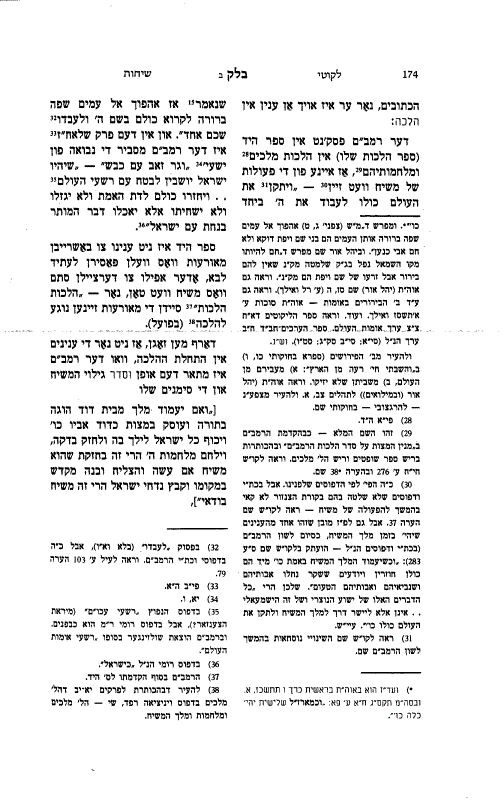
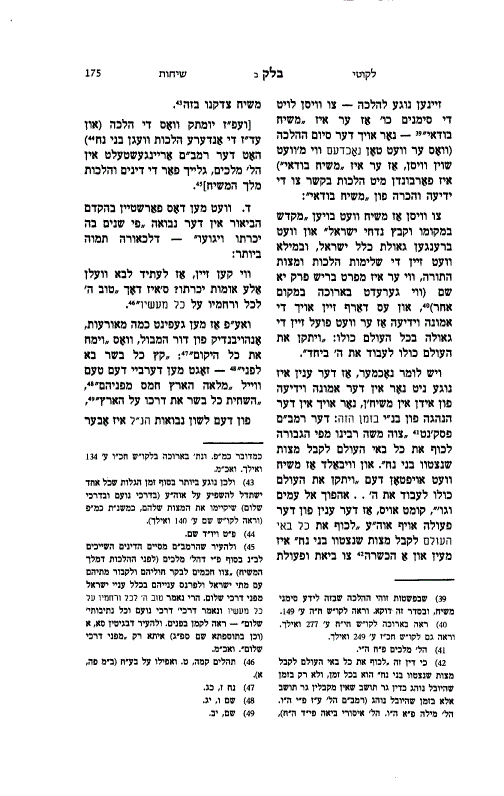
לכולי עלמא יהיו אומות העולם לעתיד לבוא, אך הדעות חלוקות האם מציאותם תהיה רק בדרך תפל לישראל, כלומר שהמציאות שלהם מצד עצמם תתבטל, או שגם בהם עצמם יהיה הבירור, כפי שהכריע הרמב"ם והחסידות.
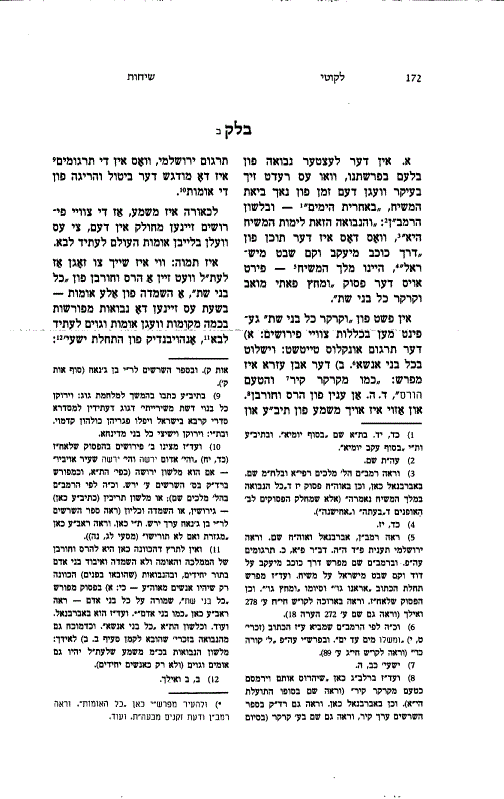
 

In Bilam’s prophecy it is stated:

“And he shall crush all the children of Sheis.”

Onkelos translates this phrase as:

“He shall rule over all the children of mankind.”

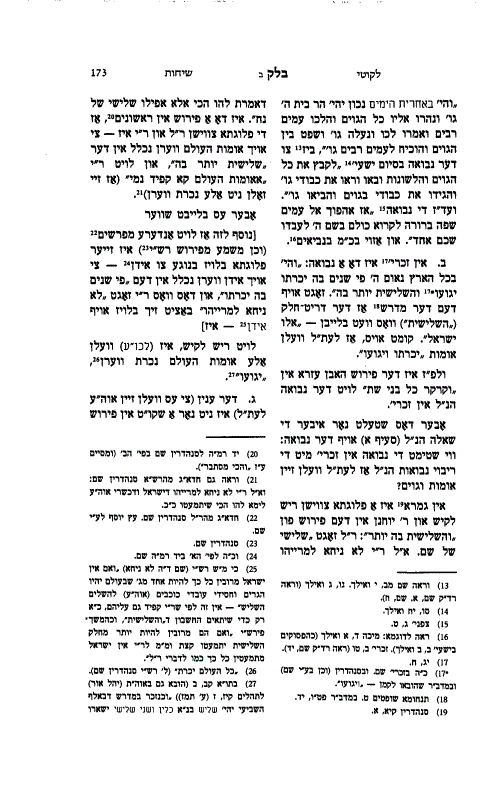
By contrast, the Ibn Ezra interprets vekarkar as a term of destruction. Similarly, the translations of Yonasan ben Uziel and the Yerushalmi Targum emphasize the nullification and destruction of the nations of the world.

This raises a difficulty. How can one say that all the nations will be destroyed, when there are many prophecies describing the existence and role of the nations during the Messianic era?

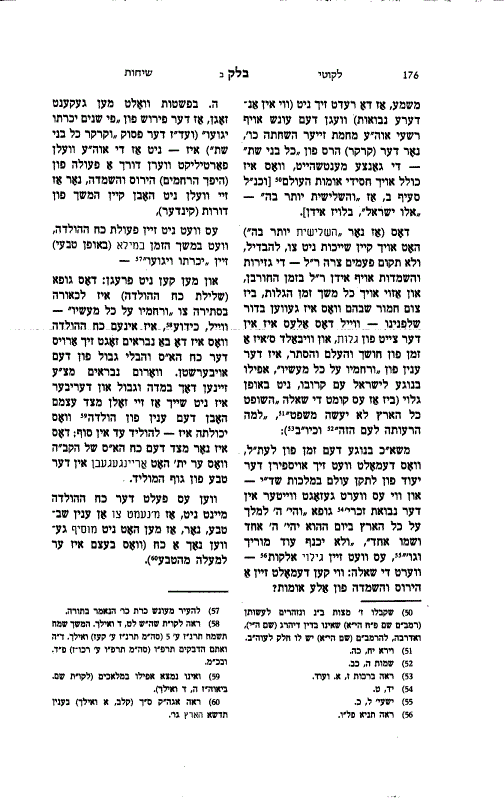
One may explain that all opinions agree that the nations of the world will exist in the future. The dispute concerns the nature of that existence.

According to one view, the nations will continue to exist only as something secondary and subordinate to Israel. Their independent identity will be nullified, even though they themselves will remain.

According to the other view, the nations themselves will undergo refinement and transformation. Their own existence will become aligned with the Divine purpose.

The Rambam and the teachings of Chassidus rule in accordance with the second approach.

The reason is that if the nations do not themselves recognize that Hashem is King over all the earth, then the refinement of the world remains incomplete. If the world's refinement is incomplete, then the redemption itself and the revelation experienced by the Jewish people would also be lacking in perfection.

Therefore, the redemption relates not only to the Jewish people but also to the nations of the world.

This idea is reflected in the words of the Alter Rebbe in Tanya:

“From the abundance of the illumination granted to Israel, the darkness of the nations will also be illuminated.”

Accordingly, the two interpretations can be reconciled according to the perspective of Chassidus.

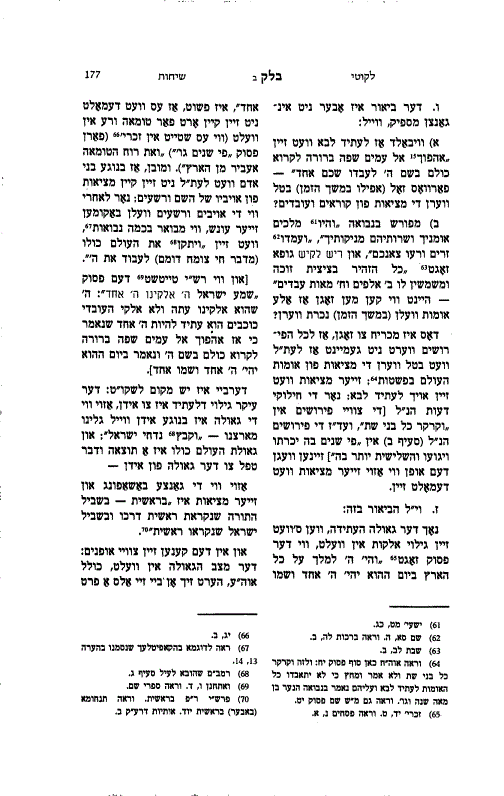
In the future era, all created beings will perceive that:

“They exist only through the truth of His existence.”

As a result, they will recognize that they possess no independent or absolute reality of their own. In this sense, their former self-definition and independent existence will be “destroyed” or nullified. This is the meaning of the interpretation that speaks of the destruction of the nations.

The Jewish people, however, possess an even deeper quality.

In the future it will be revealed not merely that they depend upon Hashem for their existence, but that their very existence is united with the Divine Essence itself.

As Chassidus expresses it:

“Israel and the Holy One, blessed be He, are entirely one.”

Thus, all creation will recognize its dependence upon Hashem, while the unique and intrinsic unity of Israel with Hashem will be openly revealed. Through this, the world will reach its ultimate state of perfection, and the redemption will be complete for both Israel and all mankind.


Leave Feedback