
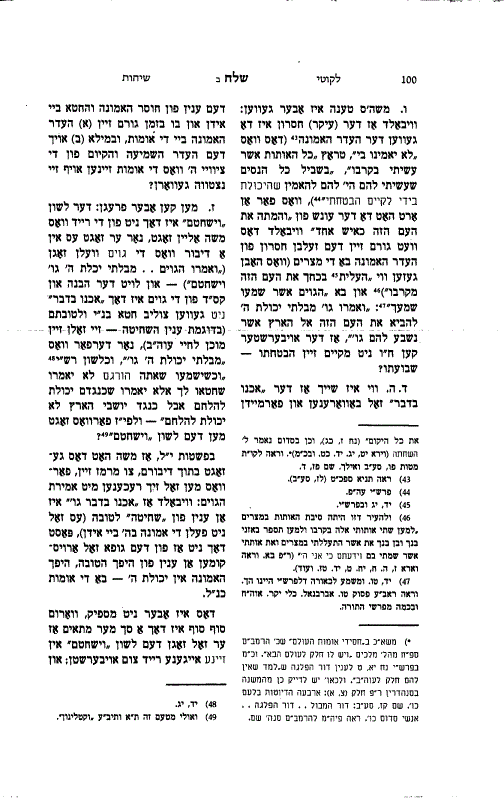
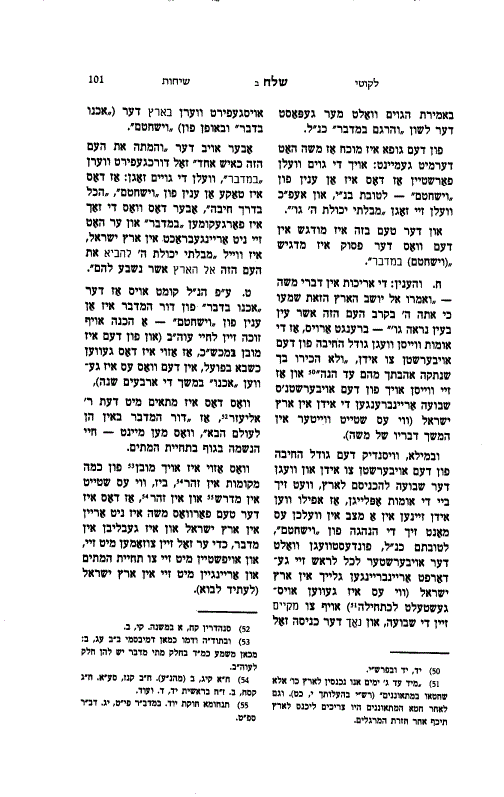
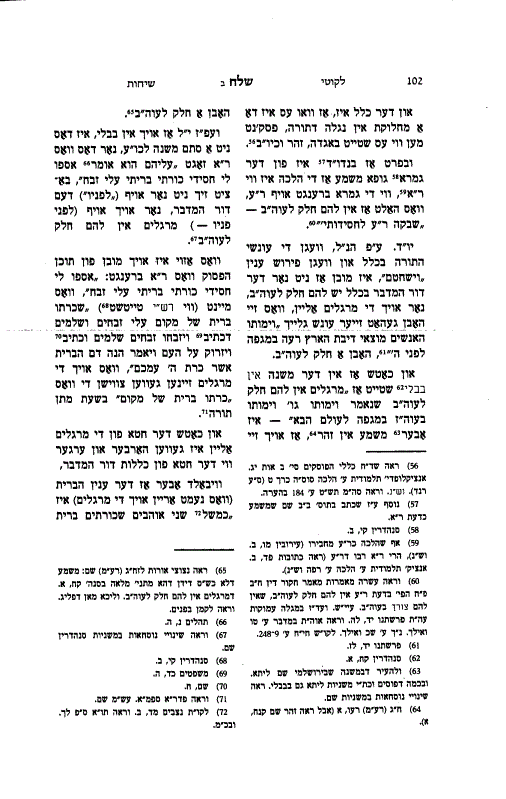
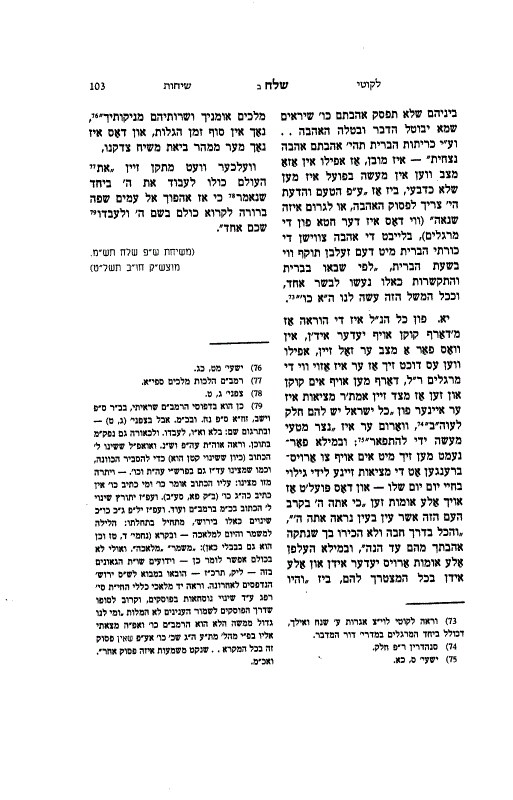
The expression “and He would slaughter them” (vayishchatem) implies an elevation and spiritual ascent, enabling them to merit Gan Eden and the World to Come. Thus, the punishment itself was ultimately for their benefit.
Moses' argument was that since the spies' sin was a lack of faith, how could a punishment—even one intended for the benefit of the Jewish people—result in a lack of faith among the nations of the world, as implied by “and Egypt will hear”?
This interpretation accords with the view of Rabbi Eliezer that the generation of the wilderness has a share in the World to Come.
The Torah states (Numbers 14:13–16):
“And Egypt will hear, for You brought up this people with Your power from among them... and they will say: Because the L‑rd was unable to bring this people into the land that He swore to them, therefore He slaughtered them in the wilderness.”
This requires explanation.
Is there no stronger argument for saving the Jewish people from destruction than the concern that “Egypt will hear”? Surely the destruction of an entire nation is far more severe than the possibility that Egypt might draw the wrong conclusion.
Explanation
The explanation begins with the unusual expression:
“He slaughtered them.”
This terminology is rarely used in reference to human beings.
The concept of slaughter (shechitah) in Torah is not merely killing; it is an act that elevates the animal. The Sages state:
“There is no ‘and he slaughtered’ except an act of drawing upward.”
The purpose of shechitah is ultimately for the benefit of the animal.
Similarly, the punishments of the Torah are not acts of cruelty. They are intended for the ultimate good of the person receiving them.
In this case, the Jewish people had repeatedly tested G‑d despite being given numerous opportunities to repent. As the verse says:
“How long will they continue to provoke Me?”
Since they persisted in sin, their ultimate good required:
“He would slaughter them in the wilderness.”
Here, “slaughter” signifies an elevation and spiritual ascent, enabling them to attain Gan Eden and other spiritual rewards.
Moses' argument was therefore not that the punishment was inherently unjust.
Rather, his argument was that since the sin itself involved a deficiency in faith, how could G‑d administer a punishment that would cause the nations to reach a similarly mistaken conclusion and weaken their faith?
The nations would say:
“Because the L‑rd was unable...”
Thus, a punishment intended to rectify spiritual failure among the Jewish people would create spiritual failure among the nations.
“He Slaughtered Them in the Wilderness”
The phrase:
“He slaughtered them in the wilderness”
appears as part of the words Moses attributes to Egypt.
The implication is that even the Egyptians would understand that “He killed them” was ultimately for the benefit of the Jewish people.
Nevertheless, they would still conclude that the fact that G‑d did not bring them into the Land and fulfill His oath to the Patriarchs indicated:
“an inability on G‑d's part.”
That false conclusion would constitute a desecration of G‑d's Name.
Connection to Rabbi Eliezer
This interpretation of “He slaughtered them” as an elevation fits well with the opinion of Rabbi Eliezer in Sanhedrin 110b that the generation of the wilderness will enter the World to Come.
Likewise, the Zohar implies that even the spies ultimately have a share in the World to Come.
Accordingly, the punishment was not one of rejection, but one of purification and elevation.
Practical Lesson
This teaches us how to view every Jew—even the spies themselves.
As Moses says:
“For You, O L‑rd, are in the midst of this people; You are seen eye to eye.”
The essential bond between G‑d and every Jew remains intact.
As Rashi emphasizes elsewhere, G‑d's conduct toward the Jewish people is:
“entirely in a manner of love,”
and it was never evident that His love for them had ceased.
Therefore, even when a Jew falls spiritually, one must recognize the enduring Divine connection within him and view him with love, confidence, and hope for ultimate elevation and redemption.