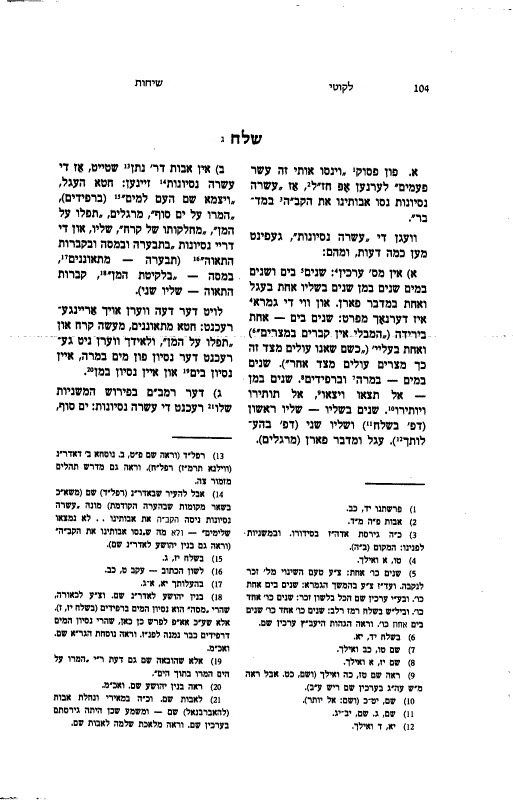
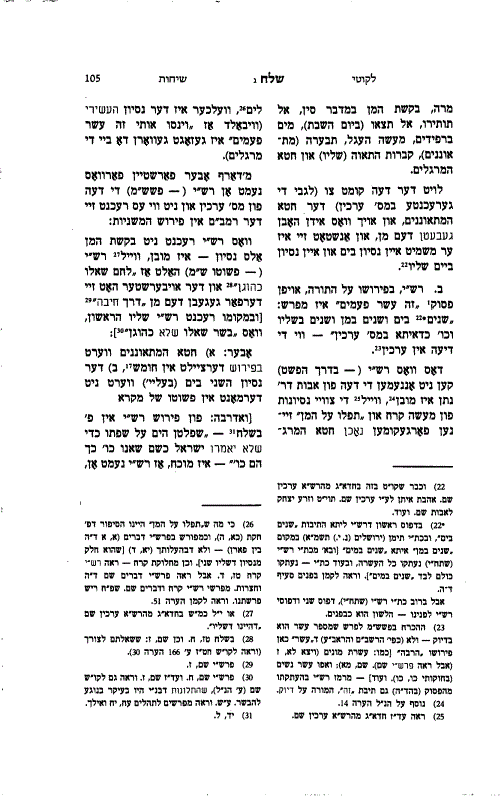
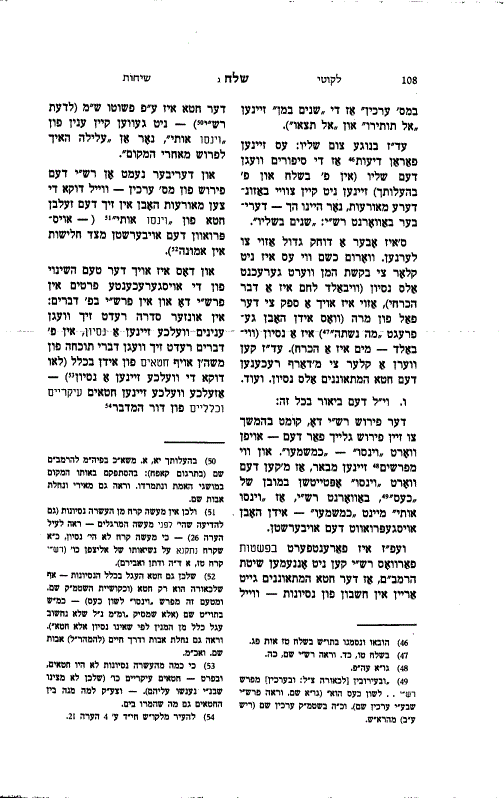
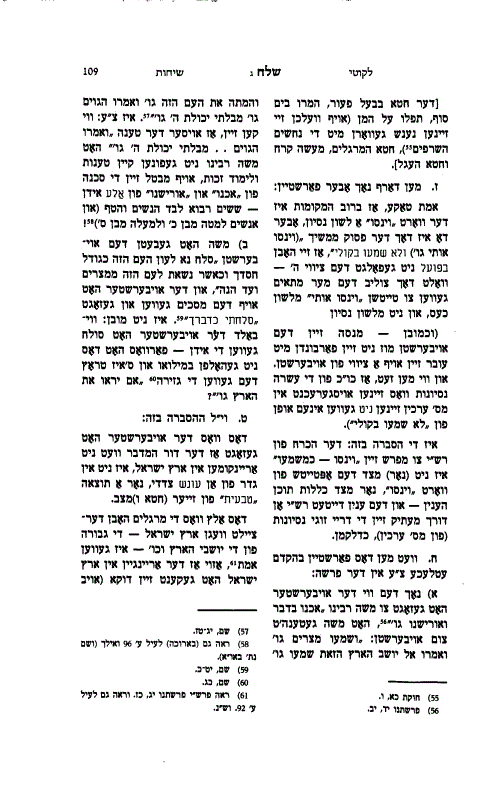
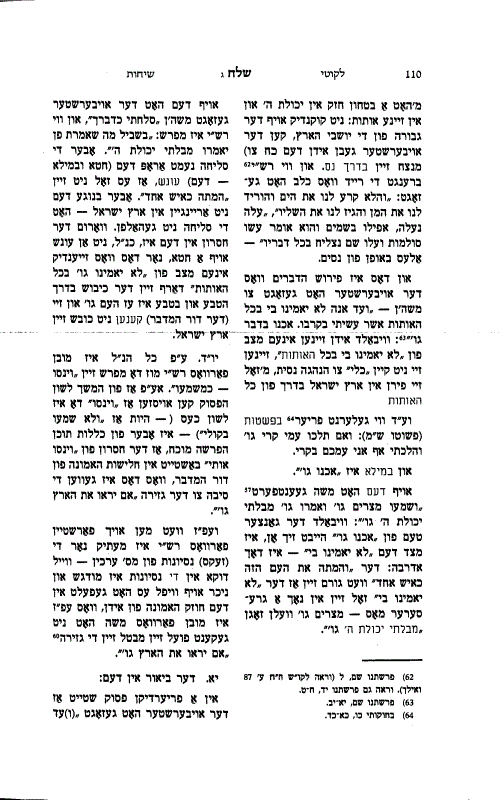
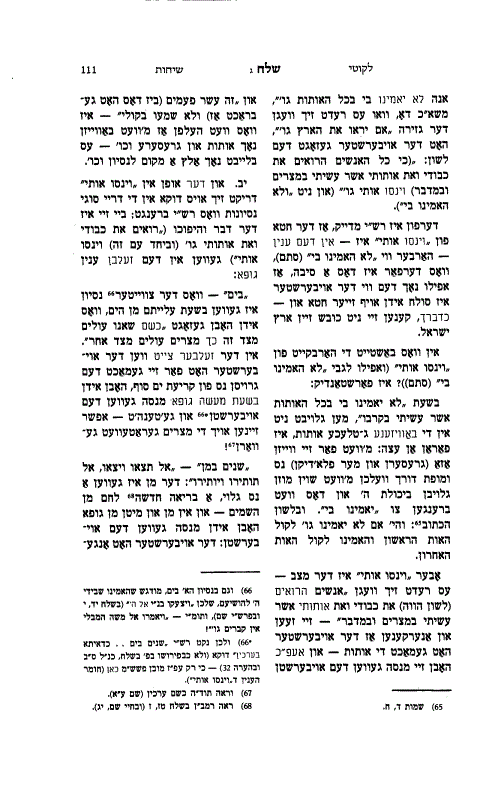
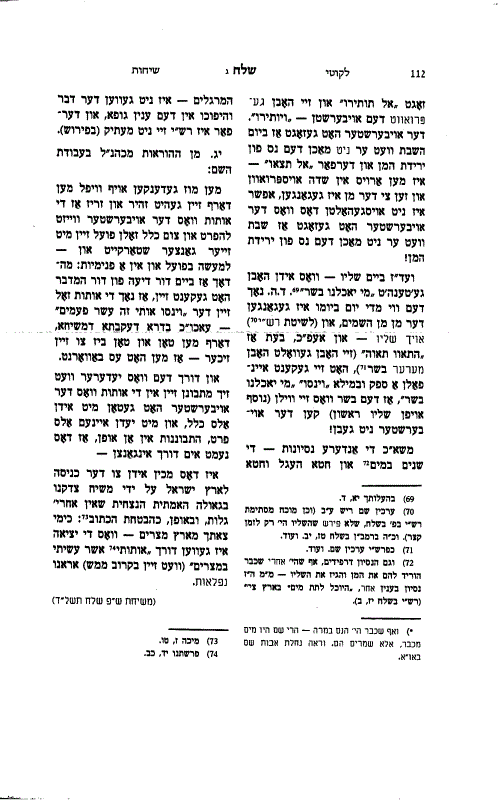
G‑d performs miracles specifically for those who believe in miracles, not for those who, even after witnessing open miracles, still fail to believe. Therefore, the generation of the wilderness could not enter the Land of Israel.
This is why Rashi specifically cites the earlier tests listed in the Gemara, where it is emphasized that G‑d showed them miracles and, at that very moment, they nevertheless tested Him.
Regarding the verse (Numbers 14:22):
“They have tested Me these ten times.”
The Gemara in Arachin explains the ten tests:
“Two at the sea, two concerning water, two concerning the manna, two concerning the quail, one with the Golden Calf, and one in the wilderness of Paran.”
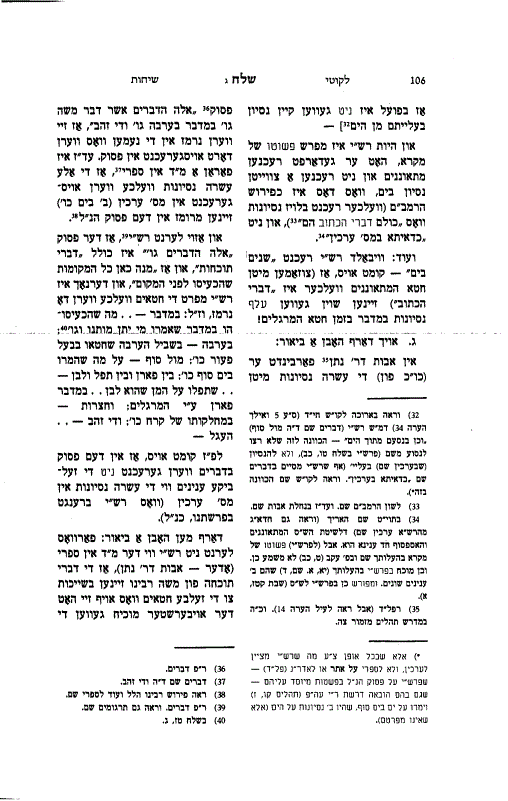
Other sources, such as Avot D'Rabbi Natan and the Rambam's Commentary to the Mishnah, list the tests somewhat differently.
Rashi writes:
“Two at the sea, two concerning the manna, and two concerning the quail... as stated in Arachin.”
This raises several questions:
Why does Rashi not mention the sin of the complainers (mit'onenim), which is explicitly recorded in the Torah?
Why does he include the second test at the sea, when the people said:
“Just as we are ascending on this side, so too the Egyptians are ascending on the other side,”
even though this statement is not explicitly found in the Torah?
And why does Rashi mention only six of the tests and then conclude:
“as stated in Arachin”?
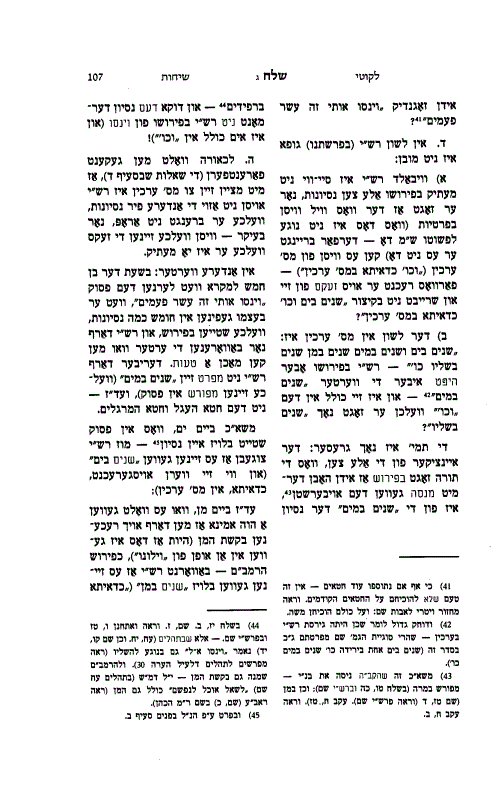
Explanation
This interpretation follows directly from Rashi's preceding comment:
“They tested Me” — according to its plain meaning.
Rashi's point is that the verse refers specifically to tests of G‑d, not merely to other sins.
For example, the sin of the complainers was different. They sought excuses and pretexts for separating themselves from G‑d's presence, but that was not primarily an act of testing G‑d.
To understand this, we must first address two broader questions.
Why did Moses argue:
“And Egypt will hear...”
instead of simply pleading for mercy on behalf of the Jewish people themselves?
And if G‑d ultimately said:
“I have forgiven, according to your words,”
why were the people nevertheless denied entry into the Land?
Why They Could Not Enter the Land
The explanation is that entering the Land required miracles.
The inhabitants of the land were indeed powerful:
“The people who dwell in the land are strong.”
Conquering them required Divine intervention beyond the natural order.
However, miracles can be granted only to those who believe in miracles.
A person who has witnessed repeated miracles and still refuses to trust G‑d demonstrates that even further miracles will not achieve their intended purpose.
Therefore, this generation could not enter the Land.
Moses' plea was not that they were spiritually fit to enter. Rather, he argued that destroying them would create a desecration of G‑d's Name:
“And Egypt will hear.”
But even Moses agreed that, in their current state, they were unable to enter the Land.
Why Rashi Chooses These Specific Examples
For this reason, Rashi specifically cites the tests from Arachin that demonstrate a recurring pattern:
G‑d performed open miracles, yet the people immediately tested Him.
At the Sea
Even after the splitting of the sea, they said:
“Just as we are ascending on this side, so the Egyptians are ascending on the other side.”
Despite witnessing a miracle, they doubted G‑d's salvation.
With the Manna
The manna itself was an ongoing miracle.
Yet even in the midst of this miraculous provision, they tested G‑d.
With the Quail
Although G‑d had already provided manna—and earlier had provided meat as well—they still complained:
“Who will give us meat to eat?”
Their complaint implied that G‑d lacked the ability to provide what they needed.
Thus, each example cited by Rashi highlights the same fundamental problem: not merely sin, but a lack of trust even while experiencing overt Divine miracles.
Because of this, further miracles would not have changed their attitude.
Practical Lesson
The lesson is how essential it is that the miracles and blessings G‑d performs for us penetrate our inner consciousness.
It is not enough merely to witness Divine kindness. One must internalize it until it produces genuine faith and trust.
Otherwise, a person can experience miracles repeatedly and still fail to recognize G‑d's hand in his life.
True faith means allowing the miracles one sees to become part of one's inner perspective, shaping how one understands and responds to every challenge thereafter.