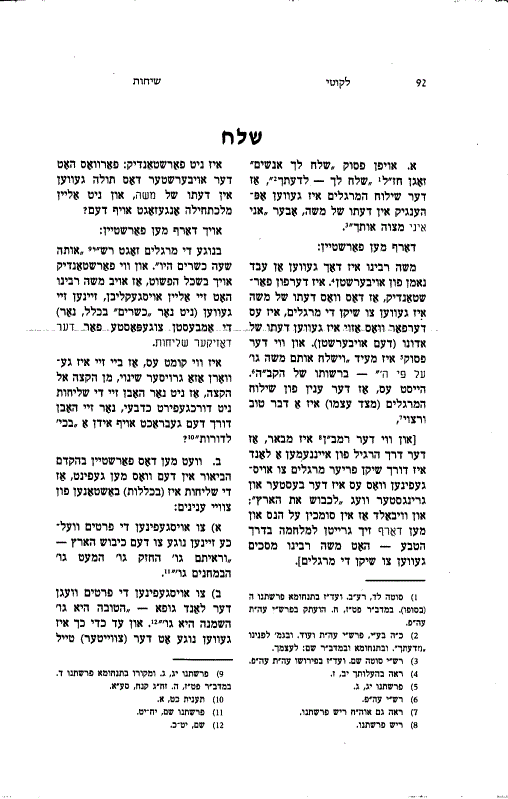
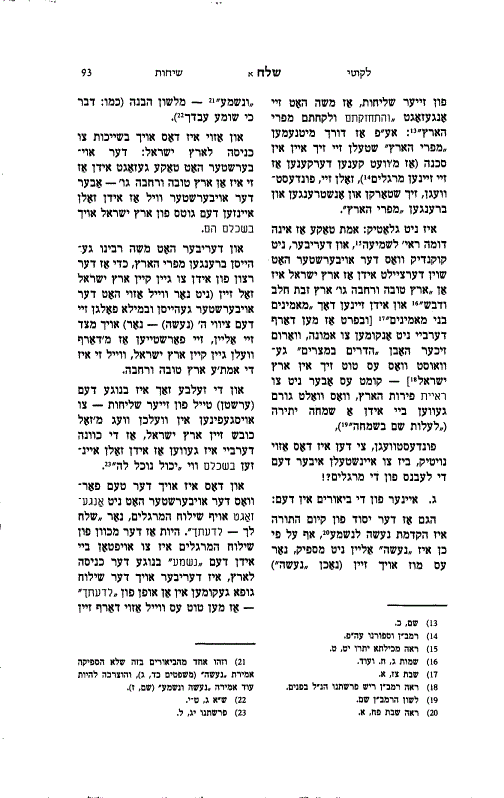
There must be not only “na’aseh” (“we will do”), but also “nishma” (“we will understand and internalize”). G‑d's will must become established within a person's intellect. Therefore, Moses sent the spies to see the Land so that the Jewish people would desire to conquer it based on their own understanding, and not merely because of G‑d's command.
The lesson is that the “nishma” aspect—understanding Torah through one's intellect—must itself be carried out as an emissary of Moses. Otherwise, it is not genuine understanding.
At the beginning of our parshah, Rashi explains:
“Send for yourself” — “According to your own understanding; I am not commanding you.”
Thus, G‑d did not command Moses to send the spies.
This requires explanation. The Torah later states:
“And Moses sent them according to the word of the L‑rd.”
Since G‑d agreed to the mission, why did He not command it?
Another question:
Since at that time “they were righteous”, how could they have fallen into such a serious error?
And furthermore, why was it necessary for the spies to see the land and bring back its fruit?
The need to determine the most practical route for conquest is understandable, since one must act within the framework of nature. But why was it necessary for them to inspect the land itself and bring back samples of its produce?
Explanation
Although “na’aseh” must precede “nishma,” there must nevertheless also be “nishma.”
The teachings of Torah must become absorbed within a person's own understanding.
For this reason, Moses sent the spies to see the Land. The purpose was that the Jewish people should desire to enter and conquer it not only because G‑d commanded them to do so, but because they themselves would recognize its goodness and value.
This is also why G‑d did not explicitly command Moses to send the spies. The objective was that this process should arise from the people's own understanding and appreciation.
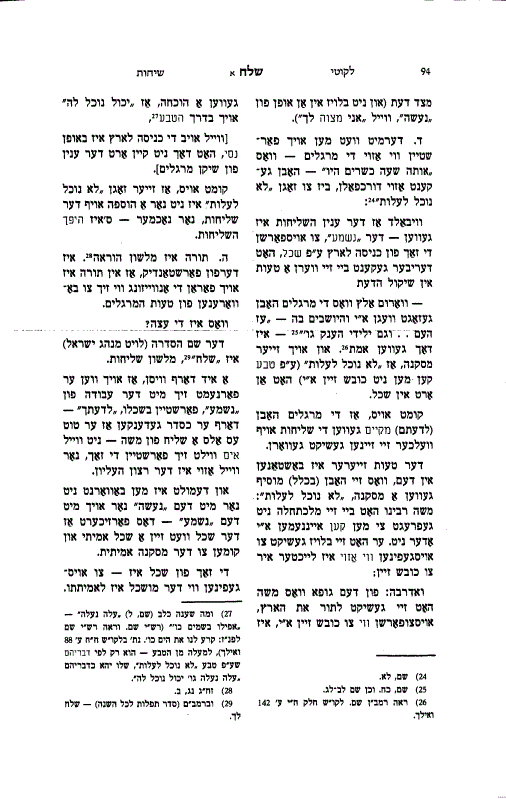
Therefore, when the spies reported:
“The people who dwell in the land are strong,”
they were not yet contradicting their mission. They were simply reporting what they had observed and understood.
Their mistake began when they added the conclusion:
“We cannot go up.”
Moses had sent them only to determine how the land could be conquered, not whether it could be conquered.
By concluding that conquest was impossible, they went beyond their assignment and contradicted its very purpose. Their error was not merely an addition to their mission; it was a rejection of it.
The Lesson
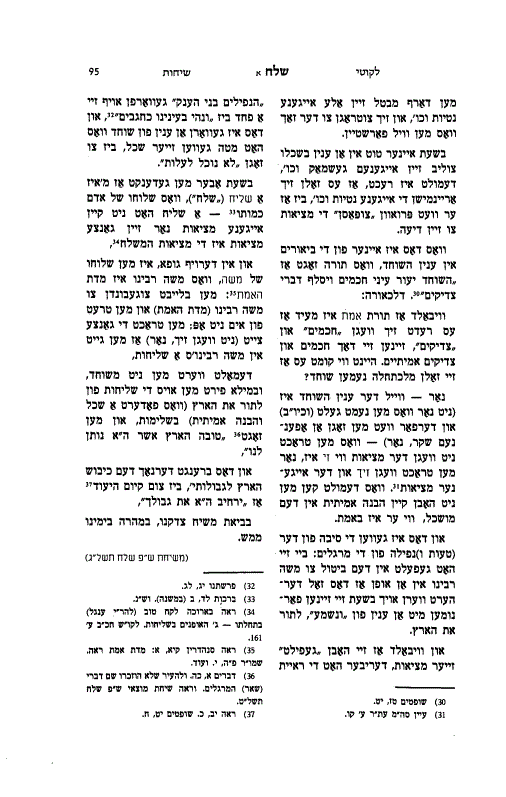
The lesson is that the “nishma” aspect of Torah—the effort to understand Torah according to human intellect—must itself be done as an extension of Moses' mission.
If not, a person's understanding cannot be trusted as genuine intellect, because human reasoning is naturally influenced by personal desires, inclinations, and emotional biases.
True understanding requires becoming a shaliach of Moses—approaching Torah with self-nullification and submission to Moses, who embodies the attribute of truth.
Only through such humility and attachment to Moses can a person achieve authentic “nishma,” understanding Torah as it truly is rather than as filtered through his own preferences and assumptions.