
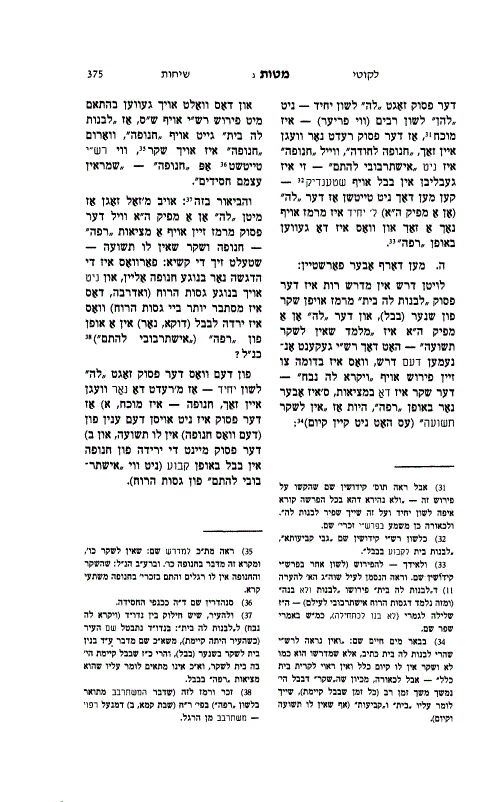
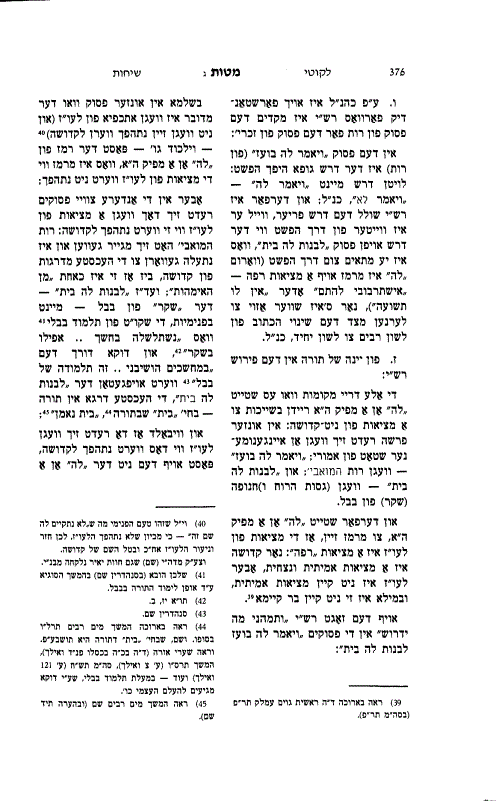
The meaning of Rashi’s words, “I wonder what he would expound,” is this: would he expound interpretations that are not according to the simple meaning of the verse, or would he expound as he does regarding this verse, where the interpretation that “its homiletic meaning is like ‘not’” is not contrary to the simple meaning? For the meaning is not that he did not call it Novach, but that he called it Novach in a weak manner, since this name did not remain established for it.
Rashi states on the verse (32:42), “And he called it Novach”: “‘It’ does not have a mappik hei. I saw in the foundation of Rabbi Moshe HaDarshan that because this name did not remain established for it, the hei is weak, so that its homiletic meaning is like ‘not.’ And I wonder what he would expound regarding two similar words: ‘And Boaz said to her,’ and ‘to build for her a house.’”
This requires explanation. There are Midrashim on both of those verses. Therefore, even if Rashi does not follow those Midrashim, what is the meaning of his question, “I wonder what he would expound”?
The explanation is: Rashi brings only those Aggadic interpretations that settle the words of the verse according to their proper place in the simple meaning. Therefore, Rashi says, “I wonder what he would expound”: would Rabbi Moshe HaDarshan expound like the Gemara and Midrash, with interpretations that are not according to the simple meaning of the verse, or would he expound according to peshat, as he does regarding this verse?
The explanation: the interpretation that “its homiletic meaning is like ‘not’” is not the opposite of the simple meaning. In other words, it does not mean that he did not call it Novach. Rather, the emphasis is “like” — “like ‘not’” — meaning that he called it Novach in a weak manner, because this name did not remain established for it.
However, regarding Rus, the Midrash explains that Boaz said to her that she was not like one of the maidservants, but like one of the matriarchs. This expounds the word “to her” as though it means “not” — “You are not from the maidservants, but from the matriarchs.” This is the opposite of the simple meaning and does not fit the peshat of the verse.
Similarly, regarding Zechariah, the Midrash explains that “to build for her a house” means that arrogance, which descended to Bavel together with flattery, did not remain in Bavel but went to Eilam. This interpretation does not fit the simple meaning, where the singular “for her” refers only to flattery, which descended to Bavel.
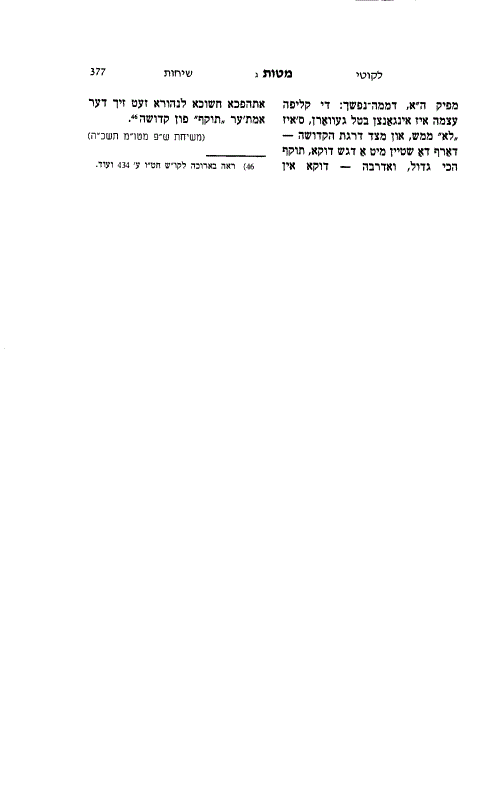
From the inner dimension of Torah: these three matters — the city of Moav, Rus who came from Moav, and the flattery and falsehood of Bavel — are all matters of the opposite side. Therefore, they do not have a mappik hei, because only holiness is a strong and lasting reality.
On this Rashi says, “I wonder what he would expound.” For Rus, and the falsehood of Bavel — meaning the Babylonian Talmud, which contains questions and challenges — were transformed into holiness. If so, what would he expound? After the transformation, it is not understood why they do not have a mappik hei. The kelipah itself has been completely nullified, for it has no true reality; and from the perspective of holiness, there should specifically be strength, because when darkness is transformed into light, the strength of holiness is revealed.