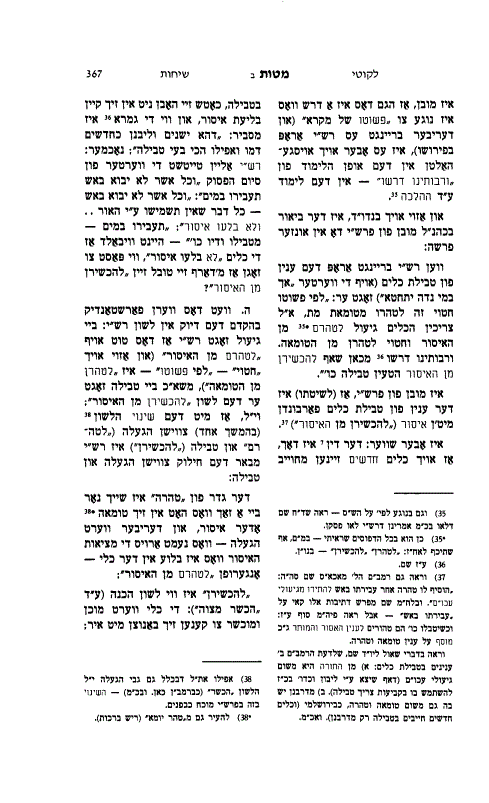
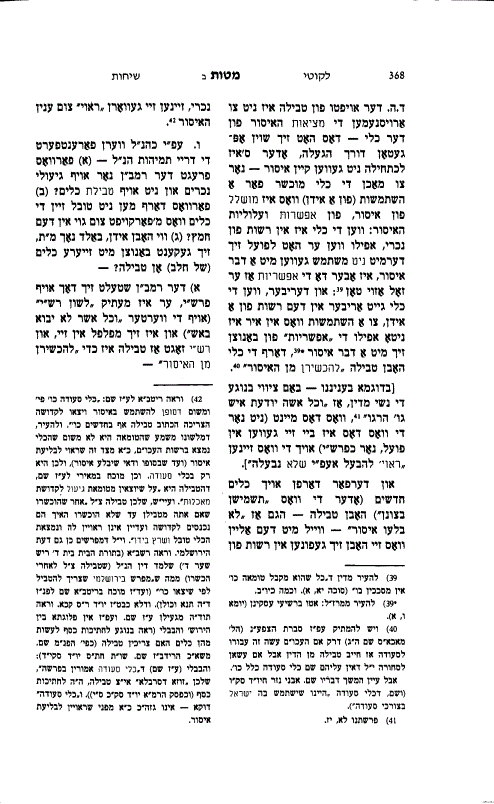
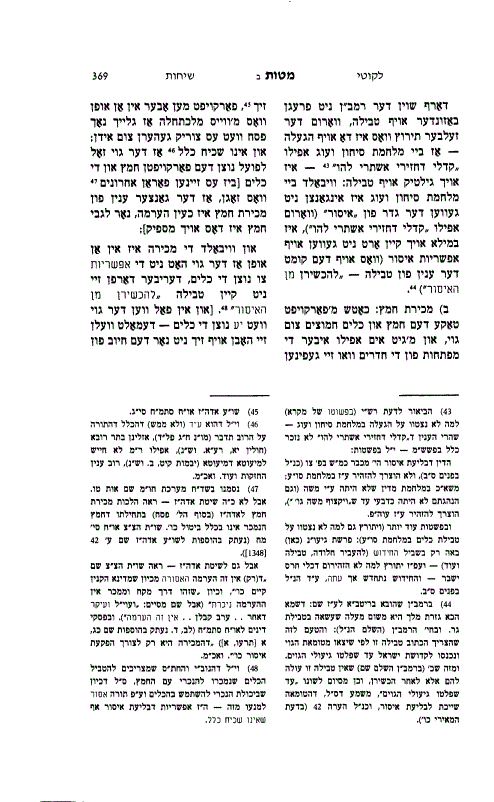
According to Rashi, immersion is also because of prohibition. His wording is, “to make them fit from the prohibition.” The term “fit” means preparation: since these vessels were prepared and suitable to be used in a prohibited way, they require immersion. Therefore, the Ramban’s answer — that in the war with Sichon they were not commanded about hagalah because it was part of the inheritance of their forefathers, and what was forbidden was permitted to them — applies also to the immersion of vessels.
Regarding the command to kasher vessels after the war with Midian, the Ramban asks why the Jewish people were not commanded about this earlier, in the wars with Sichon and Og. He answers that the land of Sichon and Og was part of the inheritance of the Jewish people, and therefore all their spoils were permitted to them, even forbidden foods.
The commentaries ask: how does this explain why the command to immerse vessels was not stated earlier, in the wars with Sichon and Og? After all, immersion of vessels is not because of prohibition, as even new vessels require immersion. If so, the Ramban’s answer — that forbidden items were permitted to them in the wars with Sichon and Og — does not explain the matter of immersion. The commentaries offer several answers. But seemingly, the question is: why does the Ramban himself not ask this question?
This can be understood through Rashi’s explanation regarding the immersion of vessels. Rashi says: “The vessels require hagalah to purify them from prohibition, and sprinkling to purify them from impurity. And our Sages expounded that even in order to make them fit from prohibition, they require immersion.”
This means that according to Rashi, immersion is also because of prohibition. The explanation is as follows: seemingly, if so, why do new vessels also require immersion? This can be understood from the precise wording of Rashi: “to make them fit,” and not “to purify them,” as he says regarding hagalah. “Making fit” means preparing the vessel. Since these vessels were prepared and suitable to be used in a prohibited way — even if they were not actually used for prohibition — they require immersion in order to make them fit for Jewish use, in a way that removes the possibility and tendency toward prohibition.
Therefore, the Ramban’s answer applies also to the immersion of vessels, because immersion too is connected with prohibition.
This also explains why one does not immerse chametz vessels after selling them to a non-Jew before Pesach. Since it is not common at all that the non-Jew will actually use the vessels, they are not considered prepared for prohibited use, and therefore they do not require immersion.
This also explains why the Jewish people did not need to immerse their dairy vessels immediately after Matan Torah, and were able to eat dairy foods from them, even though before Matan Torah they did not yet have the holiness of Jews. Even before Matan Torah, they were careful about the prohibition of meat and milk. Therefore, the dairy vessels were not prepared for prohibited use, and they did not require immersion.