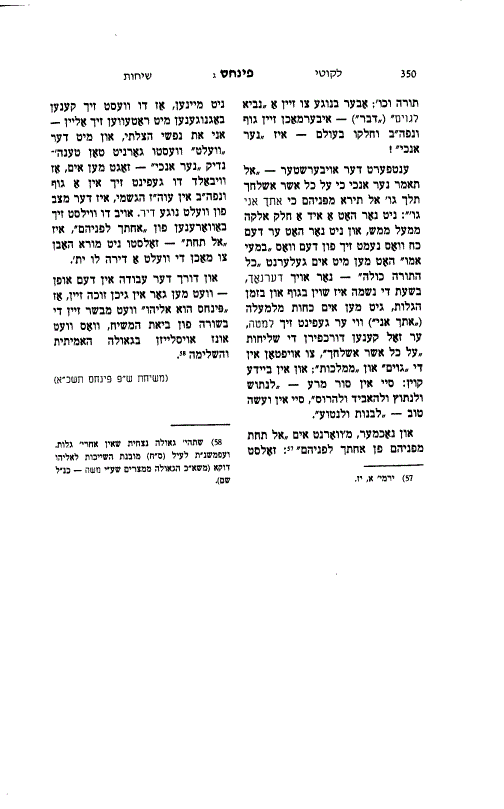
The Connection Between the Haftorah and Parshas Pinchas
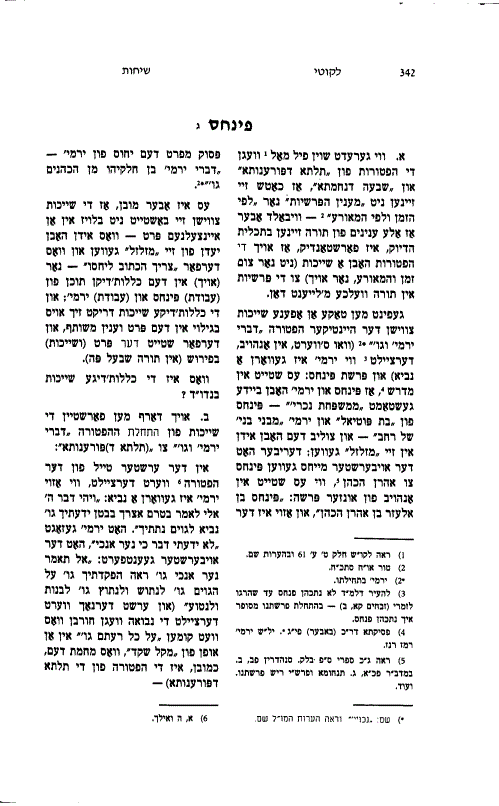
The connection between the Haftorah, which opens with the prophecy of Yirmiyahu, and Parshas Pinchas is as follows:
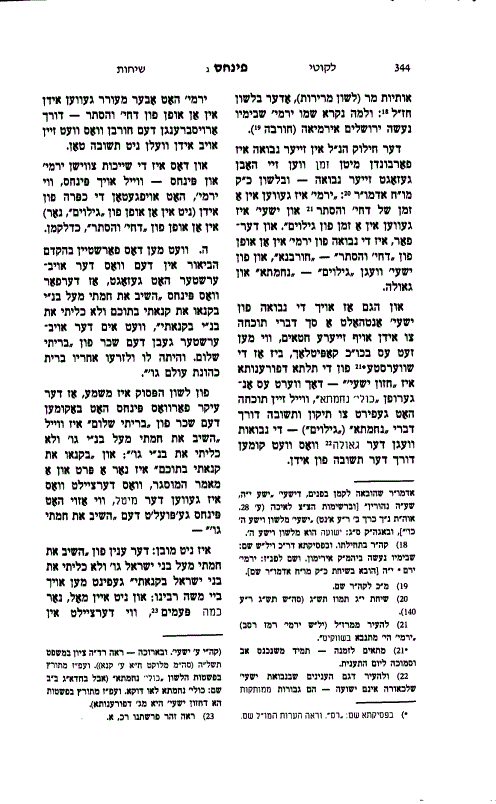
Yirmiyahu's mission was to awaken the Jewish people to repentance through rebuke and by warning them of the impending destruction of the Beis HaMikdash. His prophecy came during a period of concealment and spiritual decline.
This differs from Yeshayahu, whose central mission was to inspire repentance through words of comfort and consolation.
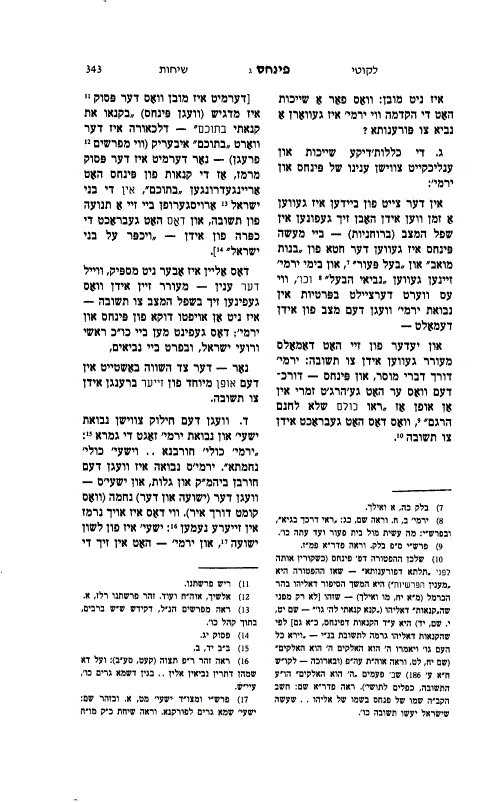
Yirmiyahu's accomplishment was that he aroused the Jewish people to return to Hashem through their own inner awakening, rather than through an overwhelming revelation from Above.
This approach parallels the unique service of Pinchas.
Pinchas "turned away My wrath" through self-sacrifice that involved his physical body. He placed his own life in danger by killing Zimri.
Moreover, his achievement was accomplished through its effect upon the Jewish people themselves. This is emphasized by the Torah's words:
"When he zealously avenged My honor among them."
His service originated from below, within the physical world.
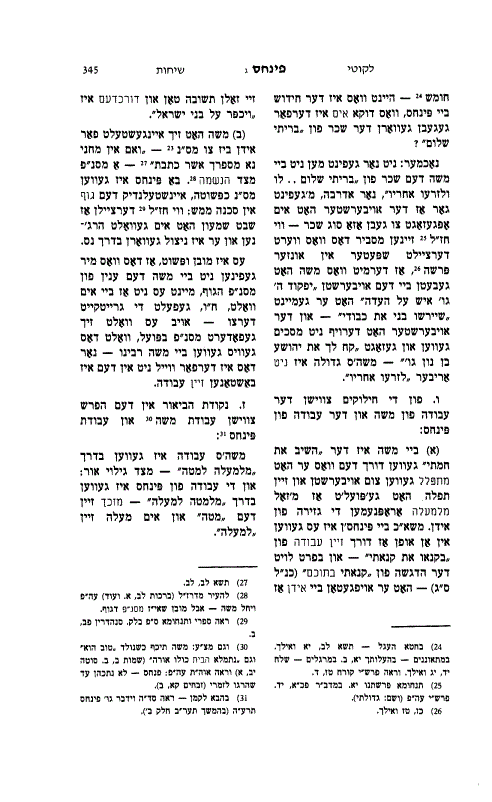
This stands in contrast to Moshe.
Moshe's self-sacrifice, expressed in his declaration,
"Erase me, please, from Your book,"
was primarily a form of spiritual self-sacrifice.
His influence upon the Jewish people came through a revelation from Above.
For that reason, its effect was not permanent. Even after the impurity introduced by the sin of the Golden Calf had been removed, that spiritual contamination eventually returned.
Because Moshe's leadership depended primarily upon Divine revelation rather than transformation from below, it could not remain equally effective under every circumstance.
For this reason, Moshe's leadership was not inherited by his sons.
Pinchas, by contrast, merited an "eternal covenant of priesthood."
His accomplishment endured because it was rooted in the efforts of the physical world itself.
The Lesson
Every Jew should recognize that if he wants his accomplishments to endure, it is not enough to serve Hashem only through the lofty powers of his soul.
Nor is it sufficient merely to refine his own physical self.
He must also influence other Jews and elevate the environment around him.
Only work that transforms the world itself has lasting permanence.
Even if a person hesitates, saying as Yirmiyahu did,
"I do not know how to speak,"
he should remember that before his soul descended into the three lower worlds—the realm associated with the three Haftoros of calamity—Hashem had already declared:
"Before I formed you in the womb, I knew you... I appointed you as a prophet to the nations."
Therefore, one should never fear fulfilling the mission entrusted to him.
Even after entering this world, Hashem assures him:
"For I am with you."
If one wishes to avoid the warning,
"Lest I terrify you before them,"
he must fulfill the preceding command:
"Do not be afraid of them."
With confidence in Hashem's mission and assistance, every Jew has the strength to carry out his Divine purpose successfully.