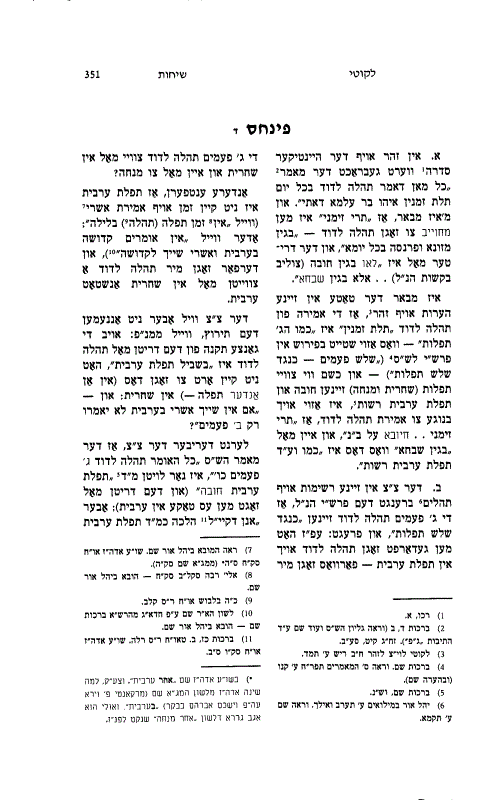
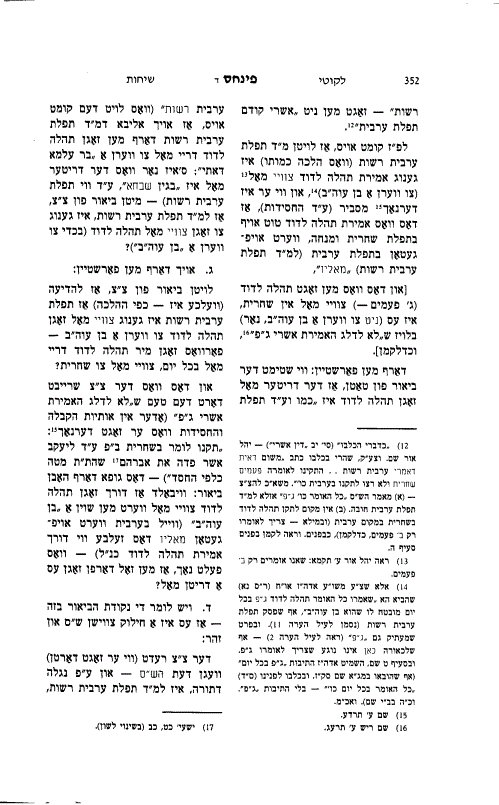
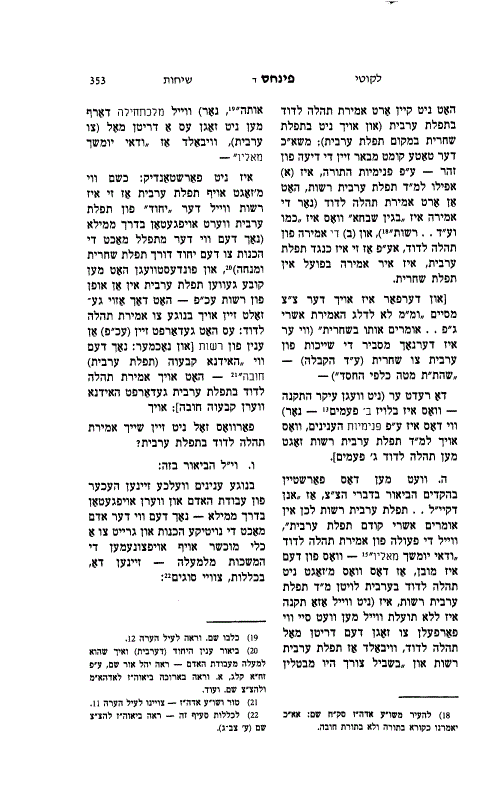
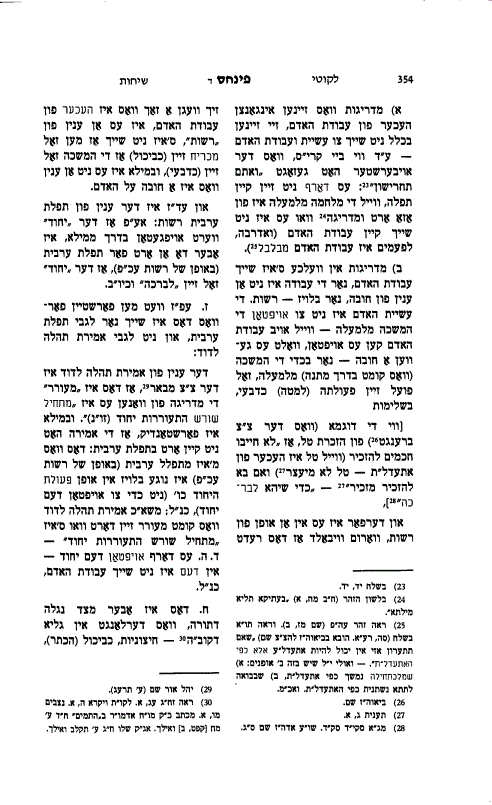
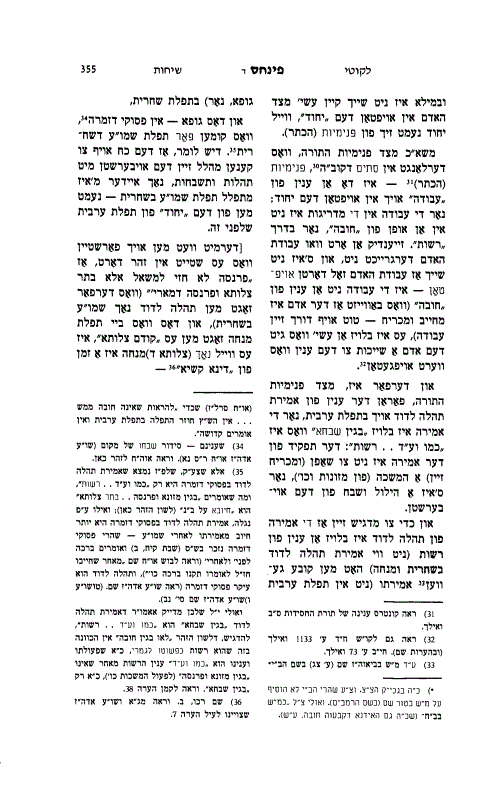
The Zohar on this week's parashah states that whoever recites Tehillah L'David (Ashrei) three times each day is assured of a share in the World to Come.
According to the Zohar, two recitations are obligatory, while the third is recited "for praise" (begin shivcha).
Regarding this teaching, there is a difference between the explanations of the Tzemach Tzedek and my revered father (the Rebbe Rashab).
The Tzemach Tzedek explains, based on Rashi, that the three recitations of Ashrei correspond to the three daily prayers.
Accordingly, the Zohar follows the opinion that Ma'ariv is obligatory.
However, according to the opinion that Ma'ariv is optional, reciting Ashrei twice each day is sufficient to merit the World to Come.
The third recitation corresponds to a Divine influence that comes on its own, independent of human effort. Therefore, it is optional.
This raises a question.
Even according to the opinion that Ma'ariv is optional, we nevertheless pray Ma'ariv in practice, so that we may become worthy of the Divine influence that descends from Above.
If so, why is Ashrei not also recited at night?
The explanation is as follows.
The Tzemach Tzedek explains that Ashrei arouses the spiritual level at which the source of the union of Ze'ir Anpin and Malchus first begins.
Since this initial awakening lies entirely beyond human capability, it is not something that man's service can produce.
Human service relates only to ensuring that the Divine flow, which will come in any case, is received properly.
My revered father, however, maintains that even according to the opinion that Ma'ariv is optional, one should still recite Ashrei three times each day.
His explanation is based on the inner dimension of Torah.
Although the Divine revelation is not produced by man's efforts, there is nevertheless a form of service whose purpose is to connect the individual to the revelation that is taking place.
In other words, while human effort does not generate the revelation, it enables the person to become connected to it.
Therefore, the third recitation of Ashrei is indeed said, although it retains the character of an optional practice.
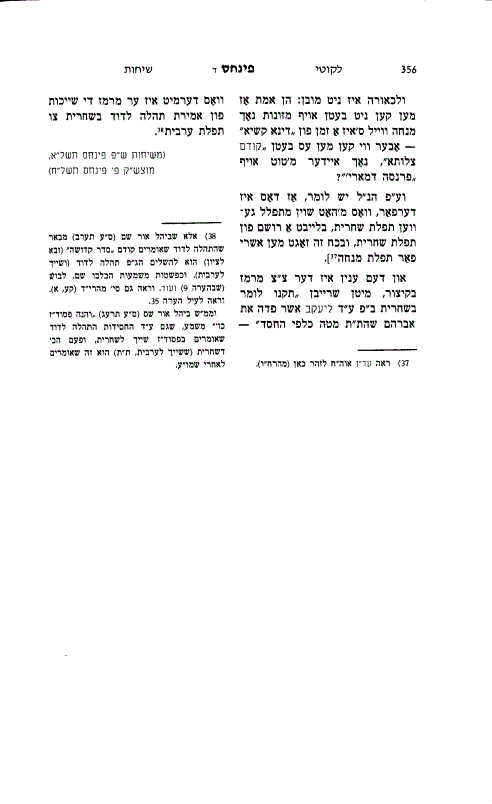
To emphasize that this third recitation is primarily an expression of praise rather than a request, it is recited in the morning before the Amidah, even though the Sages teach that one should request sustenance after prayer.
This is because that recitation is viewed as a continuation of the previous evening's Shemoneh Esrei.
Likewise, before Minchah, Ashrei is recited before the Amidah, because after Minchah the time is associated with a period of stricter judgment (dina kashya), making it inappropriate to delay the prayer itself.