
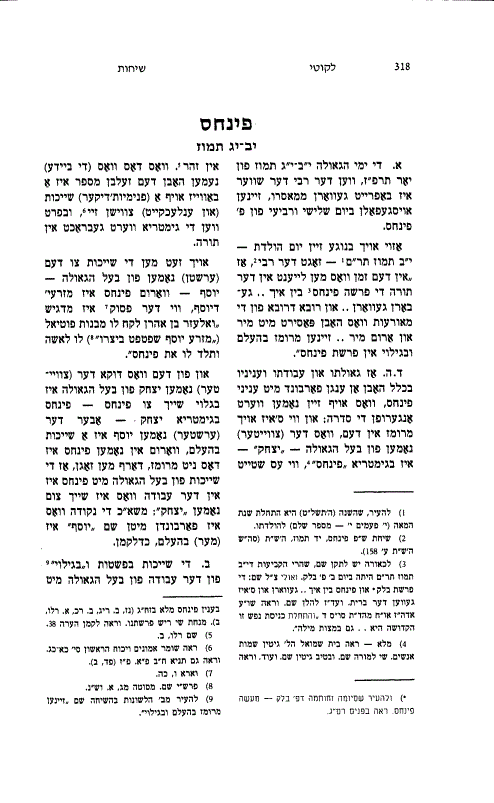
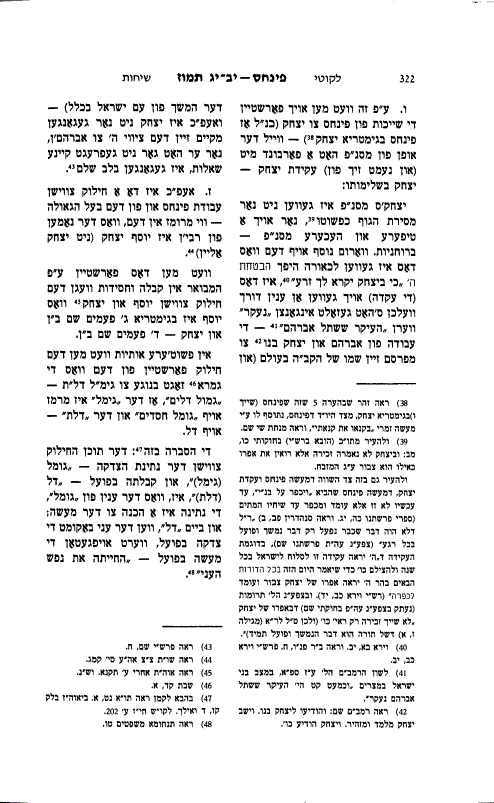
The connection between Yud-Beis Tammuz and Parshas Pinchas is that the self-sacrifice (mesirus nefesh) of Pinchas transcended even the reasoning of holiness.
Pinchas acted according to the principle:
“It is a law, but it is not taught.”
Although his conduct was in accordance with halachah, it was not the type of conduct that could ordinarily be instructed or prescribed. His action therefore stemmed from a level beyond the normal framework of holy reason and calculation.
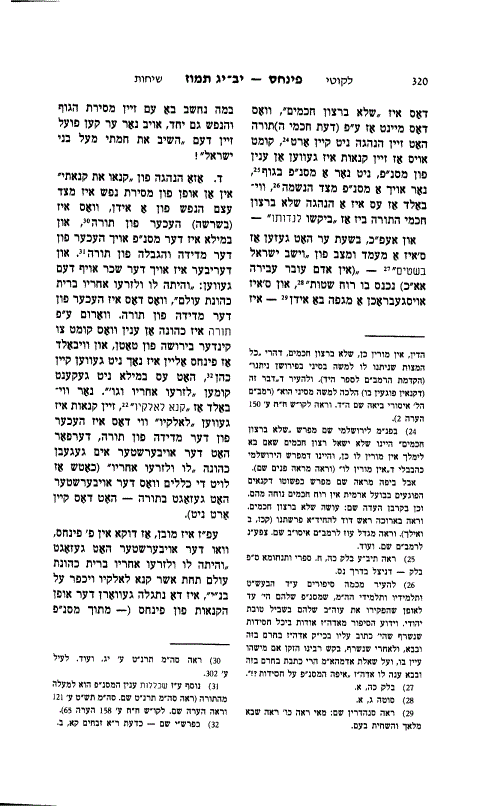
For this reason, he merited:
“An eternal covenant of priesthood.”
This reward itself reflects something beyond ordinary spiritual logic. According to the normal order of holiness, the priesthood is inherited from father to son and cannot be acquired through a single righteous act. Yet Pinchas received an eternal priesthood because his deed stemmed from a level beyond that ordinary framework.
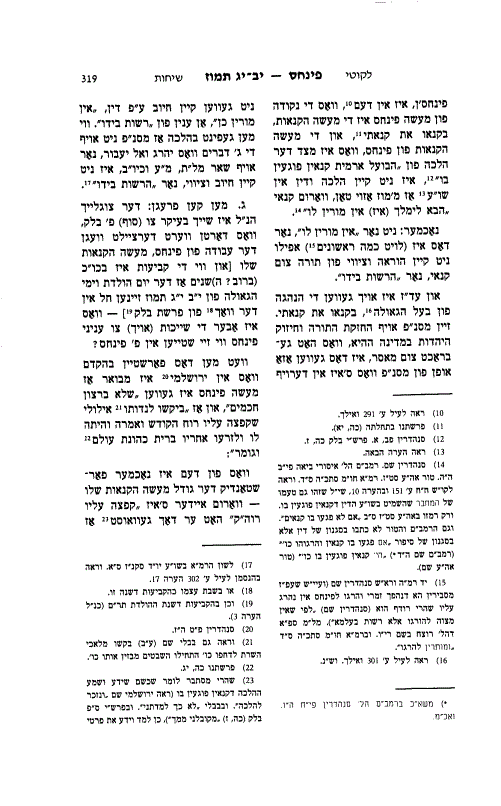
Similarly, the self-sacrifice of the Baal HaGeulah, the Rebbe Rayatz, was also beyond the calculations of holy reason. Indeed, there were many distinguished Torah leaders who initially did not agree with his approach.
Yet, just as in the case of Pinchas, after the redemption it became evident that this conduct was truly an expression of:
“He was zealous for his G‑d.”
In the end, others recognized and accepted the validity and necessity of this path.
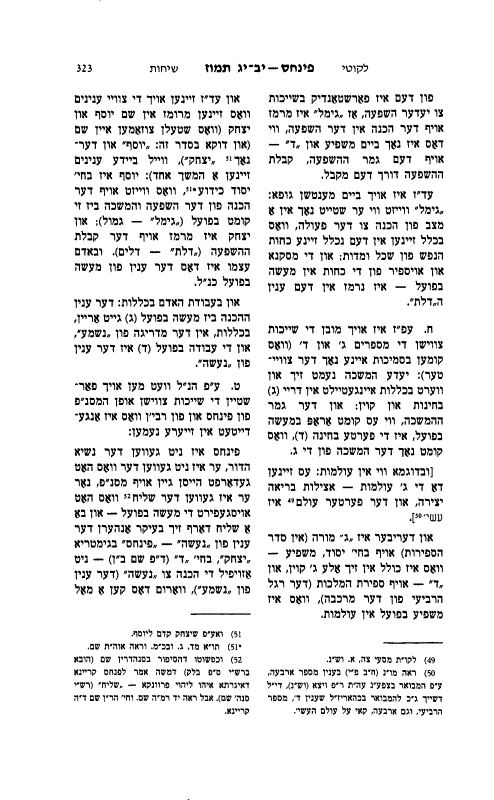
This also explains the connection between Pinchas and Yitzchak, for the numerical value (gematria) of Pinchas equals that of Yitzchak.
The Akeidah of Yitzchak was not merely physical self-sacrifice. It was also spiritual self-sacrifice. Had the Akeidah been completed, the great mission established by Avraham—to spread awareness of the One G‑d throughout the world—would seemingly have come to an end. Nevertheless, Yitzchak was prepared to surrender everything in obedience to Hashem’s will.
Yosef and Yitzchak represent two different spiritual dimensions.
Yosef corresponds to the number three (associated with three times the Divine Name Ban), while Yitzchak corresponds to the number four (associated with four times the Divine Name Ban).
The significance of three is reflected in the concept of gomel dalim—bestowing upon the needy. This represents influence as it exists within the giver, the preparation and readiness to bestow.
The significance of four is reflected in the actual reception and realization of that influence. It represents the influence as it reaches practical expression.
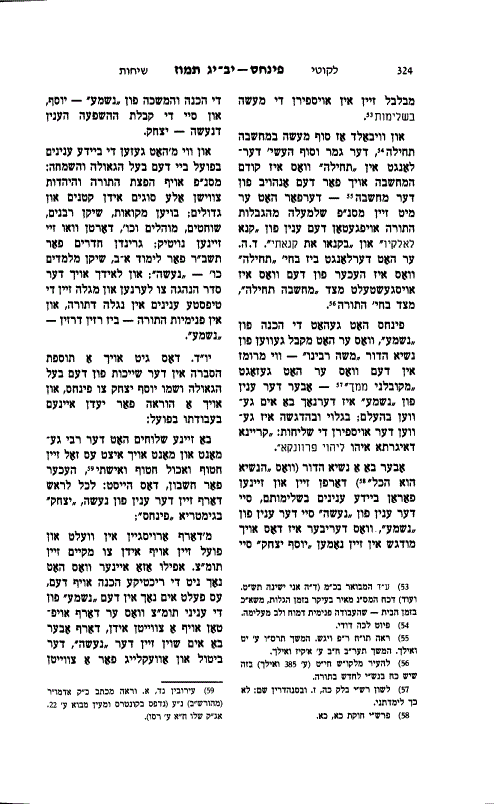
Pinchas was a shaliach—a messenger. Therefore, the primary emphasis in his service was concrete action and actual accomplishment. For this reason, he is especially associated with Yitzchak, representing implementation in practice.
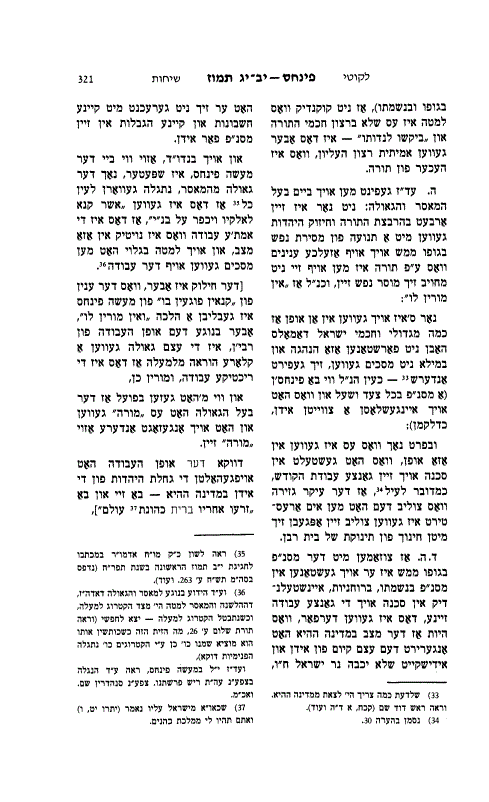
The Baal HaGeulah, however, was a Nasi, the leader of the generation. Therefore, every aspect of his service existed in complete perfection. Within him were united both Yosef and Yitzchak, both Naaseh (“we will do”) and Nishma (“we will hear and internalize”).
The Lesson
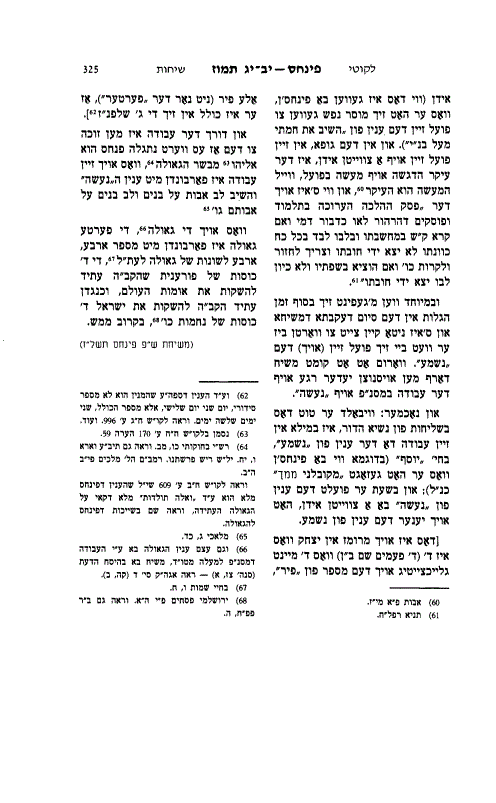
A Jew must possess the quality of Nishma—not merely understanding for oneself, but bringing that understanding into the world.
One must go out and actively draw fellow Jews closer to Torah, mitzvos, and their Father in Heaven in actual practice.
Through the principle of:
“Mekubalani mimcha” — “I have received this tradition from you,”
one remains connected to Moshe Rabbeinu and to the leader of the generation.
Through this connection, not only does one gain the strength to act, but one also brings the quality of Nishma into those whom one influences, enabling them to internalize and embrace Yiddishkeit in a deep and lasting way.