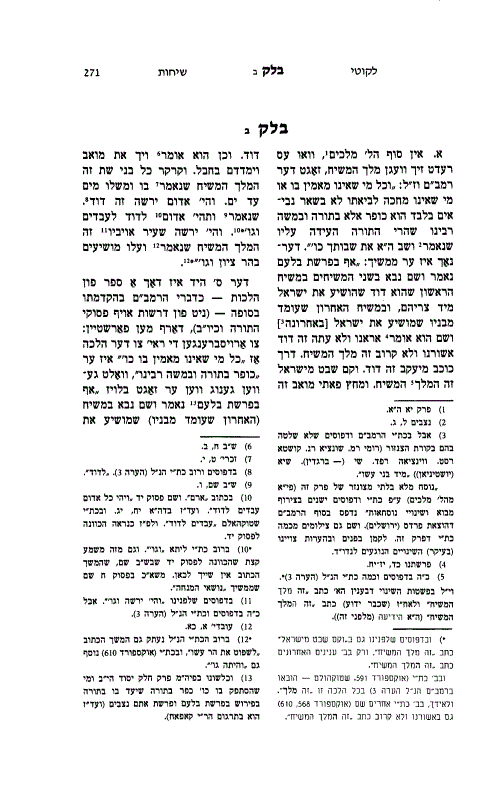
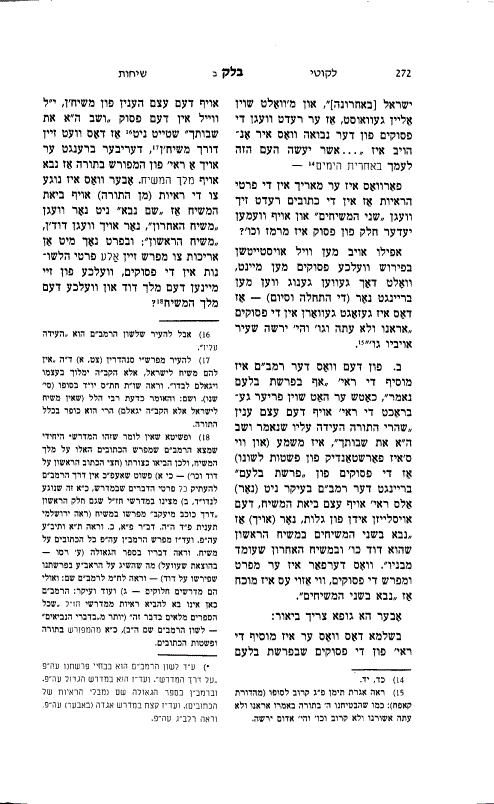
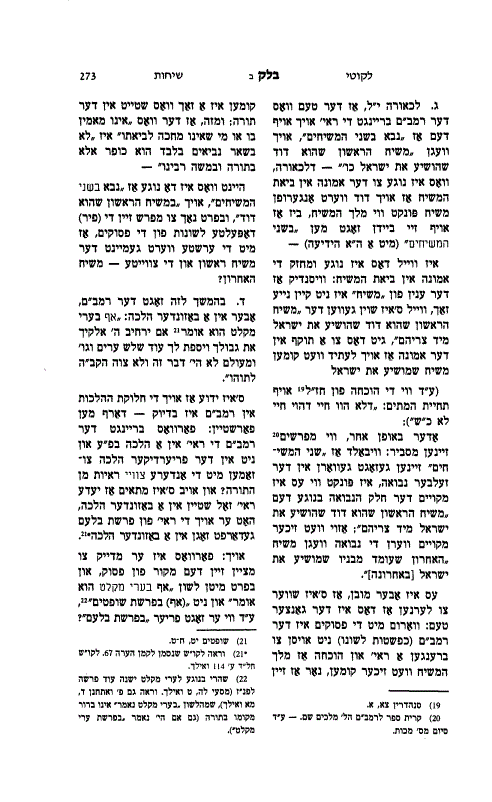
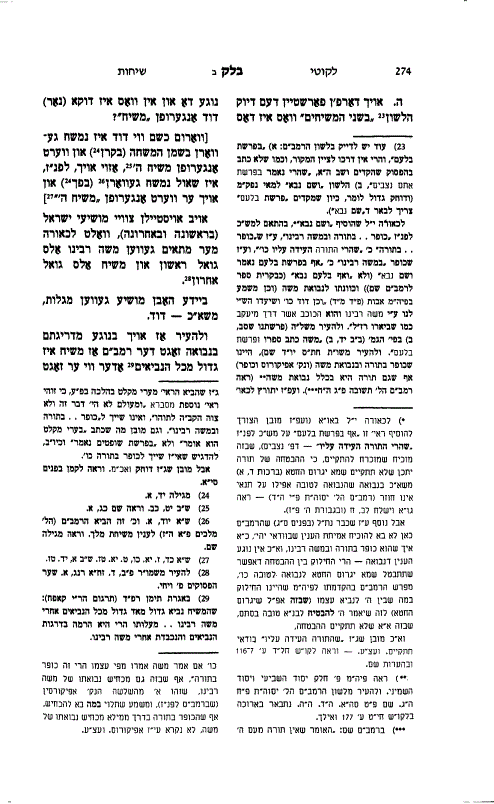
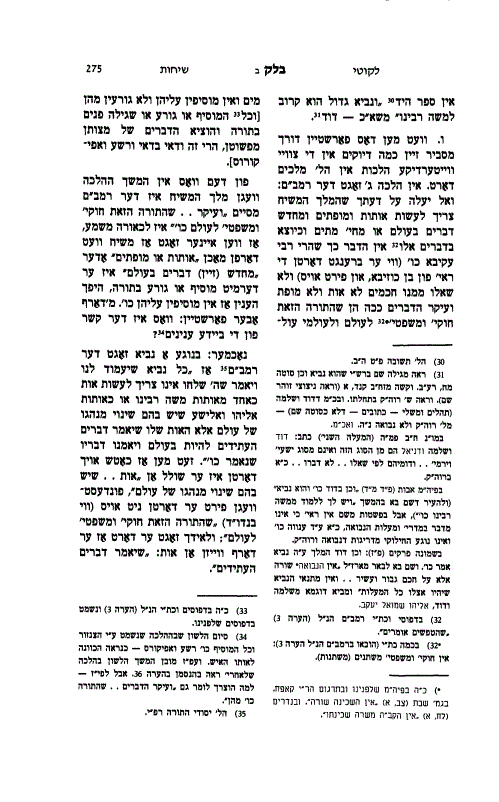
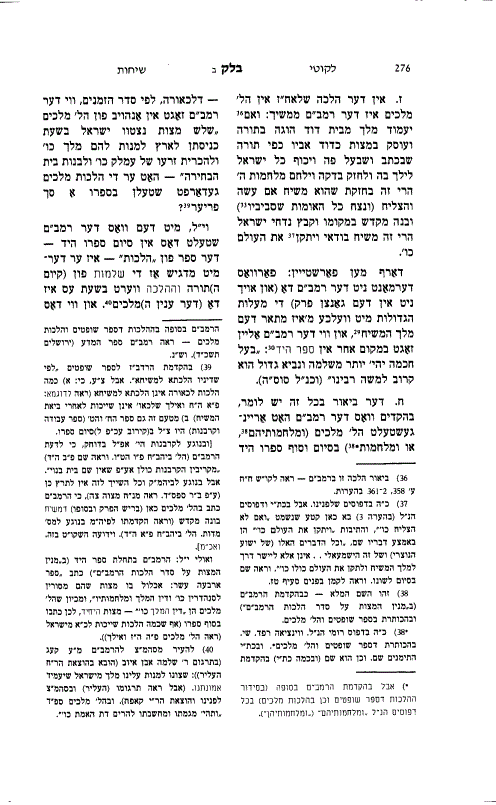
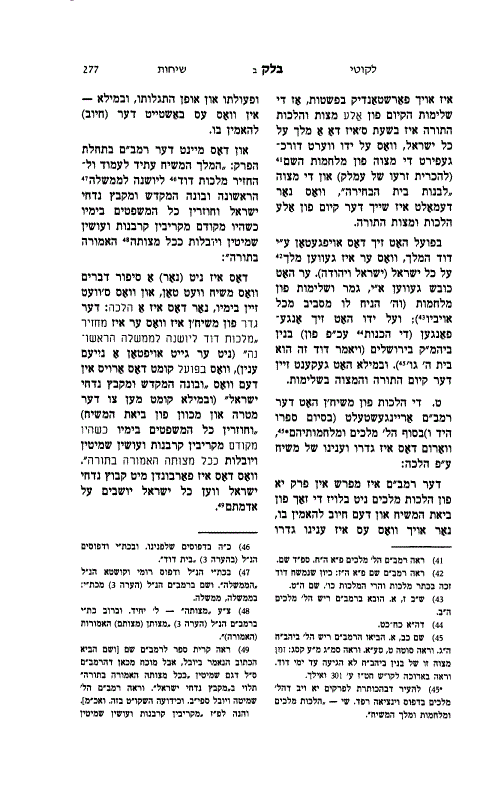
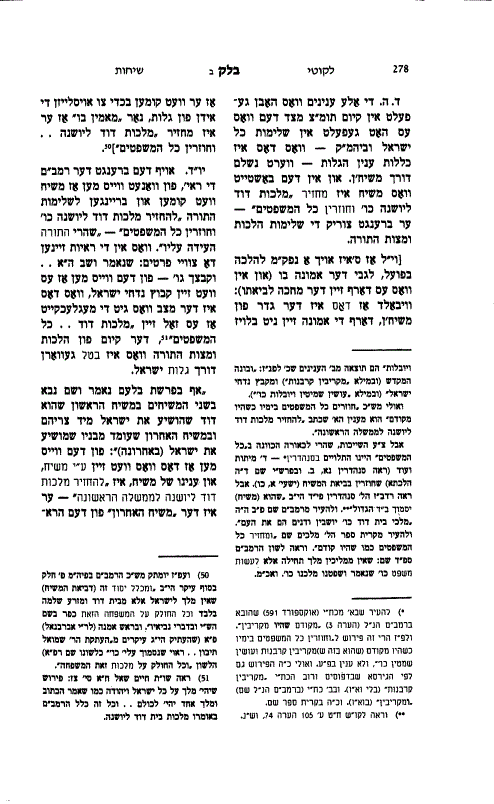

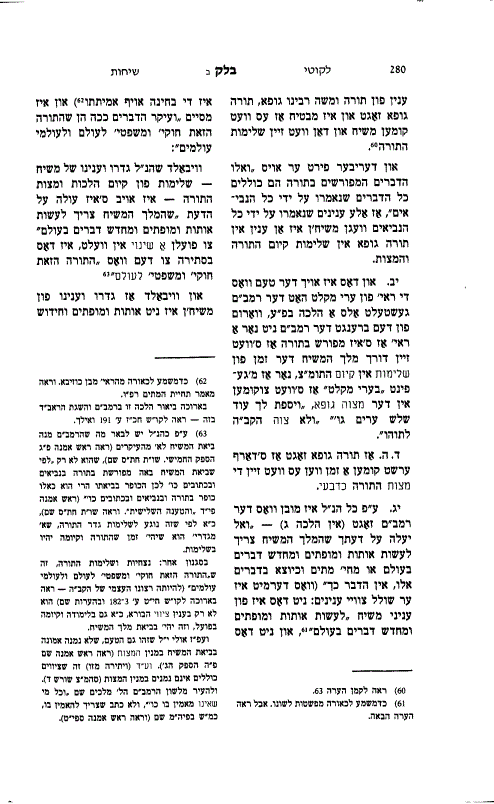
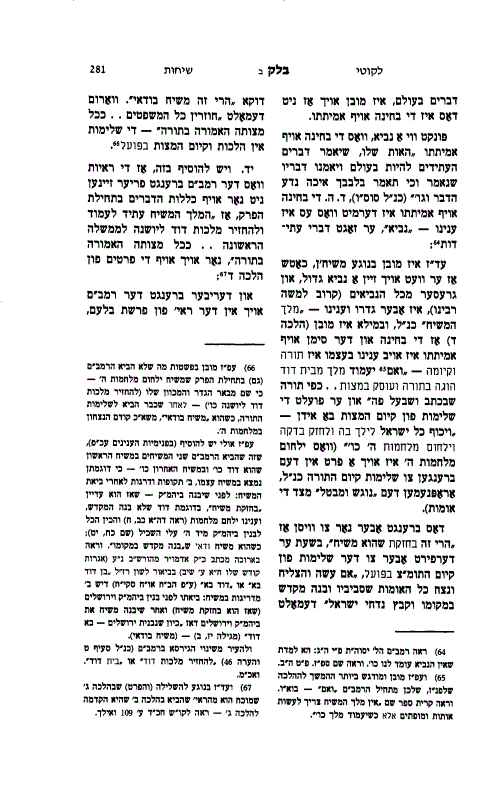
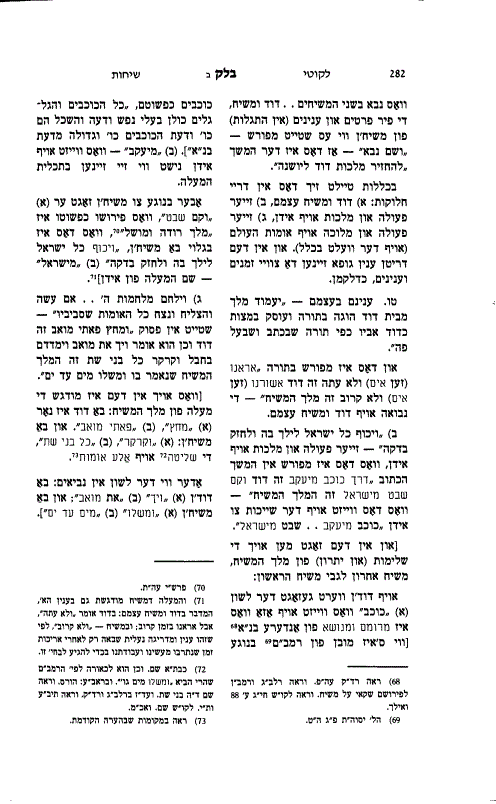
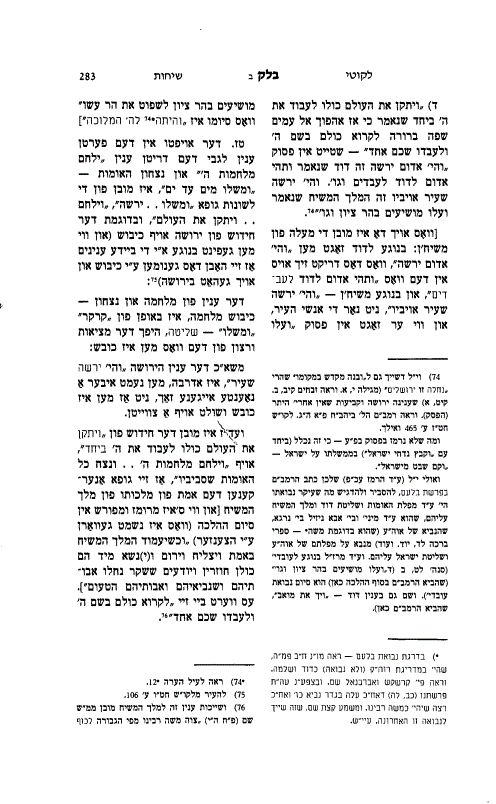
It is necessary to understand why the Rambam, in Hilchos Melachim, a book of practical halachah, cites the detailed interpretations of Bilam’s prophecy:
“I see him, but not now” — this refers to David.
“I behold him, but not near” — this refers to King Moshiach.
Why does he not suffice with the general statement that “Bilam prophesied concerning two anointed kings”?
There are also many additional questions concerning these halachos.
The explanation is as follows:
The Rambam places the laws of kingship at the conclusion of his entire code, even though appointing a king was the first mitzvah incumbent upon the Jewish people upon entering the Land. This placement alludes to the fact that the king represents the perfection and completion of Torah and mitzvos. Through the king, the full observance of Torah becomes possible.
This was accomplished in practice by David HaMelech, who first prepared for the building of the Beis HaMikdash and established the foundations of Jewish sovereignty. In the future, this completion will be achieved by Melech HaMoshiach.
This is the halachic definition of Moshiach: the Moshiach in whom we are obligated to believe is the one who will bring Torah and mitzvos to their complete fulfillment and perfection.
This also explains why the Rambam discusses the addition of cities of refuge in a separate halachah. This teaches something beyond the general idea that Moshiach will restore the perfection of Torah observance. It demonstrates that the Torah itself testifies that there will even be an expansion and enhancement within the mitzvos themselves.
The details that the Rambam derives from Bilam’s prophecy serve as proof not only for the general concept of Moshiach but also for the specific elements described in Halachah 4.
These elements are:
(1) Moshiach himself
“I see him” and “I behold him.” These verses refer to the person of Moshiach.
(2) His leadership and kingship over the Jewish people
“A star shall emerge from Yaakov, and a scepter shall arise from Israel.” This describes his rule over and elevation of the Jewish nation.
(3) His influence and sovereignty over the nations of the world
“He shall crush the corners of Moav and destroy all the children of Sheis.” This refers to his authority and impact upon the nations.
After this comes an even higher stage:
“And Edom shall become a possession.”
This is greater than military conquest. Warfare is imposed against the will of the conquered, whereas inheritance (yerushah) implies a deeper and more complete transformation.
This parallels the superiority of the Rambam’s concluding description:
“He will perfect the entire world to serve Hashem together.”
This is a higher achievement than the earlier stage of:
“He will fight the wars of Hashem.”
At first, Moshiach overcomes opposition and removes obstacles to holiness. Ultimately, however, the world itself becomes transformed and willingly participates in the service of Hashem. The final goal is not merely victory over evil, but the complete harmony of all creation in the recognition and service of the One G‑d.