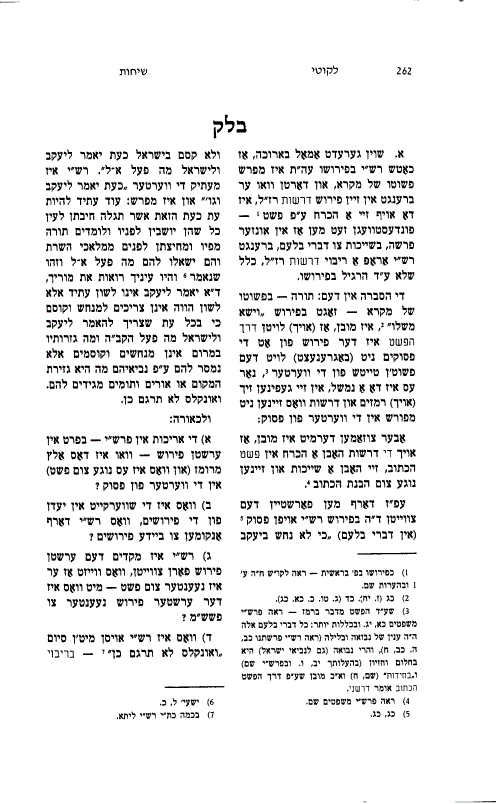
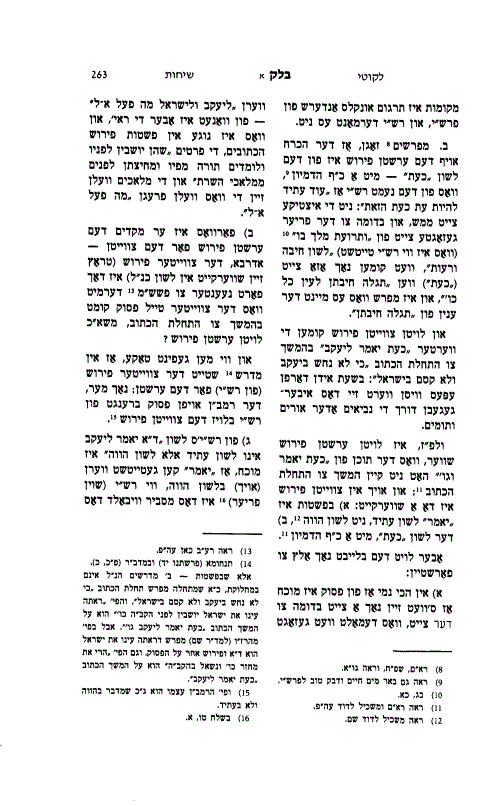
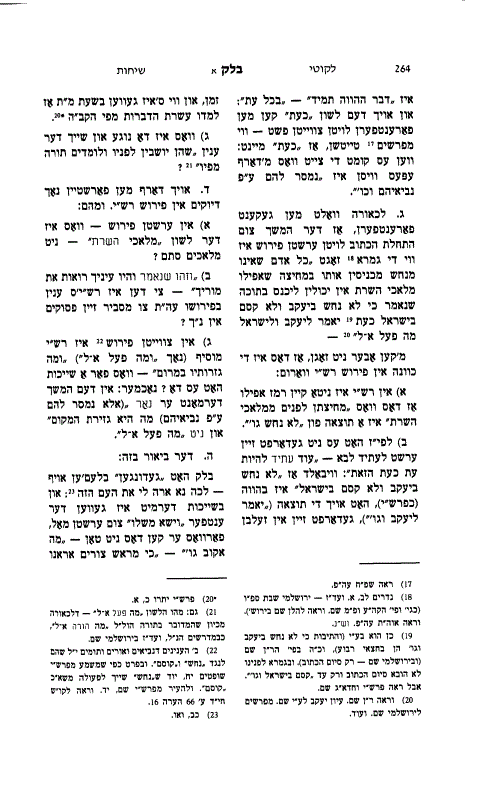
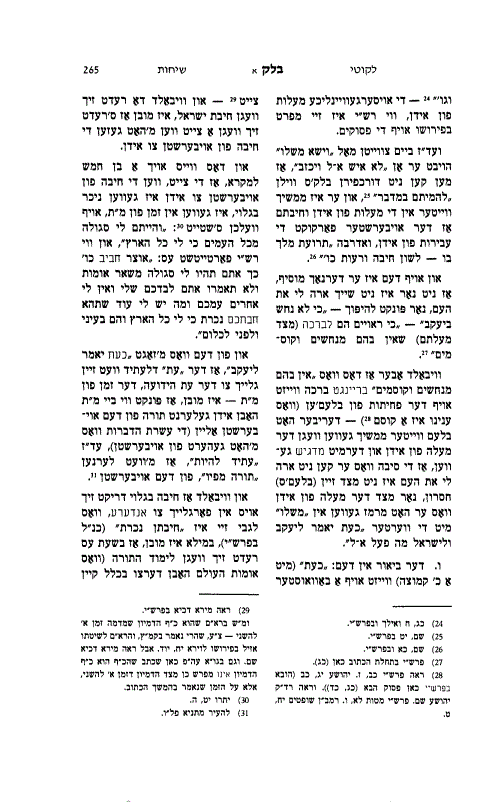
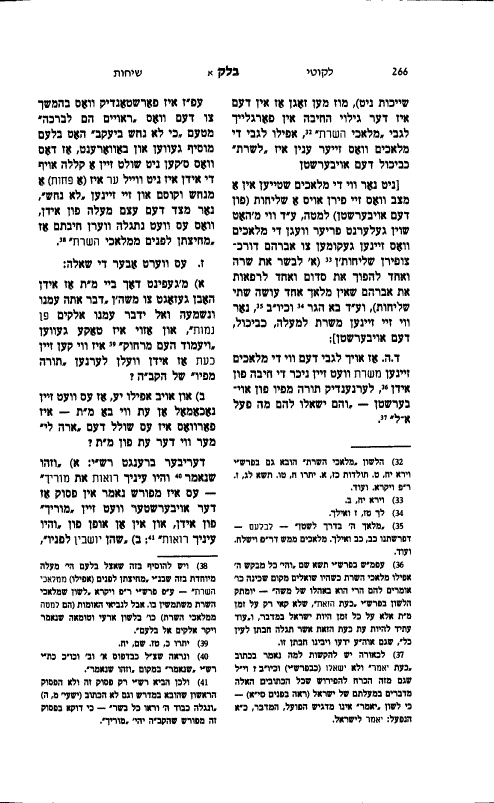
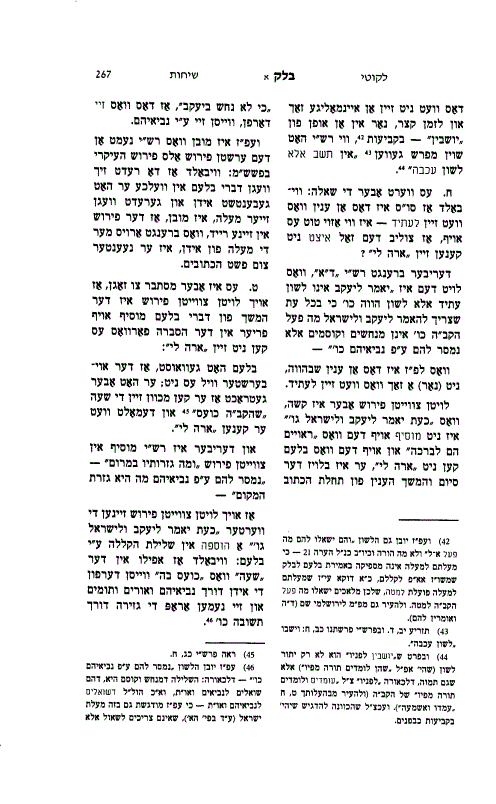
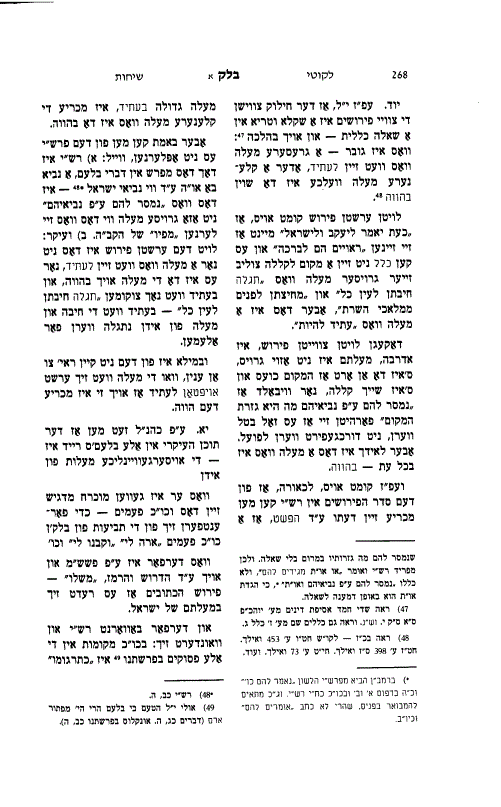
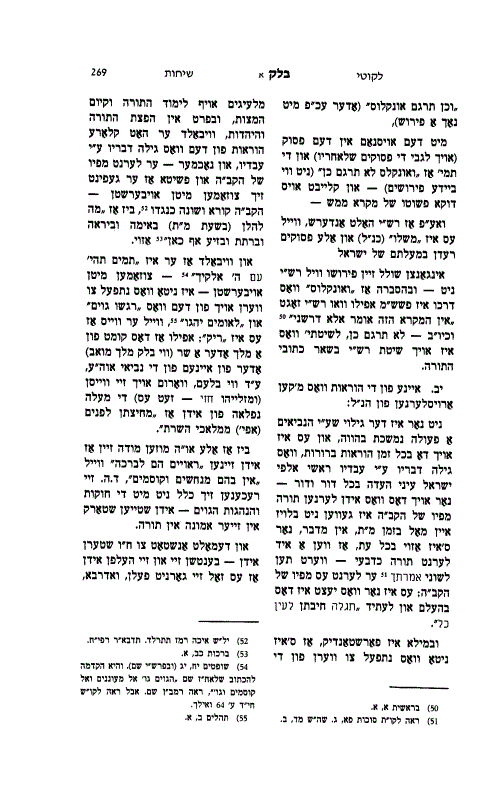
Rashi comments on the verse, “At this time it will be said of Yaakov and of Israel...”:
“There will yet come a time like this when their belovedness will be revealed before all, as they sit before Him and learn Torah from His mouth, and their place will be within a realm more inward than that of the ministering angels... as it is said, ‘Your eyes shall behold your Teacher.’
Another explanation: ‘It will be said of Yaakov’ is not future tense but present tense. They have no need of diviners or sorcerers...
Onkelos did not translate it in this manner.”
Several questions arise:
Why does Rashi elaborate at such length?
Why does he place the first explanation before the second, especially since the Midrash presents the second explanation first?
The explanation is as follows:
Bilam was explaining why he could not curse the Jewish people. As he had already said, “For from the mountaintops I see him,” referring to the unique greatness of Israel.
Similarly, in his second prophecy he declared, “The acclaim of the King is among them.” He then adds not only that they are unworthy of being cursed, but that they are deserving of blessing: “For there is no divination in Yaakov.”
However, that statement could be understood as emphasizing Bilam’s own weakness—that he lacked the power to affect them. Therefore Bilam stressed that the reason he could not curse Israel was not due to any deficiency in himself, but because of their extraordinary greatness.
This is the meaning of the word “ka’eis” (“at this time”). Rashi explains that it refers to a known and significant time when the belovedness of Israel is openly revealed—the time of the giving of the Torah. Bilam is saying that there will yet come another such time in the future.
Since the nations of the world have no connection to Torah in this manner, the emphasis is that the Jewish people will occupy a position even more inward and exalted than that of the ministering angels.
However, a difficulty arises. At Mount Sinai the Jewish people said, “You speak with us and we will hear; let not G‑d speak with us lest we die.” If so, how can they learn Torah directly from G‑d in the future?
Therefore Rashi brings proof from the verse, “Your eyes shall behold your Teacher,” indicating that in the future this direct revelation will indeed occur.
Yet according to this explanation, the verse describes a future greatness. Therefore Rashi also brings a second interpretation, which refers to a present reality: the Jewish people have no need for diviners or sorcerers.
This interpretation adds a further dimension to the phrase “For there is no divination in Yaakov.” Bilam sought to identify the moment when G‑d’s anger is manifest, hoping to exploit it. The greatness of Israel, however, is that through their prophets they are informed of spiritual realities and can respond through repentance and return to G‑d.
It is therefore understandable why Rashi places the first explanation first. The first interpretation emphasizes Israel’s greatness more strongly, and highlighting their greatness is the central theme of Bilam’s words. For this reason, Rashi prefers that explanation even though, as he notes, “Onkelos did not translate it in this manner.”
Furthermore, the two explanations are not truly in conflict. The discussion is not whether it is preferable to emphasize a great future virtue or a lesser present one. Even according to the first interpretation, the greatness already exists now; only its full revelation awaits the future.
The Lesson
Even today, when a Jew studies Torah, he is in truth learning Torah “from the mouth of the Holy One, blessed be He.” The difference is only that this reality is presently concealed and will be openly revealed in the future.
Therefore, a Jew should not be discouraged by any obstacles or challenges. The deepest connection to Hashem is already present now, and the future will merely reveal what has always been true.