
video part 1 video part 2 video part 3 video part 4
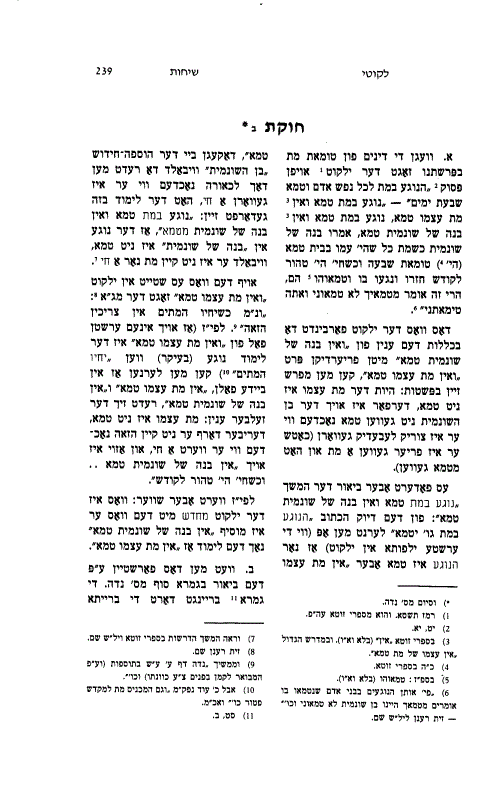
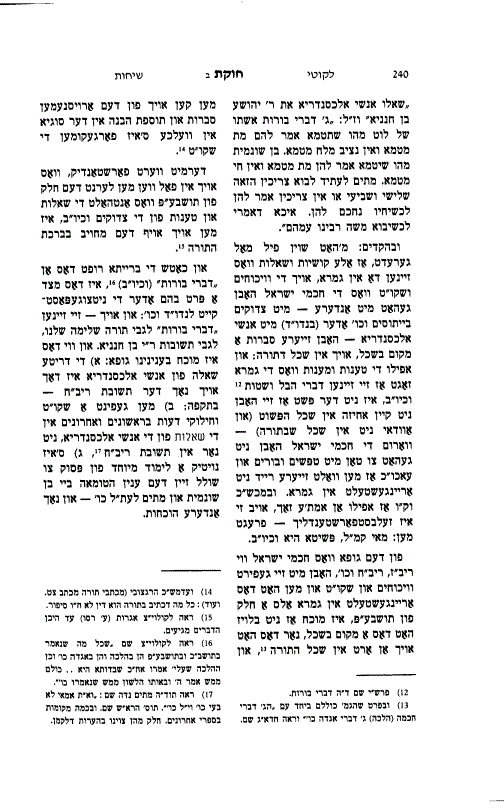
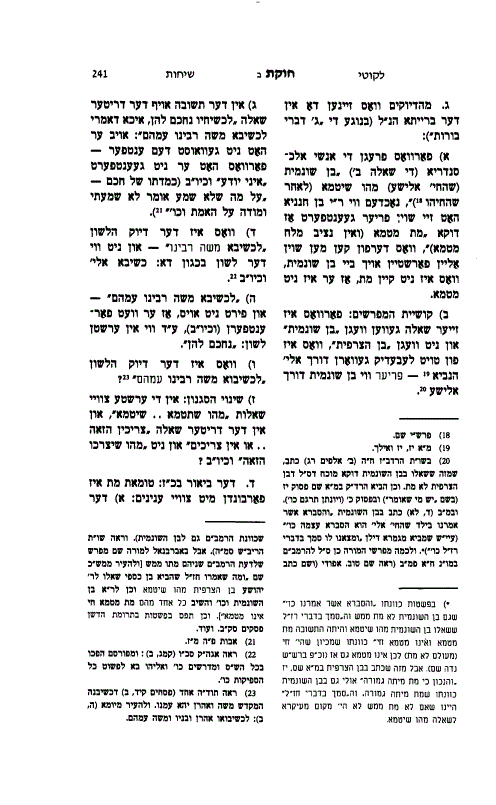
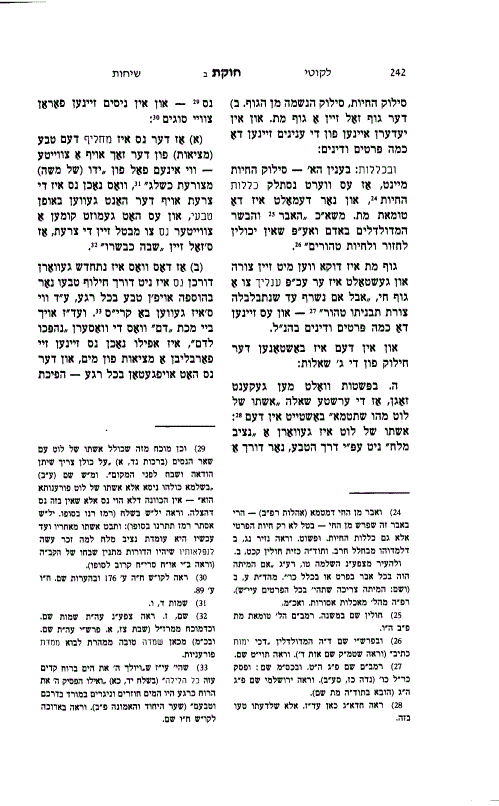
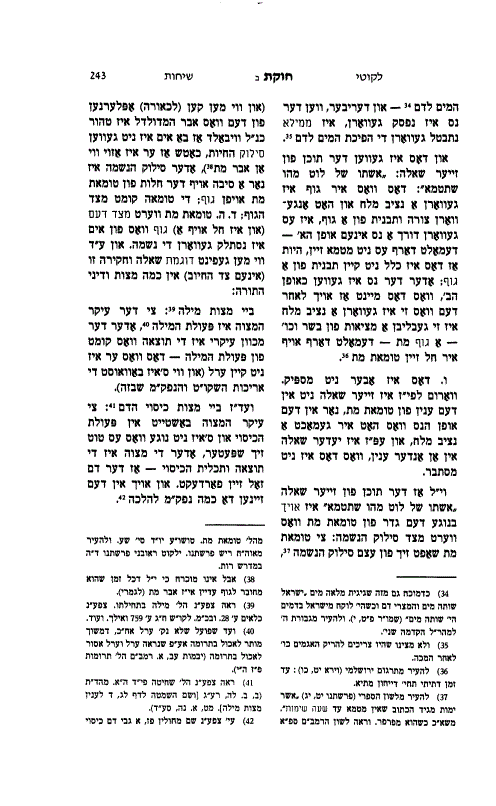
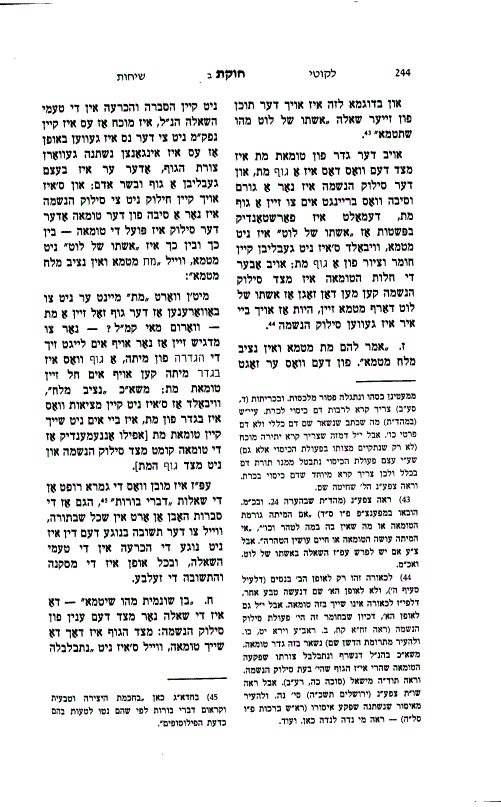
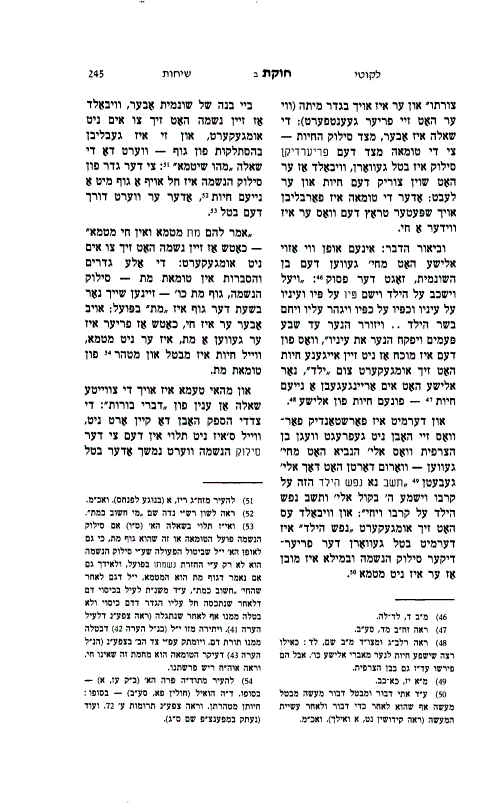
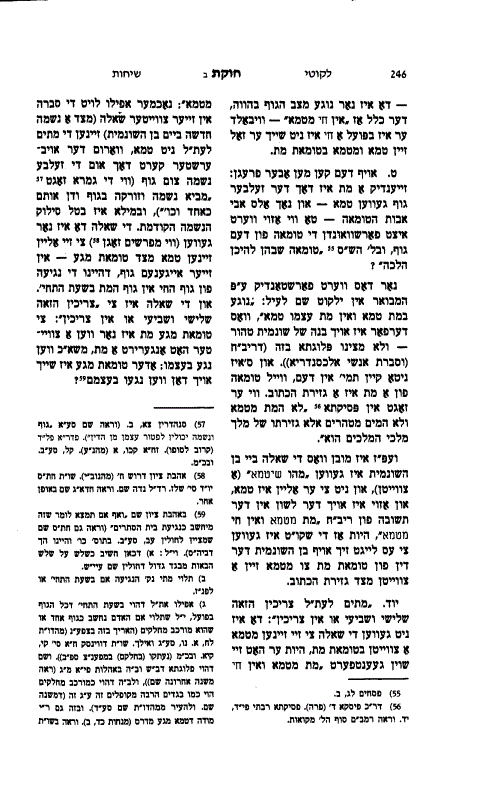
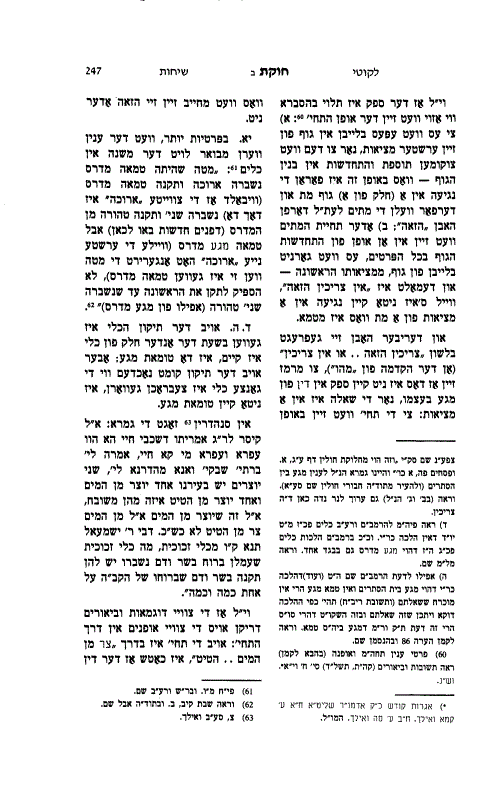
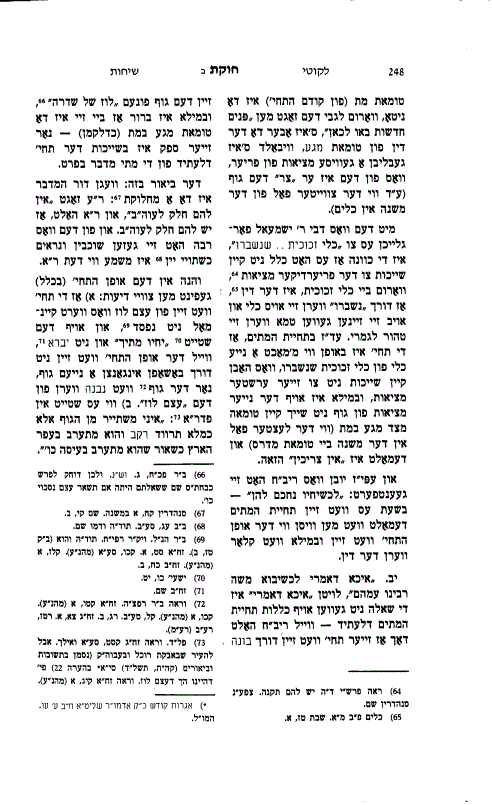
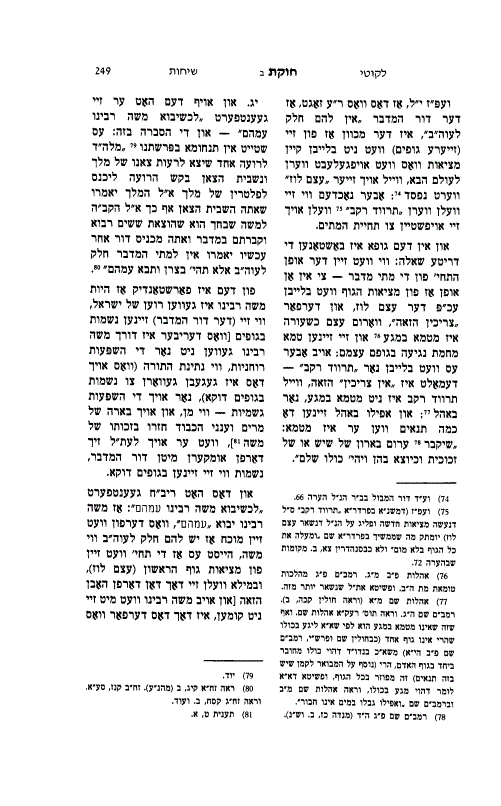
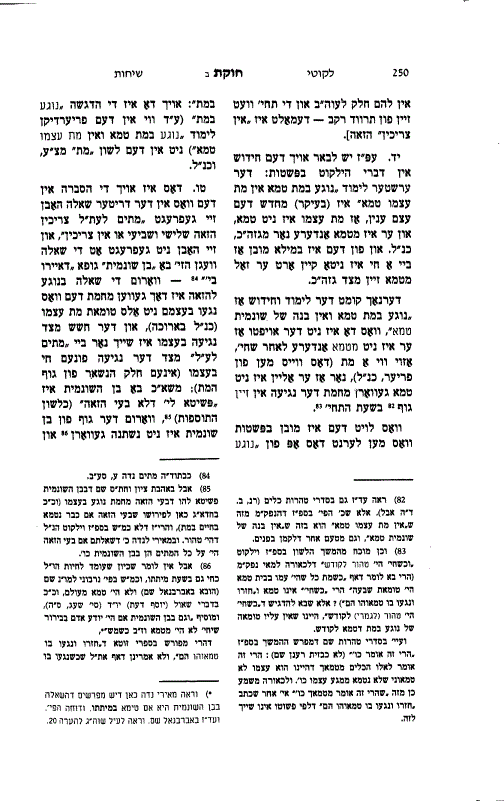
At the end of Tractate Niddah (69b and onward), it is related:
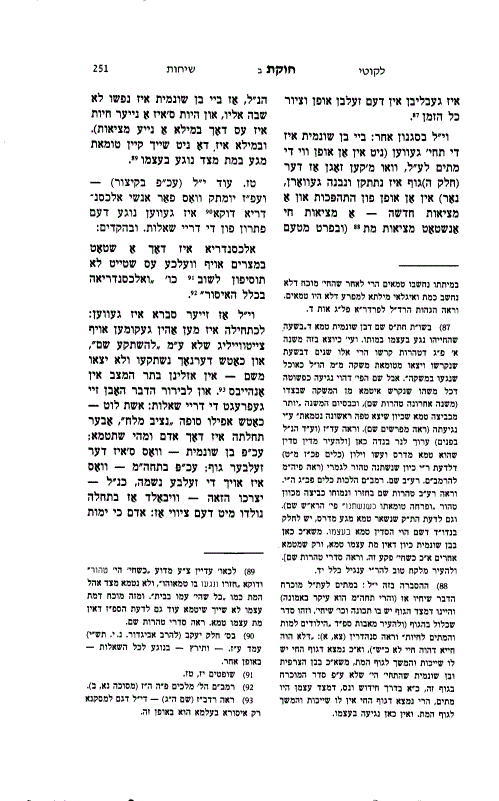
“The people of Alexandria asked Rabbi Yehoshua ben Chananyah three foolish questions. They asked: Is Lot’s wife susceptible to impurity? He answered: A corpse imparts impurity, but a pillar of salt does not impart impurity.
They asked: Does the son of the Shunammite impart impurity? He answered: A corpse imparts impurity, but a living person does not impart impurity.
They asked: Will the dead in the future resurrection require sprinkling on the third and seventh days, or will they not require it? He answered: When they come, we will become wise concerning them. Others say: When Moshe Rabbeinu comes with them.”
It is clear that these “foolish questions” have some intellectual basis. They are called foolish either because of a particular flaw in the reasoning or because such arguments do not properly apply to this subject. Relative to the completeness of Torah wisdom, they are considered “foolish.”
Several points require explanation:
Why did they ask about the son of the Shunammite after Rabbi Yehoshua had already answered that “a corpse imparts impurity”? The son of the Shunammite was alive, so it would seem obvious that he does not impart impurity.
Why did they ask specifically about the son revived by Elisha rather than the son of the widow of Tzarfas who was revived by Eliyahu?
Why did Rabbi Yehoshua answer, “When they come, we will become wise concerning them,” rather than simply saying, “I do not know”?
And what is implied by the wording, “When Moshe Rabbeinu comes with them”?
The explanation is as follows:
The impurity of a corpse involves two elements:
- The departure of the soul from the body—the removal of the life-force. This is why a limb partially detached from a living person remains pure.
- The existence of a dead body. If a body is burned to the point that its form is completely destroyed, it no longer conveys corpse impurity.
This explains their first question regarding Lot’s wife.
They were asking whether corpse impurity results primarily from the departure of the soul, in which case she should be impure, or whether the departure of the soul merely causes the body to become impure, requiring the continued existence of a body. Since she became a pillar of salt, perhaps there is no body that can contract or convey impurity.
This resembles a broader type of Torah inquiry—for example, regarding the mitzvah of covering the blood, whether the mitzvah consists in the act of covering or in the resulting state that the blood be covered.
Nevertheless, the question is considered foolish because a pillar of salt is simply outside the category of corpse impurity altogether.
Regarding the son of the Shunammite, the question concerned only the aspect of the departed soul, since the body certainly remained intact.
Elisha revived him through a new life-force, as indicated by the verse: “He placed his mouth upon his mouth…” and “the child opened his eyes.” Elisha infused him with a new vitality from his own life-force.
The question, therefore, was whether this new life-force removes the impurity caused by the departure of the previous life-force.
This is why they asked specifically about the son of the Shunammite and not the son revived by Eliyahu. In the latter case, Eliyahu prayed, “Let the soul of this child return to him,” indicating that the original soul returned. Since the original departure was reversed, it is obvious that he does not impart impurity.
Rabbi Yehoshua replied: “A corpse imparts impurity, but a living person does not.” Once the body is alive, it no longer belongs to the category of corpse impurity.
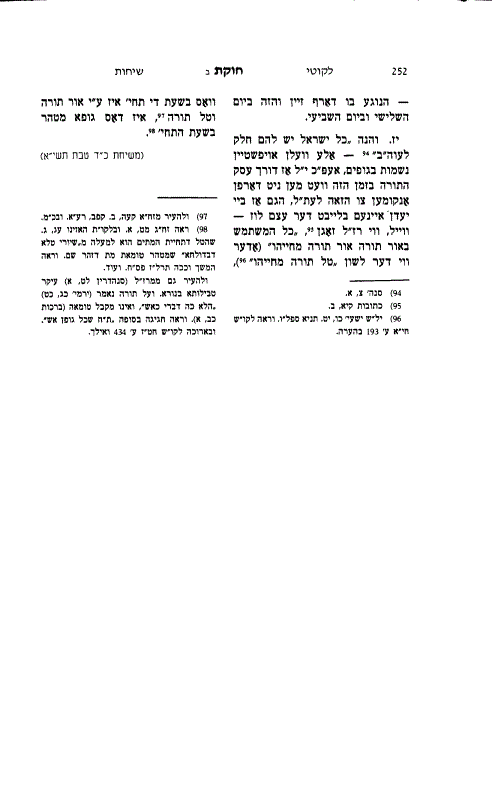
Their third question concerned the resurrection of the dead.
At this point they were no longer asking about corpse impurity itself, since Rabbi Yehoshua had already established that “a living person does not impart impurity.” Rather, they were asking whether those resurrected would require sprinkling because of impurity contracted through contact with a corpse, since the resurrected body had previously been in contact with its own dead state.
This depends upon the nature of resurrection itself.
Will the resurrected body be built from what remains of the original body, meaning that the original body continues and is expanded? Or will the original body completely cease, with resurrection creating an entirely new reality? If the latter, there would be no need for purification.
More specifically, the Mishnah teaches that when a vessel becomes completely broken, its previous impurity is entirely removed. Similarly, the Gemara offers two models for resurrection:
One compares resurrection to a vessel fashioned from clay again from existing material, implying continuity with the original entity.
The other compares it to glass vessels that are remade after being shattered, suggesting a completely renewed existence.
Depending on which model applies, the question of residual impurity would be answered differently.
Rabbi Yehoshua therefore replied: “When they come, we will become wise concerning them.” Only once resurrection occurs will it become clear in what manner it takes place.
According to the alternate version, the question specifically concerned the generation of the wilderness.
There is a dispute between Rabbi Akiva and Rabbi Eliezer regarding whether the generation of the wilderness has a share in the World to Come.
One may explain Rabbi Akiva’s view to mean that they will indeed rise at the resurrection, but nothing of their original bodies will remain; their resurrection will be a completely new creation.
Accordingly, the Alexandrians were asking specifically about the form that the resurrection of the wilderness generation would take.
Rabbi Yehoshua answered: “When Moshe Rabbeinu comes with them.”
A Midrash states that Hashem told Moshe that he would remain in the wilderness together with his generation. From this it follows that in the future Moshe will come with them. The phrase “with them” implies continuity with their previous existence. If entirely new bodies were created, it would not be accurate to describe Moshe as coming “with them.”
These three questions were asked specifically by the people of Alexandria because their own history reflected a similar issue. They originally came to Egypt with permission and without intending to settle permanently, yet eventually became established there.
Their questions therefore revolved around a common theme: whether a present reality—a living body, a resurrected body, or a transformed existence—is considered a continuation of the previous reality or an entirely new entity. This underlying question of continuity and identity connects all three of their inquiries.