
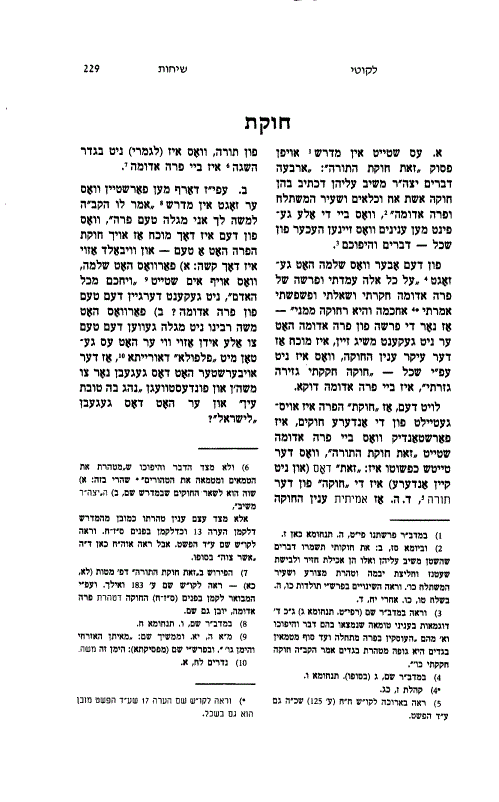
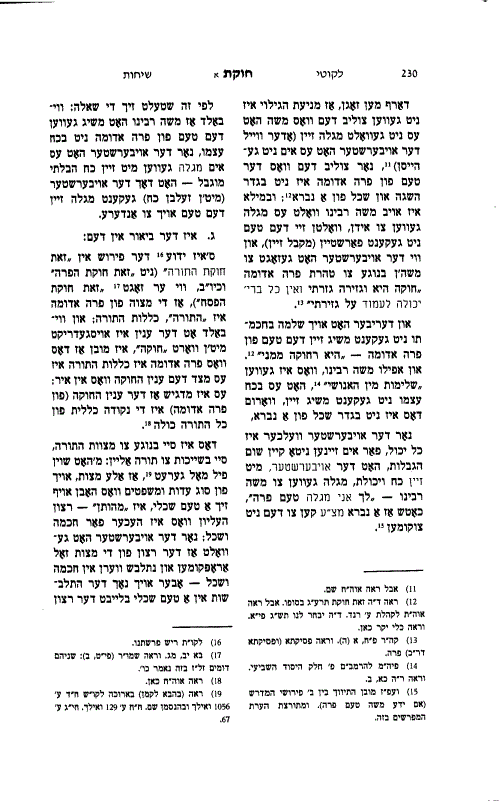
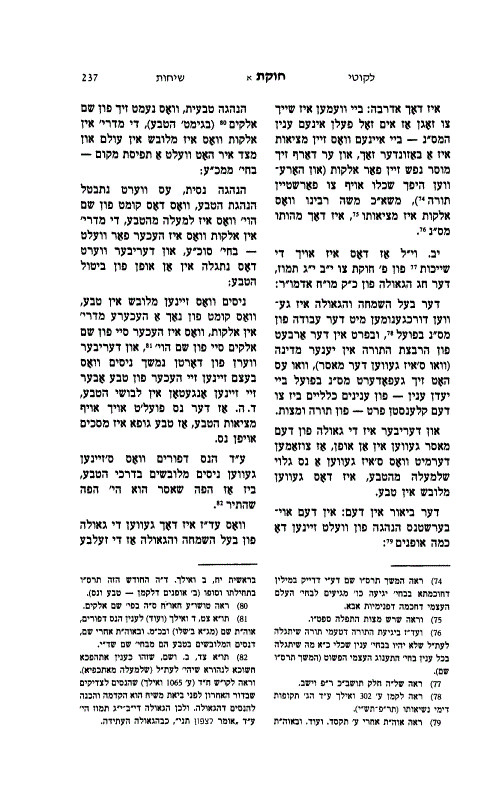
The phrase “This is the statute of the Torah” teaches that, in essence, all of Torah consists of divine statutes (chukim) that transcend human understanding; they have merely been clothed in forms that can be grasped intellectually. Therefore, there is one mitzvah—the Red Heifer—that cannot be fully understood, in order to demonstrate that the essence of all Torah is beyond reason.
For if every mitzvah could be fully comprehended by human intellect, the element of self-sacrifice (mesirus nefesh) would be lacking. Furthermore, a person could become a “scoundrel within the bounds of the Torah,” using his own reasoning to justify conclusions contrary to the Torah’s true intent.
Accordingly, it is difficult to understand the Midrash that states that Hashem told Moshe, “To you I reveal the reason for the Red Heifer.” Seemingly, if Moshe understood its reason, would that not diminish the element of self-sacrifice involved in observing it?
This can be understood by first explaining another Midrash. Moshe could not understand how purification from the impurity of death was possible, even though in some respects the impurity of a metzora is more severe.
The explanation is that as long as there remains a connection between the soul and the body, it is understandable that purification can occur. However, in the case of death, where the soul has departed from the body, it is difficult to comprehend how purification can still be possible.
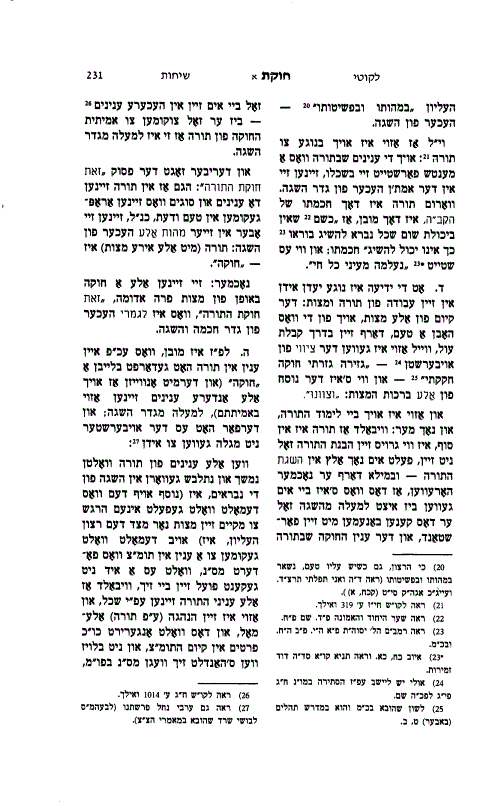
The answer is that purification comes through “the statute of the Torah.” Torah possesses the power to create an eternal imprint within the body, one that remains effective even after the soul has departed. The continued effect of the soul upon the body after separation is itself beyond human understanding, and from this power comes purification.
When the soul’s influence upon the body is merely a revelation or ray of spiritual energy, its effect may cease. But when the connection is rooted in the very essence (etzem), that essence remains present forever, even after the soul has left the body.
This concept was revealed to Moshe because Moshe represents the attribute of Chochmah. Concerning Chochmah it is said, “The inner dimension of Abba (Chochmah) is the inner dimension of Atik,” meaning that Moshe is connected to a level that transcends ordinary comprehension and can therefore grasp truths that are beyond intellect.
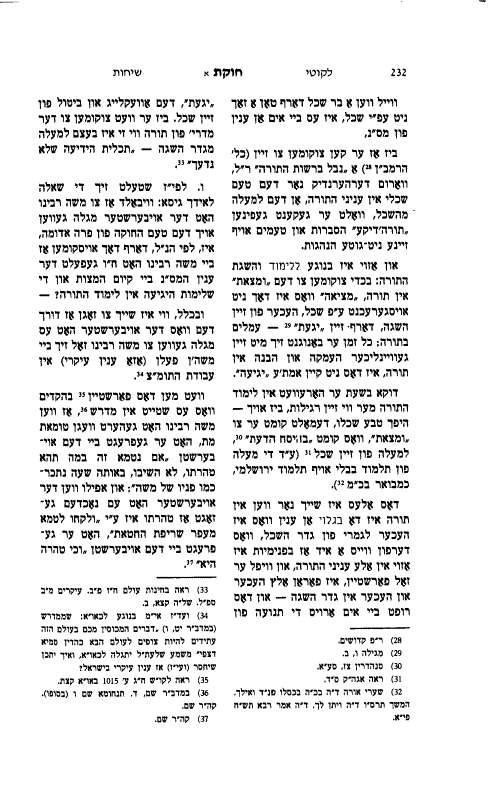
Yet this revelation did not diminish Moshe’s self-sacrifice. On the contrary, Moshe had no independent sense of self. Since he was entirely nullified before G‑d, his very essence was mesirus nefesh. Understanding the concept did not lessen his devotion because his commitment did not stem from personal understanding but from complete self-nullification.
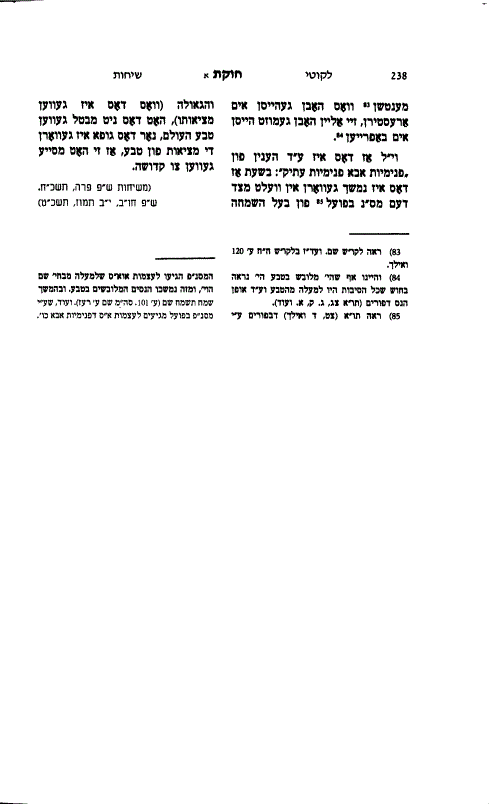
This also explains the connection to Yud-Beis Tammuz. A miracle clothed within nature is even higher than an open miracle that derives from the Divine Name Havayah, because it transforms nature itself into a vehicle for the miracle. As a result, nature itself comes to “agree” with the miraculous event.
This was the nature of the miracle of Yud-Beis Tammuz. It reflected the level of “the inner dimension of Abba is the inner dimension of Atik.” Through the self-sacrifice of the Rebbe Rayatz, the miracle was drawn down into the world in such a way that nature was not abolished. Rather, the natural order itself became an instrument that assisted holiness and redemption.