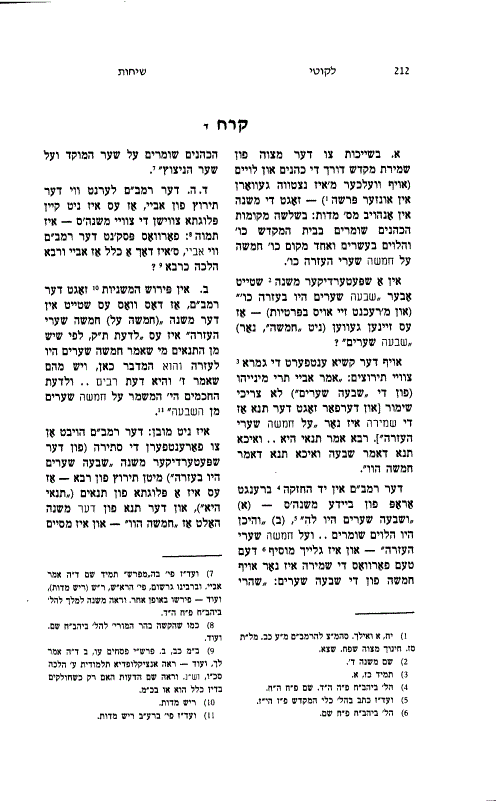
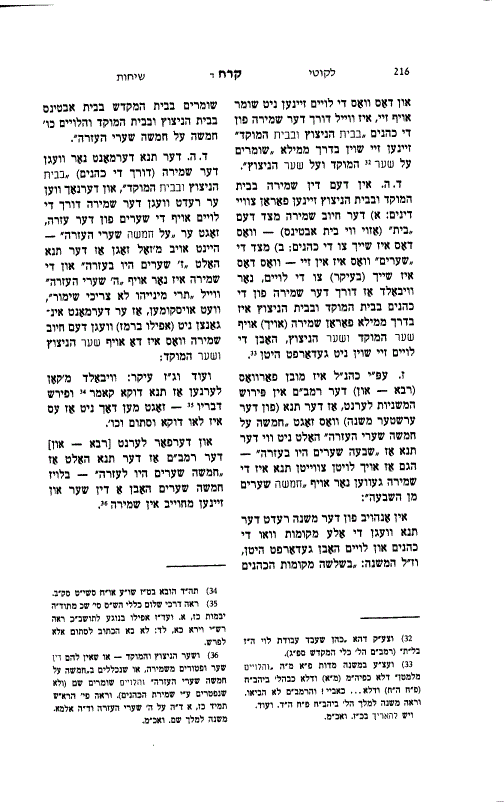
In the Mishnah, it is stated that there were different opinions regarding the number of gates in the Temple courtyard and the guarding of these gates. In our parsha, it is mentioned that Moshe was commanded to appoint the Levites to guard the Mishkan. The Mishnah in Tamid discusses the number of gates and the guarding duties: "In three places the Kohanim guard... and the Levites guard in twenty-one places." This indicates a division of responsibilities between the Kohanim and the Levites.
There is a debate among the Tannaim regarding the number of gates. One opinion states that there were five gates, while another opinion holds that there were seven gates. The Mishnah records that the guarding was specifically on five gates, even according to the opinion that there were seven gates. This is because two of the gates did not require guarding.
Rava explains that there is no actual dispute regarding the number of gates; rather, all agree that there were seven gates, but only five required guarding. This resolves the apparent contradiction in the Mishnah.
The Rambam rules according to this understanding, stating that the guarding was on five gates, even though there were seven gates in total. This aligns with the opinion that there is no disagreement among the Tannaim regarding the number of gates, only regarding the guarding of them.
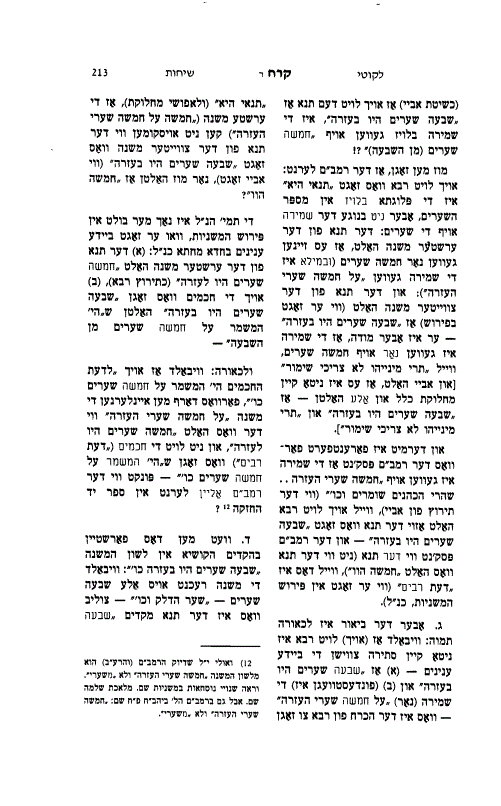
In the commentary on the Mishnah, it is further clarified that the first Mishnah holds that there were five gates, while the second Mishnah states that there were seven gates. However, both agree that the guarding was only on five gates, as two did not require guarding.
This explanation is consistent with the Rambam's ruling, which avoids creating a dispute where none exists. The first Mishnah can be understood in light of the second Mishnah, which states that there were seven gates, but only five required guarding. This is in line with Rava's explanation that two of the gates did not require guarding.
The explanation for this is as follows: Although we find several opinions regarding the number of gates in the courtyard — five, seven, or thirteen — this is not a dispute about the actual number of gates. In reality, regarding how many gates there were (since it is not possible to have a dispute about a factual reality) — all agree that there were thirteen gates, as stated in the Mishnah. The disagreement is about how many of these thirteen gates have the status of a gate: five, seven, or thirteen.
The practical difference between the gates that have the status of a gate and the other gates is relevant to several matters in halacha, including:
(a) Regarding the guarding of the Temple: Only the gates that have the status of a gate require guarding. (b) Regarding entering the Temple: When entering the Temple through gates that do not have the status of a gate, it can be said that it is not considered a proper entry. (c) Regarding mezuzah: If not for the teaching "just as a house is mundane, so too anything that is mundane, excluding those that are sacred," the law would be that only the gates that have the status of a gate would be obligated in mezuzah, as it is written, "And you shall write them on the doorposts of your house and on your gates."
Therefore, the Mishnah precedes with "There were seven gates in the courtyard" to clarify that only these seven gates, and not the others, have the status and law of a gate.
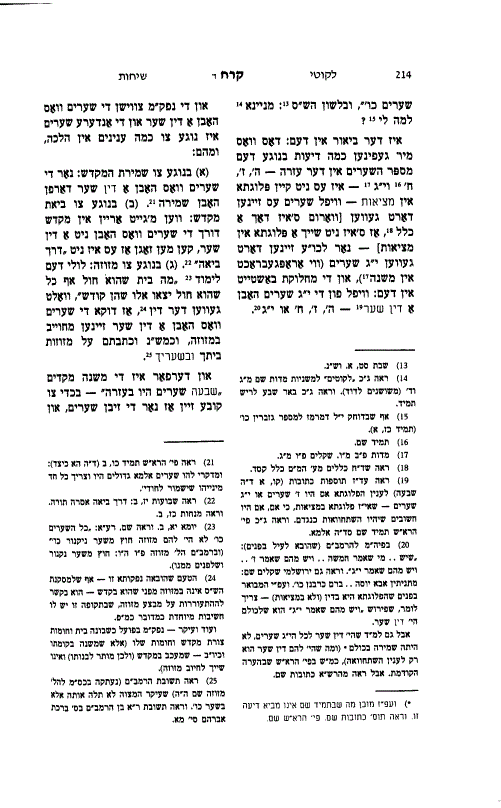
Additionally, it can be said: Just as it is explained regarding the verse "Six cities of refuge shall they be" — until all six are operational as one — so too in our case: with the additional phrase "There were seven gates in the courtyard," the Mishnah hints that all these gates exist in reality, and if the full number of seven gates is not present, the law of a gate requiring guarding does not apply.
According to this, what Rava says, "It is a dispute among the Tannaim," does not mean a dispute about the reality (how many gates there actually were), but rather the dispute is about how many of the gates have the status of a gate.
Thus, the opinion of the first Mishnah, which states that the guarding was only "on five gates of the courtyard," means that in practice there were thirteen gates, but according to its view, only five of the gates had the status of a gate.
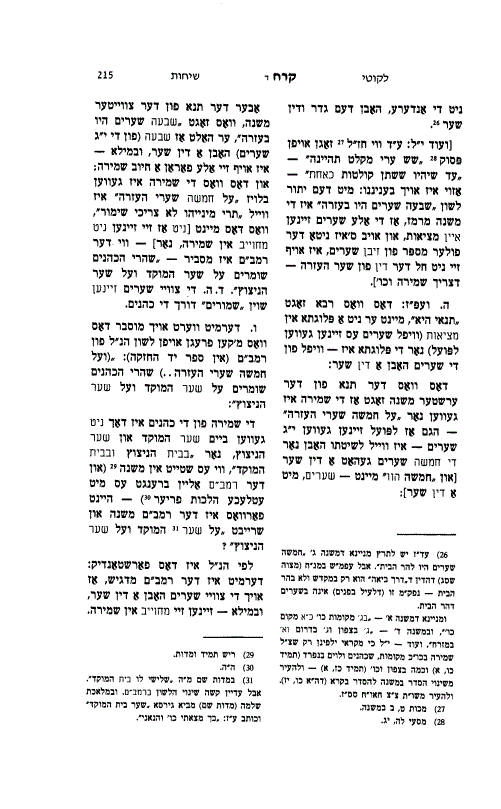
However, the Tanna of the second Mishnah, who says "There were seven gates in the courtyard," holds that seven (of the thirteen gates) have the status of a gate, and therefore all of them are obligated in guarding. The reason the guarding was only "on five gates of the courtyard" is because "two of them do not require guarding," which means [not that they are not obligated in guarding, but] — as the Rambam explains — "for the priests guard the Gate of the Hearth and the Gate of the Spark." That is, these two gates are already "guarded" by the priests.
This also explains what can be questioned about the aforementioned language of the Rambam (in the Mishneh Torah: "(and on five gates of the courtyard...) for the priests guard the Gate of the Hearth and the Gate of the Spark"). The guarding by the priests was indeed at the Gate of the Hearth and the Gate of the Spark, but "in the House of the Spark and in the House of the Hearth," as stated in the Mishnah.
And the fact that the Levites are assigned to guard them is only through the guarding of the priests. In the House of the Spark and the House of the Hearth, they are automatically guarding the Gate of the Hearth and the Gate of the Spark. This means that in the law of guarding in the House of the Hearth and the House of the Spark, there are two aspects: a) the obligation of guarding due to the house itself (as with the House of Avtinas), which pertains to the priests; b) due to the gates, which primarily pertains to the Levites. However, since through the guarding of the priests in the House of the Hearth and the House of the Spark, there is automatically guarding (also) on the Gate of the Hearth and the Gate of the Spark, the Levites did not need to guard them.
Therefore, the Mishnah mentions the guarding by the priests in the House of the Spark and the House of the Hearth, and then when it speaks about the guarding by the Levites on the gates of the courtyard, it says "on five gates of the courtyard." Even if we say that the Tanna holds "there were seven gates in the courtyard" and the guarding is only on "five gates of the courtyard" because "two of them do not require guarding," it would seem that he does not mention at all (even by hint) the obligation of guarding that exists on the Gate of the Spark and the Gate of the Hearth.
Moreover, the main point is that since we can learn that the Tanna specifically said "and explained his words" — we say here that it is not just a general and unspecified statement. Therefore, we learn that the Rambam or the Tanna holds that "there were five gates in the courtyard" — according to all opinions.
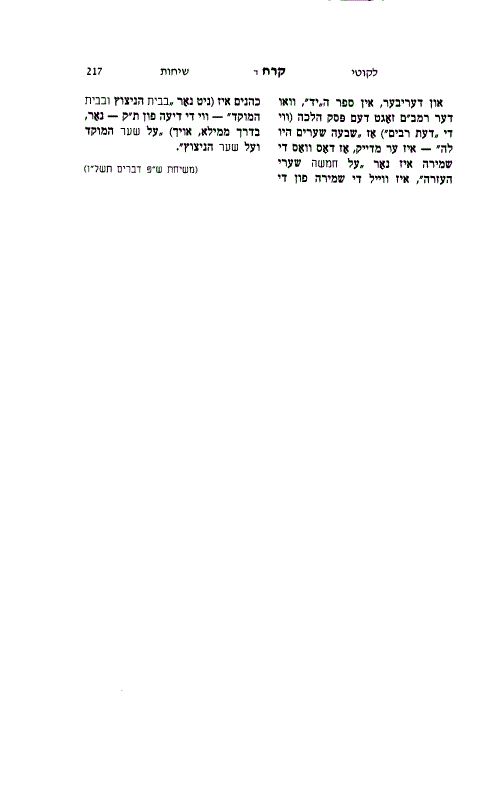
And therefore, in the Mishneh Torah, where the Rambam states the halachic ruling (like the "opinion of the many") that "there were seven gates in the courtyard," he is precise that the guarding is only "on five gates of the courtyard," because the guarding by the priests is not just "in the House of the Spark and the House of the Hearth" — as the opinion of the Tanna — but, automatically, also "on the Gate of the Hearth and the Gate of the Spark."