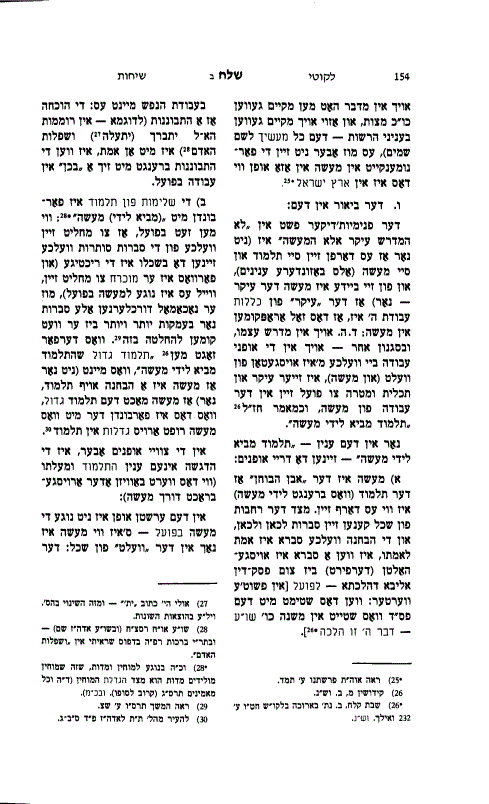
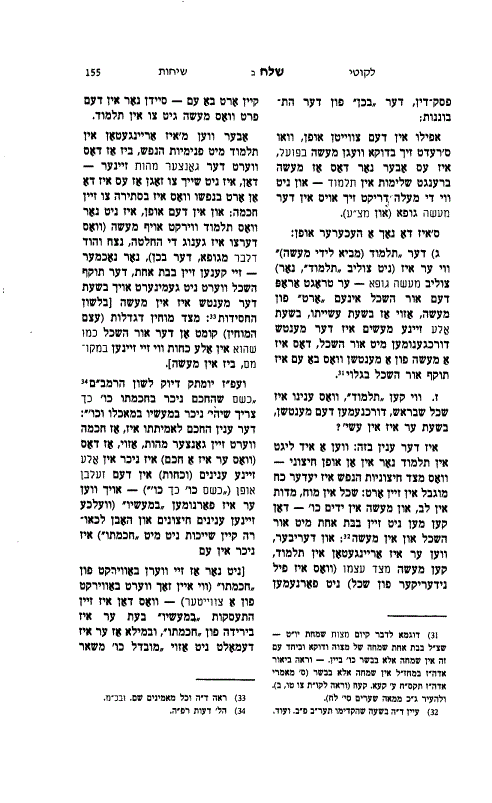
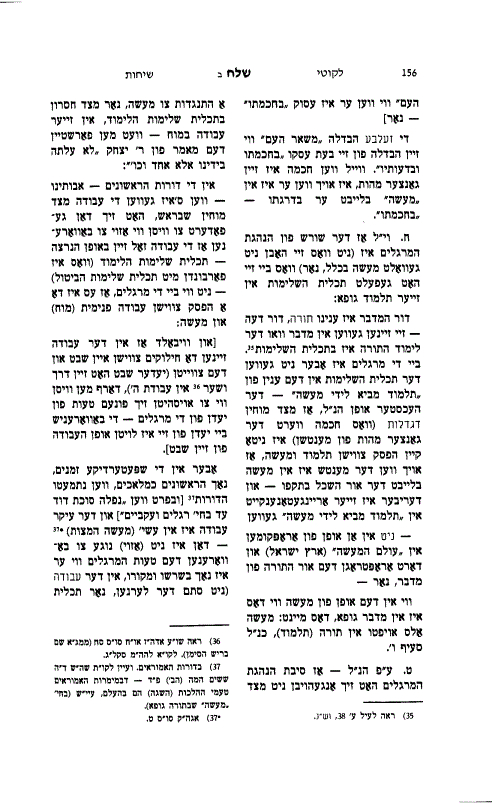
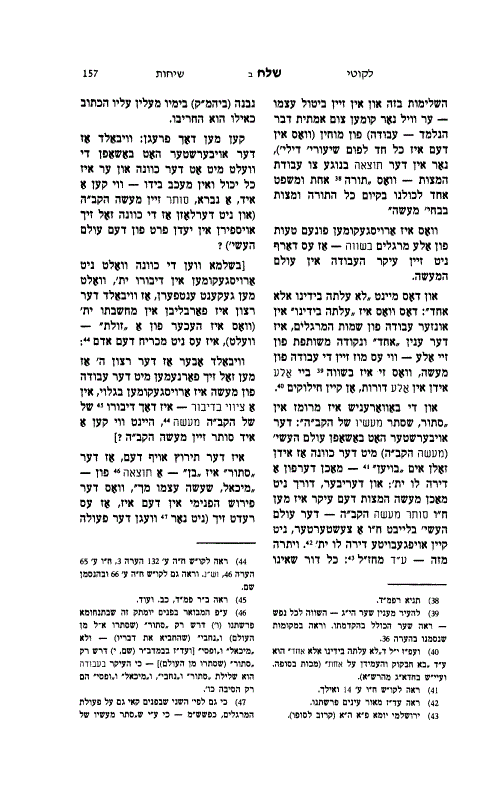
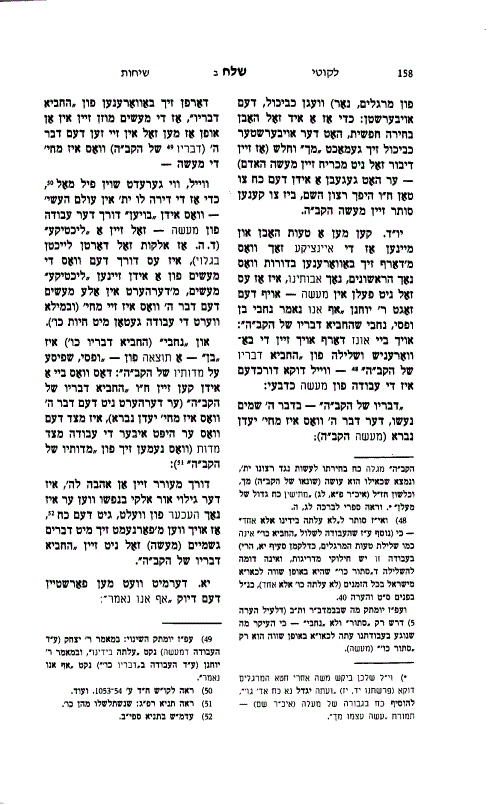
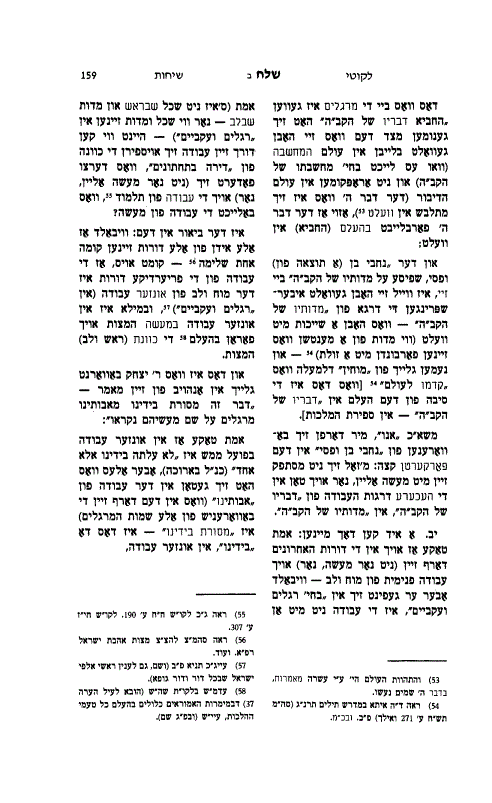

According to Rabbi Yitzchak, “Only one name has come down to us”—even though there are interpretations of all the spies’ names—because only one of them contains a lesson directly relevant to our practical service of G‑d, namely, the importance of actual deed and performance.
Rabbi Yochanan does not disagree. Rather, he adds:
“We too can say...”
meaning that there is another name from which we can derive a lesson for our Divine service. However, it applies in a different way from how it applied to our ancestors. For us, the lesson is that our actions must also contain intellect, feeling, and awareness of “the words of G‑d.”
The Gemara (Sotah 34b) states:
Rabbi Yitzchak said: The spies were named according to their deeds, but only one name has come down to us:
Sethur ben Michael.
Sethur — because he contradicted (satar) the deeds of the Holy One, blessed be He.
Ben Michael — because he made Himself poor (mach).
Rabbi Yochanan said: We too can say:
Nachbi ben Vofsi.
Nachbi — because he concealed the words of the Holy One, blessed be He.
Ben Vofsi — because he stepped over (or disregarded) the attributes of the Holy One, blessed be He.
Explanation
Although there are interpretations for all the names of the spies, Rabbi Yitzchak's point is that only one of them contains the central lesson relevant to our practical service.
Rabbi Yochanan does not argue; he merely adds another lesson that is also relevant, though in a different manner.
The spies themselves understood that action is necessary. However, they viewed action merely as a component of intellectual perfection.
They understood two advantages of action:
- When an idea is translated into action, it confirms and validates the completeness of the understanding.
- Action deepens understanding, because when one must implement an idea in practice, he is forced to think about it more profoundly.
What was lacking, however, was the true meaning of the principle:
“Torah study leads to action.”
As the Sages teach:
“Just as a wise person is recognized by his knowledge, so too he is recognized by his actions.”
When wisdom becomes a person's very essence, the light of that wisdom shines within his actions exactly as it shines within his mind.
The Lesson for Our Generation
The generation of the wilderness was known as the Generation of Knowledge (Dor De'ah). Since their service centered on intellectual and spiritual awareness, they had to be particularly careful not to fall into the spies' error.
Since each tribe served G‑d in its own unique manner, each tribe had a distinct lesson to learn from the spies.
But for us, whose primary service is action, Rabbi Yitzchak says:
“Only one name has come down to us.”
The central lesson for us is the importance of actual performance.
This is hinted at in the name:
“Sethur” — he contradicted the deeds of G‑d.
If one fails to fulfill mitzvos in actual practice, he is, in a sense, contradicting G‑d's deeds—namely, the world of action that G‑d created.
The Gemara continues:
“Ben Michael” — He made Himself poor.
G‑d concealed His power and made Himself, as it were, “poor,” granting human beings free choice. Man can therefore choose either to oppose or to fulfill G‑d's purpose in creation.
Rabbi Yochanan's Additional Lesson
Rabbi Yochanan adds that we must be careful about another point.
Our actions should contain and express:
“the words of G‑d.”
As Scripture says:
“By the word of G‑d the heavens were made.”
Our deeds should be infused with understanding, feeling, awareness, and vitality, so that they become illuminated actions rather than mechanical ones.
One must therefore beware of becoming:
“Ben Vofsi” — one who stepped over His attributes.”
That is, one must not neglect the attributes of love and awe of G‑d that should accompany one's actions.
Rabbi Yochanan specifically says:
“We too can say...”
because this lesson is especially relevant for us, not for the generation of the spies.
Their mistake was that they did not sufficiently value practical action. Our danger is the opposite: to perform actions without enough inner feeling and spiritual awareness.
Conclusion
All Jews together form a single complete organism.
Therefore, although our primary service today is action, we possess:
“a tradition received from our forefathers.”
Our service gains completion and depth through their mode of service as well. We must emphasize practical mitzvah observance, while at the same time filling those actions with understanding, love, awe, and awareness of G‑d, thereby combining the strengths of both generations.
Short Synopsis (≈320 characters)
Rabbi Yitzchak highlights one spy's name because the main lesson for us is the primacy of actual mitzvah performance. Rabbi Yochanan adds that action must also be infused with G‑dliness, understanding, love, and awe. Our task is to unite practical deed with inner spiritual vitality.