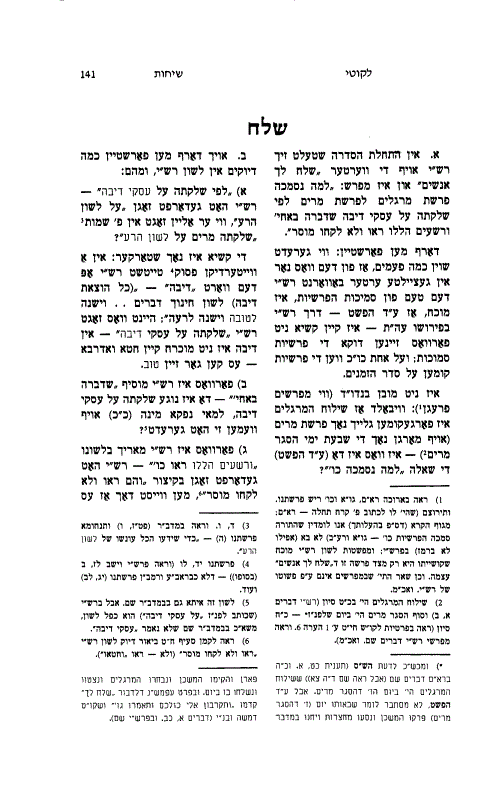
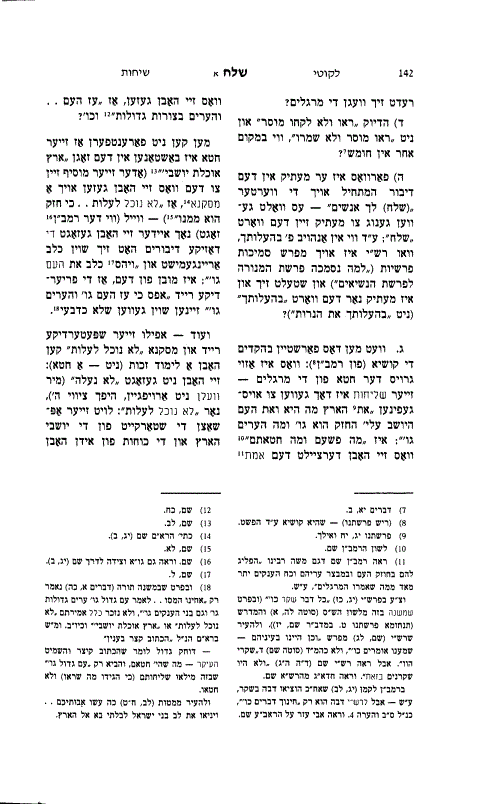
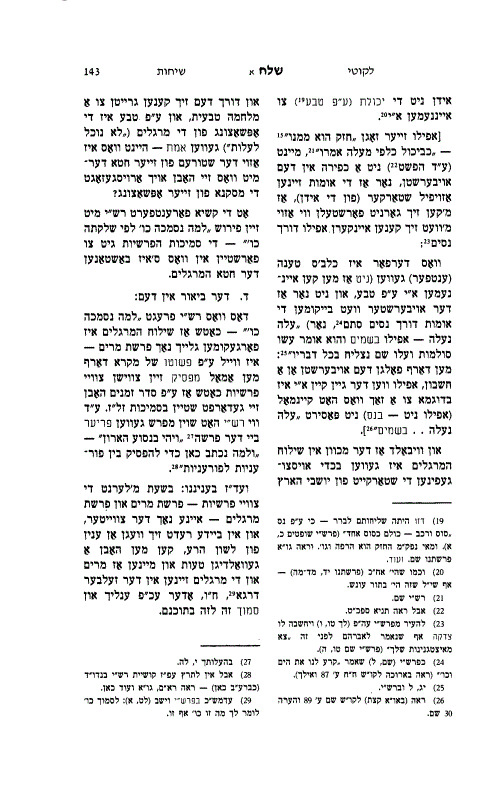
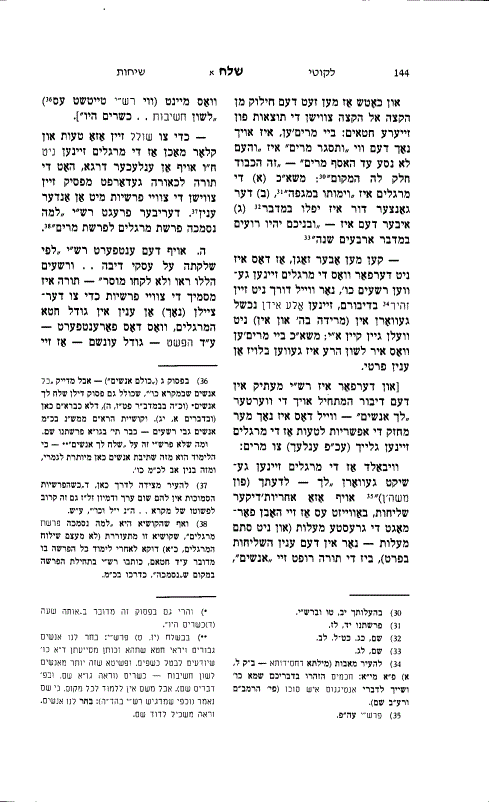
On the simple level, there is reason not to place the section of the spies immediately after the section of Miriam (even though this is the chronological order of events), lest we think that Miriam’s sin was similar to the sin of the spies. Therefore, Rashi asks:
“Why is the section of the spies placed next to the section of Miriam?”
Rashi (13:2) comments:
“Why is the section of the spies placed next to the section of Miriam? Because she was punished on account of slander, and these wicked people saw it and did not take a lesson from it.”
At first glance, this is difficult to understand. On the simple level of Scripture, there seems to be no problem with these sections appearing consecutively. Why does Rashi ask, “Why is it placed next to it?” Especially since this is the actual chronological order in which the events occurred.
Explanation
The explanation is that there is indeed a logical reason why these sections should not have been placed together. If they were juxtaposed, one might mistakenly assume that Miriam’s sin was comparable to that of the spies.
Therefore, Rashi asks:
“Why is the section of the spies placed next to the section of Miriam?”
His answer is that the Torah intentionally places them together in order to emphasize the severity of the spies’ sin:
“They saw and did not take a lesson.”
To understand this, we must first note that the spies’ primary sin was not merely that they said:
“The people are strong...”
Rather, their fault was their excessive and prolonged negative speech—iskei dibah (“engaging in slander”). The emphasis is on the very act of spreading and elaborating upon the negative report, not merely on the specific content of what they said.
Similarly, Miriam’s mistake was that she spoke at length about Moses instead of addressing the matter privately and discreetly.
The spies should have learned from her experience.
“They Saw and Did Not Learn”
The spies became afraid of the inhabitants of the land only after they actually saw their strength.
Although they had previously heard about the might of those nations, hearing is not comparable to seeing. As the saying goes:
“Hearing is not like seeing.”
Therefore, Rashi carefully emphasizes:
“They saw and did not take a lesson.”
Just as their fear was based on actual sight, the lesson from Miriam was likewise something they had personally witnessed. Since they had seen her punishment with their own eyes, they should certainly have learned from it and avoided repeating a similar mistake.
Short Synopsis (≈250 characters)
Rashi asks why the spies’ story follows Miriam’s, even though it is chronological. The juxtaposition teaches the gravity of their sin: Miriam was punished for slander, and the spies saw this yet failed to learn. Their error was not merely what they said, but their spreading of negative speech.