
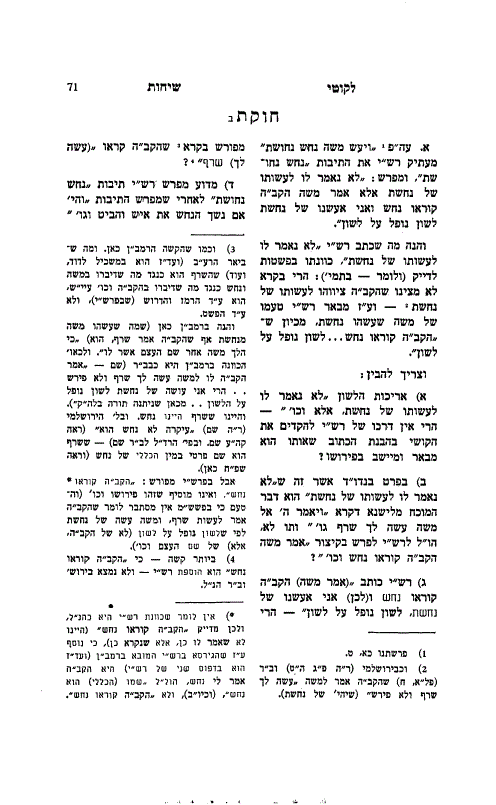
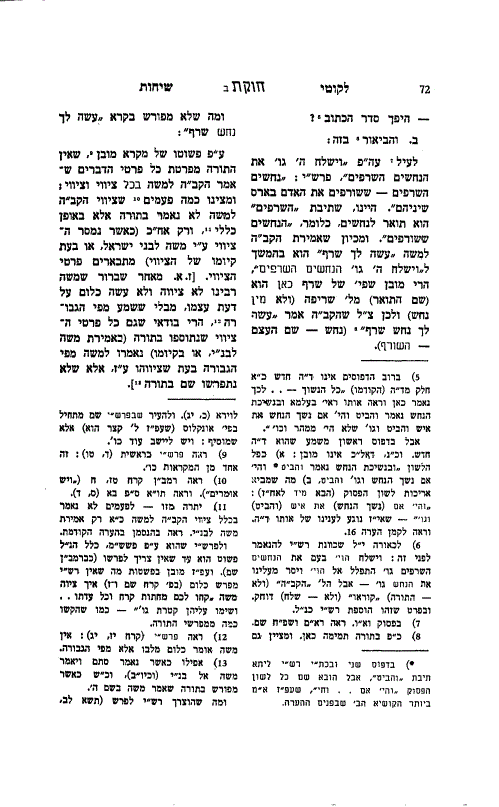
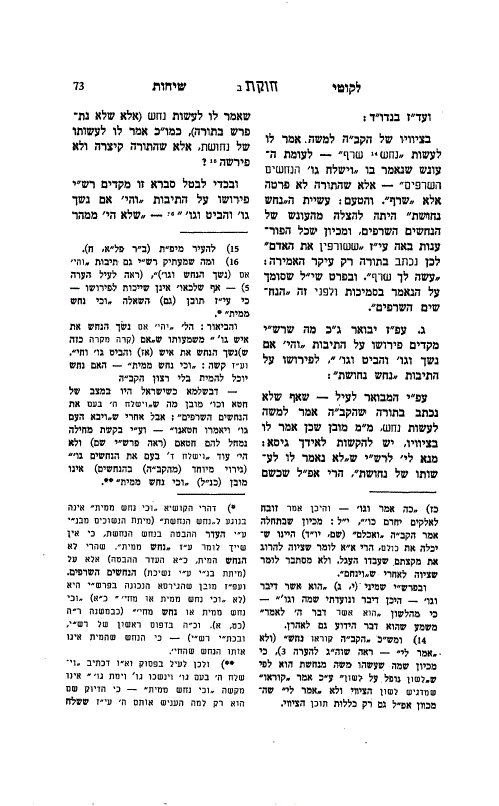
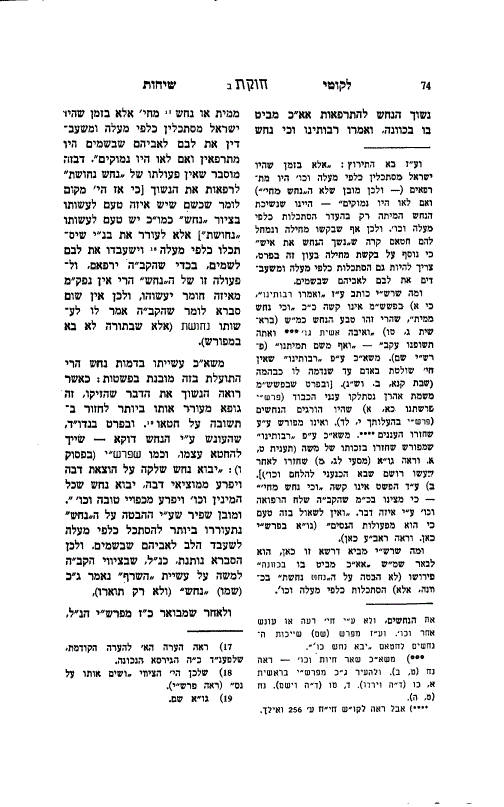
Rashi comments on the verse (Bamidbar 21:9):
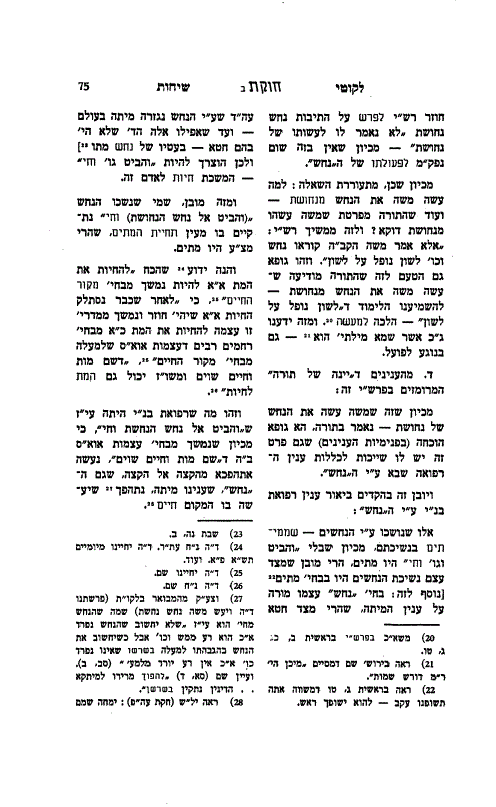
“A copper serpent”—“He was not told to make it of copper. Rather, Moshe said: ‘The Holy One calls it a serpent, and I will make it of copper (nechoshes), a word resembling nachash (serpent).’”
This requires explanation. What does Rashi mean when he says, “The Holy One calls it a serpent”? The verse records only that G‑d told Moshe, “Make for yourself a fiery serpent (saraf),” and does not mention the word nachash (serpent).
The explanation is that this verse follows directly after the verse:
“And G‑d sent among the people the fiery serpents (han’nechashim haserafim).”
Since the command is a continuation of that context, it is reasonable to assume that G‑d actually referred to it as a “fiery serpent” (nachash saraf), but the Torah records only the primary term, “saraf.”
However, if so, how do we know that G‑d did not also instruct Moshe to make it specifically from copper, with the Torah simply omitting that detail?
This can be understood by first noting that Rashi precedes his explanation of “copper serpent” with his famous comment:
“Could a serpent kill or give life? Rather, when Israel looked upward and subjected their hearts to their Father in Heaven, they were healed.”
Rashi places this explanation first because it clarifies that the serpent itself possessed no independent power. Its function was merely to arouse the Jewish people to repentance and to direct their hearts toward Heaven.
If so, the material from which the serpent was made was entirely irrelevant to its purpose. Therefore, it is unlikely that G‑d would have specified what material should be used. Accordingly, Rashi explains that Moshe independently chose copper because “it is a play on words”—nachash and nechoshes.
The Inner Dimension of Torah
The serpent represents the concept of death, as reflected in the statement of the Sages that certain individuals died only because of “the counsel of the serpent.”
Copper (nechoshes) alludes to a spiritual level capable of descending into and becoming associated with the realm of the kelipos (forces of concealment and impurity). This itself is the reason that nechoshes is linguistically related to nachash.
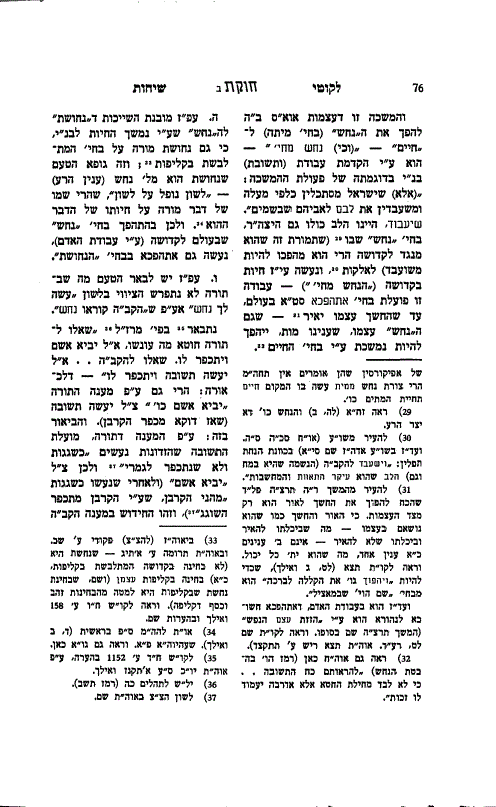
The Copper Serpent therefore represents the transformation of death itself into life. It alludes to the idea of Techiyas HaMeisim (the Resurrection of the Dead), which is not merely a return to ordinary life but the revelation of a life-force higher than life as we know it.
This is the meaning of the verse:
“And he shall live.”
A completely new vitality is drawn into that which had been associated with death and the serpent.
Thus, the Copper Serpent symbolizes the ultimate is’hapcha—the transformation of death into life—through the power of the Infinite One, the very Source of Life.
Based on this, we can also understand why the Torah does not explicitly record a command to make a serpent, mentioning only a “fiery serpent.” Although, as Rashi says, “the Holy One called it a serpent,” the Torah itself does not emphasize that aspect.
The Torah states:
“Let him bring a guilt-offering and he will be atoned for.”
Within the framework of Torah, a sacrifice can reduce deliberate sins to the level of inadvertent transgressions, and the guilt-offering atones for an inadvertent sin. However, from the perspective of Torah alone, complete transformation of the sin is not possible.
It is specifically G‑d, Who transcends Torah, Who declares:
“Let him repent.”
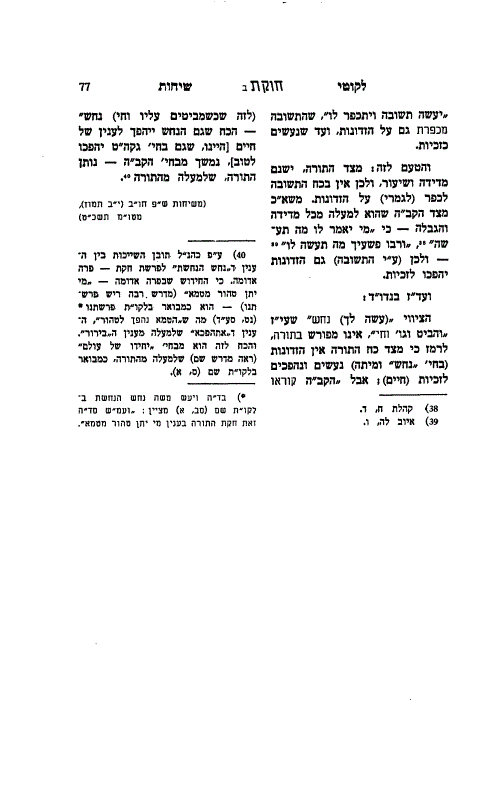
Through repentance, an absolute transformation can occur—not merely forgiveness, but a complete reversal in which even deliberate sins are transformed into merits.
The Copper Serpent therefore symbolizes a power that comes from beyond the ordinary framework of Torah: the power of complete transformation, turning death into life, impurity into holiness, and even sins into merits through the Infinite Divine Source.