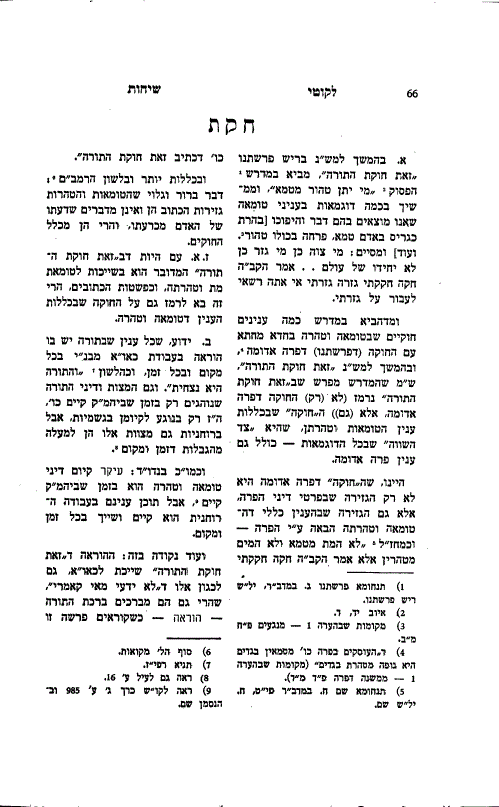
The statutes (chukim) of the Torah are beyond human reason and understanding, as the Rambam writes:
“It is clear that the laws of impurity and purity are decrees of Scripture…”
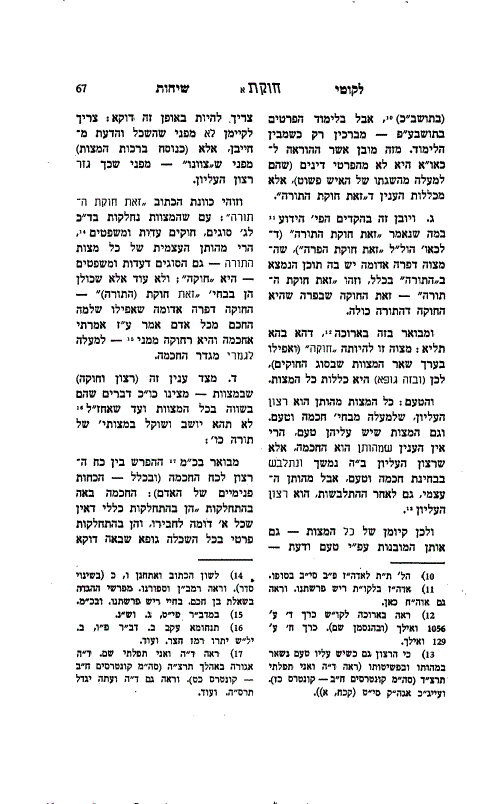
In truth, all the statutes of the Torah are expressions of Divine will that transcend reason and understanding. Indeed, even those mitzvos that have been clothed in rational explanations are, at their essence, manifestations of G‑d’s supra-rational will.
The difference between intellect and will is that intellect operates through analysis and differentiation. Its nature is to divide a subject into many details and distinctions.
Will, by contrast, is fundamentally one unified desire. Therefore, if even a single detail is lacking in the fulfillment of that will, the deficiency affects the entirety of the will.
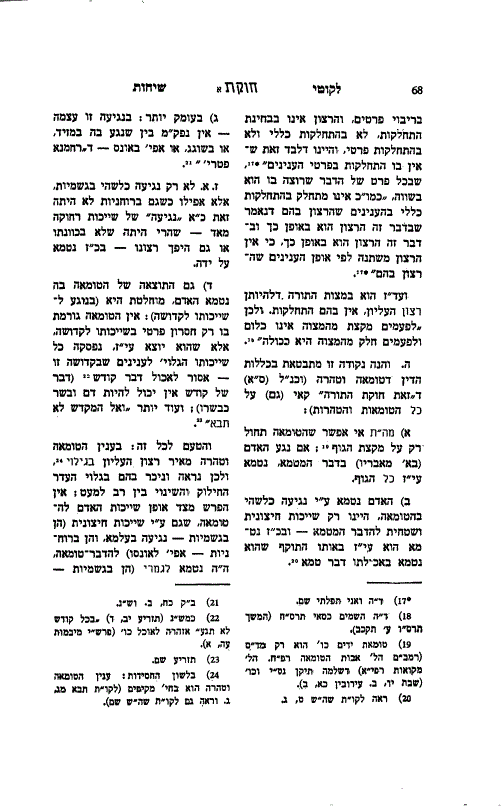
This concept is expressed in several laws relating to ritual impurity from a corpse (tumas meis):
- According to Torah law, if even one part of a person’s body becomes impure, the entire person becomes impure.
- There is no distinction between touching impurity externally and ingesting it internally. In both cases the result is the same state of impurity.
- There is no distinction between accidental and intentional impurity. The state of impurity exists regardless of intent.
- The consequence is absolute: a person who is impure cannot partake of sacred offerings at all until purification is completed.
These laws reflect the nature of Divine will. Since G‑d’s will is one indivisible whole, a deficiency in even one aspect affects the entire state.
Practical Lesson
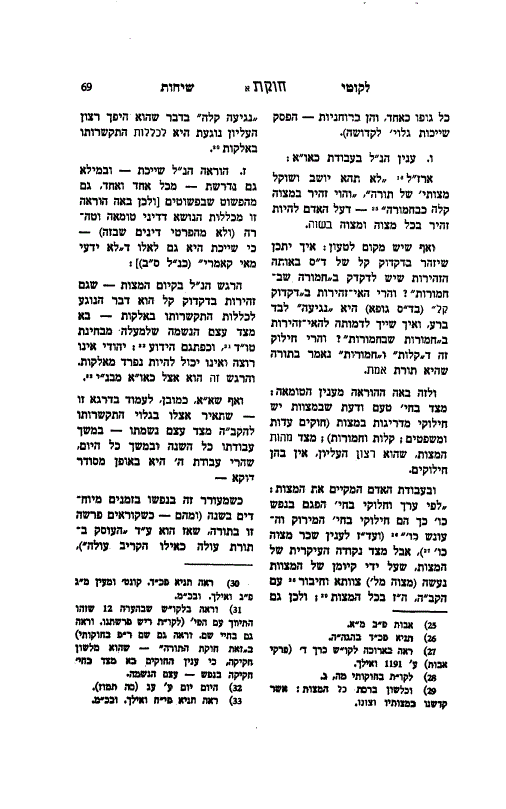
A person must be careful not only with major mitzvos, but also with what may appear to be a minor mitzvah or merely an enhancement (hiddur mitzvah).
From the perspective of human intellect, one detail may seem insignificant compared to another. But from the perspective of the Divine will, every detail is part of the same unified desire. Therefore, great care must be taken with every aspect of Torah and mitzvos, because each one expresses the Supreme Will (Ratzon HaElyon).