Introduction
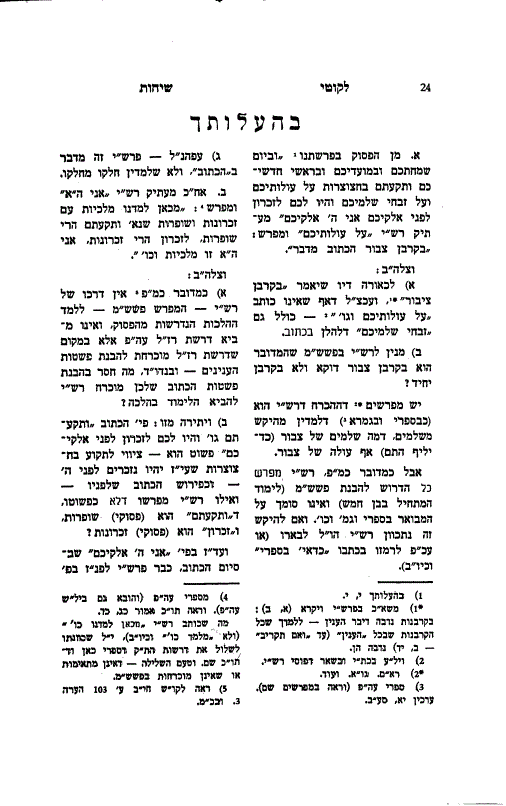
In this study, we will be learning the first sicha on Parshas Baalosecha from Likkutei Sichos, volume 13. This is a Rashi-focused sicha, centered on the verses at the end of Revi'i in the parsha. The Torah there discusses the special trumpets—the chatzotzros—that were made and how they were used to gather the people at various times.
One of the verses, specifically verse 9, describes that when there is a war against an enemy, the chatzotzros are blown as part of the response. The Torah promises that through this act, Hashem will remember us and grant salvation. Then, in verse 10, it continues: "On your days of rejoicing, on your festivals, and on your Rosh Chodesh," you are also to blow these trumpets. The verse specifies that this is done when bringing the korban olah and korban shlamim—offerings brought in the Temple—and concludes by saying this will serve as a reminder before Hashem: "I am Hashem your God."
The Rebbe focuses on Rashi's commentary to this last verse—verse 10—where Rashi addresses two specific phrases from the verse. The sicha will analyze both of these comments in detail. The Rebbe raises questions about Rashi’s wording and approach, particularly regarding what exactly is meant by "the day of your rejoicing." While it seems clear that Yom Tov (festivals) and Rosh Chodesh are included, what does "the day of your rejoicing" refer to?
The Rebbe points out that understanding this phrase is actually central to why Rashi comments as he does here. There is also a reference to the Sifri—a classic midrashic source—which interprets "the day of your rejoicing" as referring to Shabbos. However, the Rebbe notes that according to peshat—the straightforward meaning of the text—and especially in Rashi’s approach to peshuto shel mikra, Rashi would not interpret it this way.
With these questions and themes in mind, we will proceed to examine Rashi’s commentary inside and see how the Rebbe unpacks his approach.
Saif Aleph
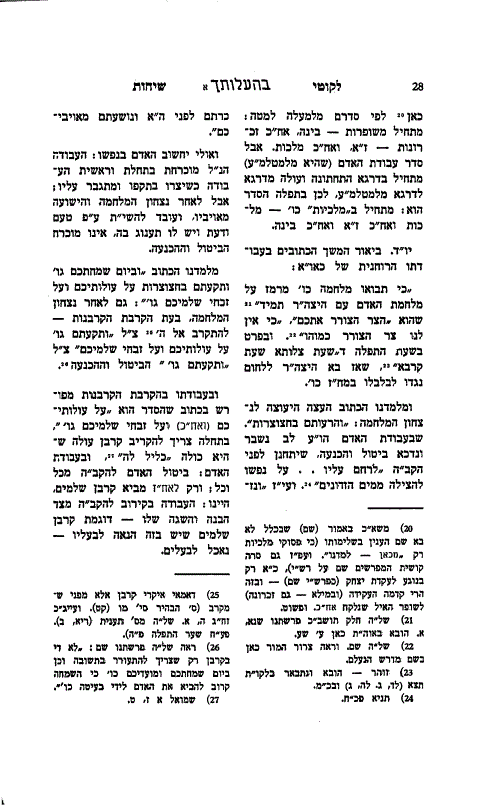
The Rebbe begins by focusing on the verse in our parsha that discusses blowing the trumpets—the chatzotzros—on days of joy, festivals, and Rosh Chodesh, specifically when bringing communal offerings such as the korban olah and zivchei shlamim. The Torah says this should serve as a remembrance before Hashem: "Ani Hashem Elokeichem." Rashi comments on the phrase "al oloteichem," explaining that this verse refers to communal sacrifices—korban tzibur.
The Rebbe raises a question about Rashi's wording. Why does Rashi say, "this verse is talking about a communal offering"? Would it not have been enough for Rashi to simply state "korban tzibur"? What is added by saying that the whole verse is speaking about communal offerings?
Furthermore, perhaps only "al oloteichem" refers to communal offerings, but what about "zivchei shlomeichem"? Maybe those could be individual offerings. The Rebbe explains that since both are mentioned in the same verse, and "zivchei shlomeichem" comes after "al oloteichem," it is included as part of the same context. Therefore, both refer to communal offerings.
This leads to another question: why would one think otherwise? Why does Rashi need to emphasize that the entire verse is about korban tzibur? There must be something deeper in Rashi's use of the phrase "hakosuv medaber"—"the verse is speaking about." The Rebbe suggests that this wording will help us understand how we know that "beyom simchatchem"—on your days of rejoicing—refers specifically to communal offerings.
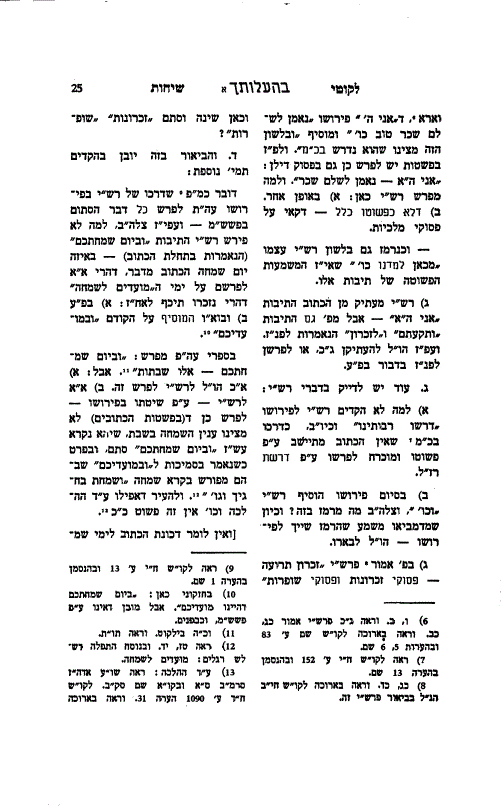
The Rebbe then asks: how does Rashi know, on the simple level of peshat, that the verse refers only to communal offerings and not individual ones? Perhaps even an individual who brings an offering on Yom Tov or Rosh Chodesh would require trumpet blasts. What in the text indicates otherwise?
Some commentators suggest that Rashi's proof comes from a comparison made in Sifri and Gemara—a hakesh, or textual juxtaposition, between shlamim and olah. In those sources, we learn that shlamim refers to communal offerings; since olah appears next to it, it too must be communal. However, the Rebbe points out that this approach does not fit with Rashi's method.
The Rebbe emphasizes that Rashi always explains what is necessary for understanding the simple meaning of the text—peshat. This is especially important because Chumash study begins at age five; everything must make sense on a child's level. Therefore, Rashi does not rely on explanations found only in Sifri or Gemara unless he explicitly references them.
If Rashi intended us to learn from this comparison (hakesh) between shlamim and olah, he would have mentioned it or at least hinted at it by writing something like "as we find in Sifri." Since he does not do so here, we cannot say this is his intent.
This means that when Rashi writes "hakosuv medaber," he is not deriving one part from another (olah from shlamim), but rather stating that the entire verse deals with communal offerings. This differs from other commentators' explanations.
The transcript then notes some uncertainty regarding whether a later point (possibly labeled Gimel) introduces a new question or further refutes previous interpretations. The speaker suggests looking into this further for clarification.
The section concludes by referencing another comment from Rashi at the end of the verse: from here we learn that Malchuyos are recited together with Zichronos and Shofaros. Normally, on Rosh Hashanah during Musaf, we recite these three special blessings. The Rebbe notes that Rashi has discussed this earlier as well and will mention it again later.
Saif Beis
The Rebbe begins by analyzing Rashi’s comment that from the phrase “Ani Hashem Elokeichem,” we learn that Malchiyos must be included together with Zichronos and Shofros. At first glance, this seems to mean that when reciting the verses of Zichronos and Shofros, one must also add a verse of Malchiyos, as derived from the words “Ani Hashem Elokeichem.”
However, the Rebbe points out that he will later explain Rashi in a completely different way than this initial understanding. Still, this is how one might read it at first: that the verse teaches us to include Malchiyos with Zichronos and Shofros.
This leads to several questions. First, it is not Rashi’s usual practice to bring halachic teachings or the laws derived from a verse unless they are necessary for understanding the simple meaning—peshat—of the text. Rashi only cites the teachings of our sages when they are essential for clarifying what the verse means on its most basic level. In our case, what is lacking in the simple reading of the verse that would force Rashi to bring down this halacha about including Malchiyos?
Second, as will be explained later, there are extra words in this verse which Rashi interprets as teaching us a halacha. The Rebbe notes that Rashi says the Torah wrote an extra word here specifically to teach us something practical, which will be clarified further on.
Third—and even more strongly—not only does this teaching seem unnecessary for peshat, but it actually appears to contradict it. The plain meaning of the verse is straightforward: when you blow with the trumpets (chatzotzros), they will serve as a reminder before Hashem. It is a commandment to blow these trumpets so that Hashem will remember you. This matches what is stated in the previous verse: when going out to war, you blow on the trumpets and are remembered before Hashem so He will help you.
Yet Rashi does not explain it simply like this. Instead, he introduces the idea of “verses of Shofros,” even though those words do not appear explicitly in Rashi—rather, it is understood from context. At first glance, we would think Rashi is talking about reciting verses (not blowing actual shofars or trumpets), but really, in context, these verses refer to blowing as a reminder before Hashem.
The same question applies regarding Malchiyos. The phrase “Ani Hashem Elokeichem” at the end of the verse has already been explained by Rashi earlier in Parshas Va’era: “Ani Hashem” means “I am trustworthy to pay reward.” There too, Rashi elaborates that wherever it says “Ani Hashem,” it means God can be trusted to fulfill His word and give reward for mitzvos.
If so, why does Rashi here interpret “Ani Hashem Elokeichem” differently—as referring to reciting verses of Malchiyos? Not only is his explanation different here than elsewhere, but it does not fit at all with the simple meaning of these words.
In fact, Rashi himself hints that this interpretation is not peshat. He says “from here we learn,” indicating that this is a derived teaching rather than a direct reading of the text.
The Rebbe continues by raising another question: If Rashi intends for us to understand “Zikartem” as referring to verses of Shofros and “Zikaron” as verses of Zichronos (as written earlier), then why does he not quote those words directly? Alternatively, why doesn’t he explain them earlier under their own headings? This would clarify what each term means before introducing new interpretations.
The accumulation of these questions demonstrates that if one reads Rashi as referring simply to reciting verses—pesukei Zichronos, pesukei Shofros, etc.—many difficulties arise. The Rebbe signals that he will soon offer an alternative reading where these issues disappear because we are not talking about reciting verses at all.
The Rebbe adds further points for consideration regarding Rashi’s language. First: Why doesn’t Rashi introduce his comment with his usual phrase—“our teachers expounded”—which he often uses when departing from peshat? In many places where Rashi brings an interpretation based on our sages’ teachings because peshat alone does not suffice, he prefaces it by noting its source in rabbinic tradition. Here he omits such an introduction.
Second: At the end of his commentary, Rashi concludes with “v’chulu”—“etc.” What does this add? If “Ani Hashem Elokeichem” stands for Malchiyos, what more is included by saying “etc.”? Is there something else hinted at here? Since Rashi includes it, perhaps it connects back to his main explanation—but if so, why leave it vague?
The Rebbe’s intent with all these questions is clear: if you read Rashi as referring merely to reciting verses (Zichronos and Shofros), you encounter numerous problems. By offering a new approach—not about reciting verses at all—the Rebbe promises these difficulties will be resolved and everything will become clear.
Saif Gimmel
The Rebbe begins by addressing the unusual use of the word “v’cholu” in Rashi’s commentary. He notes that in Parshas Emor, Rashi explicitly writes “zichron teruah p’sukei zichronos”—that is, verses of remembrance—and “u’psukei shofaros,” verses of shofar. However, here in our parsha, Rashi changes his wording and simply says “zichronos” and “shofaros,” without specifying “p’sukei.” The Rebbe points out that this is not a trivial difference; it signals a shift in meaning that requires explanation.
To understand this change, the Rebbe introduces an additional question. He reminds us that it is Rashi’s consistent practice to clarify anything unclear or ambiguous in the simple meaning—peshat—of the verse. If Rashi does not know the answer, he will write “lo yadati”—“I do not know.”
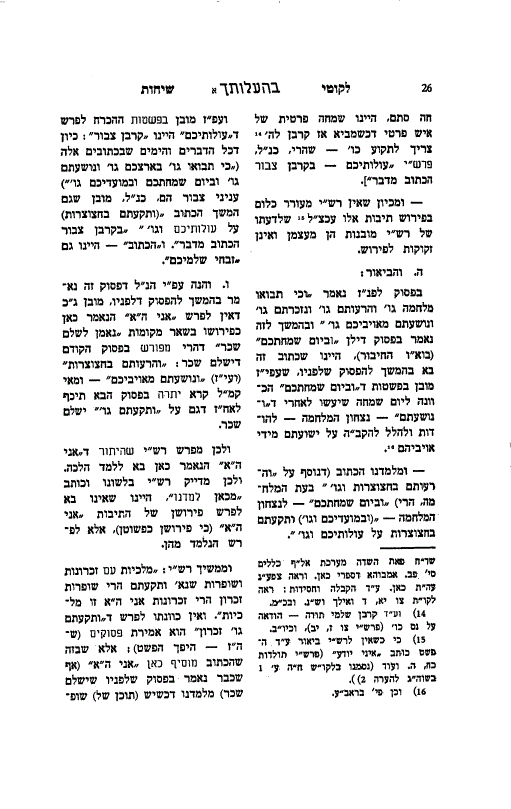
The Rebbe then asks: Which day of rejoicing is this passage referring to? We cannot say it refers to the festivals, since those are mentioned immediately afterward in the text. The verse itself distinguishes between “yom simchaschem”—your day of rejoicing—and “uv’moadeichem”—and on your festivals. This separation makes it clear that they are not the same.
Some commentators suggest that “yom simchaschem” refers to Shabbos. But if so, Rashi should have explained this explicitly. According to peshat, there is no clear source for calling Shabbos a day of rejoicing; the Torah does not refer to Shabbos as a time for joy in the same way it does for festivals. Therefore, Rashi cannot interpret “yom simchaschem” as Shabbos.
Perhaps one might argue that it refers to private celebrations—a personal day of joy when someone brings an offering out of gratitude. However, this passage discusses communal offerings—korban tzibbur—not individual ones. Thus, interpreting it as a private celebration does not fit with the context.
The fact that Rashi remains silent about what “yom simchaschem” means suggests that he considers its meaning self-evident within the context of peshat. If an explanation were needed, Rashi would have provided one; his silence indicates that no further clarification is necessary.
The Rebbe then offers a novel insight: “Yom simchaschem” follows directly from the previous verse, which describes Hashem saving Bnei Yisrael in battle. After such salvation and victory in war, there would naturally be a day set aside for rejoicing—to thank and praise Hashem for deliverance from their enemies.
The previous verse states:
וכי תבואו מלחמה בארצכם וגו' והרעותם בחצוצרות ונזכרתם לפני ה' אלקיכם ונושעתם מאויביכם וגו'.
"When you go to war in your land... you shall blow on the trumpets and you will be remembered before Hashem your God and be saved from your enemies..."
Immediately following this comes our verse: “And on your day of rejoicing...” The connecting vav (“and”) links these two passages together, indicating continuity between them. Thus, according to peshat, “yom simchaschem” refers to a communal celebration after military victory—a thanksgiving gathering for salvation.
This understanding resolves why Rashi does not need to explain what day is meant: it is obvious from context—it is the communal celebration after being saved from war.
This also answers another question: How do we know these verses refer specifically to communal offerings (korban tzibbur) rather than individual ones? The entire section discusses events affecting all of Bnei Yisrael—warfare and national salvation—so it follows naturally that any offerings or celebrations described here are communal in nature.
The phrase "haKosuv medaber"—the verse speaks (about)—used by Rashi emphasizes this point: all these passages are discussing matters relevant to the community as a whole. Therefore, both the days described and the offerings referenced are communal matters.
Saif Daled
This analysis leads the Rebbe to a further insight regarding the phrase Ani Hashem Elokeichem—“I am Hashem your God”—which appears again in the second Rashi. Since we have established that this section follows a moment of victory, where Hashem has saved the Jewish people from their enemies, it raises the question: why does the Torah repeat Ani Hashem Elokeichem at this point? The people are already in the midst of celebrating their deliverance. What is added by this repetition?
The Rebbe explains that, based on the context, this verse is a direct continuation of the previous one. Therefore, we cannot interpret Ani Hashem Elokeichem here as we might elsewhere—such as in Parshas Vayeira, where Rashi explains it to mean “I am trustworthy to pay reward.” In our case, the previous verse already makes clear that Hashem will reward them: when they blow the trumpets, they will be saved from their enemies. That is itself a form of reward.
This prompts us to ask: what new teaching is introduced by repeating Ani Hashem Elokeichem? Rashi’s precision in language becomes crucial here. He writes “from here we learn,” signaling that he is not interpreting the literal meaning of these words but rather deriving a halachic lesson from their presence. The simple meaning remains “I am God your God,” but since these words are seemingly extra, we must learn something additional from them.
Rashi is not coming to explain the words themselves; rather, he is highlighting that their repetition teaches us something new. The straightforward meaning—that Hashem will save and help when they blow the shofar—has already been stated. The focus now shifts to what can be derived from this repetition.
Here, the Rebbe clarifies that we are not discussing verses of Malchios (Kingship), Zichronos (Remembrances), or Shofros (Shofar blasts) as recited on Rosh Hashanah. Instead, Rashi explains that Malchios comes together with Zichronos and Shofros—not as verses to be recited, but as concepts present in action. When you have remembrance (Zichronos) and shofar blasts (Shofros), you must also include Malchios.
The verse says:
וּתְקַעְתֶּם בַּחֲצֹצְרוֹת לְזִכָּרוֹן לִפְנֵי ה׳ אֱלֹקֵיכֶם אֲנִי ה׳ אֱלֹקֵיכֶם
"And you shall blow with the trumpets for a remembrance before Hashem your God; I am Hashem your God."
In this verse, “blowing” refers to shofar blasts—Shofros. “Remembrance” refers to Zichronos. And Ani Hashem Elokeichem represents Malchios. Rashi’s intent is not to interpret these as verses to be recited but rather as elements present in the mitzvah itself—the act of blowing for remembrance before God includes all three themes.
This is why Rashi does not use headings like “verses of Zichronos” or “verses of Shofros,” as he does elsewhere (for example, in Parshas Emor). Here there are no verses being recited; it is about blowing trumpets and invoking remembrance before God through action.
The lesson derived is that whenever there is an act involving remembrance and shofar blasts—whether literally blowing trumpets as in our passage or reciting verses on Rosh Hashanah—the element of Malchios must also be present. This integration applies both on a simple level (blowing for remembrance) and on a deeper level (reciting verses).
Thus, Rashi’s careful wording teaches us that every time there is an act or mention of Zichronos and Shofros together, Malchios must accompany them—even if it is not explicitly stated in every context. This halachic principle emerges specifically from the extra words Ani Hashem Elokeichem in our passage.
Saif Hei
The discussion here centers on the meaning of the verses regarding zichronos and shofaros. In our context, the intent is not for the specific verses of zichronos and shofaros recited on Rosh Hashanah, but rather their simple meaning as previously explained. The Rebbe notes that even according to Rashi, despite his commentary, the meaning of the verse remains literal. Therefore, Rashi does not need to explain it further—just as he did not elaborate on the previous verse.
The Torah says that you are to blow the trumpets (chatzotzros), and through this act, you will be remembered by Hashem. This has nothing to do with the formal recitation of pesukei zichronos or pesukei shofaros. The simple meaning is: blow, and Hashem will remember you. This is similar to the earlier verse: “וַהֲרֵעֹתֶם בַּחֲצֹצְרוֹת”—“You shall sound the trumpets,” and as a result, “וְנִזְכַּרְתֶּם לִפְנֵי ה'”—“you will be remembered before Hashem,” and “וְנוֹשַׁעְתֶּם מֵאֹיְבֵיכֶם”—“you will be saved from your enemies.” Thus, Rashi does not explain these verses because their meaning is clear.
The question that does require explanation is why the Torah adds extra words in the verse—specifically “אֲנִי ה' אֱלֹקֵיכֶם”—“I am Hashem your God.” What is this addition for? We already know from earlier that when you blow, Hashem responds. Rashi answers that there is a halachic teaching derived from these extra words. That is why Rashi references them.
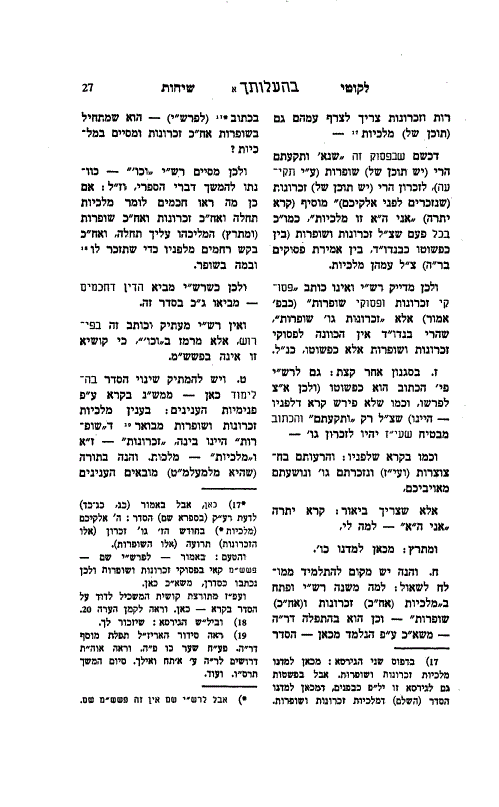
Rashi concludes with “Malchuyos, zichronos, shofaros,” followed by “etc.” The Rebbe asks: what does this “etc.” mean? He explains that there is a question which might arise for a sharp student—not at the literal level of peshat, but still relevant. Rashi does not spell out this question explicitly; instead, he hints at it with “etc.” because a child might wonder about the order in which Rashi presents these concepts—Malchuyos first, then zichronos, then shofaros—which matches our practice in davening but differs from the order in certain verses.
The Sifri addresses this kind of question: why did Chazal establish that we say Malchuyos first, followed by zichronos and then shofaros? The verse itself says “וּתְקַעְתֶּם שׁוֹפָרוֹת” (shofaros), then “לִזִכָּרוֹן” (zichronos), and finally “אֲנִי ה'” (malchuyos). So why do we reverse it?
The Sifri answers: first you must accept Hashem’s kingship over you—Malchuyos comes first. Then you seek mercy so that you are remembered before Him—zichronos. And how do you accomplish this? Through shofar—shofaros. Thus, this order reflects a logical progression: coronation (malchuyos), remembrance (zichronos), and then using the shofar as a means to achieve remembrance.
This explains why Rashi brings down the halacha of Chazal in this order—Malchuyos with zichronos and shofaros together—and not according to the sequence found in the verse itself. He follows the order established by Chazal as explained in Sifri: first Malchuyos, then zichronos, then shofaros.
The reason Rashi does not quote this section of Sifri explicitly but only hints at it with “etc.” is because this question does not arise at the level of simple peshat. Therefore, he relies on advanced students to look up or intuitively understand what lies behind his brief reference.
The Rebbe notes that later in Ois Tes he will explain deeper reasons for these different orders—whether Malchuyos-zichronos-shofaros or otherwise—based on their inner meanings according to Kabbalah and Chassidus. Each sequence reflects different spiritual levels and intentions within our service of Hashem.
This approach helps us appreciate why there may be changes in order between what appears in Torah verses and what we practice during prayer—the arrangement carries profound significance both halachically and spiritually.
Saif Vov
The discussion here centers on the order of Malchios, Zichronos, and Shofros. The way we recite them in prayer—starting with Malchios—is different from the order in the verse itself. The verse says, "Uskatem" (which refers to Shofros), then Zichronos, and then Malchios. This difference is rooted in deeper spiritual concepts.
Chassidus explains that these three—Shofros, Zichronos, and Malchios—correspond to different levels within the ten sefiros. Shofros aligns with bina (intellect), Zichronos with the middos (emotions), specifically zeir anpin, and Malchios with malchus (sovereignty). So, in the spiritual structure, Shofros is bina, Zichronos is zeir anpin, and Malchios is malchus.
When Torah descends from above to below—from a divine perspective—the order follows this top-down structure: first bina (Shofros), then zeir anpin (Zichronos), and finally malchus (Malchios). This is why the verse lists them in that order; it reflects how spiritual energy flows from higher to lower realms.
However, when it comes to a person's service—avodas ha'adam—the process is reversed. We begin from below and ascend upward. The person starts at the lowest level and climbs step by step. Therefore, in prayer, we begin with Malchios (malchus), move up to Zichronos (zeir anpin), and finally reach Shofros (bina). This bottom-up approach mirrors our journey of spiritual growth.
The Rebbe now prepares to explain various details in these two verses about waging war and sounding trumpets. These details illuminate their meaning for a person's spiritual service: the battle represents our internal struggle with the yetzer hara (evil inclination), especially during prayer. The sounding of trumpets symbolizes bitul—self-nullification—which is essential for overcoming this inner battle.
The first of these two verses begins:
כי תבואו מלחמה וגו׳
"When you come to war..."
This hints at the constant struggle each person faces against their yetzer hara. As the verse continues, "he is the enemy who oppresses you," highlighting that no adversary troubles us like our own evil inclination does.
This struggle is especially pronounced during prayer (tefillah). Prayer time is described as a time of battle because that's when the yetzer hara tries hardest to distract us with foreign thoughts and confusion.
So what should one do when faced with this inner war? The Torah gives advice: "You shall sound the trumpets." In terms of personal service, this means cultivating a broken and humble heart—a sense of bitul, or self-nullification before Hashem. One should beg Hashem for compassion on their soul, asking to be saved from turbulent waters—the negative influences threatening to overwhelm them.
This idea echoes language from Tanya: just as one blows a shofar or trumpet in battle for help, so too must a person cry out from a place of humility during their spiritual struggles.
The result? As the verse says: "You will be remembered before Hashem your God and saved from your enemies." Through this approach—sounding one's inner trumpet of humility—a person can achieve victory over their yetzer hara.
This covers the first verse: through bitul, one wins the battle. But even after achieving victory and reaching a state of joy or celebration—as described in the next verse—the need for bitul remains constant. The Rebbe will continue by explaining how this applies even during times of happiness and success in one's service.
Saif Zayin
The Rebbe addresses a possible misconception: one might think that the elevated service and intense subjugation—bittul—are only necessary at the beginning of one's spiritual journey, when the yetzer hara is strong and fighting back. At that stage, a person needs to be completely nullified before Hashem in order to overcome their inner struggles.
However, after achieving victory—after overcoming the yetzer hara and experiencing salvation from one's enemies—a person might assume that now, in serving Hashem with understanding and delight, such intense bittul is no longer required. The Torah teaches otherwise. Even after winning the battle, even when bringing offerings—korbanos, which means coming close to Hashem—one still needs to sound the trumpets (uskatem) over their offerings. This blowing represents maintaining that sense of subjugation and humility before Hashem.
The Torah specifies two types of offerings: olei seichem (burnt offerings) and zivchei shalmeichem (peace offerings). The order is significant: first comes olei seichem, then zivchei shalmeichem. In spiritual terms, this means that the first step in serving Hashem is total self-nullification—like the korban olah, which is entirely burnt on the altar for Hashem alone.
This total bittul, where a person gives themselves over completely to Hashem without any personal agenda or pleasure, must come first. Only after achieving this level can one bring a "peace offering"—the korban shlomim. The peace offering represents a service where there is also personal enjoyment and understanding; part of it is eaten by the owner, symbolizing that one's own intellect and pleasure are now involved in serving Hashem.
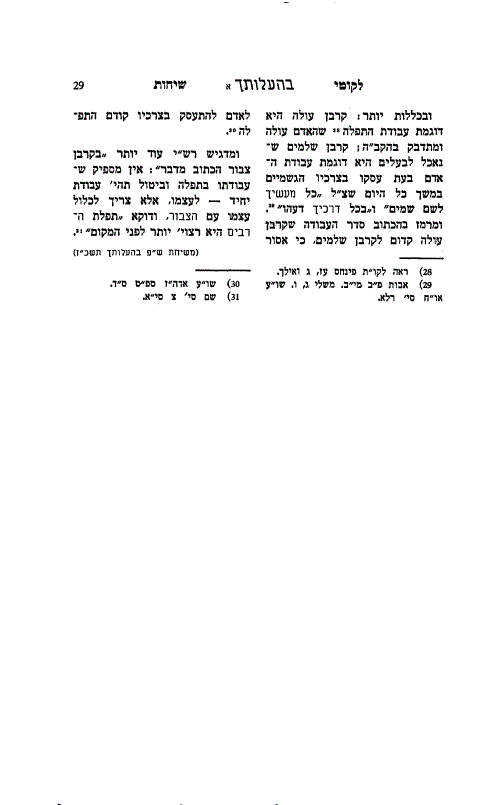
The Rebbe explains further: in a broader sense, the korban olah corresponds to prayer (tefillah). During prayer, a person rises above themselves and cleaves to Hashem. The korban shlomim, on the other hand, parallels serving Hashem while engaged in daily physical activities—making sure that all one's actions are for the sake of Heaven (l'shem shamayim) and knowing Hashem in all one's ways.
This order teaches us that before engaging in worldly matters—even if they are ultimately for a holy purpose—one must first pray. Just as one may not attend to personal needs before praying, so too must one establish complete bittul, like an olah, before moving on to service involving personal enjoyment or understanding.
The Rebbe notes that Rashi emphasizes another point: these verses refer not just to individual offerings but to communal ones (korban tzibor). It is not enough for one's prayer and subjugation to be an individual matter; rather, one must include oneself with the community. Communal prayer (tefillas harabim) is especially beloved and accepted before Hashem, as codified in halacha.
This underscores the importance of joining with others in service—not remaining isolated but connecting with the collective Jewish people. Only then does our service reach its fullest expression and acceptance by Hashem.
This teaching was delivered on Shabbos Parshas Beha'alosecha, 5727 (1967).
Key Points
1. The Rebbe’s analysis centers on Rashi’s commentary to the verses about blowing trumpets (chatzotzros) on days of joy, festivals, and Rosh Chodesh, specifically when bringing communal offerings. He questions why Rashi emphasizes that the entire verse refers to communal sacrifices and not individual ones, highlighting the importance of context in understanding the Torah’s intent.
2. The phrase “Ani Hashem Elokeichem” is examined in depth. While it might seem to teach that Malchuyos must be recited with Zichronos and Shofros, the Rebbe challenges this reading based on Rashi’s usual approach to peshat and explores why Rashi brings down a halachic teaching here, given that it appears unnecessary or even contradictory to the simple meaning.
3. The Rebbe clarifies that “yom simchaschem”—your day of rejoicing—refers not to Shabbos or private celebrations but to communal thanksgiving after salvation from war. This is evident from the context and the connecting vav (“and”) in the verses, which links the celebration directly to national deliverance.
4. The repetition of “Ani Hashem Elokeichem” in these verses is not simply a restatement but serves as a source for a halachic principle: whenever there are acts involving remembrance (Zichronos) and shofar blasts (Shofros), Malchuyos must also be present. This is derived from the seemingly extra words in the verse rather than their literal meaning.
5. Rashi’s order—Malchuyos, Zichronos, Shofros—matches our practice in prayer rather than the sequence found in the Torah verses. This order reflects a logical progression: first accepting Hashem’s kingship, then seeking remembrance, and finally using shofar as a means to achieve it. Rashi hints at deeper questions about this order with his use of “etc.”
6. Chassidus explains that the Torah’s order (Shofros-Zichronos-Malchuyos) reflects a top-down flow from higher spiritual realms (bina–zeir anpin–malchus), while our prayer order (Malchuyos-Zichronos-Shofros) mirrors our ascent from below upward in avodas ha’adam. The battle described in these verses symbolizes our inner struggle with the yetzer hara, especially during tefillah, where self-nullification (bitul) is key to victory.
7. Even after achieving spiritual victory and joy, ongoing bitul remains essential. The Torah teaches that both burnt offerings (olah) and peace offerings (shlomim) require trumpet blasts—symbolizing humility before Hashem both at times of struggle and celebration. This underscores that total self-nullification precedes service involving personal enjoyment or understanding.
8. Communal service is emphasized throughout; both prayer and offerings should be undertaken together with the community. Only through collective effort does our avodah reach its fullest acceptance by Hashem, highlighting the power and necessity of tefillas harabim—communal prayer—in Jewish life.