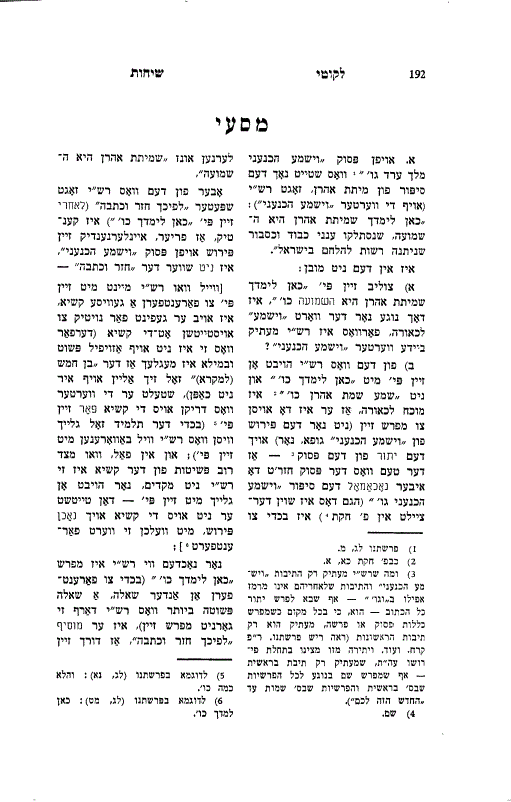
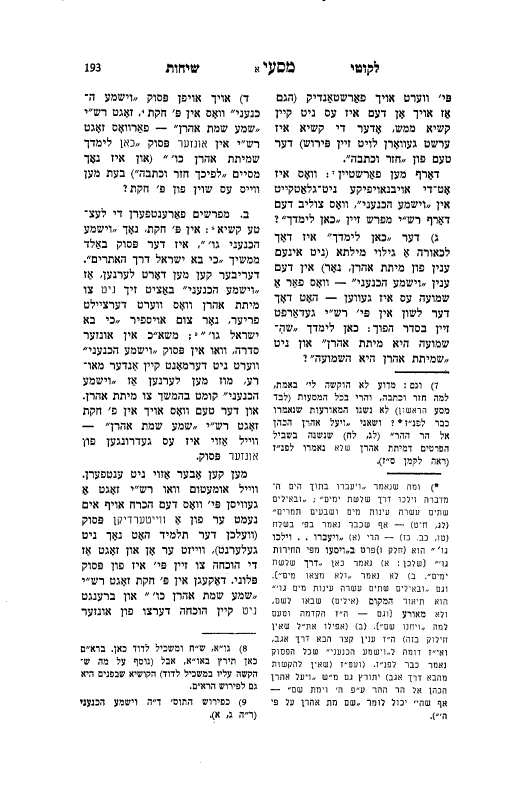
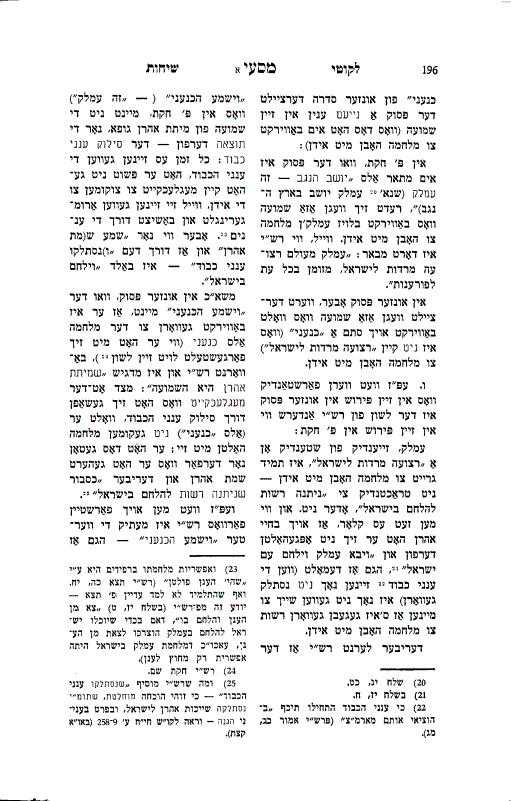
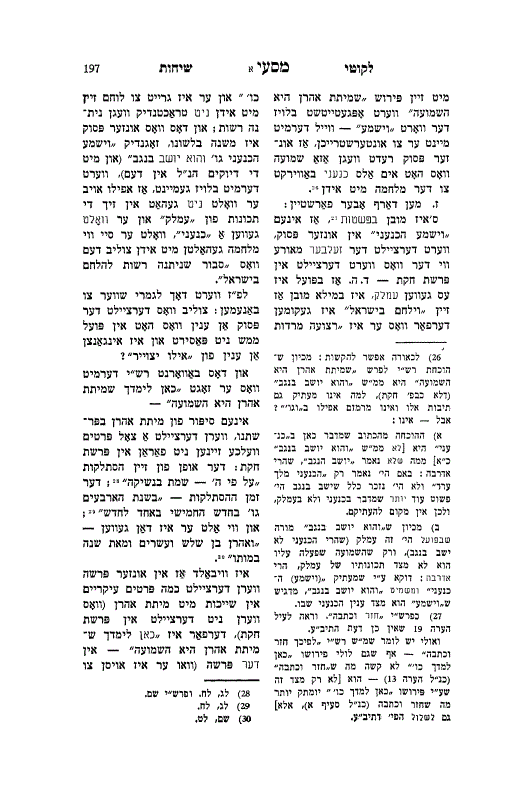
In our parsha, the “news” that was heard did not affect only Amalek, but also the other nations. The news was that “he thought permission had been granted to fight against Israel.” Amalek, by contrast, does not need permission; he only needs the opportunity. This is why Rashi emphasizes that Aharon’s passing itself — which caused them to think that permission had been granted — was the actual news, not merely that the Clouds of Glory had departed.
On the verse (33:40), “The Canaanite heard,” Rashi explains: “Here it teaches you that the passing of Aharon was itself the news, for the Clouds of Glory departed, and he thought that permission had been granted to fight against Israel. Therefore, it repeated it.”
This needs to be understood: From the end of Rashi’s comment, “Therefore, it repeated it,” it seems that only the end of Rashi explains why the words “The Canaanite heard” are repeated. If so, what difficulty is Rashi answering at the beginning of his explanation? Another question: Rashi already explained this same idea earlier in Parshas Chukas.
The explanation is as follows: In our parsha it says, “The Canaanite, king of Arad, and he was dwelling in the south, in the land of Canaan.” This means that “dwelling in the south” is not a description of the Canaanite himself; it only tells us where he lived. By contrast, in Parshas Chukas it says, “The Canaanite, king of Arad, who dwelled in the south,” where “dwelling in the south” is a description of the Canaanite.
The explanation is that “dwelling in the south” refers to Amalek. Therefore, in Parshas Chukas, the verse is speaking about news that affected only Amalek, who is “ready at all times for punishment and calamity.” As soon as there was an opportunity, when the Clouds of Glory departed, Amalek came to fight against Israel.
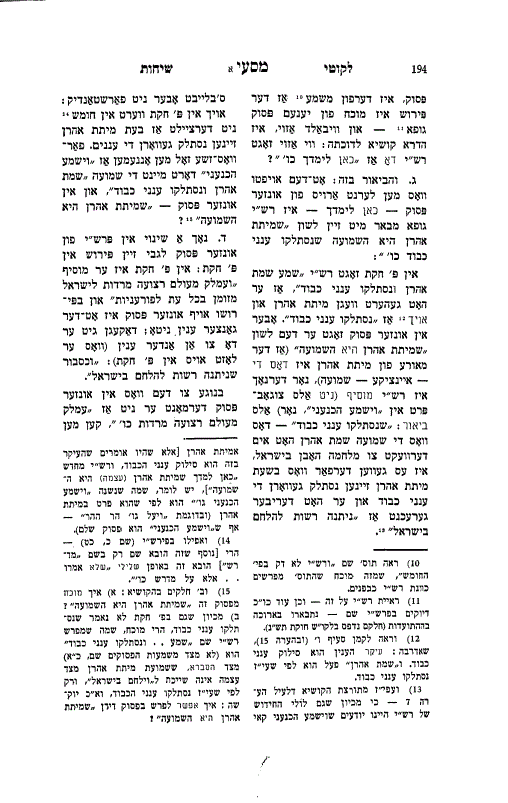
In our parsha, however, the verse is speaking about news that affected not only Amalek, but also the other nations. That news was that “he thought permission had been granted to fight against Israel.” The other nations would come to fight only if they thought permission had been granted. Amalek, however, does not need permission; he waits only for the possibility.
This is why Rashi emphasizes that the passing of Aharon itself was the news, not that the main point was the departure of the Clouds of Glory. Aharon’s passing is what caused them to think that permission had been granted to fight.
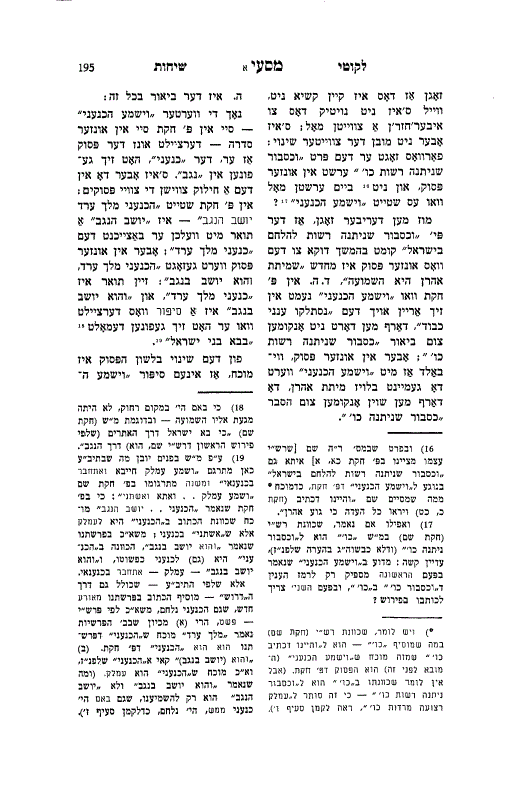
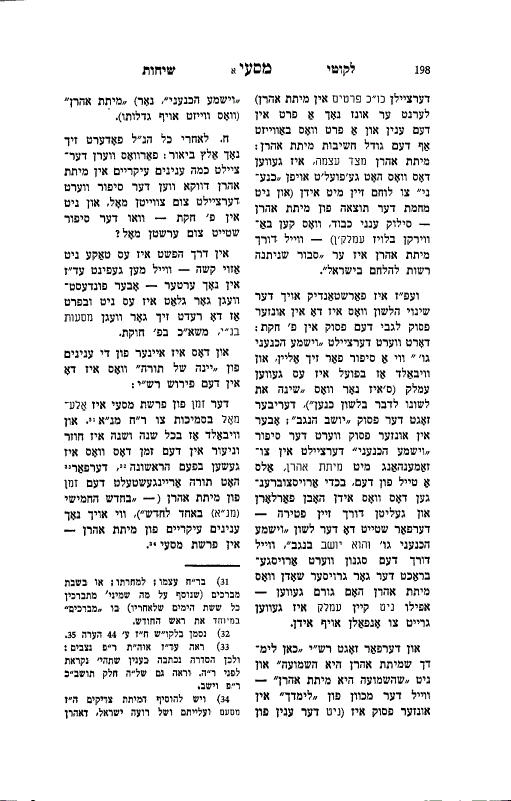
The reason this detail is explained specifically here — that the news affected even the other nations because of Aharon’s passing — is because in our parsha, which in some years is read around the time of Aharon’s passing, there are many details about Aharon’s passing. Therefore, this detail is also brought here.
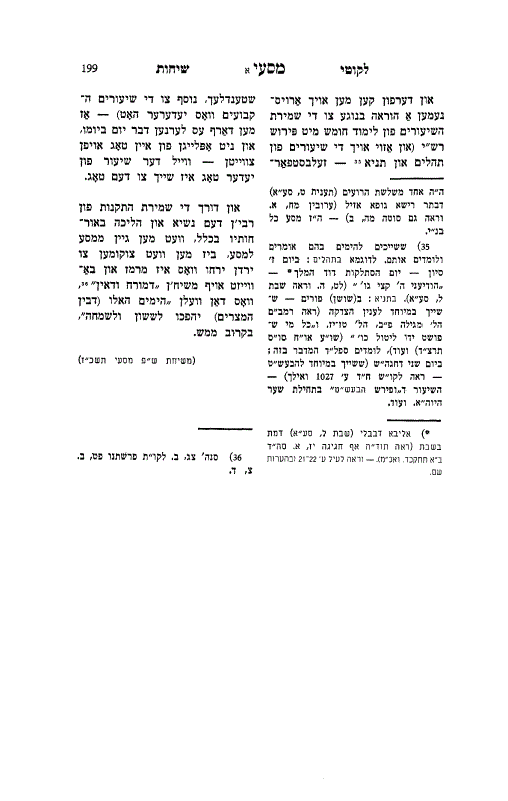
The inner dimension of Torah: From this we see the connection between the parsha and the time when it is read. From here there is also a lesson regarding the daily study of Chitas: one should learn the daily portions on their proper day and not delay them to the next day.