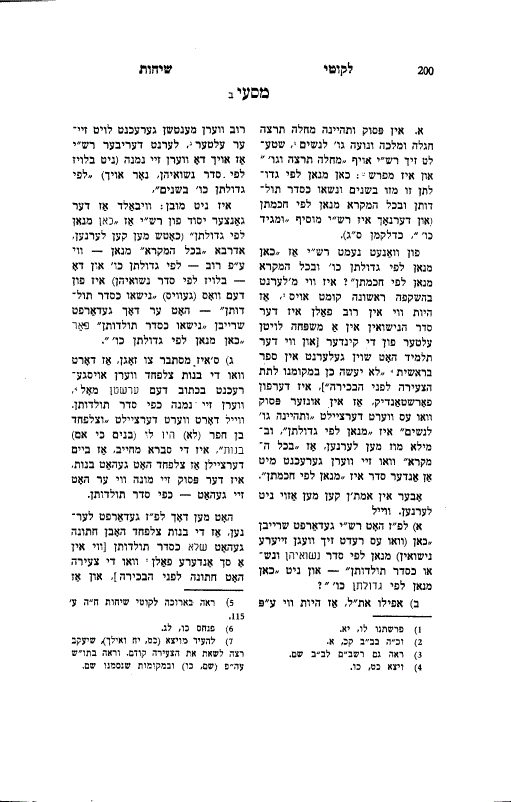
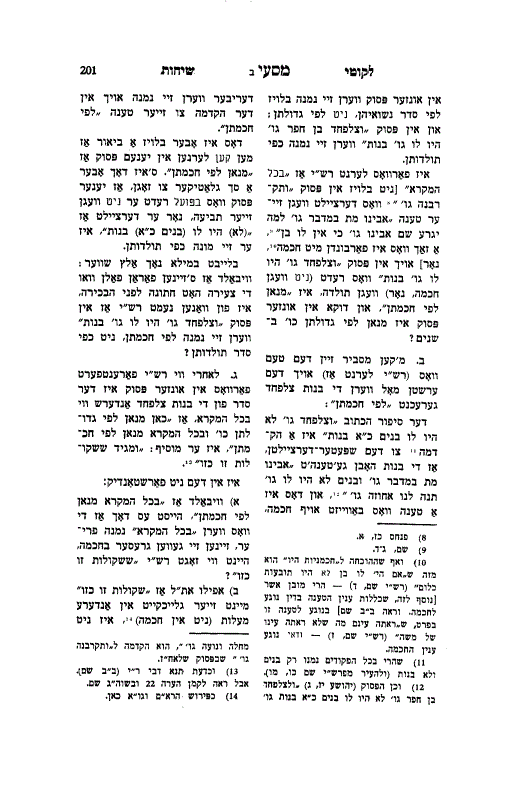
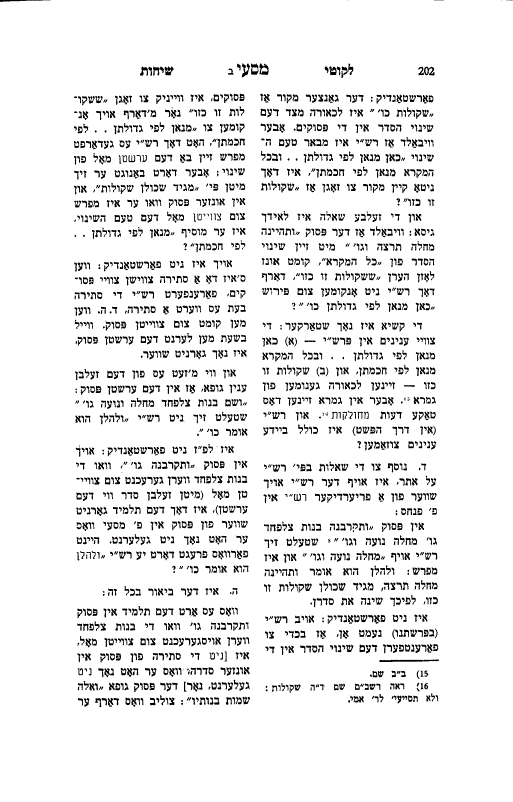
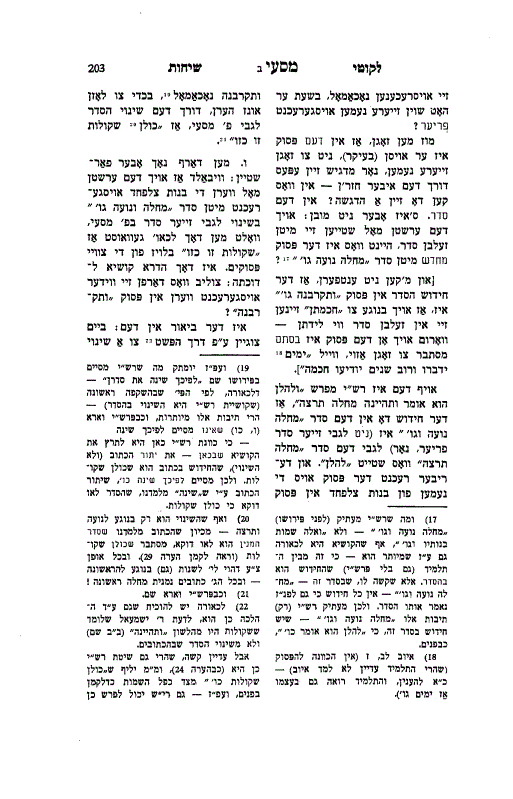


The difficulty in Parshas Pinchas, in the verse “And they drew near,” is not the reason for the change in the order of their names, but the fact that they are counted again. On this Rashi explains that the novelty of their second listing is not a new point in relation to the first listing, but a new point connected to what is stated later in Parshas Masei, where the order is changed to teach that they were all equal.
Rashi states on the verse, “Machlah, Tirtzah, etc.” (36:11): “Here they are listed according to their age, each one older than the next, and they married according to the order of their birth. But throughout Scripture they are listed according to their wisdom, and this teaches that they were all equal.”
This requires explanation. Seemingly, the opposite would make more sense: the first time they are listed, in Parshas Pinchas (26:33), in connection with their birth — “Tzelafchad the son of Chefer had no sons, but only daughters” — they should be listed according to age. The change in Parshas Masei should then be understood as according to their wisdom. Furthermore, the statement that “they were listed according to their wisdom” appears to contradict the statement that “they were all equal,” and indeed, in the Gemara there is a dispute between these two views.
There is another difficulty: Why does Rashi explain in Parshas Pinchas, on the verse (27:1), “And the daughters of Tzelafchad drew near: Machlah, Noa, etc.” — “Later it says, ‘And Machlah, Tirtzah, etc., became,’ teaching that they were all equal; therefore the order was changed”? Seemingly, the question does not arise until our parsha, Parshas Masei. Why, then, does Rashi explain it already there?
The explanation is: the difficulty in Parshas Pinchas, in the verse “And they drew near,” is not why the order was changed, but why they are counted again altogether. On this Rashi explains that the novelty of their second listing is not a new point in relation to the first listing, but a new point connected to what is stated later in Parshas Masei, where the order is changed in order to teach that they were all equal.
One cannot say that we would have known that they were equal from the difference between the first listing (26:33) and the third listing, in our parsha (36:11). If so, the question would remain: why did the Torah need to list them a second time in the verse “And they drew near” (27:1)? For without that second listing, we would have explained the change differently: that the first listing was according to birth order, while the third listing was according to wisdom. Therefore they are also mentioned in the verse “And they drew near,” to teach that they were all equal.
Accordingly, it is understood that “they were listed according to their wisdom” does not contradict “they were all equal.” “They were listed according to their wisdom” does not mean that there were differences in their wisdom. Rather, the first listing is connected with wisdom, since they presented a wise and proper claim. The listing in Parshas Masei, where they are listed according to age, is also connected with wisdom, since “many years make wisdom known.” Therefore, from the fact that there is a change between two listings that are both connected with wisdom, we learn that they were all equal.
There is also another explanation: within wisdom itself, there is wisdom that comes through toil and effort. This is the meaning of the order in the first listing in Parshas Pinchas, where Noa is listed second even though she was the youngest. The extra listing in “And they drew near” teaches that they were all equal from the perspective of the wisdom that comes through many years. Thus, when combining the wisdom that comes through age with the wisdom that comes through effort, Noa and Tirtzah are shown to be equal.