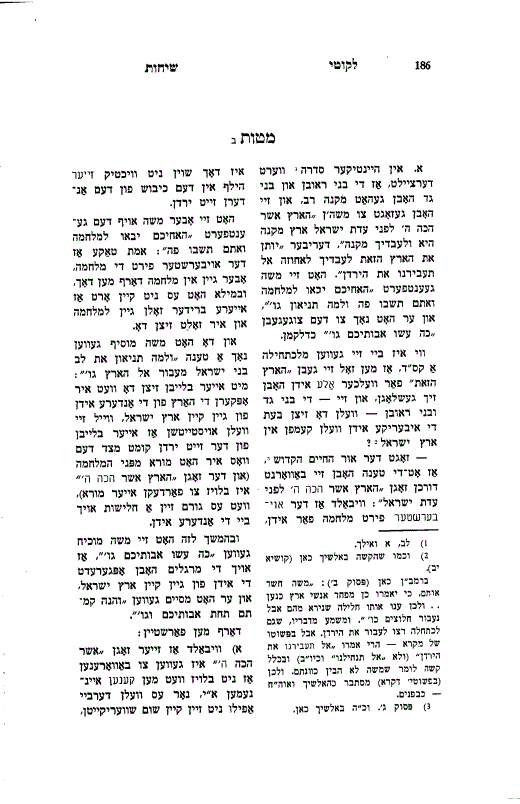
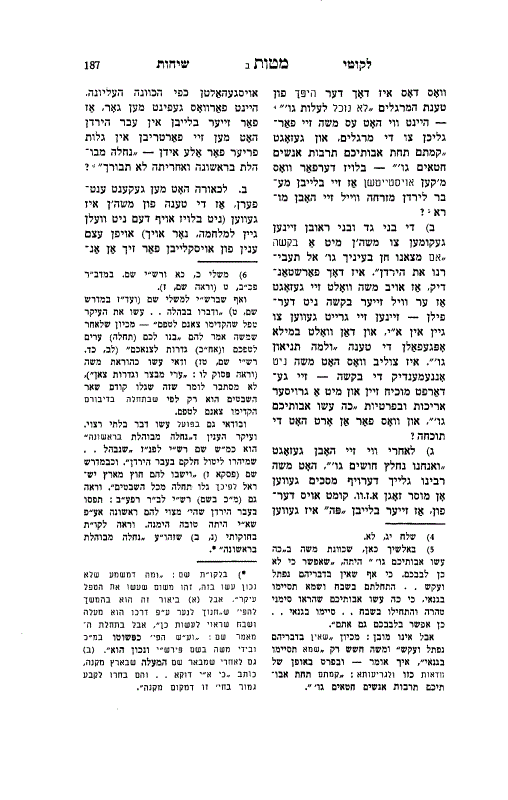
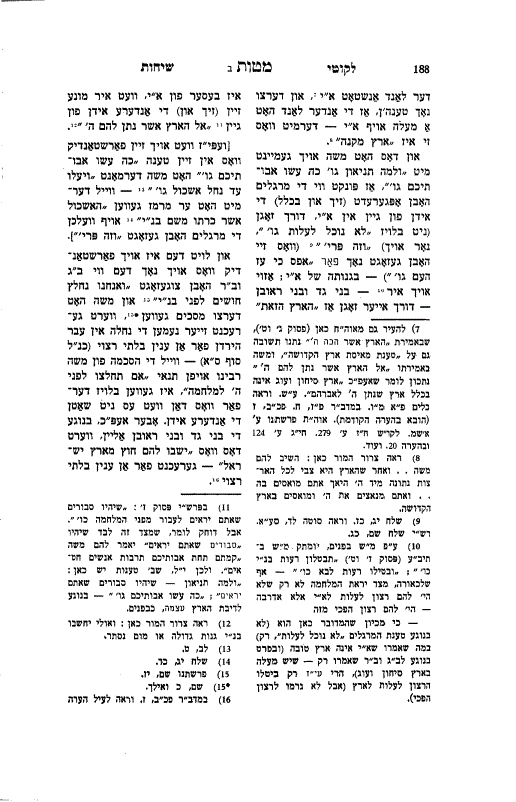
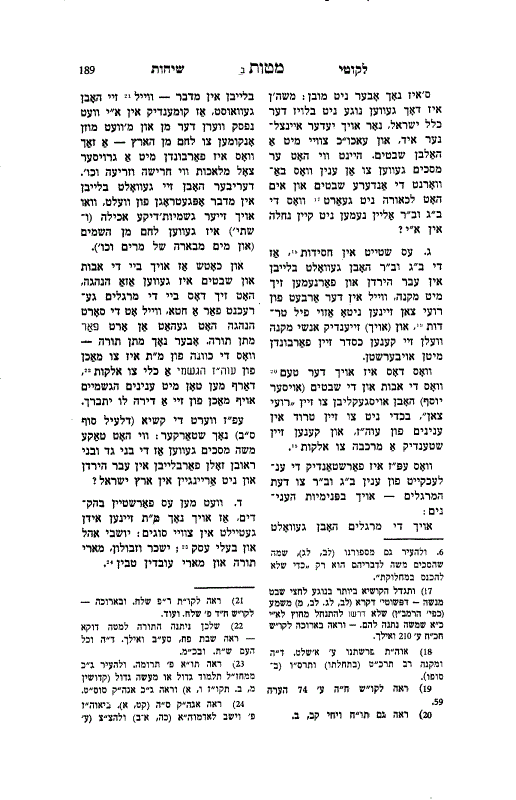
Among the Jewish people there are two types: Yissachar and Zevulun. Therefore, after Bnei Gad and Bnei Reuven said, “We will arm ourselves quickly,” showing that they would have a connection with the rest of the Jewish people, they became similar to those who sit in the tent of Torah, whose service is to “illuminate” — to reveal Hashem’s dwelling in this world through Torah study. Nevertheless, in a subtle sense, this was still a departure from the true inner purpose — a “hasty inheritance.”
Regarding Bnei Gad and Bnei Reuven, there are many questions. Among them: They said, “The land that Hashem has given,” showing that they believed in Hashem’s ability. If so, how is it possible that Moshe thought they were like the meraglim and said to them, “This is what your fathers did”? And if their desire to remain on the other side of the Yarden, rather than in Eretz Yisrael, was undesirable, why did Moshe agree to give them an inheritance there after they said, “We will arm ourselves quickly”? From the fact that Moshe agreed to give them a portion on the other side of the Yarden, it seems that this was in line with the Divine intention. If so, why is it said about them, “An inheritance gained hastily at first, its end will not be blessed” — that because they were on the other side of the Yarden, they were the first to be exiled?
The explanation is: Bnei Gad and Bnei Reuven were people of livestock because they wanted to live in seclusion, like the Avos. However, after Matan Torah, this became an undesirable form of service, because the Torah was given specifically below, in order to create a dwelling for Hashem in the lower realms. Their claim was therefore similar to that of the meraglim, who did not want to enter Eretz Yisrael. That is why Moshe said to them, “This is what your fathers did.”
However, among the Jewish people there are two types: Yissachar and Zevulun — those devoted to Torah and those devoted to good deeds. Therefore, after Bnei Gad and Bnei Reuven said, “We will arm ourselves quickly,” meaning that they would enter Eretz Yisrael and have a connection with the rest of the Jewish people, they became similar to those who sit in the tent of Torah, whose service is to “illuminate” — to reveal Hashem’s dwelling in this world through Torah study.
Nevertheless, this was still an undesirable matter, a “hasty inheritance,” because in a subtle sense it was a departure from the true inner purpose.
In the notes: This is the connection to the beginning of the parsha, the subject of releasing vows. The ultimate purpose is not separation and withdrawal, but connection with the matters of this world.
The conduct of Ben Azzai is a path according to Torah. Nevertheless, from it there can eventually develop the state of “he gazed, etc.” This is unlike Rabbi Akiva, who, after the matter of “shadartei,” returned home, and “entered in peace and emerged in peace.”