


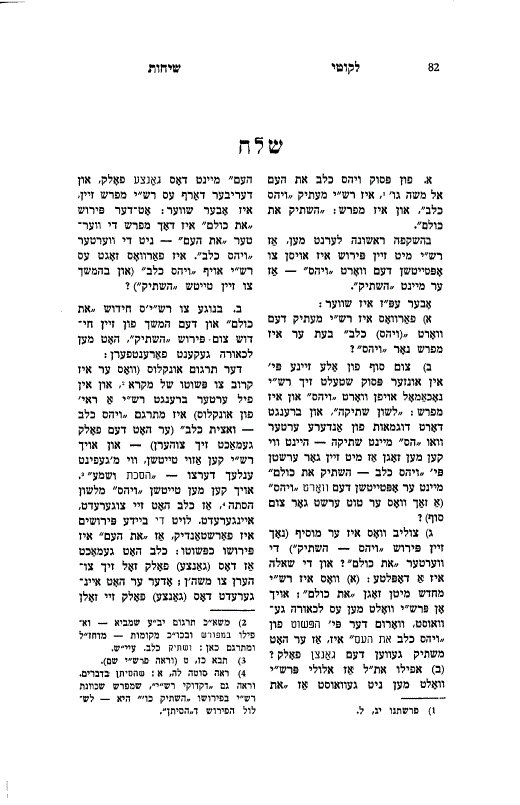
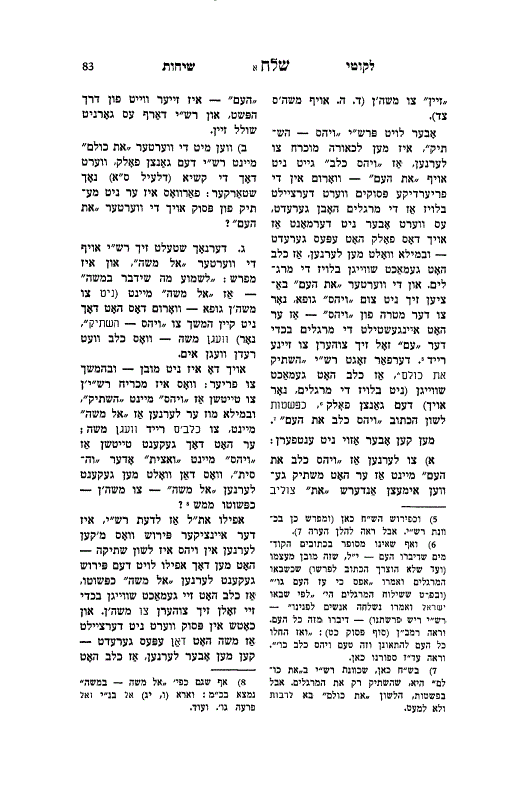
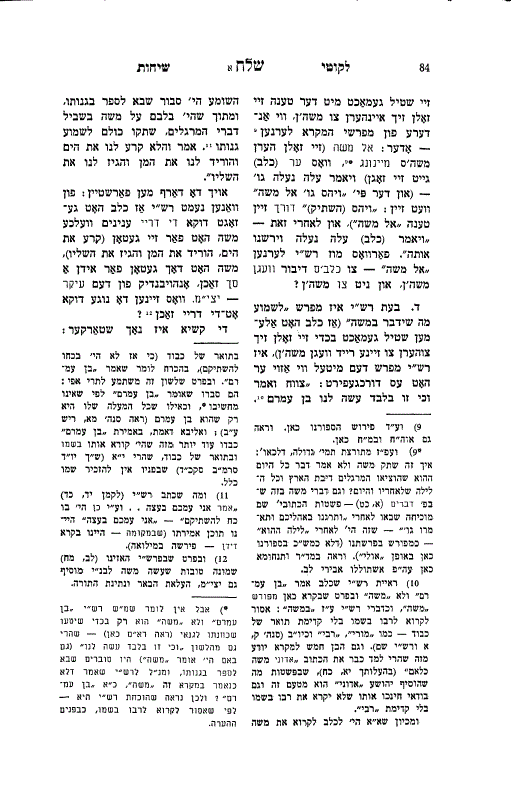
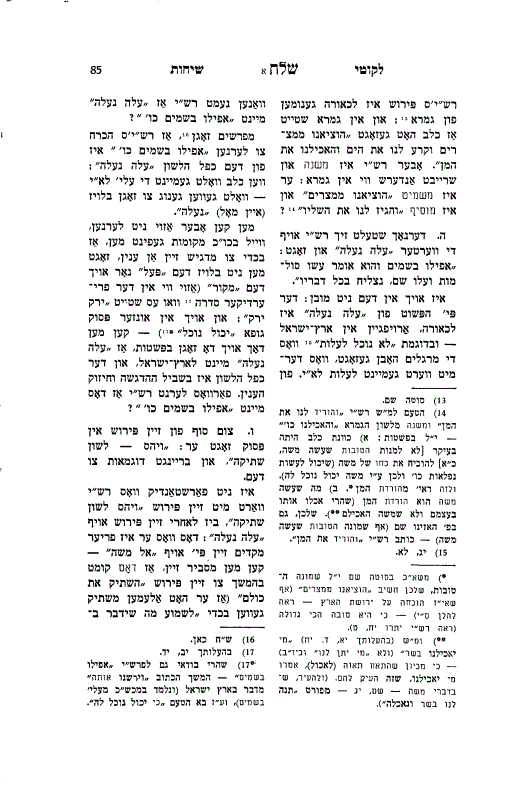
“He split the sea for us” — at the sea there should have been a battle (unlike in Egypt itself), yet G‑d fought on their behalf. This answered the spies’ claim that “the people who dwell in the land are strong.”
“He brought down the manna for us” — G‑d provides all their needs even while traveling on the way to the Land of Israel. This answered the claim that “the Hittites, etc., dwell in the mountains...”
“He provided the quail for us” — G‑d gave them quail even after they sought a pretext for complaint and said, “Who will feed us meat?” This answered the claim concerning “Amalek dwells...”
Rashi (13:30) comments:
“And Caleb silenced [the people]” — He quieted everyone.
“To Moses” — so that they would listen to what he was going to say about Moses. He cried out and said: “Is this the only thing that the son of Amram has done for us?” Those listening assumed that he intended to speak negatively about Moses. Since their hearts had already turned against Moses because of the spies’ words, they all became silent in order to hear his criticism. He then said: “Did he not split the sea for us, bring down the manna for us, and provide the quail for us?”
“We shall surely go up” — Even if he were to tell us, “Build ladders and climb into heaven,” we would succeed in everything he tells us.
This requires explanation:
What is Rashi adding by saying that Caleb “silenced everyone”? Seemingly, the verse itself says, “Caleb silenced the people.” Why does Rashi not explain, as the Targum does, that “he caused them to listen”? According to that explanation, “to Moses” would simply mean that they should listen to Moses, and there would be no need to explain, “to hear what he would say about Moses.”
Why did Caleb specifically mention these three events rather than more general miracles such as the Exodus from Egypt? Indeed, the Gemara says, “He took us out of Egypt,” but does not mention the quail.
What benefit was there in mentioning Moses’ virtues? The spies were not challenging Moses; they were claiming that “the people who dwell in the land are strong.”
And why does Rashi explain “We shall surely go up” as referring even to climbing to heaven, rather than explaining simply that it refers to ascending to the Land of Israel, with the repetition serving merely as added emphasis?
Explanation
Rashi is bothered by the fact that the verse does not simply say, “Caleb said.” Why does it first say, “Caleb silenced…”?
Therefore, Rashi explains that Caleb first silenced everyone, meaning that he succeeded in quieting all the Jewish people so that they would listen to words praising Moses.
Although the spies were speaking about the strength of the inhabitants of the land and not directly about Moses, Caleb mentioned these specific accomplishments because they directly refuted the spies’ arguments.
The spies made three claims:
- “The people who dwell in the land are strong.”
- Even before entering the land there would be danger, as “the Hittites, Jebusites, and Amorites dwell in the mountains, and the Canaanites dwell by the sea and along the Jordan.”
- “Amalek dwells in the Negev.” They mentioned Amalek because the Jews had already suffered from Amalek when they questioned, “Is G‑d among us or not?” The spies argued that sending spies itself showed a lack of confidence in G‑d’s ability, and therefore they would again suffer defeat as happened with Amalek.
Caleb answered each point:
- “He split the sea for us.” At the sea, a battle should have been necessary (unlike Egypt, where Pharaoh himself drove them out), yet G‑d fought for them and split the sea.
- “He brought down the manna for us.” G‑d provides all their needs even while they are still on the journey.
- “He provided the quail for us.” G‑d granted them quail even after they complained and sought excuses, saying, “Who will feed us meat?”
Rashi then continues:
“We shall surely go up” — Even if he were to tell us, “Build ladders and climb into heaven,” we would succeed in everything he tells us.
Since Caleb’s earlier response addressed the spies’ claims by emphasizing Moses’ accomplishments, this statement must introduce a new idea: that we will succeed in everything Moses tells us, even when it transcends the normal limitations of the world.
The Deeper Teaching
Caleb possessed several advantages over Joshua:
- His rescue from the counsel of the spies came through his own initiative and effort (isarusa d’letata), when he went and prostrated himself at the graves of the Patriarchs.
- He influenced everyone — even the spies themselves — as indicated by the fact that he “silenced everyone.” By contrast, when Caleb and Joshua later spoke together, “the entire congregation said to stone them.”
- In addition to rational arguments, he reached the level of speaking about what lies beyond logic and reason, such as climbing to heaven.
These three qualities are interconnected.
One of the advantages of initiative from below (isarusa d’letata) is that it refines and transforms the lower reality on its own terms, and therefore has a deeper effect. Through service that begins from below, one reaches a level that is even higher — a level beyond reason and understanding.
Practical Lesson for Shlichus
From Caleb’s words — “He split the sea for us… We shall surely go up… Even into heaven… We will succeed in everything he tells us” — we learn a powerful lesson in the work of shlichus.
Success is assured even when there are doubts, obstacles, or apparent barriers. Not only can the central challenge be overcome, but all the secondary impediments as well. When one follows the Rebbe’s and the Torah’s directives with complete trust, one receives the strength to succeed beyond what seems naturally possible.