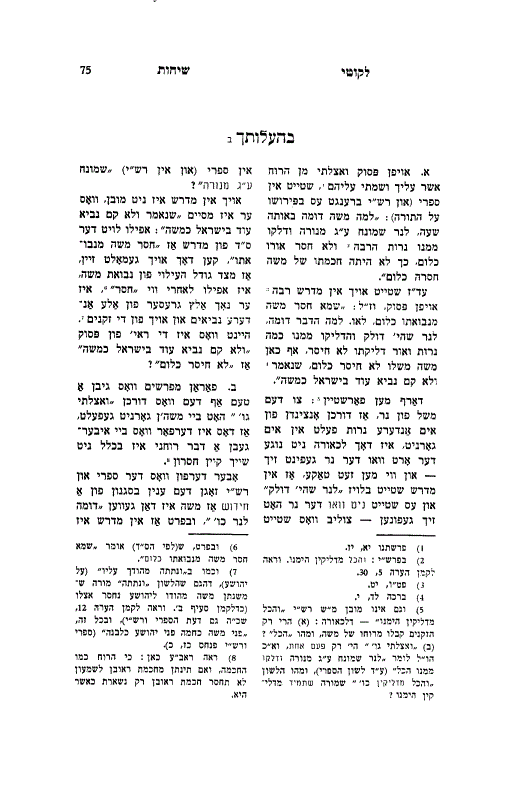
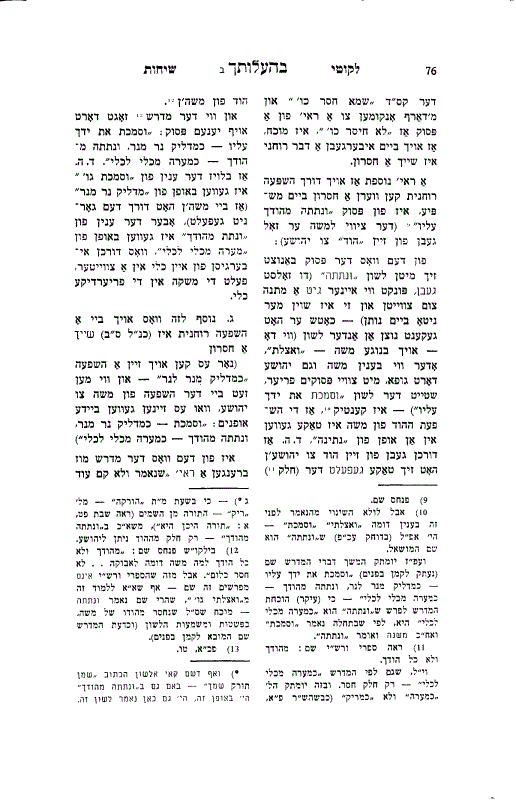
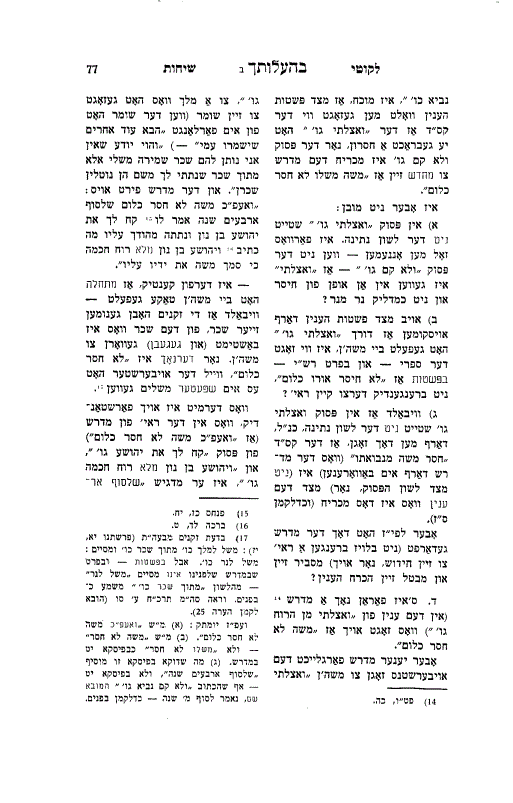
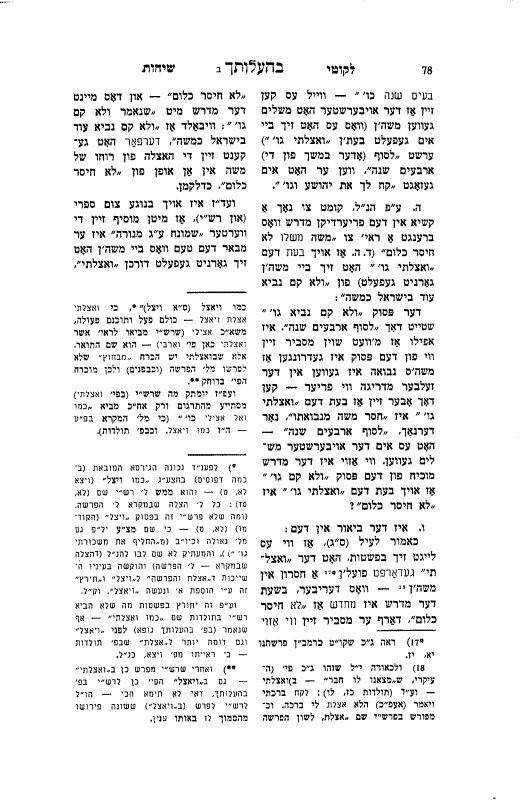
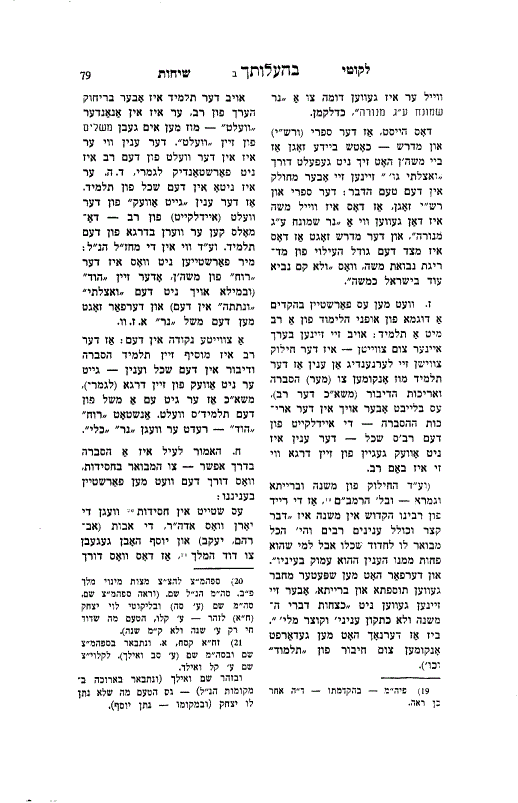
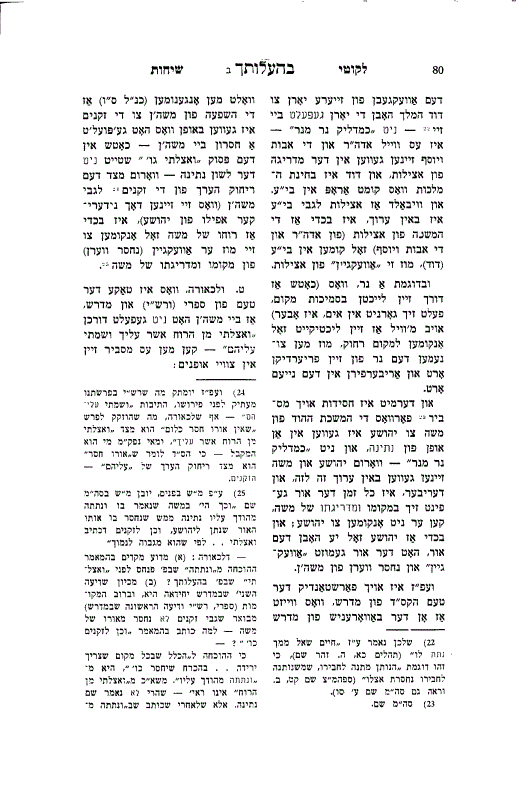
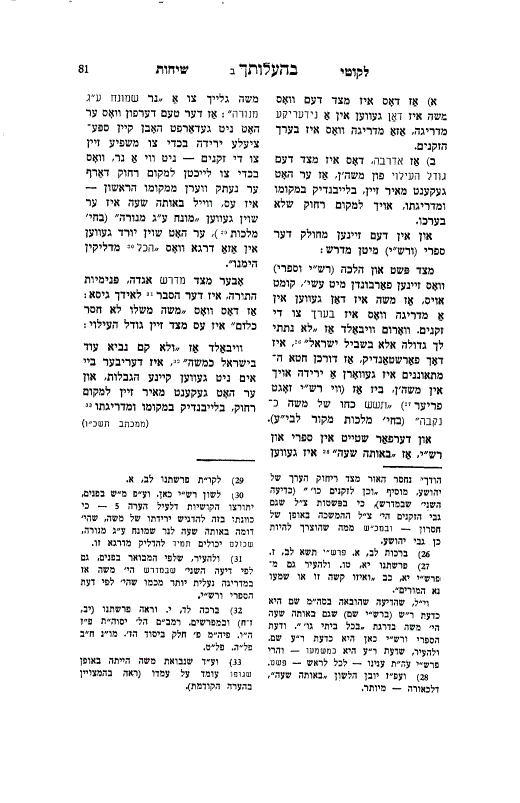
Regarding the verse (Numbers 11:17),
“I will take of the spirit that is upon you and place it upon them,”
Rashi (based on the Sifrei) explains:
“To what was Moshe comparable at that time? To a lamp placed upon a candelabrum, from which many lamps were lit, yet its light was not diminished at all. So too, Moshe’s wisdom was not diminished in the slightest.”
Similarly, the Midrash states:
“What is this comparable to? To a lamp that was burning, from which many lamps were lit... as it says, ‘No prophet ever arose again in Israel like Moshe.’”
This raises several questions.
According to Rashi, why is it important for the analogy to specify that the lamp was placed on a candelabrum?
According to the Midrash, how does the verse “No prophet ever arose in Israel like Moshe” prove that Moshe’s light was not diminished? Even if one were to assume that Moshe’s light was reduced by sharing it with the elders, it could still be true that his prophecy remained superior to that of all other prophets and elders.
Explanation
One cannot say that Moshe’s light was not diminished simply because spiritual matters are not subject to loss. On the contrary, the wording of both Rashi and the Midrash implies that the fact that his light was not diminished is itself a novelty. Indeed, the Midrash even brings a verse as proof.
Rather, there are two ways spiritual influence can be transmitted:
- When the teacher and student are on a comparable level. In such a case, even though the teacher must explain the idea at length and with many words, the depth and subtlety of the concept remain intact and are not diminished.
- When the teacher’s understanding is incomparably higher than that of the student. In that case, the teacher must resort to analogies from an entirely different realm, and the original depth and refinement of the idea are necessarily reduced in the process.
Rashi, who explains the straightforward meaning of the verse, understands that Moshe’s wisdom was not diminished because Moshe was still within the same general framework as the elders. This is connected to the idea that “I granted you greatness only for the sake of Israel,” and at this point the Jewish people had sinned. Therefore, the analogy is precise:
“Like a lamp placed upon a candelabrum.”
The elders were on Moshe’s level to the extent that he did not need to “bring the lamp down” to their place; they could receive from him without any reduction in his wisdom.
The Midrash, however, which explains the verse on a deeper, inner level, takes the opposite approach. The reason Moshe’s light was not diminished was precisely because of Moshe’s unique greatness, as reflected in the verse:
“No prophet ever arose in Israel like Moshe.”
Since Moshe’s spiritual light was utterly beyond limitation, he could illuminate even those far below him while remaining completely in his own place, without any diminution whatsoever.
Short Summary:
Rashi explains that Moshe’s wisdom was not diminished because the elders were sufficiently on his level to receive directly from him. The Midrash explains that Moshe’s wisdom was not diminished because his prophetic greatness was infinite and unrestricted, enabling him to share with others without any loss at all.