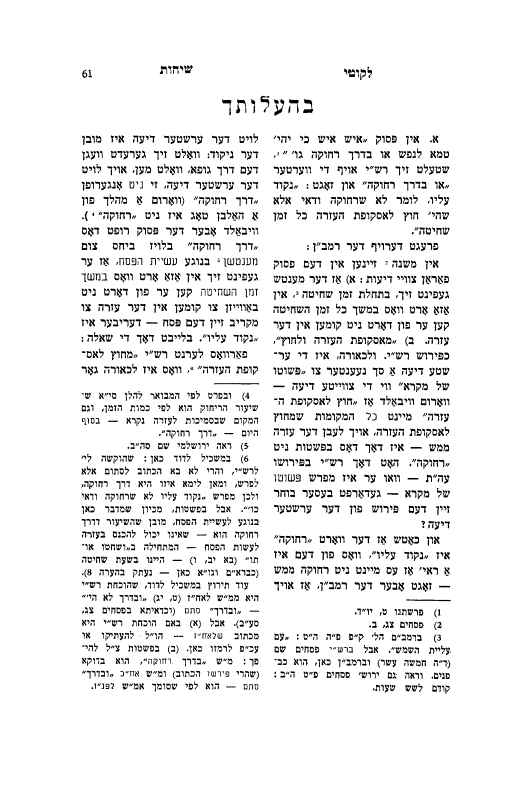
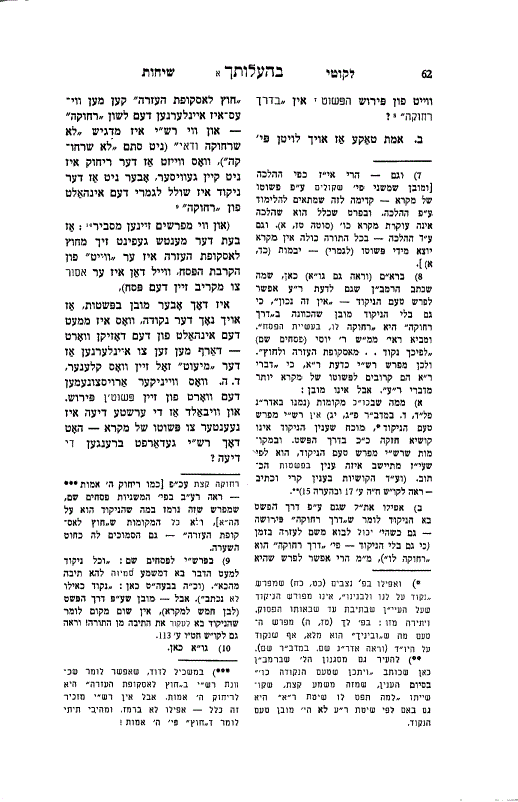
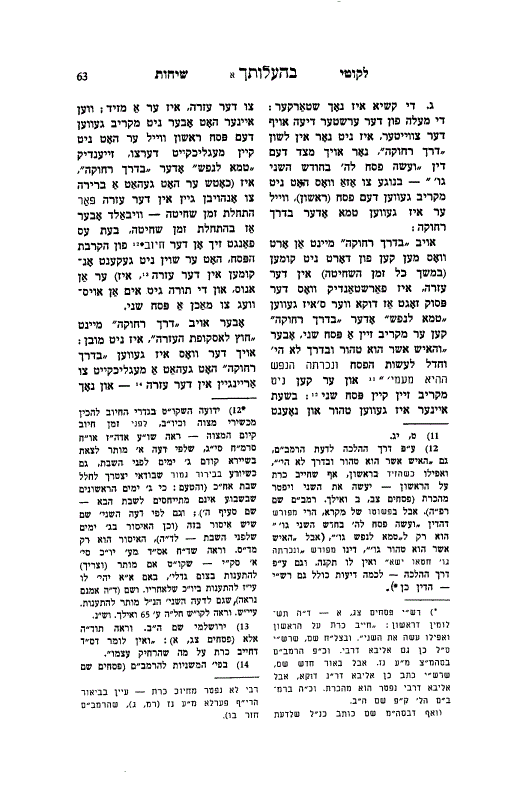
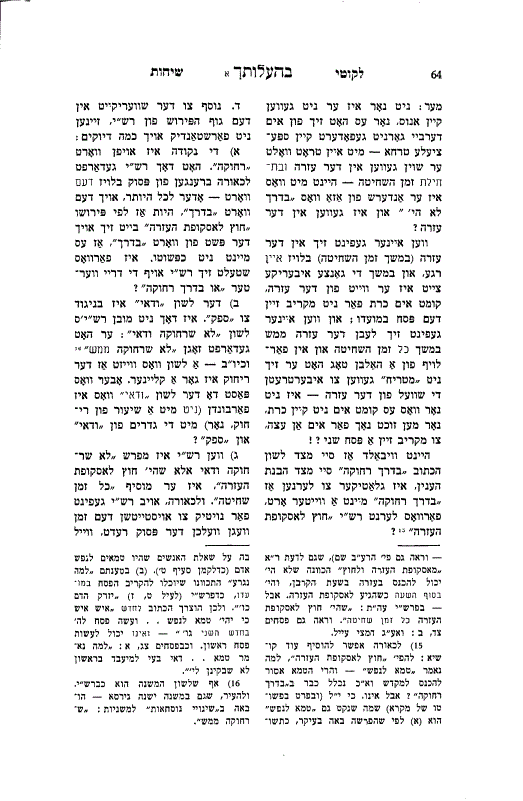
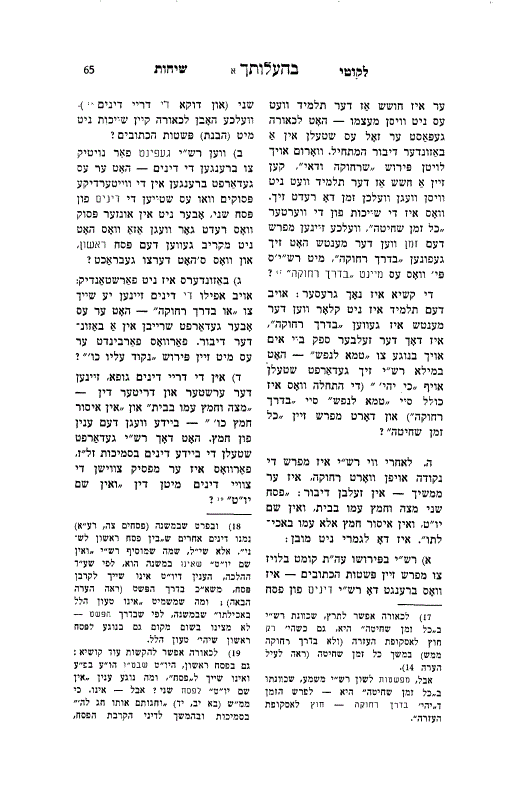
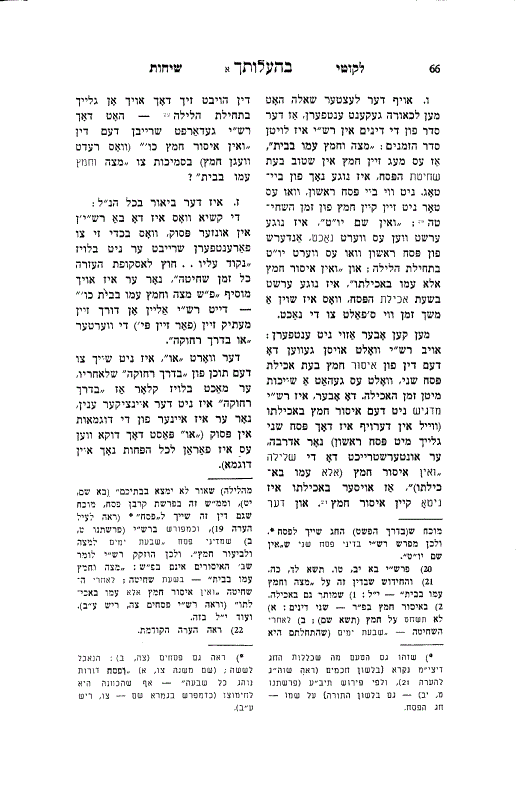
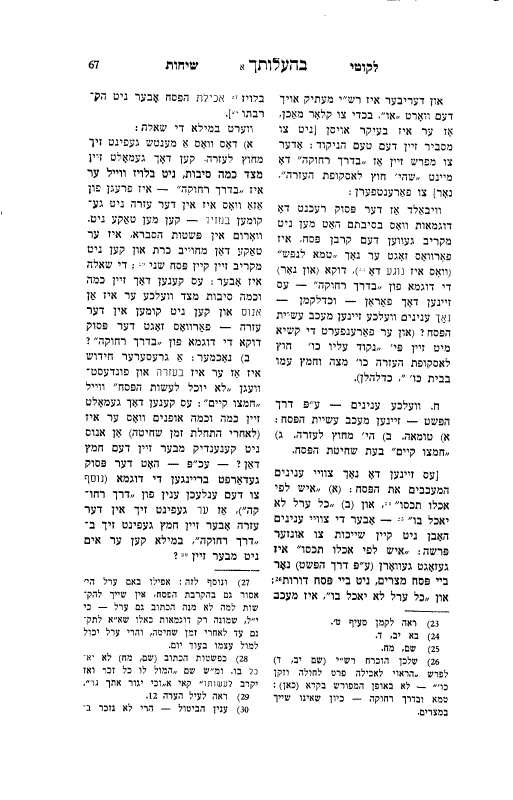
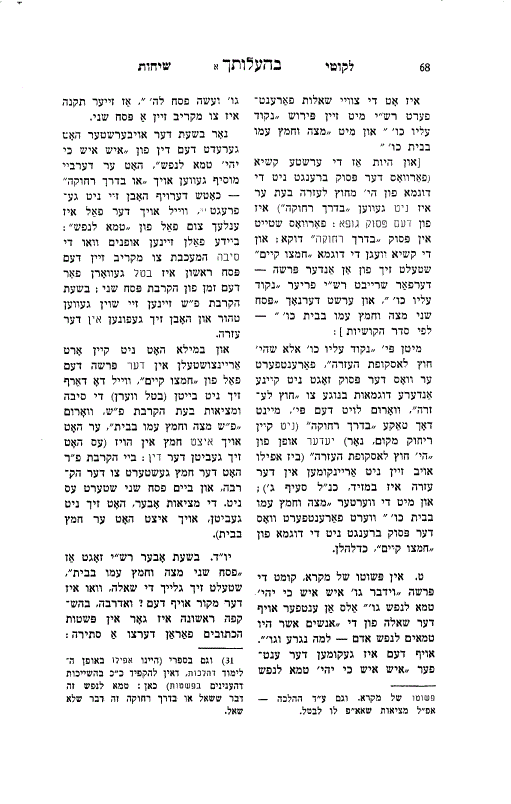
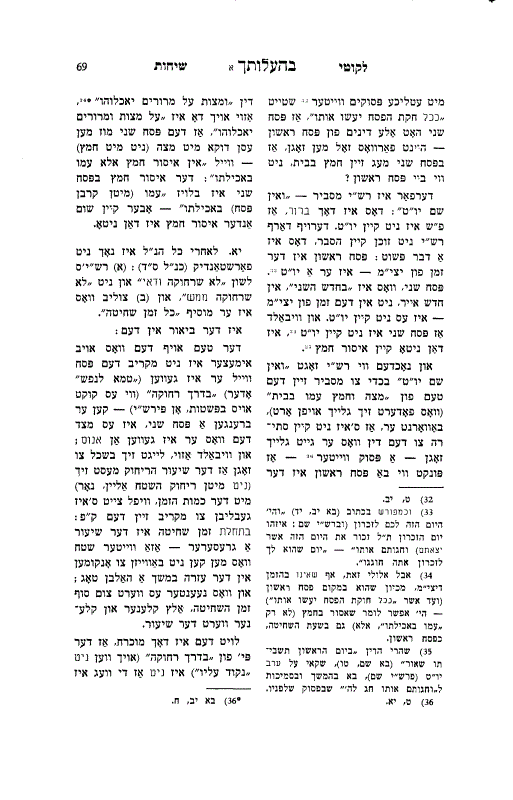
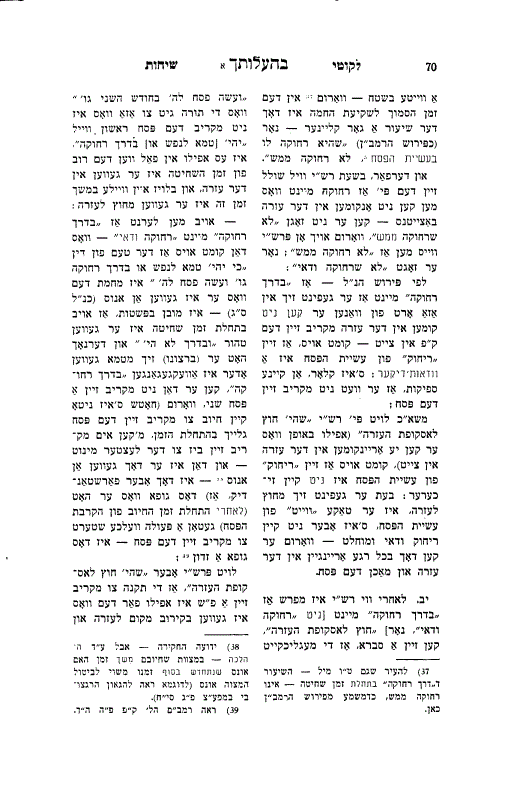
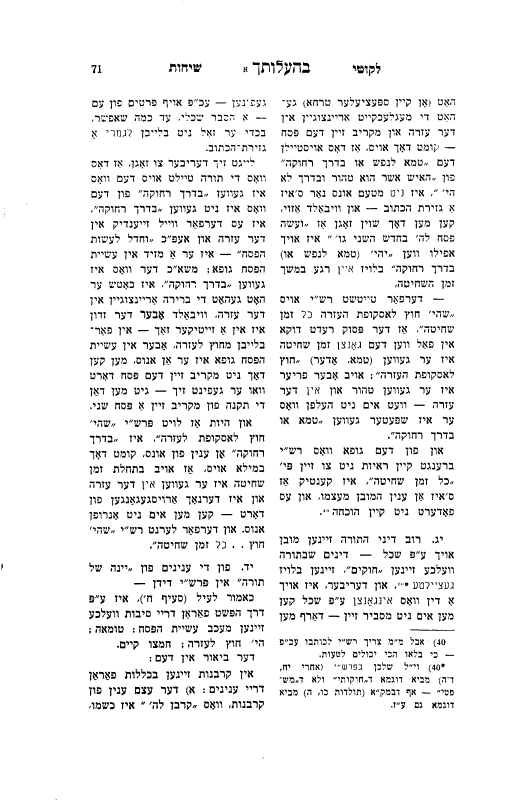
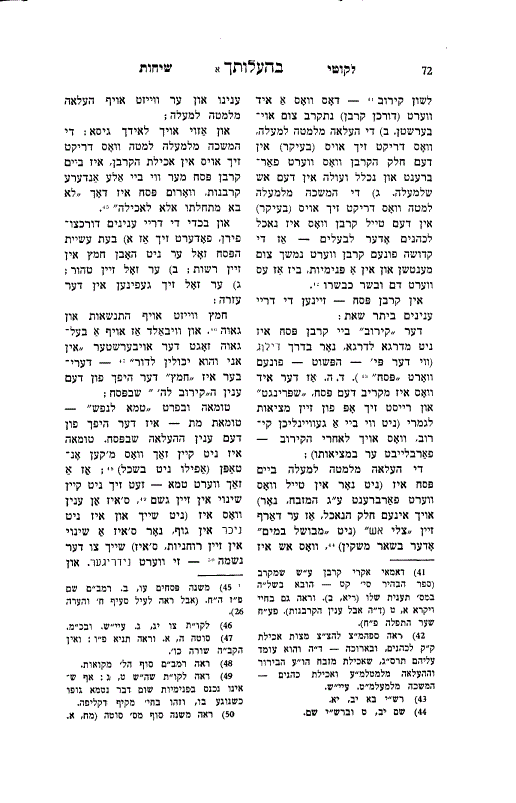
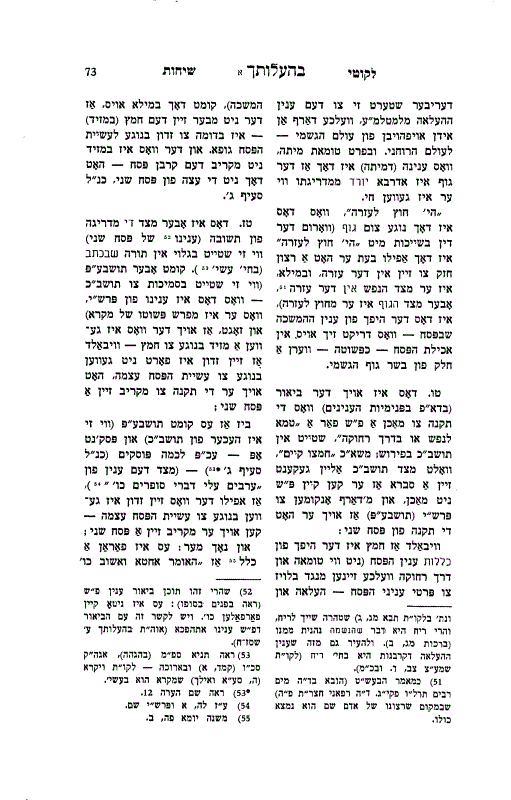
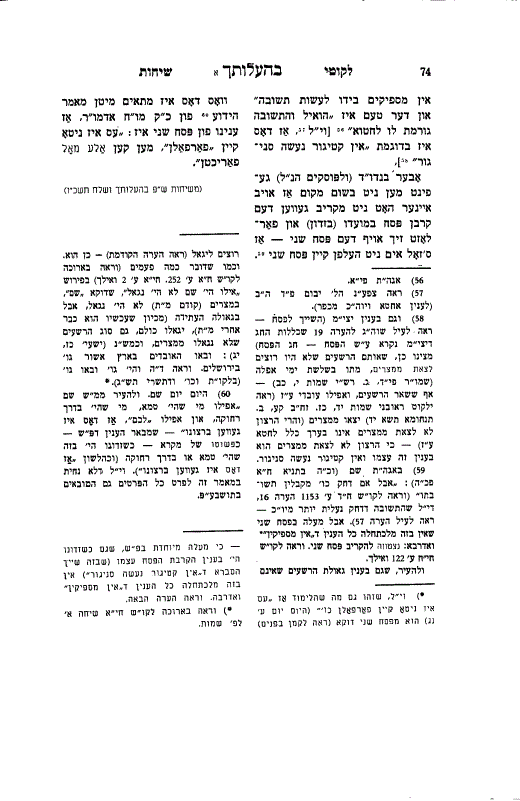
Rashi (Numbers 9:10) comments:
“Or on a distant journey”: The word is marked with dots to indicate that it need not be truly distant; rather, he was outside the threshold of the Temple courtyard during the entire time of the slaughtering of the Pesach offering. Regarding Pesach Sheni, one may have both matzah and chametz in his house; there is no festival day, and the prohibition of chametz applies only while eating the offering.
This requires explanation:
Why does Rashi not explain the phrase “a distant journey” as the Ramban does—that it refers to someone who is unable to reach the Temple courtyard during the time the Pesach sacrifice is offered? Seemingly, that is a simpler interpretation than Rashi’s explanation, according to which even someone who could have entered the courtyard but chose not to is still considered eligible for Pesach Sheni.
Furthermore, why does Rashi quote the word “or” (“או”) in his opening citation? And seemingly, the laws of Pesach Sheni have no direct connection to the interpretation of “a distant journey.” Why, then, does Rashi combine them in a single comment?
Explanation
The difficulty Rashi is addressing is hinted at by the word “or.” The verse implies that “a distant journey” is only one example of a case in which a person may bring the Pesach Sheni. If so, why does the Torah not mention another, seemingly greater novelty—someone who still possesses chametz and therefore cannot offer the Pesach sacrifice, even though he is physically present in the Temple courtyard?
Additionally, there are many other situations in which a person is prevented from entering the courtyard even though he is not on a distant journey. Why are those not mentioned?
Rashi therefore explains:
“The dots indicate that it need not be truly distant; rather, he was outside the threshold of the Temple courtyard.”
His intent is that any situation in which a person is outside the courtyard is included in the category of ‘a distant journey.’
As for why the Torah does not mention the case of someone whose chametz remains in his possession, that case does not belong to the category discussed in our passage, because:
“Pesach Sheni allows matzah and chametz to be in the house together.”
In the case of ritual impurity (and similarly, a distant journey), there was an actual condition preventing the person from bringing the Pesach offering. Once reality changes—the impure person becomes purified, or the traveler returns—he can bring Pesach Sheni.
The case of chametz is different. The physical situation has not changed; the chametz remains in his house. Rather, the law itself changes, since chametz is permitted in the house on Pesach Sheni.
A Further Point
Rashi writes:
“Not that it was certainly distant…”
rather than “not that it was actually distant.”
This wording suggests that even someone who stood outside the threshold of the courtyard and deliberately did not enter may still bring Pesach Sheni. The distance is only “uncertain,” because he could have entered immediately if he wished. Rashi adds “during the entire time of the slaughtering” because had he been inside the courtyard for even a single moment during that period, he would not be eligible for Pesach Sheni.
The explanation is as follows:
The Torah exempts from kareis (spiritual excision) someone who was outside the courtyard because his deliberate wrongdoing was not in the actual performance of the Pesach sacrifice itself, but rather in a side matter—remaining on a “distant journey.”
However, if he was already in the courtyard at the beginning of the slaughtering time, then even if he later became unable to offer the sacrifice, he cannot bring Pesach Sheni. At that point, his failure relates directly to the Pesach offering itself, since he was present and able to offer it.
Wine of Torah (Inner Meaning)
The three spiritual dimensions present in all sacrifices are expressed with even greater intensity in Pesach Sheni:
- Drawing close to G‑d (kiruv) – In the Pesach offering, this closeness comes through a leap (“dilug”).
- Elevation from below to above – In the Pesach offering, the entire sacrifice is roasted in fire.
- Drawing holiness downward – The Pesach offering is brought primarily for eating.
Based on this, one might initially think that only:
- Someone who is ritually impure (a deficiency in spiritual elevation), or
- Someone on a distant journey (a deficiency in drawing holiness into the physical world, since his soul desires to be in the Temple but his body is absent),
may bring Pesach Sheni.
But someone with chametz in his house—symbolizing arrogance, which opposes the very concept of drawing close to G‑d—would seemingly not qualify.
Therefore, only impurity and a distant journey are explicitly mentioned in the Written Torah.
The Oral Torah, however—and Rashi’s explanation—teach that even someone whose chametz remained in his house can bring Pesach Sheni, because his deliberate wrongdoing was not in the Pesach sacrifice itself.
Moreover, there are opinions in the Oral Torah that even if the person’s deliberate act was directly connected to the Pesach sacrifice—for example, he remained outside the courtyard despite being able to enter easily—he may still bring Pesach Sheni.
For nothing stands in the way of repentance.
Indeed, although generally our Sages say:
“One who says, ‘I will sin and then repent,’ is not given the opportunity to repent,”
we do not find such a limitation regarding Pesach Sheni. One who failed to bring the first Pesach offering with the intention of bringing the second is still able to bring Pesach Sheni.
As the saying of the Previous Lubavitcher Rebbe teaches:
“The message of Pesach Sheni is: It is never too late to make things right.