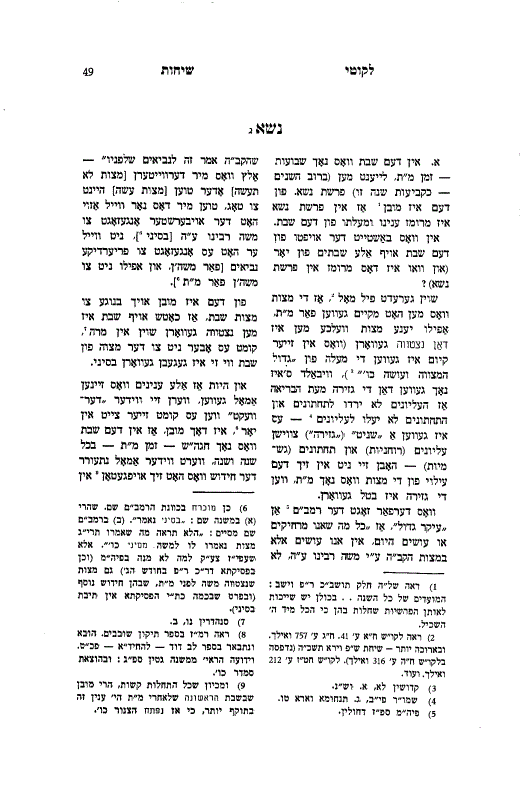
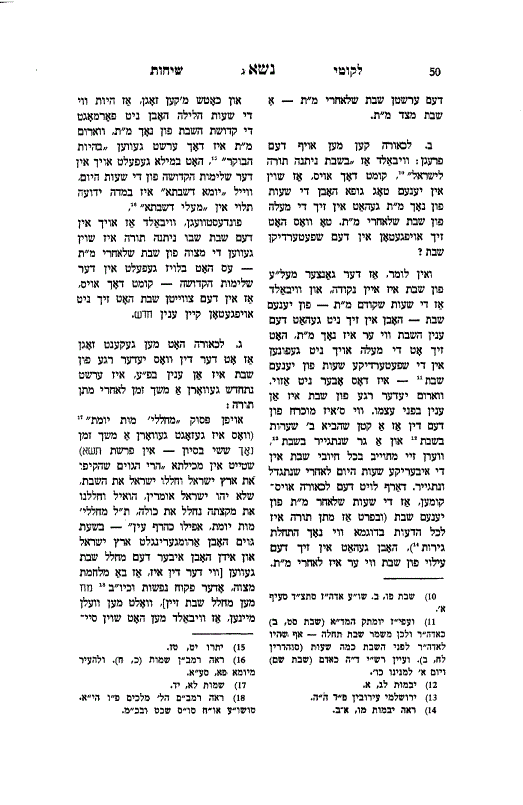
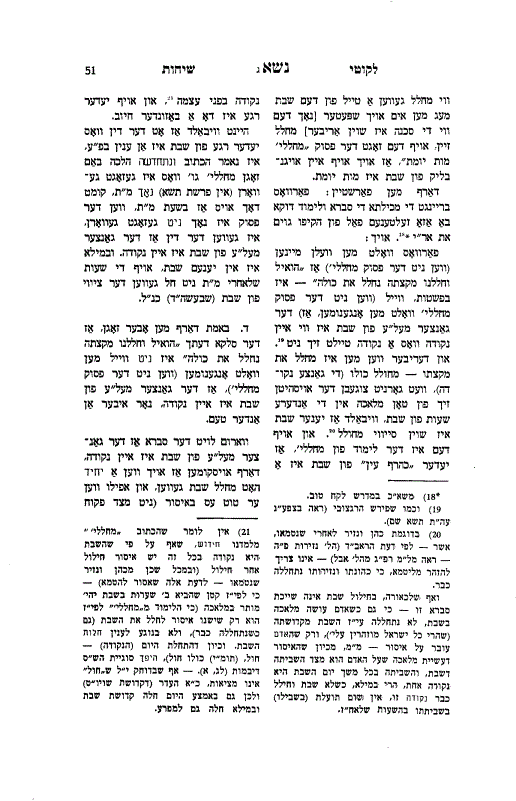
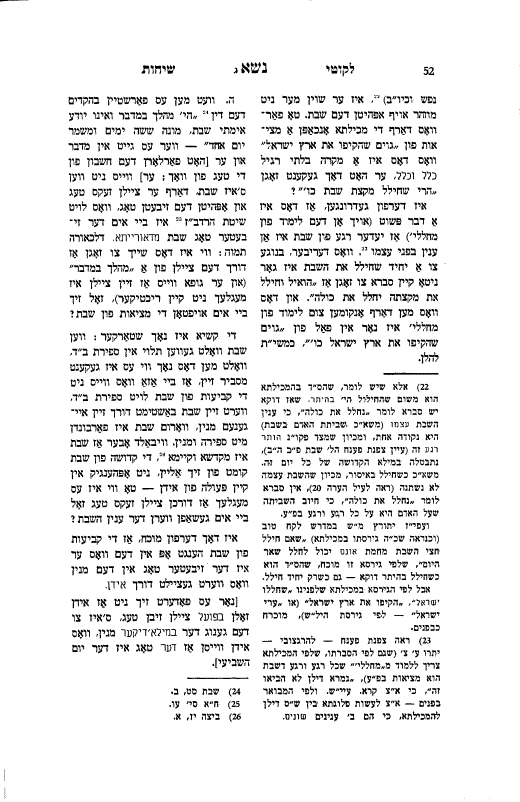
It must be said that there is a unique quality to the Shabbos of Parshas Naso, which in most years is the first Shabbos after Matan Torah. Although the Torah was given on Shabbos itself, and therefore the special quality of a post–Matan Torah Shabbos already existed on the day of Matan Torah, nevertheless that was not a complete Shabbos, but only part of a Shabbos.
At first glance, this is difficult to understand. Every moment of Shabbos is an independent entity. If so, the moments following Matan Torah should already have possessed the full quality of a post–Matan Torah Shabbos. What, then, is the unique advantage of the first Shabbos after Matan Torah?
One might suggest that the idea that every moment of Shabbos is an independent entity was only introduced after Matan Torah, in the section of Ki Sisa. The source would be the discussion concerning gentiles who surrounded Jews and caused them to desecrate part of Shabbos. The Torah teaches that Jews should not say, “Since we have already desecrated part of Shabbos, we may desecrate the rest.” If so, perhaps the Shabbos of Matan Torah was not yet considered a complete Shabbos.
However, this explanation cannot stand. The initial assumption that one might continue desecrating Shabbos after part of it had already been violated is not because all of Shabbos is one indivisible entity. If that were the case, the Gemara should have given the common example of an individual who desecrated Shabbos, rather than the unusual case of the entire Jewish people. Rather, the assumption was based on the idea that Shabbos requires the Jewish people collectively to observe it. If all Israel had already failed to observe it, one might have thought the remainder could also be violated. But the concept that every moment of Shabbos is an independent obligation is self-evident. Therefore, no one would think that an individual who desecrated part of Shabbos is exempt from observing the rest.
This can be understood by first examining the discussion regarding a person traveling in the wilderness who no longer knows which day is Shabbos. Since there is a dispute concerning when he should observe Shabbos, it is clear that this observance is not merely a reminder of Shabbos. Rather, the individual's Shabbos (at least on a Rabbinic level) is established through counting the days. Since the Sages instituted their enactments in a manner similar to Torah law, it follows that even when everyone knows which day is Shabbos, the existence of Shabbos depends on the reality that the Jewish people count the days leading to it.
Now, counting by itself is not an independent reality. Its significance comes only because “the mitzvah gives it importance” (mitzvosei achshavei). Therefore, the Shabbos on which the Torah was given did not possess the full quality of Shabbos. When the commandments were given at Sinai, the earlier commandment from Marah was nullified. As a result, for the portion of Shabbos that followed Matan Torah there was no command governing the counting of the days leading to that segment of Shabbos.
The unique quality of the mitzvos after Matan Torah is that they stem from the Divine Essence, not merely from a revelation, and that they have the power to affect physical reality itself. This idea is especially emphasized in Shabbos. Shabbos transcends the world, and within it is revealed a love of Hashem that is beyond reason and understanding. This revelation influences even the animal soul, bringing it to the state of “nullify your will before His will.”
This concept is alluded to in the beginning of Parshas Naso: “Take a census of the sons of Gershon.” The name Gershon contains two meanings. One is “drive out” or “expel,” referring to the revelation and emergence of a love that transcends intellect. The second is “Drive out the maidservant’s son,” symbolizing the expulsion of the evil within the animal soul, so that a person reaches the state of nullifying his own will before the will of Hashem.