
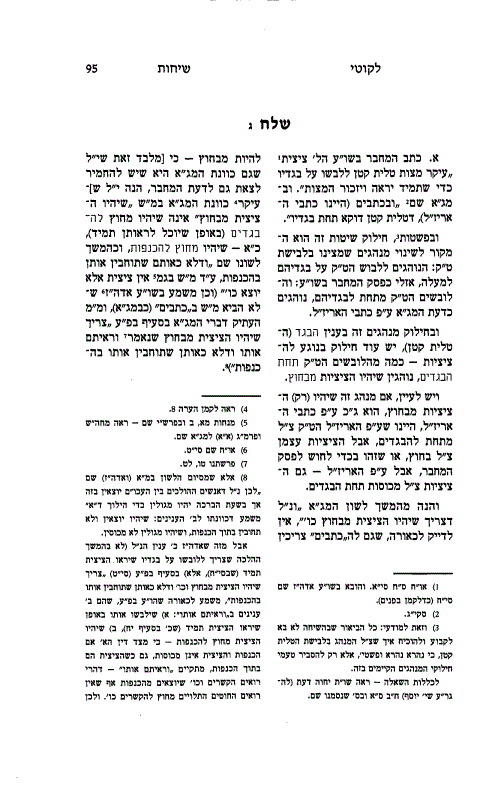
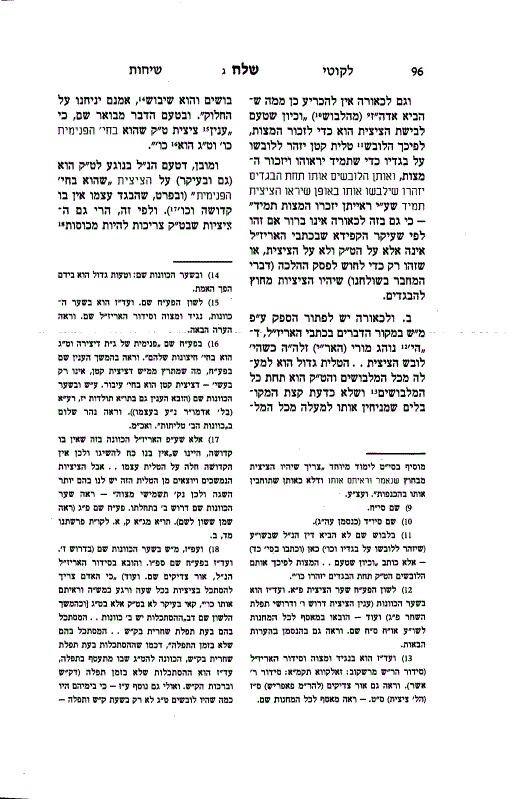
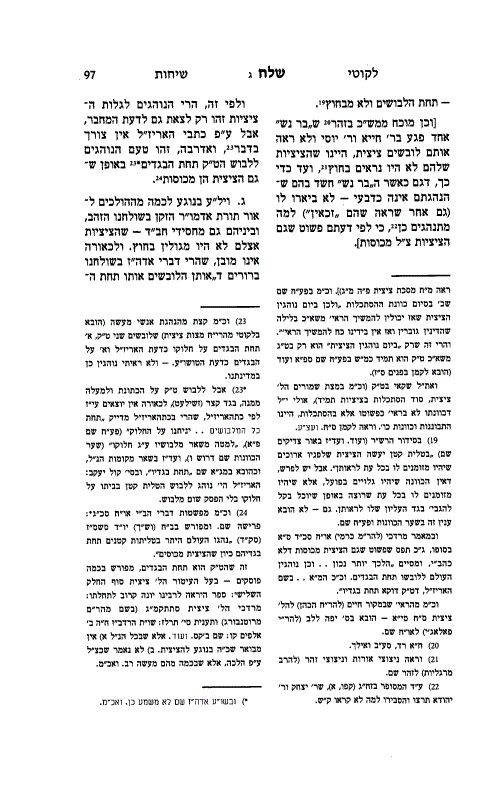
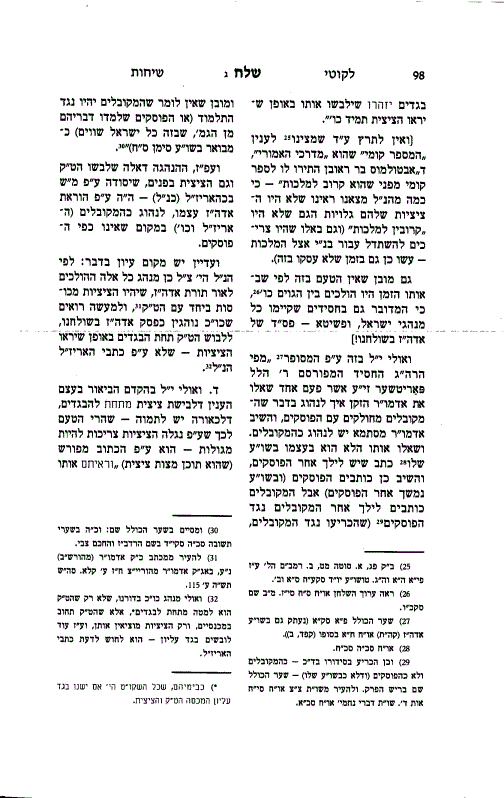
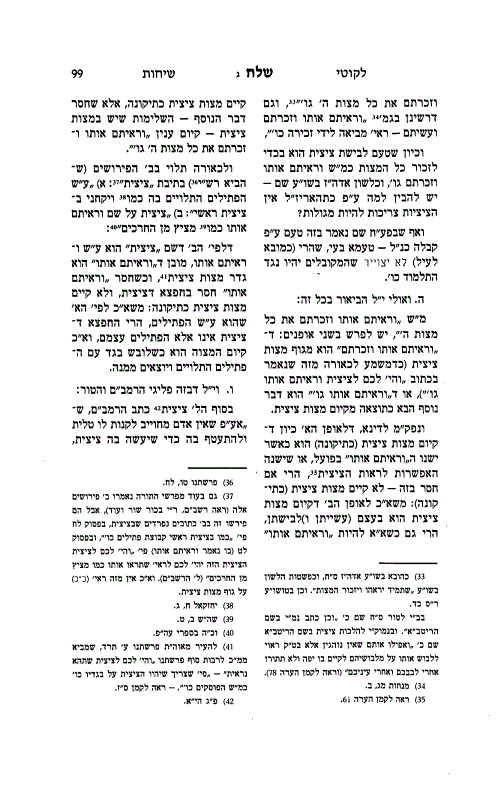
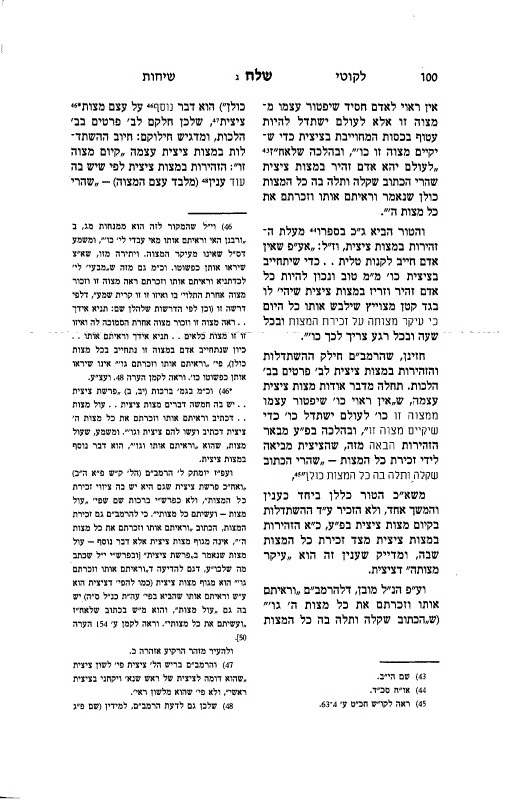
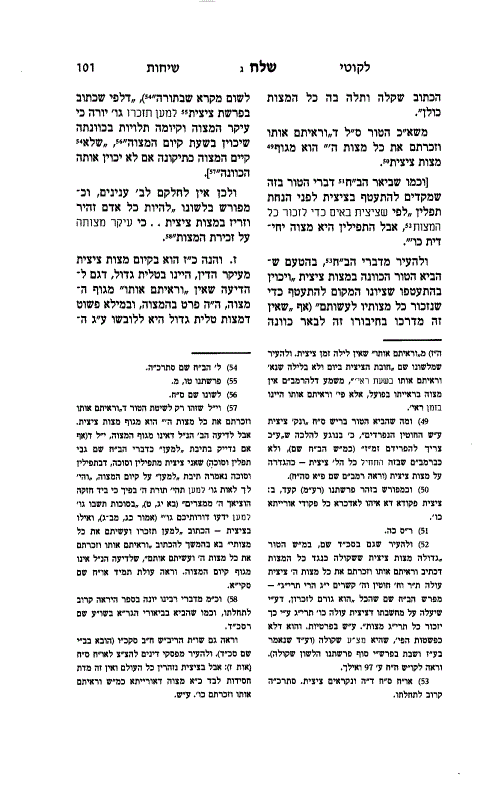
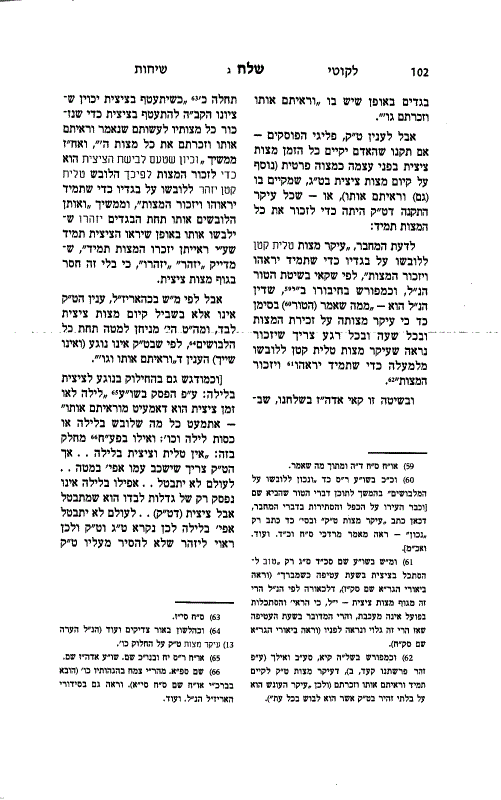
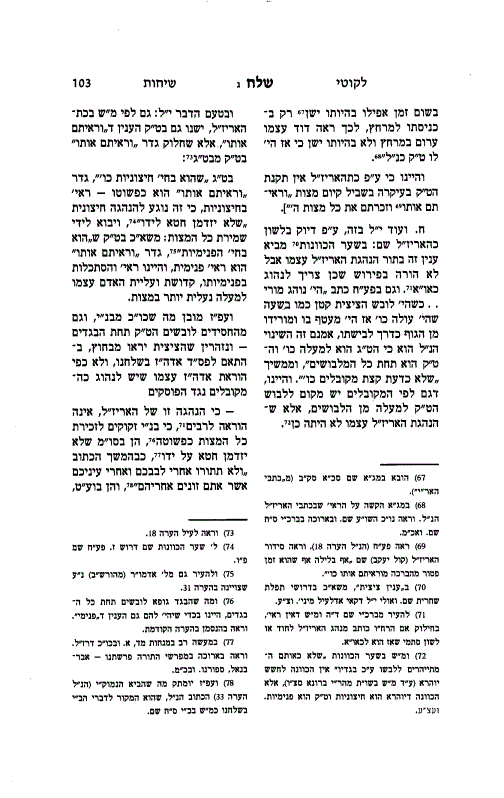
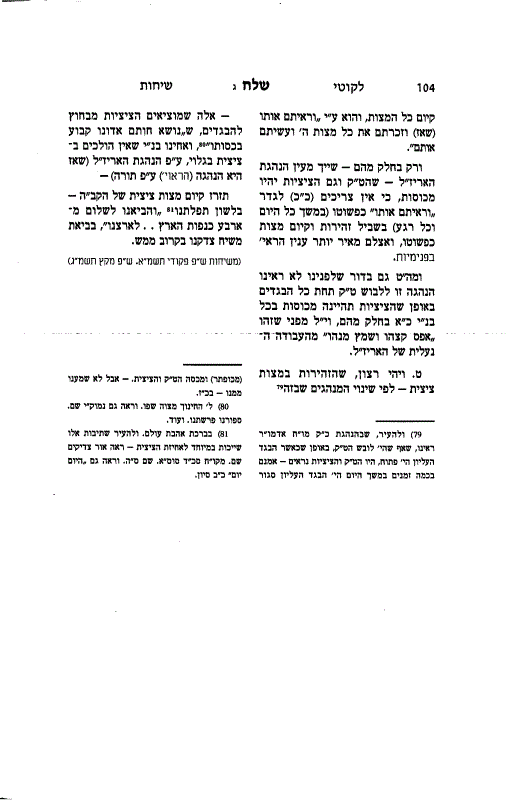
The Arizal's reason for keeping the tzitzis covered is that the tallis katan represents the level of inner spirituality (pnimiyus). Accordingly, even the concept of seeing the tzitzis refers to an inward, contemplative form of perception.
This also explains the custom of those who wear the tzitzis outside their clothing: most Jews require additional reinforcement in remembering all the mitzvos through actual physical sight.
The Mechaber writes in the Shulchan Aruch that the primary way of fulfilling the mitzvah of a tallis katan is to wear it over one's garments.
The Magen Avraham, however, cites the Arizal, who maintained that the tallis katan should specifically be worn under one's garments.
There are likewise differing customs regarding the tzitzis themselves.
From the teachings of the Arizal, who explains that tzitzis correspond to the level of pnimiyus, it would appear that not only the garment but also the tzitzis should remain covered.
If so, one must explain the widespread custom of wearing the tallis katan beneath one's clothing while leaving the tzitzis visible.
Explanation
The mitzvah of tzitzis can be understood in two ways:
1. Seeing the tzitzis is part of the very definition of the mitzvah
According to this approach, the verse:
“And you shall see it”
defines the mitzvah itself.
This corresponds to Rashi's explanation that the word tzitzis is related to the concept of looking or gazing, based on the phrase:
“And you shall see it.”
2. Seeing the tzitzis is an additional function of the mitzvah
According to this approach, the mitzvah of tzitzis exists independently, while seeing the tzitzis is an additional benefit that helps fulfill another purpose.
This corresponds to Rashi's alternative explanation that tzitzis is related to the lock of hair on the forehead (tzitzis harosh).
It also fits with the Rambam's presentation. After explaining the importance of being careful to fulfill the mitzvah of tzitzis, the Rambam discusses in a separate law how tzitzis leads a person to remember all the mitzvos.
According to this understanding, one fulfills the mitzvah of tzitzis even when he is not actually looking at the tzitzis.
The Basis of the Different Customs
Regarding the Rabbinic institution of wearing a tallis katan, it may be suggested that the Mechaber understands its purpose to be that a person should constantly be able to see the tzitzis.
According to the Arizal, however, the purpose of the tallis katan is different.
Its purpose is to ensure the continual fulfillment of the mitzvah of tzitzis throughout the day. Since the mitzvah itself does not depend on actually seeing the tzitzis, visibility is not essential.
The Arizal's Perspective
The Arizal explains that the tallis katan corresponds to the level of inner spirituality (pnimiyus).
Therefore, even the concept of:
“And you shall see it”
does not primarily refer to physical sight. Rather, it refers to an inward spiritual awareness and contemplation.
The "seeing" associated with tzitzis is an inner perception of G‑dliness and the remembrance of His commandments.
Why Many Leave the Tzitzis Visible
This also explains the custom of those who allow the tzitzis to remain outside their clothing.
Although the deeper meaning of tzitzis involves inward perception, most people require the assistance of actual physical sight in order to strengthen their remembrance of the mitzvos.
Therefore, leaving the tzitzis visible fulfills the simple meaning of:
“And you shall see it and remember all the commandments of the L‑rd.”
The visible tzitzis serve as a constant reminder, helping a person maintain awareness of Torah and mitzvos throughout the day.
Thus, both customs express valid spiritual approaches:
- According to the Arizal, the emphasis is on the inner dimension of the mitzvah, and therefore the tallis katan and tzitzis are ideally concealed.
- According to the widespread custom, the tzitzis are left visible so that their sight will strengthen one's remembrance of all the mitzvos and inspire practical observance.