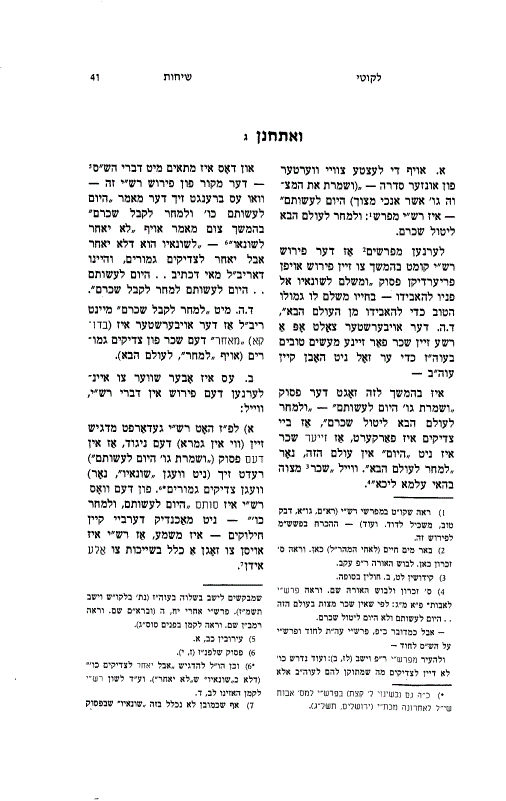
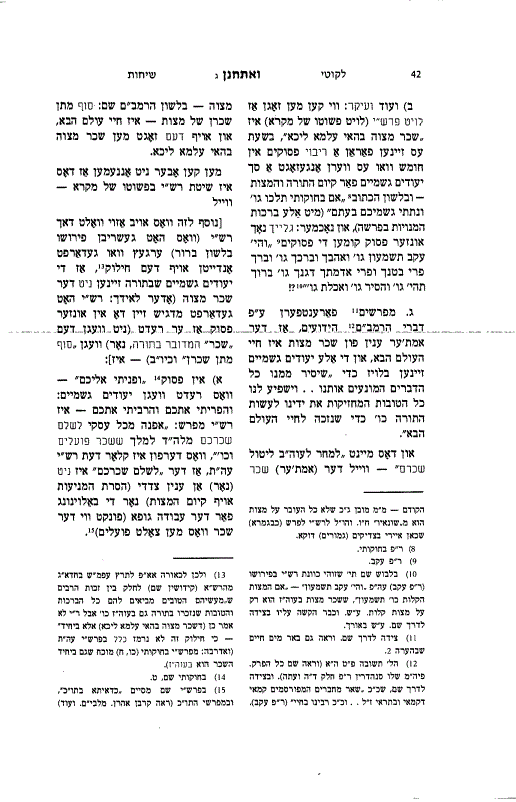
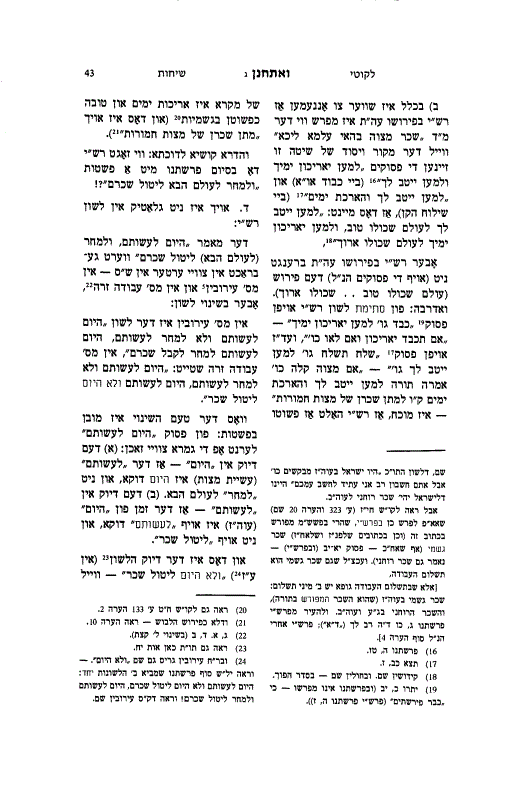
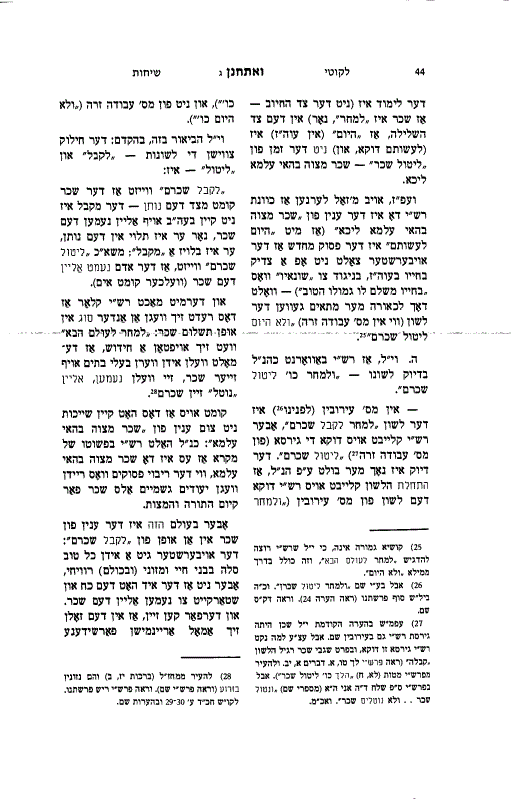
In our parshah, the Torah speaks of a special form of reward that a person can take on his own, without needing to “receive” it from Hashem. Regarding this unique reward, Rashi says, “Tomorrow, to take their reward.” This does not negate the ordinary reward for mitzvos that exists in this world.
Rashi comments:
“Today, to perform them—and tomorrow, in the World to Come, to take their reward.”
The commentators explain that this follows the preceding verse, “He repays those who hate Him to their face, to destroy them.” This means that Hashem rewards the wicked during their lifetime for the good they have done, in order to remove their portion from the World to Come.
Rashi then continues that, regarding the righteous, their reward is in the World to Come. This appears to follow the opinion in the Gemara that “there is no reward for a mitzvah in this world.”
At first glance, however, this is difficult to understand. According to Rashi’s straightforward interpretation of the Torah, it cannot mean that there is no reward for mitzvos in this world. Many verses explicitly state that when the Jewish people observe the mitzvos—“If you walk in My statutes”—they will receive physical blessings.
The explanation can be understood by carefully examining Rashi’s wording: “to take their reward,” following the version in Maseches Avodah Zarah. He does not say, “to receive their reward,” as in the version found in Eruvin.
The distinction is as follows. Here the Torah is speaking of a unique reward that a person can take on his own and does not have to receive from Hashem. When reward must be received from Hashem, it is possible that, because of external factors, it will not actually be granted in this world.
Regarding this special reward, however, Rashi says, “Tomorrow, to take their reward.” Nevertheless, there certainly remains the ordinary reward for mitzvos that is given in this world.
The inner explanation is that there are two forms of reward.
The first comes from the level of memalei kol almin, the Divine light that fills all worlds. On this level, the service of created beings has significance. Therefore, the reward follows naturally from the person’s avodah and comes automatically, without requiring an additional effort to obtain it.
This is the reward of Gan Eden, which corresponds to the level of memalei.
The second form of reward comes from the level of sovev kol almin, the Divine light that transcends all worlds. On this level, the service of created beings has no inherent significance. The reward is therefore miraculous and does not follow automatically from the person’s avodah. It must be actively taken.
This also explains the precise wording that, even in the future, the person will have “to take it.”
This is the reward of the World of Resurrection, which corresponds to the transcendent level of sovev.