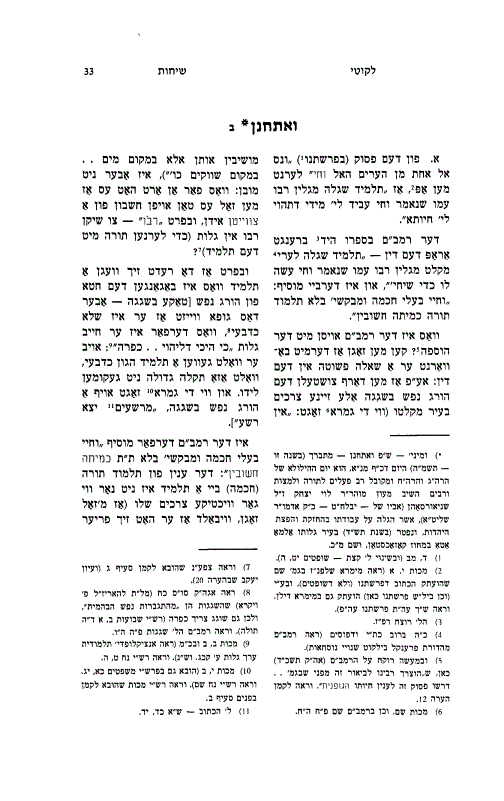
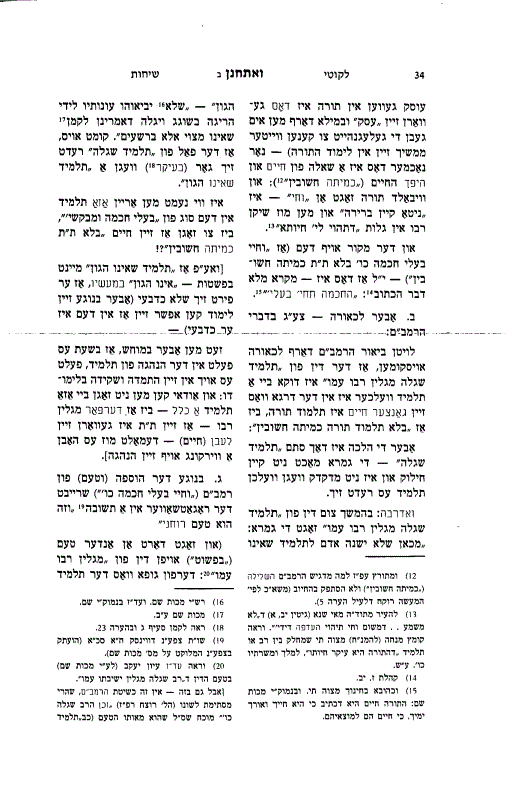
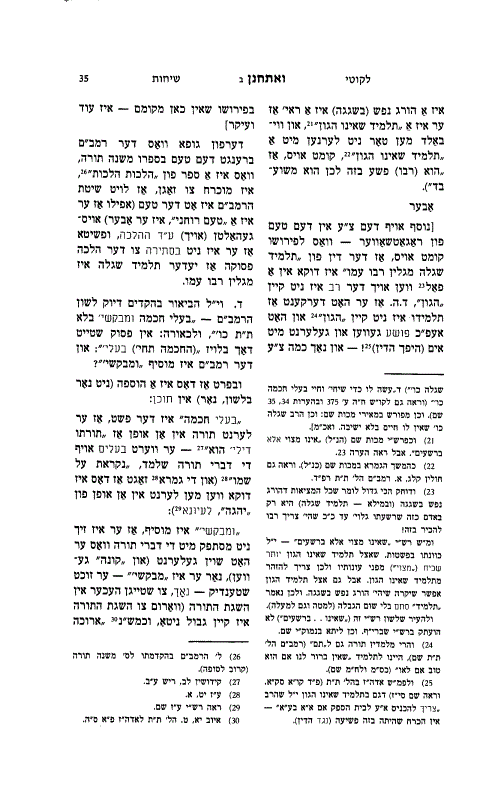
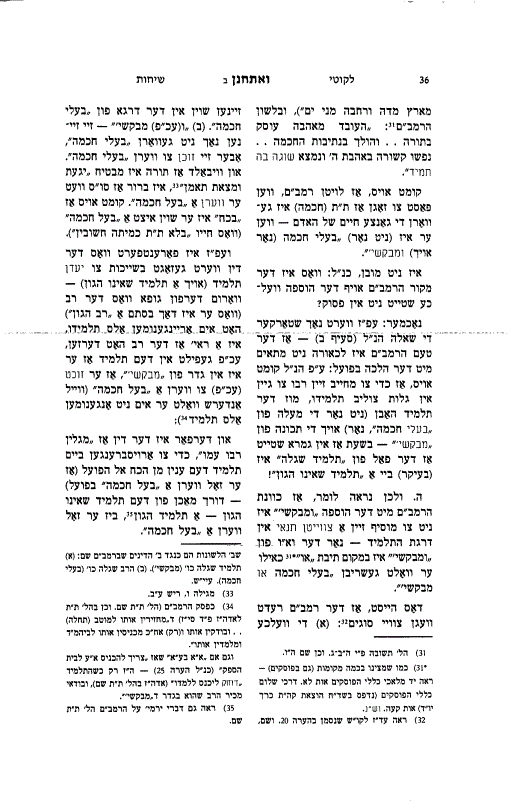
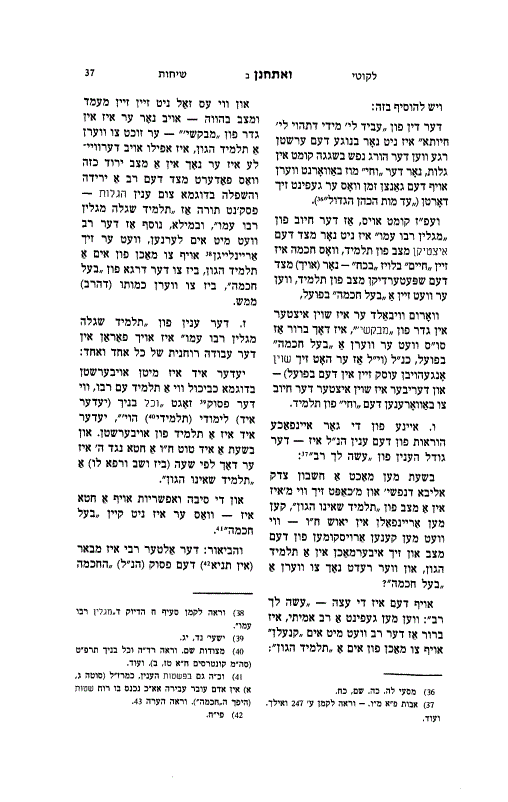
“A student who is exiled—his teacher is exiled together with him… for the lives of the masters of wisdom and those who seek it are considered like death without Torah.”
This law applies to every student. Although some students are not presently “masters of wisdom,” they are nevertheless “those who seek it.” Therefore, they will ultimately attain the level of “masters of wisdom.”
The Rambam states:
“If a student is exiled, his teacher is exiled together with him, as it is stated, ‘He shall flee… and live.’ For the lives of the masters of wisdom and those who seek it, without Torah, are considered like death.”
This requires explanation. The law applies to every student. How, then, can it be said that every student is among the “masters of wisdom,” for whom life without Torah is considered death?
This is especially difficult because the law concerns a student who unintentionally killed another person. Such an incident indicates that, in some sense, “evil emerges through one who is culpable.”
The explanation is that the words “those who seek it” introduce a separate category.
There are those who are already “masters of wisdom.” There are also students who, although they are not yet masters of wisdom, are nevertheless “those who seek it.” Since they sincerely seek wisdom, it is certain that they will ultimately reach the level of “masters of wisdom.”
When a teacher studies with a particular student, it is because he sees or senses within that student the potential to be among “those who seek wisdom,” and recognizes that he possesses the ability to become a master of wisdom.
This provides a lesson regarding the teaching, “Make for yourself a rav.” When a person has a rav, he can be confident that the rav will devote himself to him until he reaches the level of a master of wisdom.
This also contains a lesson in a person’s Divine service.
When a person is on the level of a “master of wisdom”—in accordance with the Alter Rebbe’s explanation that the blessed Ein Sof rests specifically within the faculty of Chochmah—he has no connection with sin.
When a person sins, however, and thereby becomes subject to the avenger of blood, he may think that he has no connection with the level of Chochmah.
The teaching is that he must not think this way. Chochmah exists in a concealed state within every Jew. By becoming one of “those who seek it”—by sincerely desiring that the faculty of Chochmah be revealed—then “wisdom gives life to those who possess it,” and the power of the yetzer hara is nullified.
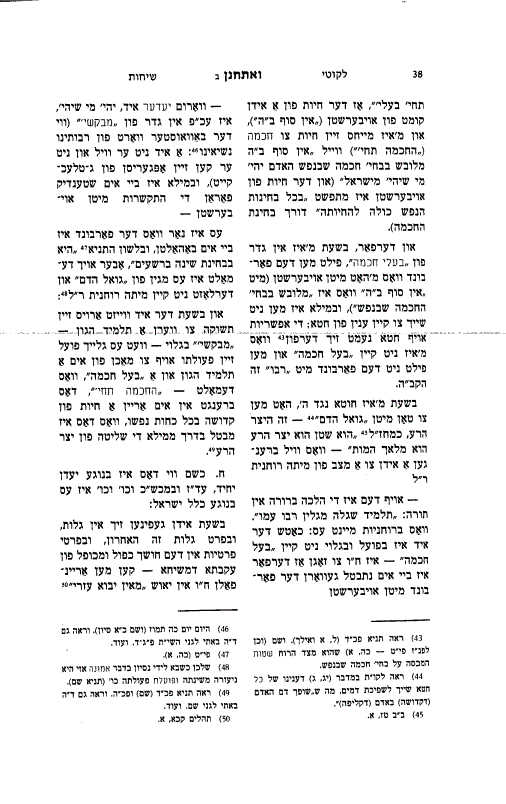
The same lesson applies to the Jewish people as a whole.
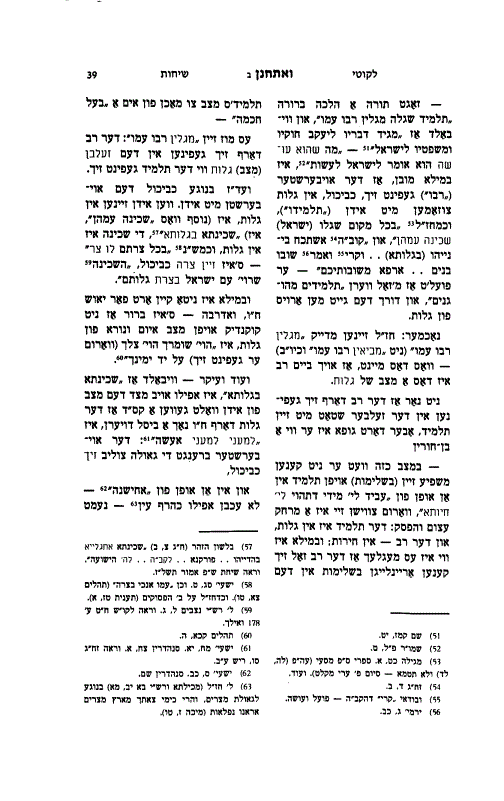
From this law we learn that we must never despair in exile, because “his teacher is exiled together with him.” Hashem is together with the Jewish people in exile, and therefore, “In all their distress, He is distressed.”
Consequently, Hashem declares:
“For My sake, for My sake, I will act.”