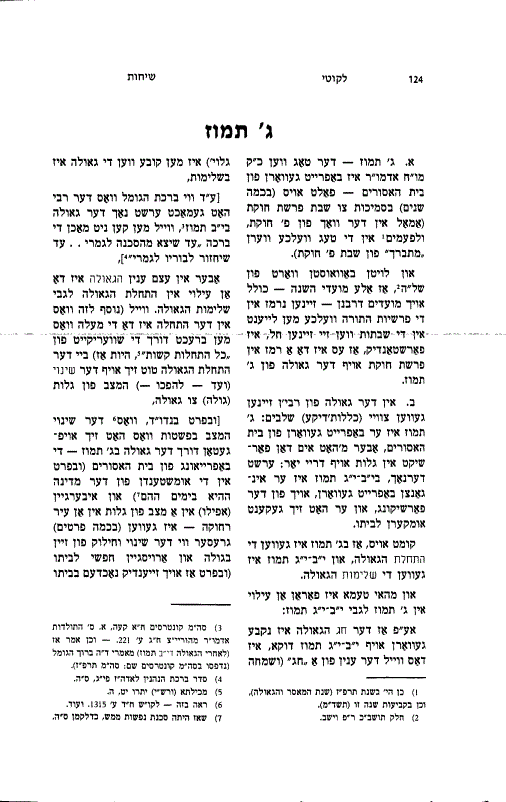
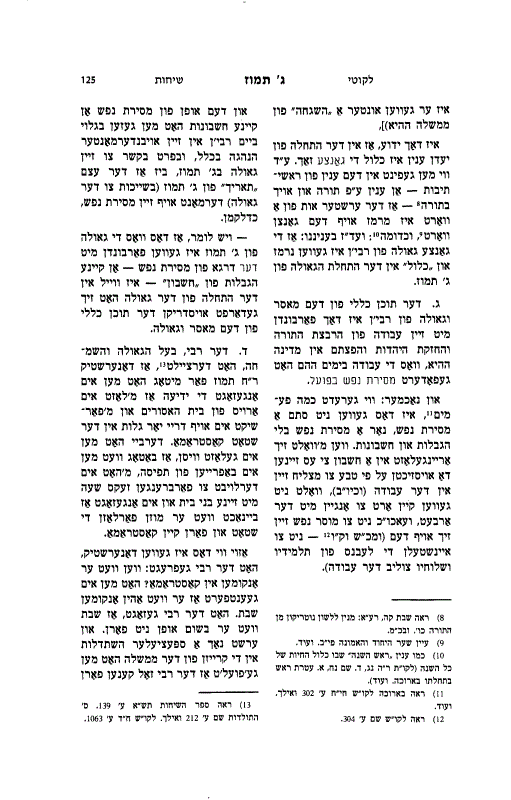
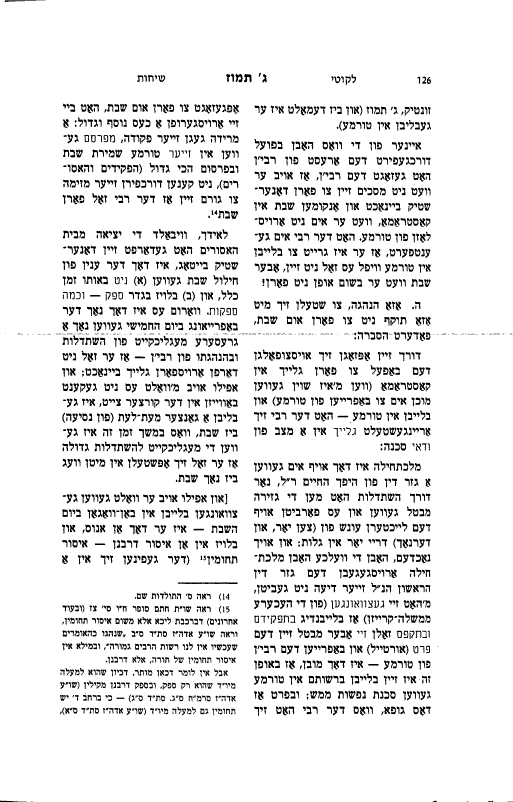
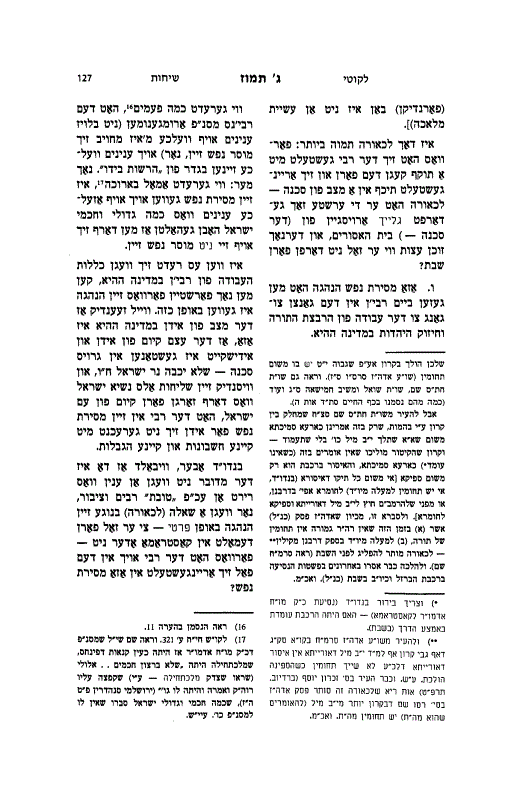
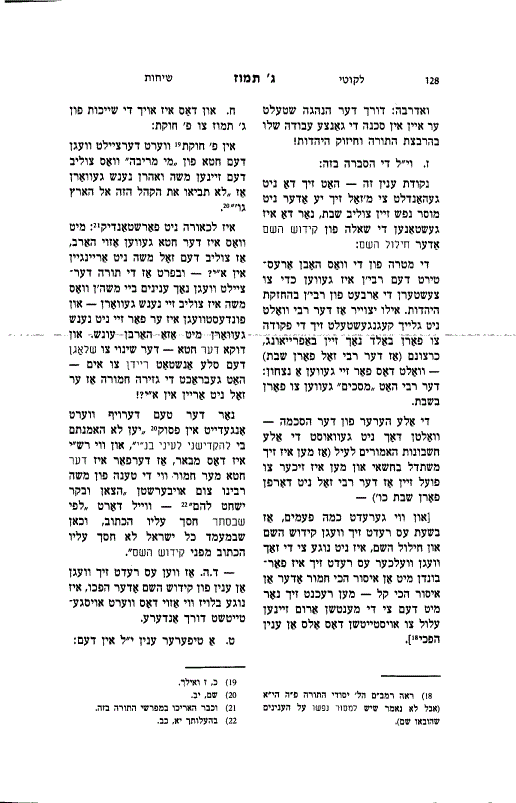
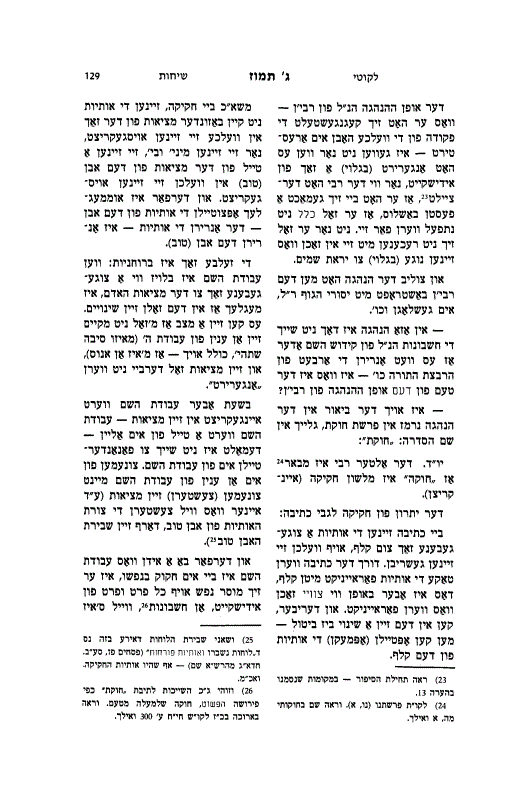
The Previous Rebbe (the Rebbe Rayatz) placed himself in mortal danger in order to avoid arriving in Kostroma on Shabbos. As a result, he remained in prison until after Shabbos rather than travel on the day of rest.
This raises a question:
How could he place himself in a situation of certain danger to life for the sake of a possible violation of Shabbos? After all, it was possible that the authorities might have changed their orders, postponed the journey, or arranged for the train to stop during Shabbos. Furthermore, the issue involved only a rabbinic prohibition, since the prohibition of traveling beyond the Shabbos boundary (techumin) in this case was of rabbinic origin.
The explanation is that the central issue was not the severity of the prohibition itself but the matter of Kiddush Hashem.
Had he agreed to travel by train on Shabbos, observers would have concluded that he had consented to violating Shabbos. In fact, this was one of the purposes behind the authorities’ decree—that he should be seen traveling on Shabbos.
This is similar to the episode of Moshe Rabbeinu at the waters of Merivah, where Hashem said:
“Because you did not sanctify Me...”
The issue was not merely the act itself but the missed opportunity to create a public sanctification of Hashem’s Name.
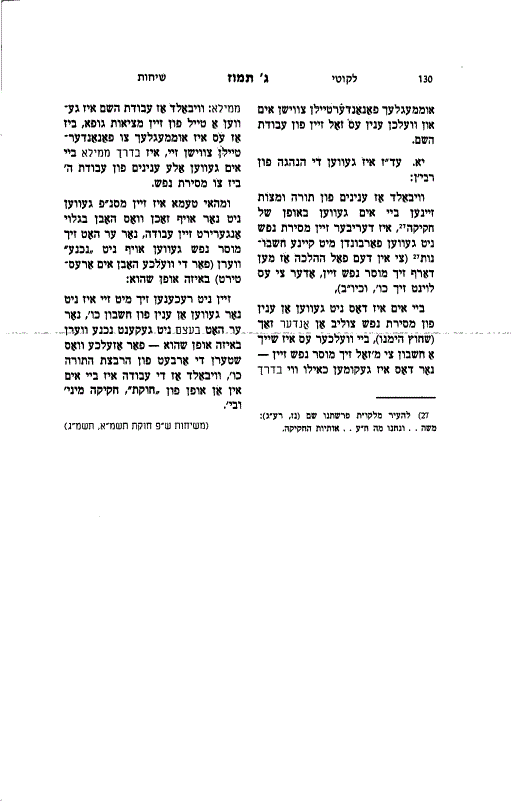
One may add that even while he was imprisoned—where no public audience could observe his conduct and where the element of Kiddush Hashem seemingly did not apply—the Rebbe Rayatz still conducted himself with complete self-sacrifice and refused to grant his captors any significance or authority over his spiritual commitment.
This can be understood from the name of the parshah: Chukas.
A chok represents something engraved. When the teachings of Torah are engraved within a person's soul, they are not merely ideas that he possesses; they become inseparable from his very identity.
When Torah is engraved into one's being, it is impossible to separate oneself from the service of Hashem. Just as one cannot separate from oneself, so too one cannot separate from Torah and mitzvos.
Therefore, it becomes inconceivable to submit to those who wage war against Torah and mitzvos.
For this reason, the Rebbe Rayatz stood against his persecutors with unwavering strength and self-sacrifice. His resistance was not based merely on legal calculation or rational evaluation. It flowed from a level where Torah and his very existence were one and the same.
When Torah is engraved upon the soul, compromise is no longer an option, and a Jew finds the strength to stand firm against every challenge with absolute devotion to Hashem.