לקוטי שיחות חלק יח - חוקת בלק - י"ב י"ג תמוז

Likutei Sichos vol 18 - Chukas-Balak: 12-13 Tammuz - Beyond Reason: The Victory of Yud-Beis Tammuz

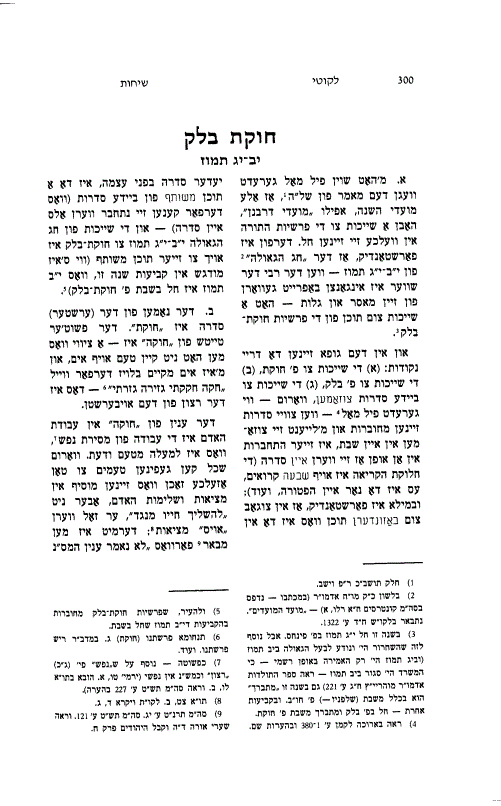
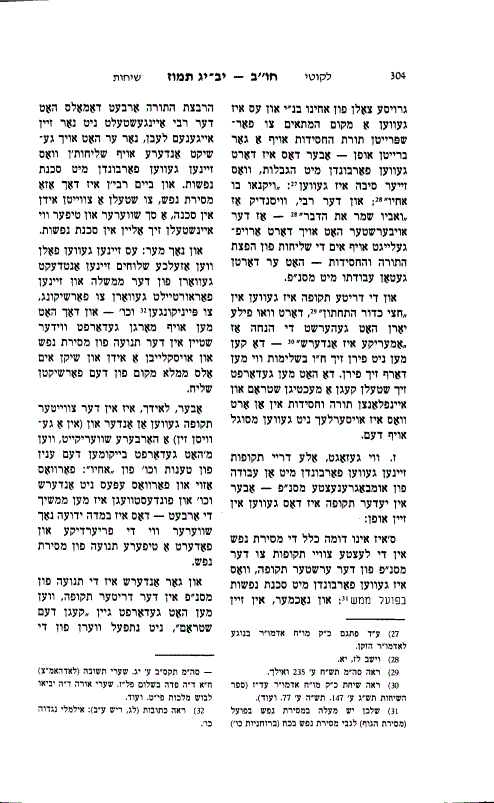
Parshas Chukas, Parshas Balak, and Yud-Beis Tammuz share a common theme: forces that operate beyond reason. Balak’s hatred was irrational, while the Rebbe Rayatz’s self-sacrifice transcended all calculation. Through mesirus nefesh beyond reason, opposition itself was transformed and overcome.

The connection between Parshas Chukas and Yud-Beis Tammuz is that a chok represents something that transcends reason and understanding.

The parshah is called simply “Chukas” rather than “Chukas HaTorah” because this statute is entirely beyond the framework of human intellect, unlike other commandments that may possess some degree of rational explanation.

This is the connection to Yud-Beis Tammuz.

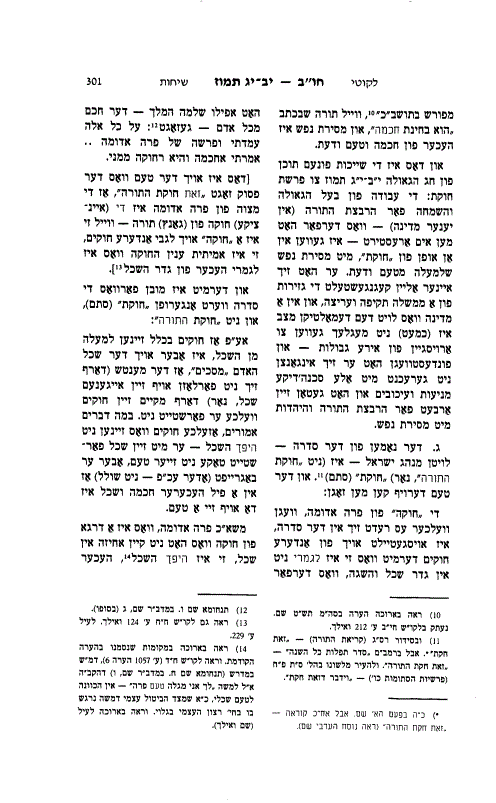
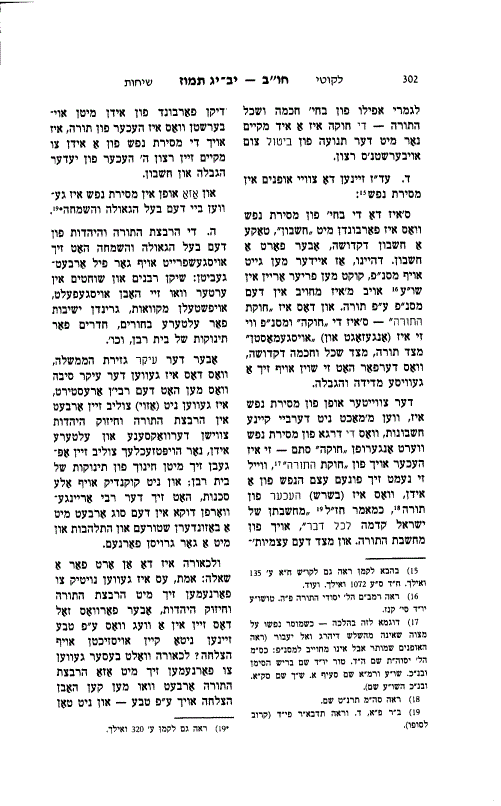
The self-sacrifice (mesirus nefesh) of the Baal HaGeulah, the Rebbe Rayatz, was of a kind that transcended the very category of rational calculation. He did not pause to consider whether there was a formal obligation to risk his life. He devoted himself to strengthening Torah and Judaism regardless of the consequences.

In particular, he invested extraordinary effort in Jewish education, even though this endangered many of his other activities and exposed him to severe persecution.

Throughout the three distinct periods of his leadership, his mesirus nefesh expressed itself in different ways. This demonstrates that his self-sacrifice stemmed from the very essence of his soul. Because it came from the essence, it could manifest itself through every avenue and circumstance.

The connection to Parshas Balak is as follows:

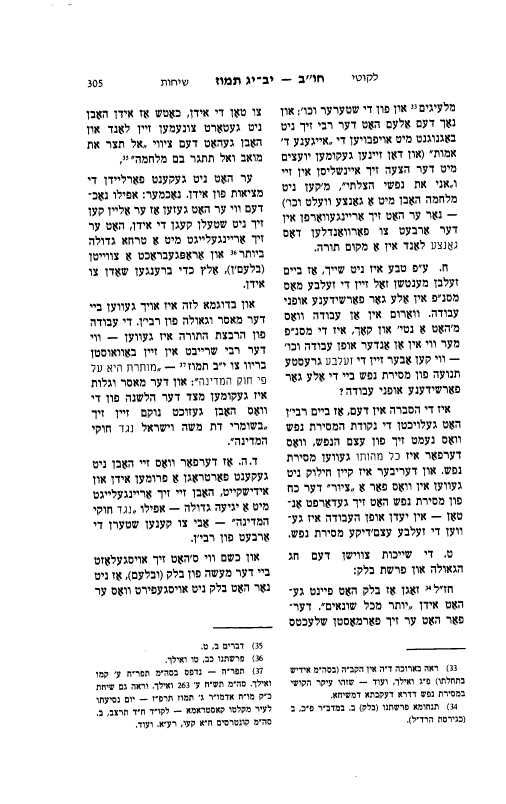
Balak hated the Jewish people more intensely than any of their other enemies. This hatred was especially irrational because the Jewish people had been explicitly commanded not to wage war against Moav. Balak therefore had no objective reason to fear them.

Yet precisely because of his hatred, not only did his attempts to curse Israel fail, but:

“Hashem your G‑d transformed the curse into a blessing.”

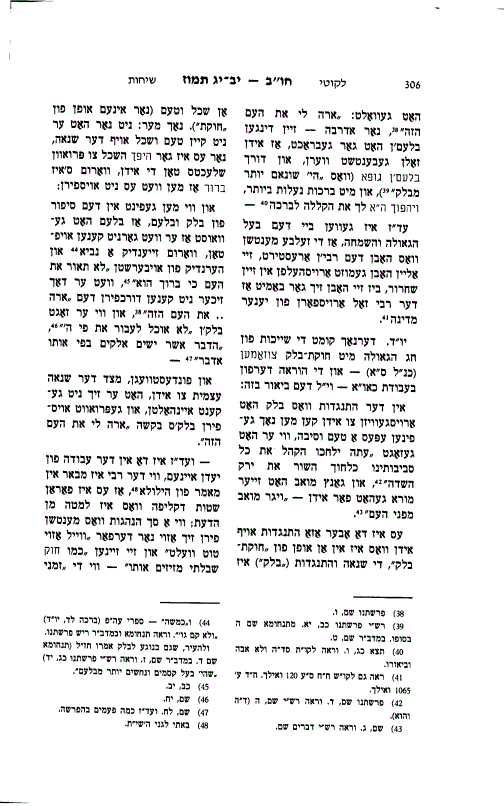
A similar phenomenon occurred in connection with the liberation of Yud-Beis Tammuz.

The imprisonment of the Rebbe Rayatz resulted from the hatred and opposition of his enemies, even though the activities in which he was engaged were permitted according to the laws of the country. Yet the very authorities who imprisoned him were eventually compelled to assist in his release, both from prison and from the country itself.

This explains the common theme that unites Chukas and Balak.

Balak’s hatred was itself beyond reason. It was a kind of “Chukas Balak”—an irrational hatred that could not be explained by logic.

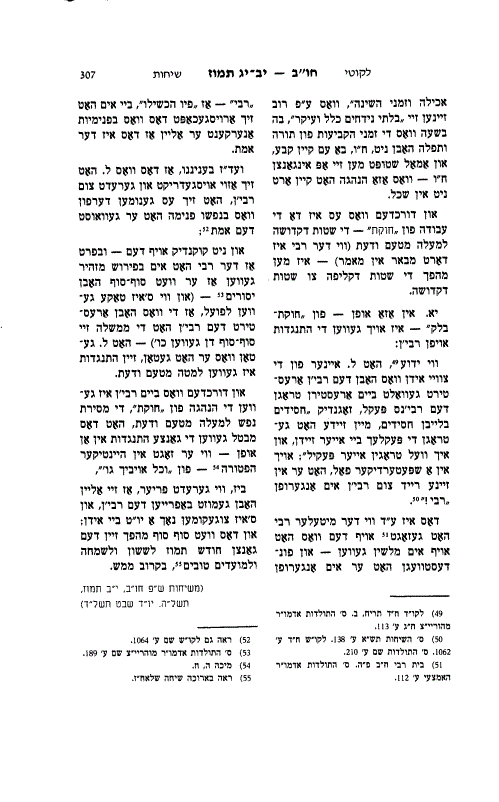
This is illustrated by the well-known story that even one of the leading persecutors addressed the Rebbe Rayatz as “Rebbe.” Deep down, he recognized the Rebbe’s greatness. Yet despite that recognition, he continued to harbor an irrational hatred that transcended reason.

The response to such opposition was the Rebbe’s own self-sacrifice, which also transcended reason.

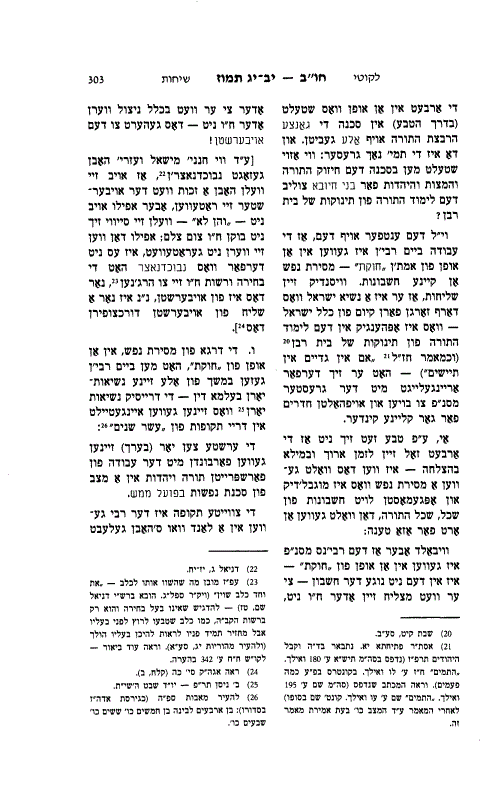
Because the opposition came from a level below and beyond rational calculation, it could not be overcome through ordinary reasoning. It was nullified only through a mesirus nefesh that originated from an even deeper level—one that was entirely above reason and understanding.

Thus, the lesson of Yud-Beis Tammuz is that when a Jew stands firm with unwavering commitment to Torah and holiness, rooted in the essence of the soul and beyond all calculation, even the strongest and most irrational opposition ultimately dissolves and is transformed into a force that assists the Divine purpose.


The Rebbe emphasizes that mesirus nefesh is not merely an act reserved for times of extreme duress. Rather, it is a fundamental aspect of our daily lives, rooted deeply in our connection with Torah and mitzvot. The lesson imparted by Rabbi Yosef Yitzchak’s steadfastness serves as a source of inspiration and strength to Jews worldwide.

Moreover, he discusses how self-sacrifice inspired by sincere faith can transform even seemingly adverse situations into opportunities for greater divine revelation, adding that faith in Hashem inevitably leads to spiritual empowerment. This divine service transcends physical limitations and adverse earthly circumstances.

Ultimately, the Rebbe urges every individual to internalize this message and apply it to their own life, focusing on divine service with devotion that overrides personal challenges. This dedication not only reinforces personal faith but also influences those around in bringing them closer to their heritage and the beauty of Torah observance.

Leave Feedback