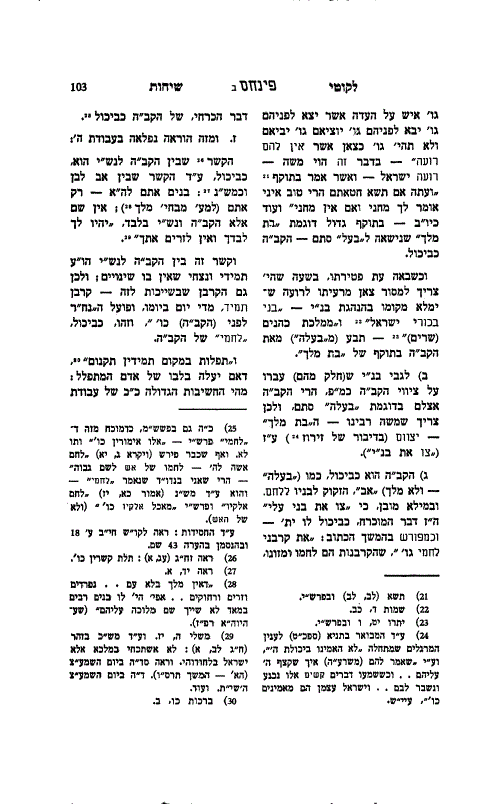
On the verse, "Command the Children of Israel and say to them: My offering, My food for My fire-offerings..." (Numbers 28:2), Rashi comments:
"Command the Children of Israel." What was said immediately beforehand? 'May the L‑rd appoint a man over the congregation.' The Holy One, blessed be He, said: 'Before you command Me concerning My children, command My children concerning Me.' This may be compared to a king's daughter who was about to depart from this world and instructed her husband concerning her children... as explained in the Sifrei.
This requires explanation.
What difficulty in the verse prompts Rashi to give this explanation?
At first glance, the lesson of the analogy seems less obvious than the lesson of the verse itself. It is understandable that Moshe should ask Hashem to appoint a new leader for the Jewish people. But in the analogy, why would the woman need to instruct her husband to care for their children? She has only a few children, whereas in the analogy's application there is an entire nation.
Furthermore, why does Rashi cite the version found in the Sifrei that speaks of "a king's daughter... instructing her husband", rather than the more familiar version, "a king whose wife..."?
The explanation is as follows.
Rashi is troubled by the wording, "Command the Children of Israel."
The command to bring the offerings would seem to apply primarily to the priests, who actually offer the sacrifices. Why, then, is the command addressed to all the Jewish people?
Therefore, Rashi explains that "Command the Children of Israel" is a general exhortation to every Jew to remain mindful of Hashem. Only afterward does the Torah add, "Say to them," teaching that this general commitment must find practical expression through the communal offerings.
However, this raises another question.
Rashi quotes Hashem as saying, "Before you command Me concerning My children..."
How can Moshe be described as commanding Hashem?
Moreover, Moshe's request that Hashem appoint a leader seems far more essential than the command regarding the offerings, which serve primarily to bring satisfaction before Hashem. Why, then, does Hashem respond by telling Moshe to command the Jewish people about the offerings?
The answer becomes clear from the details of Rashi's analogy.
Moshe is compared to a king's daughter.
As the king's daughter, he possesses the standing and authority to plead with Hashem on behalf of the Jewish people and ask Him to forgive them.
Significantly, Rashi says she instructed "her husband," not "her father," the king.
This alludes to the fact that because some Jews had sinned, their relationship with Hashem at that moment resembled that of a husband rather than that of a father and king.
Therefore, Hashem tells Moshe:
"Command My children concerning Me."
Moshe must urge the Jewish people to strengthen and renew their bond with Hashem through the continual offerings.
A Timeless Lesson
This Rashi teaches a profound lesson about the eternal relationship between Hashem and the Jewish people.
The bond between a father and his child is everlasting and can never be severed.
At the same time, Hashem כביכול desires and awaits the service of the Jewish people, who bring Him "My food for My fire-offerings."
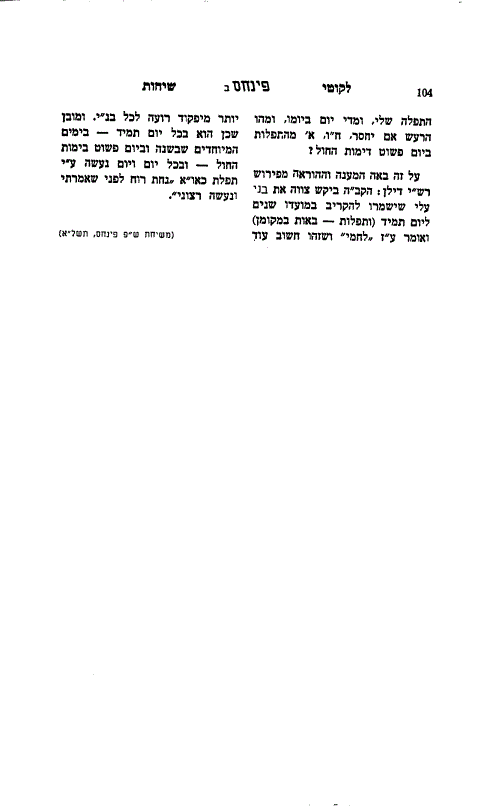
Since our prayers were instituted in place of the daily sacrifices, this highlights the immense importance of every prayer—even the simple weekday prayers offered by every Jew.
Every sincere prayer strengthens the eternal bond between Hashem and His people.