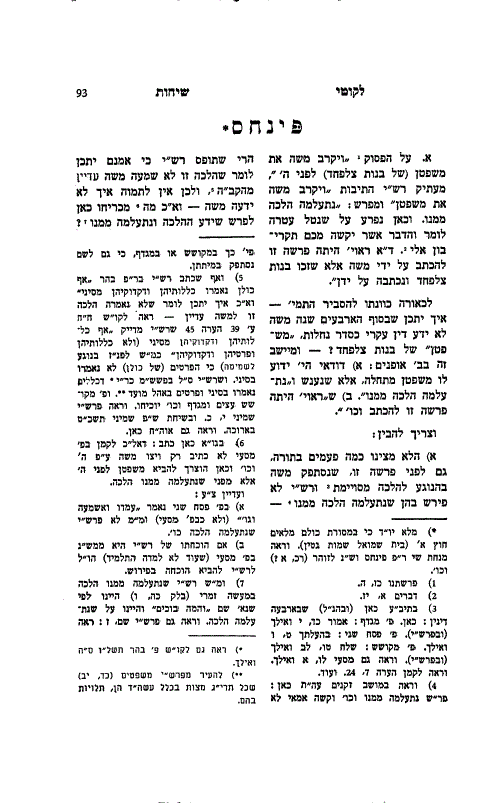
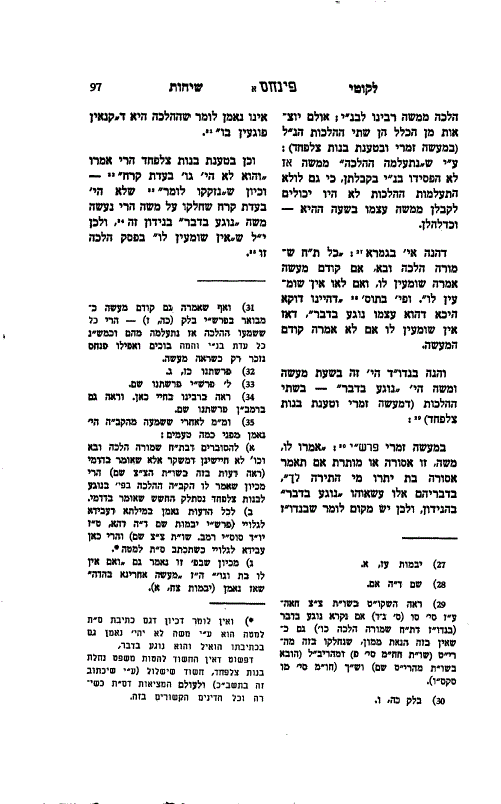
On the verse, "Moshe brought their case before the L‑rd" (Numbers 27:5), Rashi comments:
"Moshe brought their judgment — The halachah was concealed from him. Here he was called to account for having taken a crown for himself when he said, 'The matter that is too difficult for you, you shall bring to me' (Deuteronomy 1:17).
Another explanation: This section really deserved to have been written through Moshe, but the daughters of Tzelafchad merited that it be recorded through them."
This requires explanation.
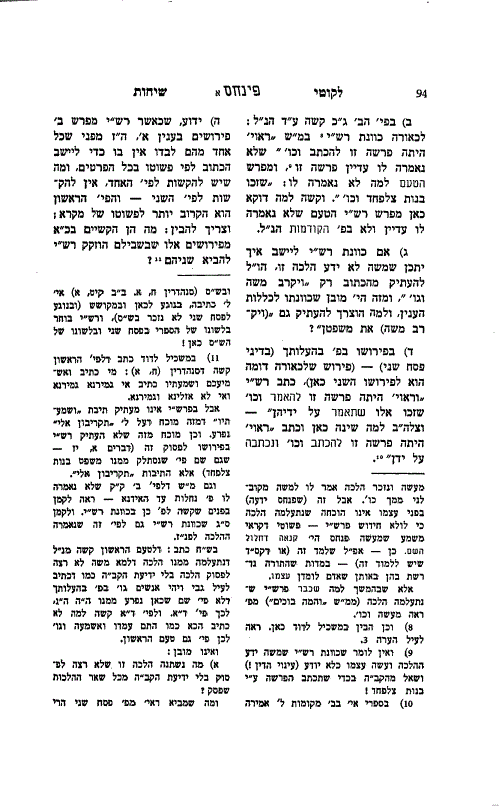
Regarding Rashi's first explanation: We find earlier occasions where Moshe did not know a particular law, yet Rashi offers no comment. Why, in this instance, is Rashi compelled to explain that Moshe had originally known the halachah but that it was temporarily concealed from him?
Regarding the second explanation: Why does Rashi explain the reason for the concealment דווקא here and not in the earlier instances where Moshe was uncertain?
The explanation is as follows:
Rashi is troubled by the wording of the verse: "Moshe brought their judgment" (mishpatan). The Torah does not use the more common expression, such as "the matter" or "the case."
Therefore, Rashi explains that "their judgment" refers specifically to the legal ruling itself. The word "matter" (davar) would include the entire legal discussion and deliberation, whereas "judgment" (mishpat) refers to the final verdict.
This indicates that Moshe already knew what the ruling should be. Nevertheless, he brought their judgment before Hashem because, at that particular moment, the halachah had been concealed from him.
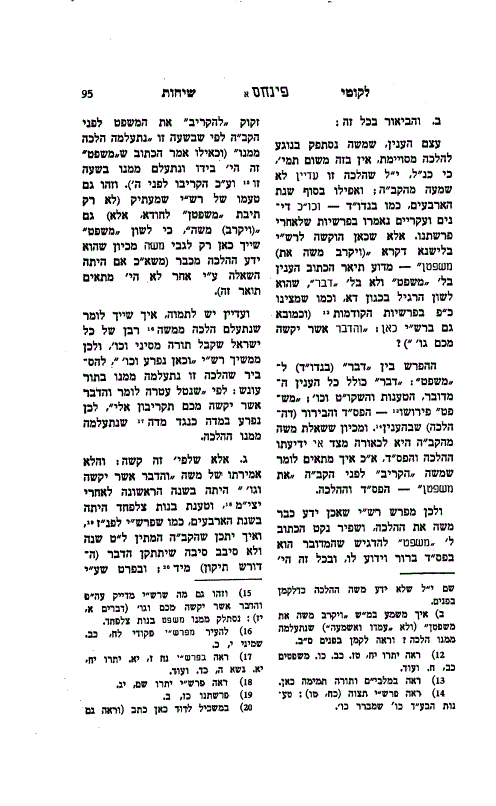
Why was it concealed?
Rashi explains that "here he was called to account" for having said earlier, "The matter that is too difficult for you, you shall bring to me." His statement implied a degree of self-importance, and therefore, on this occasion, he experienced a temporary concealment of the halachah.
However, this raises another difficulty.
If the concealment was a consequence of that earlier statement, why did Hashem wait forty years before this consequence occurred?
Therefore, Rashi adds a second explanation.
This second interpretation is not addressing why the section was written here, but rather offers another reason why the halachah was concealed from Moshe: "This section deserved to have been written through Moshe, but the daughters of Tzelafchad merited that it be recorded through them."
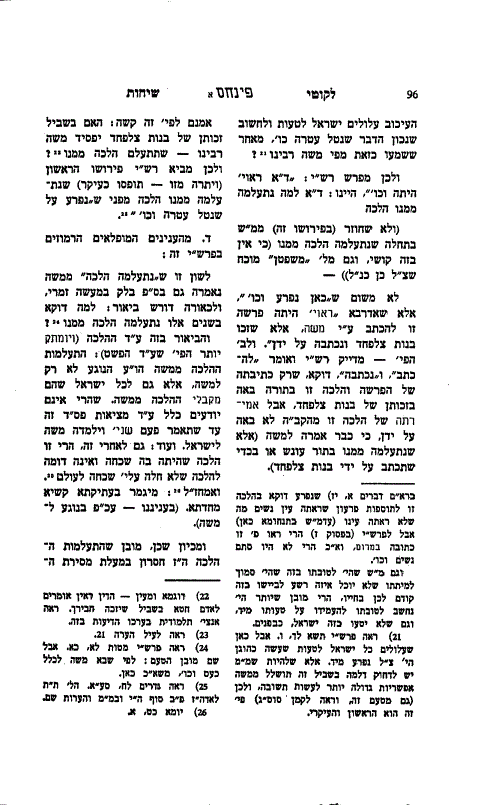
Thus, the second explanation continues the first. Both agree that the halachah was concealed from Moshe. They differ only regarding the reason for that concealment.
Nevertheless, Rashi does not present the second explanation as the primary one, because it remains difficult to say that, merely because the daughters of Tzelafchad were deserving, Moshe should lose the distinction of having this halachah transmitted through him.
One of the remarkable insights in this Rashi
The expression "the halachah was concealed from him" appears in only two contexts: the law concerning "zealots may strike him" (Pinchas and Zimri) and the case of the daughters of Tzelafchad.
This suggests a deeper connection.
Ordinarily, when "the halachah was concealed from Moshe," there is a deficiency in Moshe's role as the one through whom Torah law is transmitted to the Jewish people, since the people did not receive the ruling from him at that time.
However, in these two cases, that deficiency did not truly exist.
In both instances, Moshe himself was personally connected to the case.
In the incident of Zimri, Moshe was directly involved in the events unfolding before him.
Likewise, in the case of the daughters of Tzelafchad, they emphasized that their father "was not among Korach's assembly." Since Korach's rebellion directly challenged Moshe's authority, Moshe had a personal connection to the matter.
As a general principle, a judge who has a personal interest in a case cannot render its legal decision.
Accordingly, even had Moshe remembered the halachah, it would not have been appropriate for the ruling to be issued on his authority in these cases.
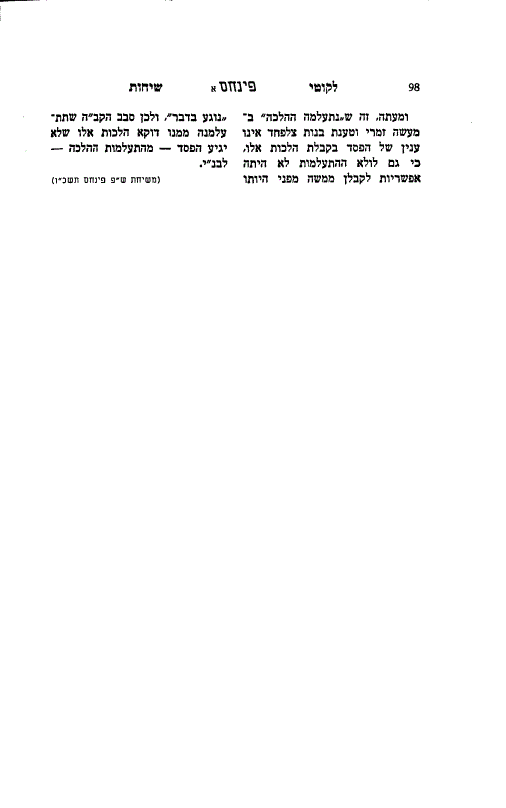
Therefore, there was no real deficiency in the temporary concealment of the halachah from Moshe, because in any event, these rulings could not appropriately have been decided through him under those circumstances.