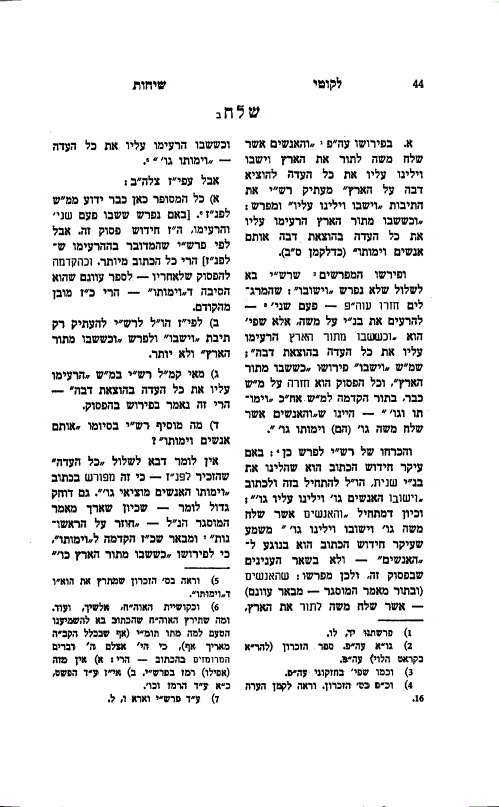
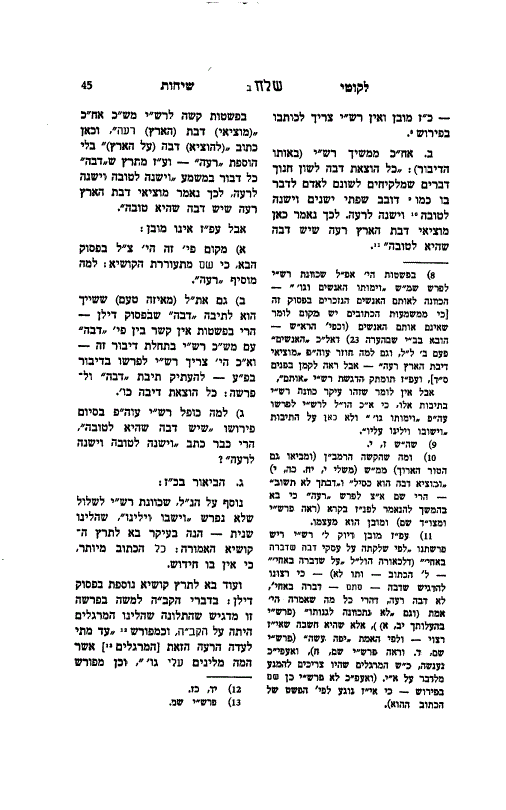
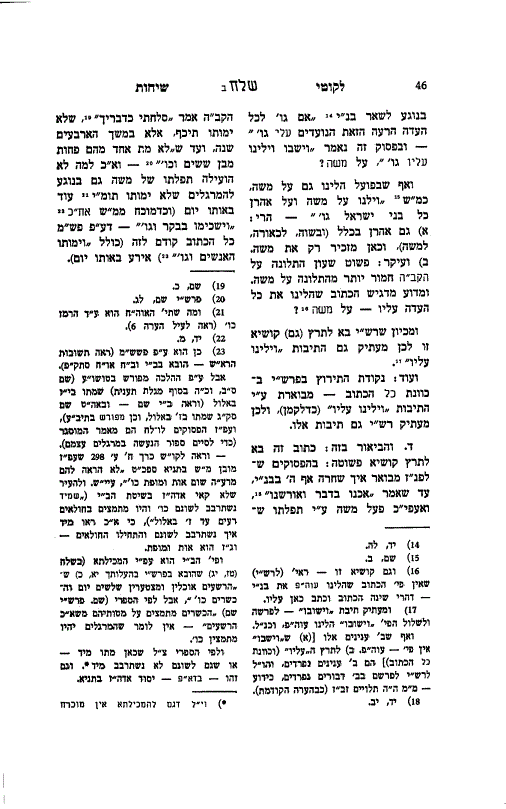
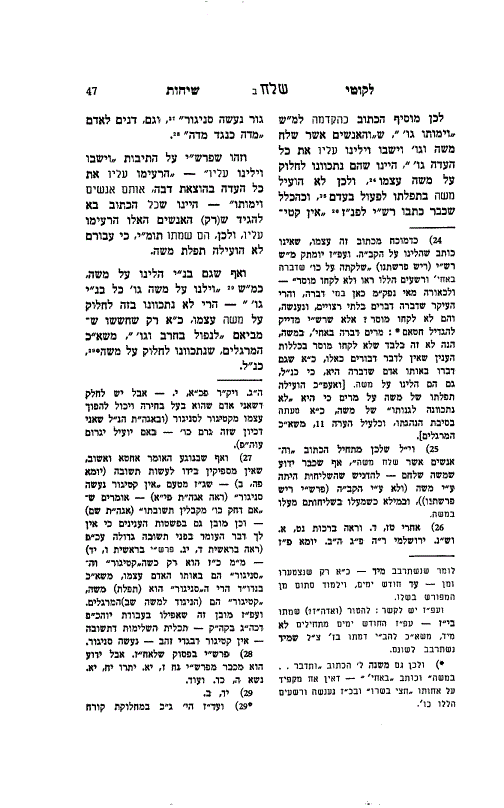
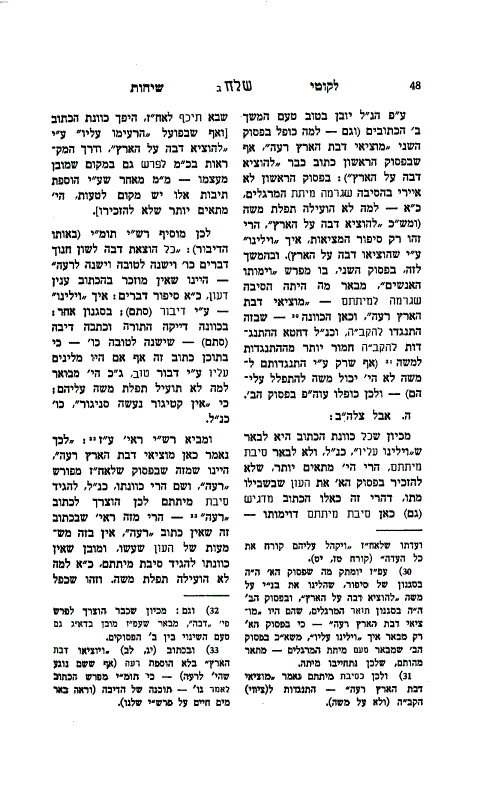
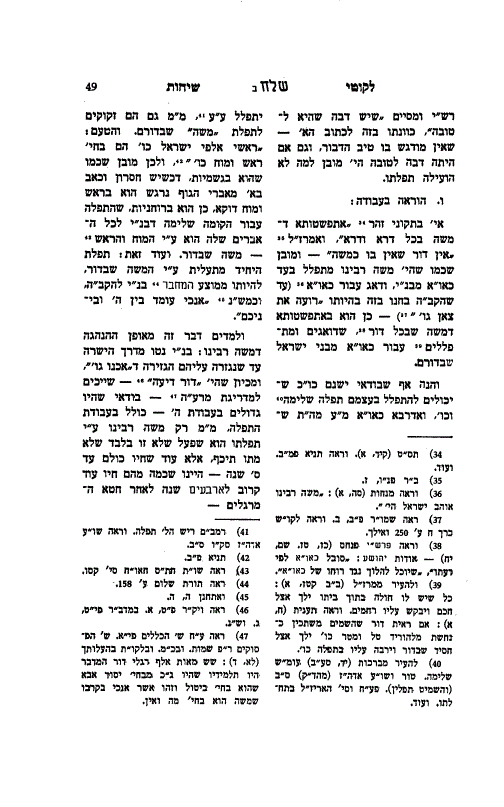
“And they returned and caused complaints against him” — in these words the Torah hints at the reason why the spies died on that very day. The reason Moses’ prayer did not help them was because “they complained against him”—against Moses himself. And there is a principle that “the prosecutor cannot become the defender” (ein kateigor na'aseh saneigor).
Rashi (14:36) comments:
“And they returned and caused complaints against him” — When they returned from scouting the land, they stirred up the entire congregation against him through their slanderous report. “Those men died.”
On the simple level, Rashi means that “they returned” does not mean that they repeated their slander a second time. Rather, the verse is telling us that when they returned from the Land of Israel, they caused the people to complain against Moses.
However, according to this explanation, a difficulty arises. The entire verse seems unnecessary. What new information is it teaching?
The explanation is that this is precisely the question Rashi is addressing: what is the verse adding?
Rashi explains that these words hint to the reason the spies died immediately. Moses prayed on behalf of the Jewish people, yet his prayer did not help the spies because they had spoken against him. Since they had turned Moses himself into the object of their accusations, he could not serve as their defender; the prosecutor cannot become the defender.
Rashi continues:
“Every expression of dibah (evil report) refers to training or accustoming people to speak about someone, as in the phrase ‘causing the lips of sleepers to speak.’ This can be used for good or for bad.”
Rashi's intent is to emphasize that this verse itself is not stating the actual sin for which they died, because dibah can sometimes be used positively as well as negatively.
The direct cause of their death is stated in the following verse:
“They brought forth an evil report of the land.”
That was the sin against G‑d. However, the reason Moses’ prayer did not protect them is hinted to in our verse: they had complained against Moses himself.
Lesson
Although every Jew is obligated to pray for himself, there is in every generation an extension of Moses (itpashtusa d’Moshe b’chol dara).
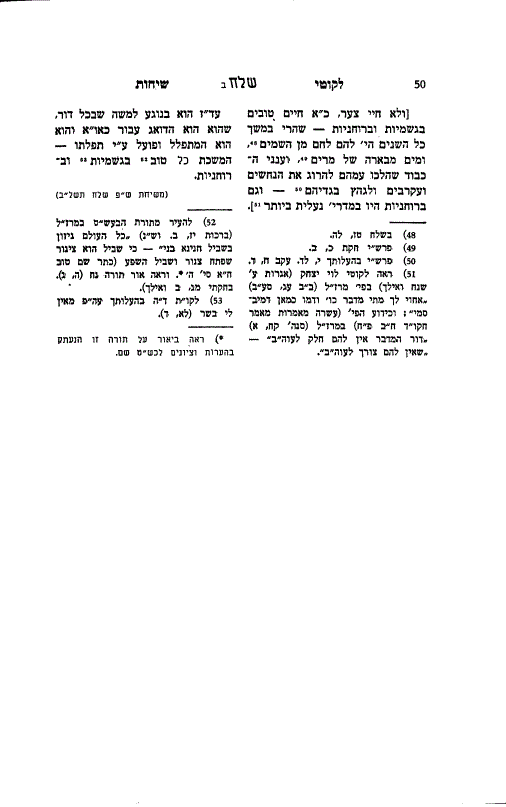
It was specifically Moses’ prayer—not merely the prayers of the spies themselves, even though they belonged to the lofty generation known as the Dor De’ah—that enabled the Jewish people to live and receive blessing both materially and spiritually.
As the head of the entire body of Israel, Moses’ prayer sustained the nation, and many of those who were decreed to remain in the wilderness lived for nearly forty more years.
Short Synopsis (≈300 characters)
The phrase “they complained against him” explains why the spies died immediately. Their sin was directed against Moses, so his prayer could not defend them—“the prosecutor cannot become the defender.” The lesson is the unique power of the “Moses” of every generation, whose prayers sustain and protect the Jewish people.