
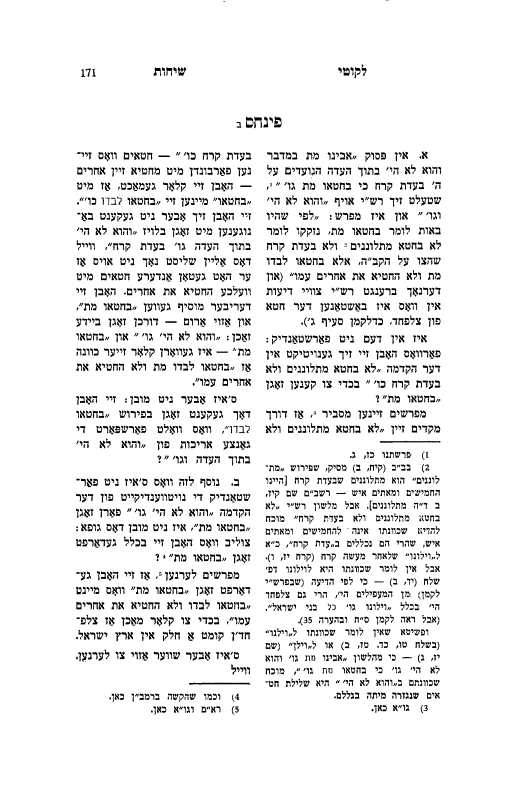
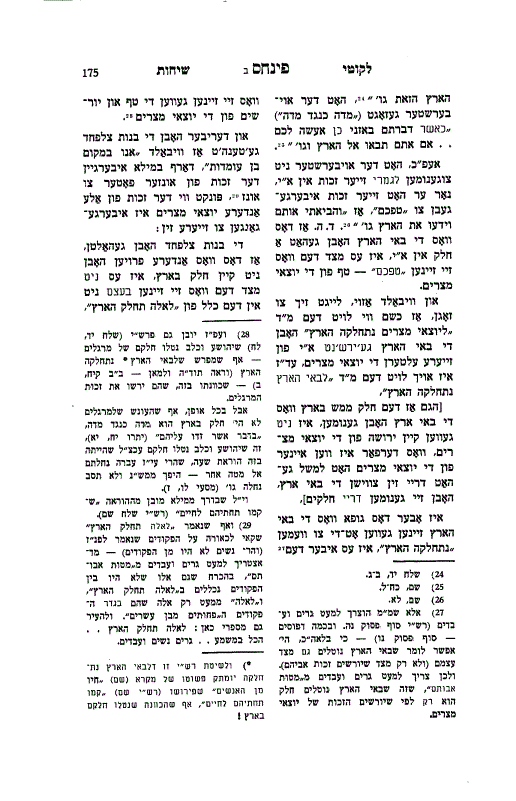
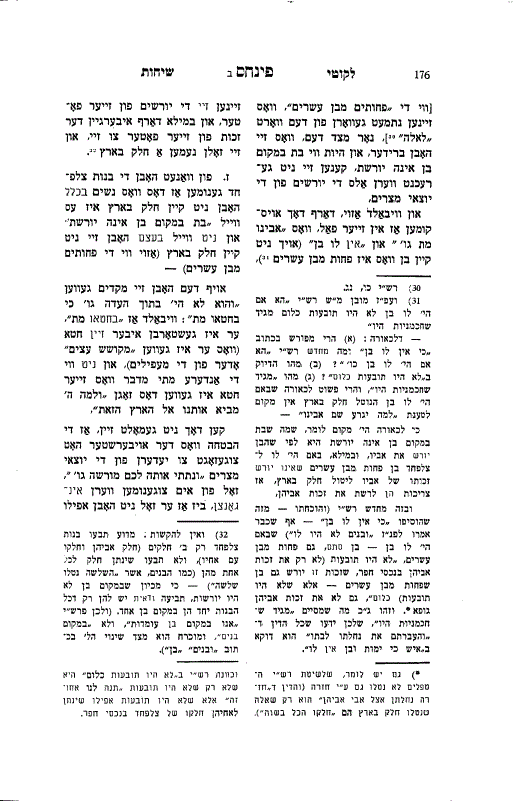
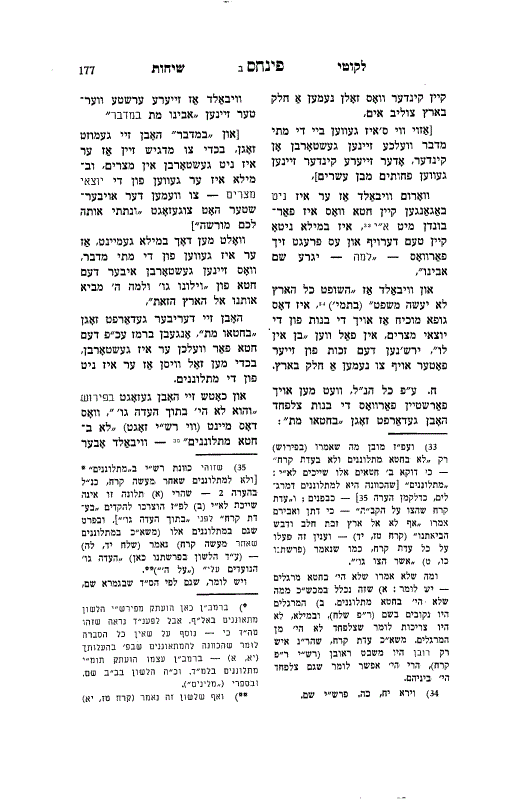
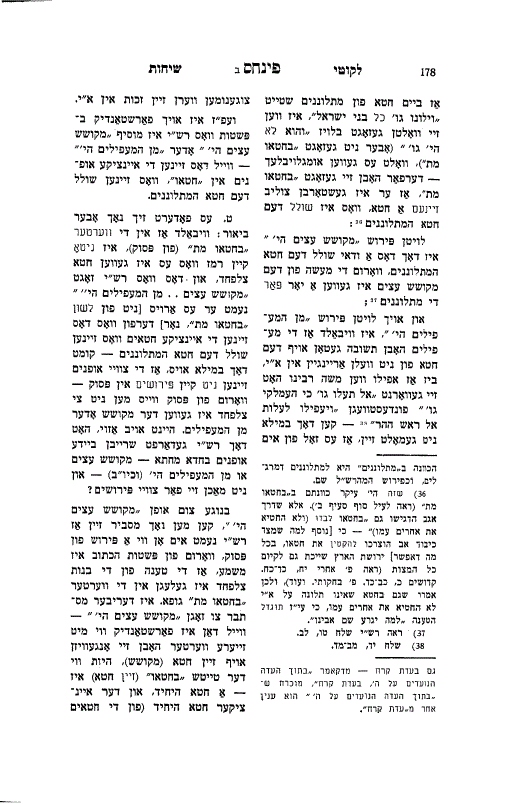
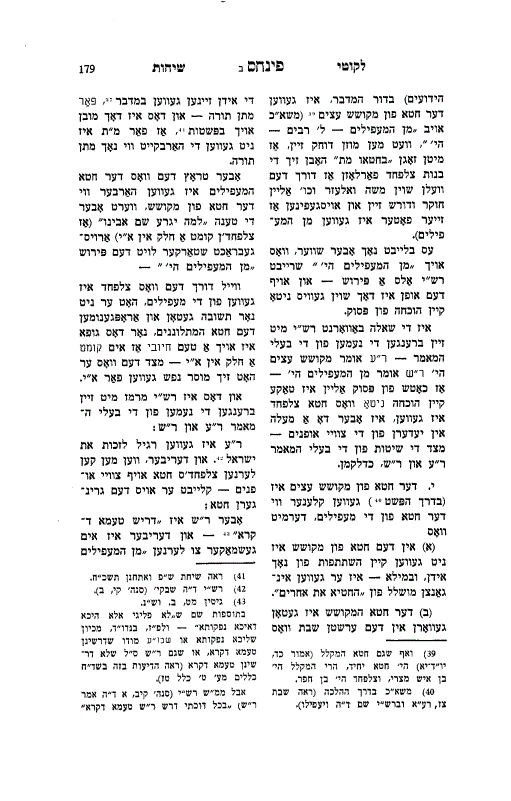
On the verse, "Our father died in the wilderness, but he was not among the assembly that gathered against the L‑rd, the assembly of Korach; rather, he died through his own sin, and he had no sons" (Numbers 27:3), Rashi comments:
"Since they were about to say, 'He died through his own sin,' they first found it necessary to clarify that he did not die as one of the complainers nor as part of Korach's assembly, who rebelled against G‑d. Rather, he died only because of his own personal sin and did not cause others to sin with him. Rabbi Akiva says that he was the wood-gatherer, and Rabbi Shimon says that he was among the ma'apilim (those who attempted to enter the Land after the decree)."
This requires explanation. According to those commentators who explain that the daughters' main point was that their father had not caused others to sin, it should have been sufficient to say, "He died only through his own sin." Why was it necessary to add the lengthy introduction, "He was not among the assembly..."?
Furthermore, where do we find that someone who caused others to sin forfeits his share in the Land of Israel? Why does Rashi present two opinions regarding Tzelafchad's identity? What is the source for these two interpretations? And why does Rashi specifically mention the names of the sages who offered them?
The explanation is as follows:
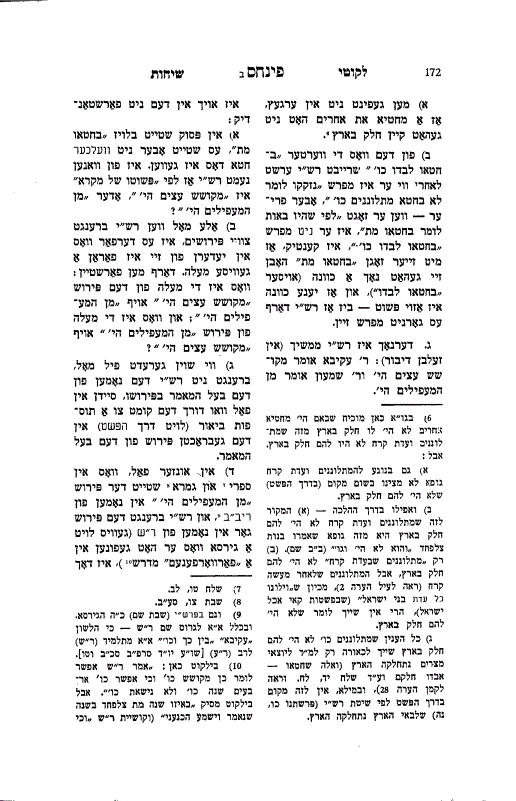
The daughters of Tzelafchad argued, "Why should our father's name be diminished?" Their father had been among those who left Egypt. Even according to the opinion that the Land was divided among those who entered it, they inherited only because they were the heirs of those who had left Egypt, to whom G‑d had promised, "I will give it to you as an inheritance." After the sin of the spies, G‑d declared, "But your children... to them I shall give it," meaning that those who entered the Land received their portions only because they inherited the rights of the generation that left Egypt.
Accordingly, Tzelafchad's daughters claimed that they should inherit their father's portion. Otherwise, their father's share in the Land would be lost. Since his sin was unrelated to the Land of Israel, his right to a portion remained intact. This distinguished him from the complainers—which included the spies—and from Korach's assembly, who rejected the Land by declaring, "You have not even brought us to a land flowing with milk and honey."
This explains why they said, "He died through his own sin." They wished to allude to the specific nature of his sin—whether he was the wood-gatherer or, according to the second opinion, one of the ma'apilim—so that Moshe would recognize that his offense had nothing to do with rejecting Eretz Yisrael.
However, they did not explicitly identify his sin, because publicly mentioning a father's wrongdoing would have violated the mitzvah of honoring one's father. Instead, they immediately added, "He was not among the assembly..." prompting Moshe to investigate and determine which sin they were referring to. Once he did so, it would become clear that their father's sin was unrelated to the Land of Israel.
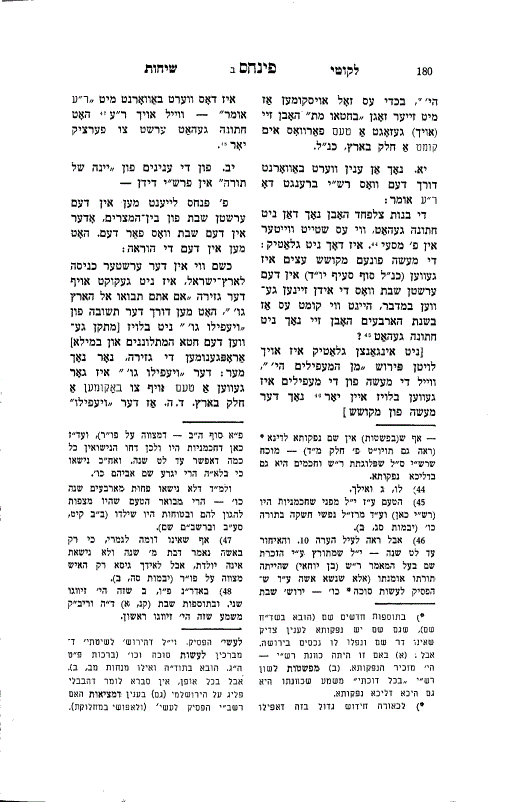
This also explains the two interpretations:
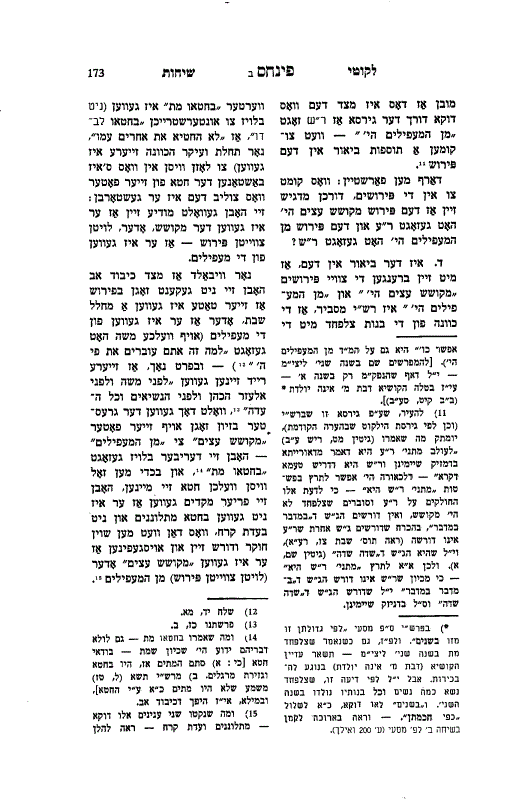
According to Rabbi Akiva, Tzelafchad was the wood-gatherer, demonstrating that he had no involvement whatsoever in the sin against the Land.
According to Rabbi Shimon, he was one of the ma'apilim. Although they acted improperly, their attempt to enter the Land reflected repentance for the sin of the spies. Thus, even if he had once been connected with that episode, he ultimately corrected it through teshuvah.
Rabbi Akiva, who is known for interpreting matters in a way favorable to the Jewish people (as reflected in the Talmudic expression, "Rabbi Akiva, set aside your usual pious approach"), identifies him as the wood-gatherer. This minimizes the severity of his offense: it was an individual act, not participation in a communal rebellion, and it occurred before the Jewish people had become fully accustomed to observing the Torah, as Rashi notes, "They had observed only one Shabbos."
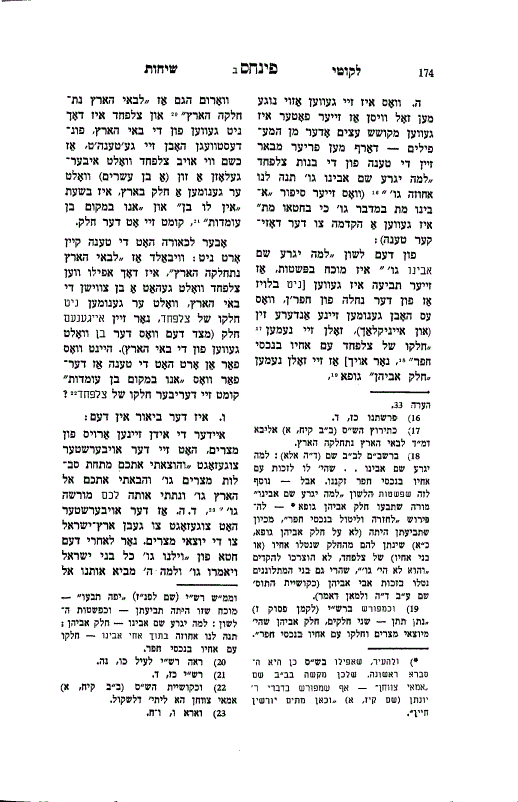
Rabbi Shimon, by contrast, is known for expounding the reason behind the verse (doresh ta'ama d'kra). Therefore, he identifies Tzelafchad as one of the ma'apilim. According to this view, the words "He died through his own sin" actually strengthen the daughters' claim to inherit the Land, because their father had repented. His repentance transformed his relationship to Eretz Yisrael and therefore supported their inheritance.
Wine of Torah
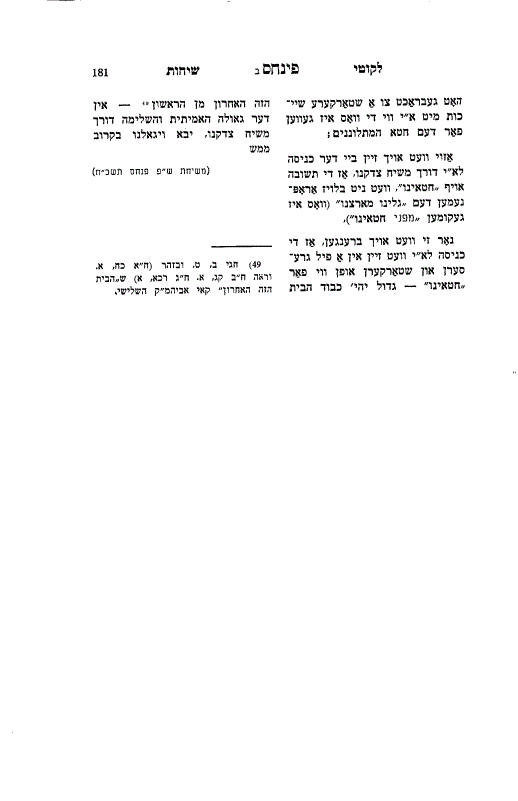
Just as the ma'apilim's determination to enter the Land became the basis for their deserving a portion in it, so too teshuvah does far more than erase sin—or even remove the exile that sin caused. Genuine repentance transforms the individual so profoundly that it elevates his future relationship with the Land of Israel itself.
Ultimately, teshuvah does not merely restore what was lost; it brings the Jewish people to an even higher level than before, culminating in the fulfillment of the prophecy:
"The glory of this latter House shall be greater than that of the former."