
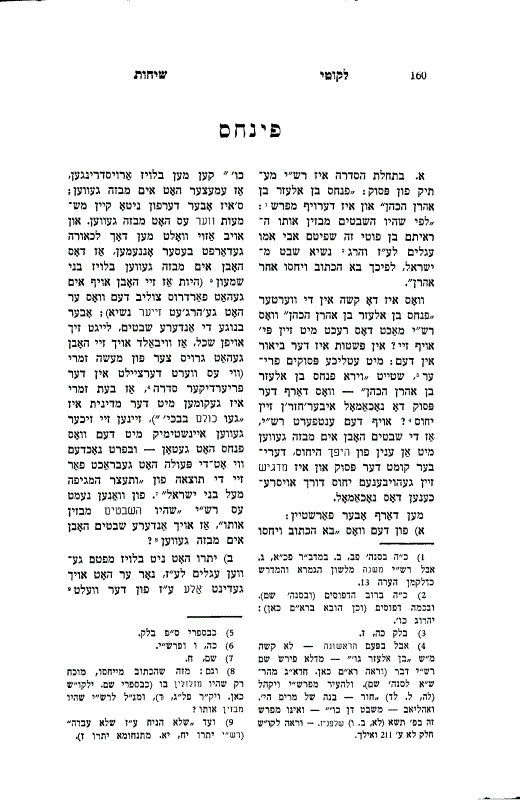
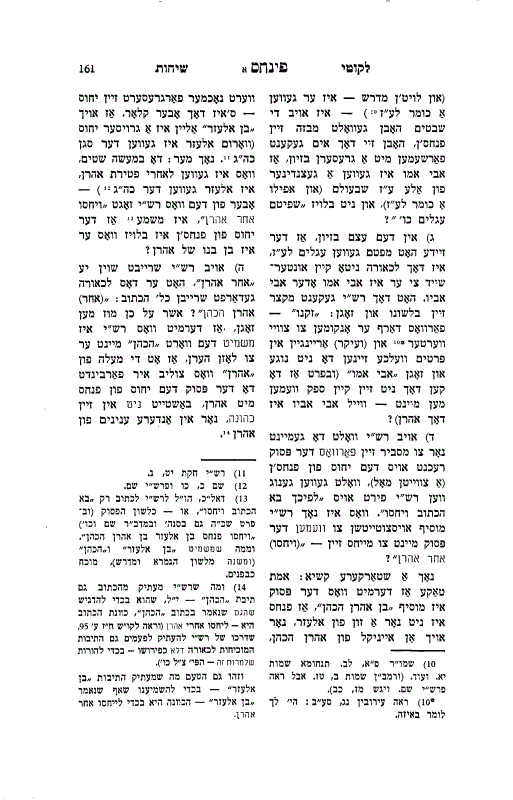
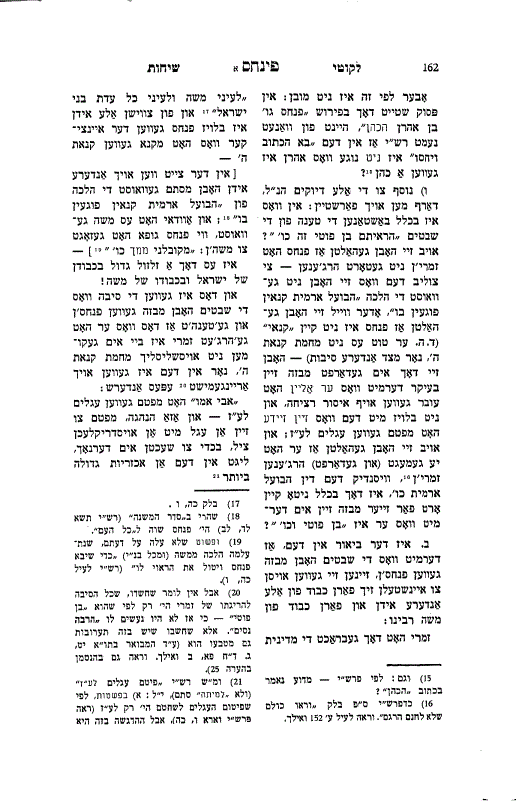
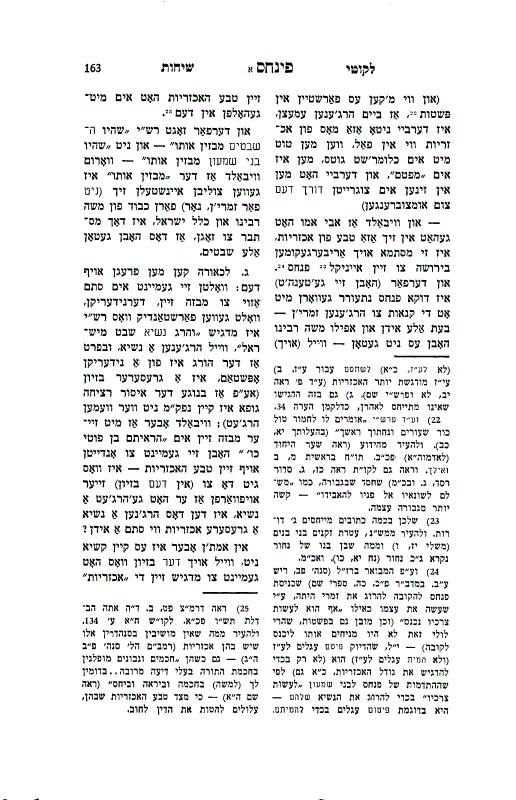
The Tribes Scorned Pinchas in Order to Defend Moses and the Jewish People, Since They Had Not Acted with Zeal While Pinchas Had. The Torah Therefore Emphasizes That His Zeal Stemmed from Aaron's Love of Peace, Not from Cruelty.
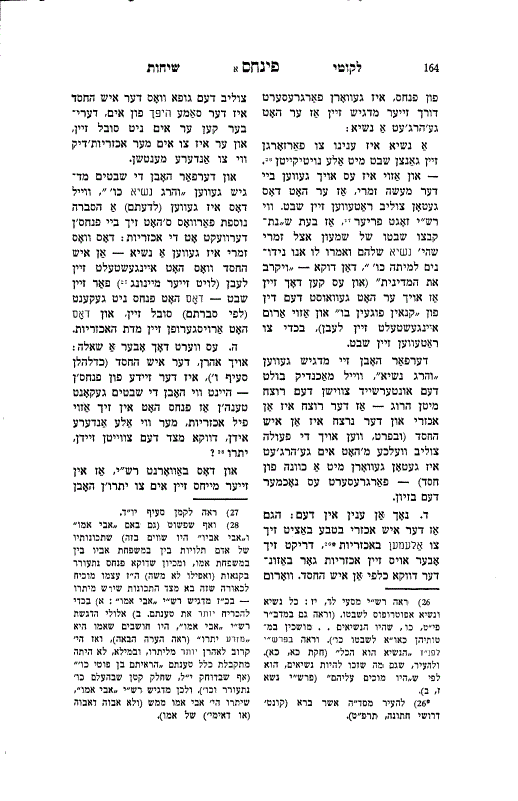
At the beginning of our Torah portion, on the verse, "Pinchas, son of Elazar, son of Aaron the priest," Rashi explains:
"Because the tribes were disparaging him, saying, 'Have you seen this son of Puti, whose maternal grandfather fattened calves for idol worship, and yet he killed a prince of a tribe of Israel?' Therefore Scripture traces his lineage to Aaron."
Several questions arise regarding this commentary:
- How does Rashi know that all the tribes disparaged him, and not only the tribe of Simeon?
- Jethro had served every form of idolatry in the world. Why do they specifically refer to his ancestor as one who "fattened calves for idol worship," which would appear to be a less serious description?
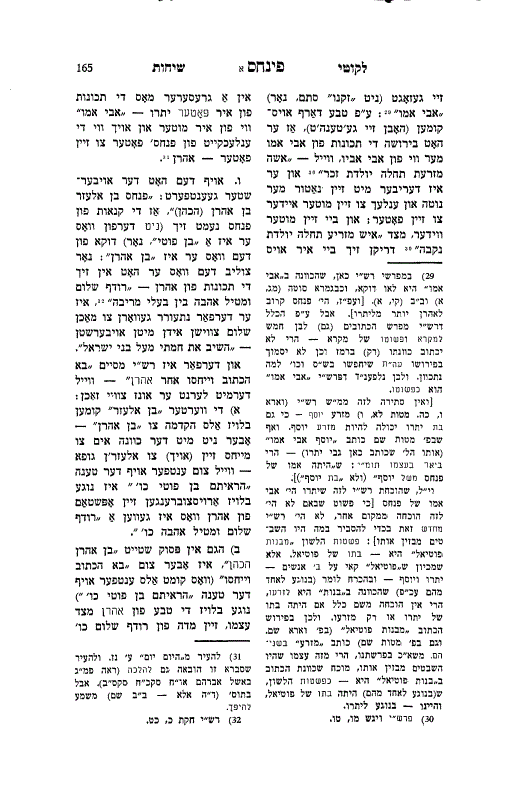
The explanation is that all the tribes criticized Pinchas in order to uphold the honor of Moses and the rest of the Jewish people. They had not acted with zeal, whereas Pinchas had. They therefore claimed that his conduct resulted from an inherited tendency toward cruelty, stemming from his maternal ancestry—described as one who "fattened calves"—an occupation that reflects a certain hardness of character.
Moreover, Pinchas had slain a prince of Israel, whose role was to perform acts of kindness for the members of his tribe. Indeed, Zimri's actions had been intended to defend the people of his tribe who had gathered around him.
Therefore, the Torah explicitly traces Pinchas' lineage to Aaron, who "loved peace and pursued peace." This demonstrates that Pinchas' true intention was not violence, but to restore peace between the Jewish people and their Father in Heaven.
Inner Dimension of Torah (Miyenah Shel Torah):
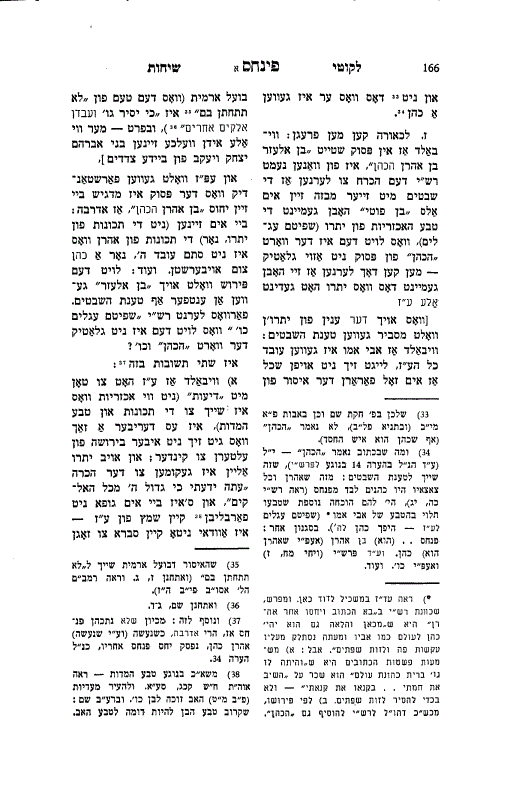
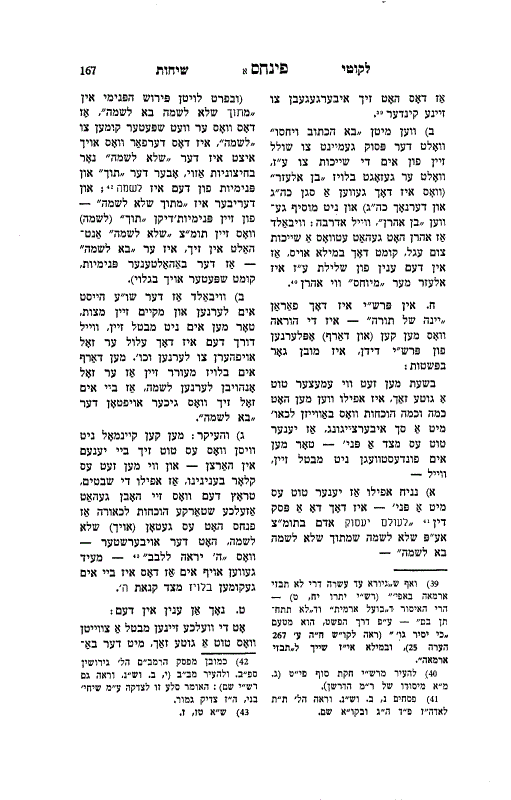
When one sees a fellow Jew who studies Torah and observes the commandments with beauty, enthusiasm, and devotion, even if it appears that he is motivated by personal interests or ulterior motives, one must not disparage him or weaken his resolve.
For this is the Torah's own instruction: "A person should always engage in Torah and mitzvot even when not for their own sake, because through acting not for their own sake, one ultimately comes to act for their own sake."