
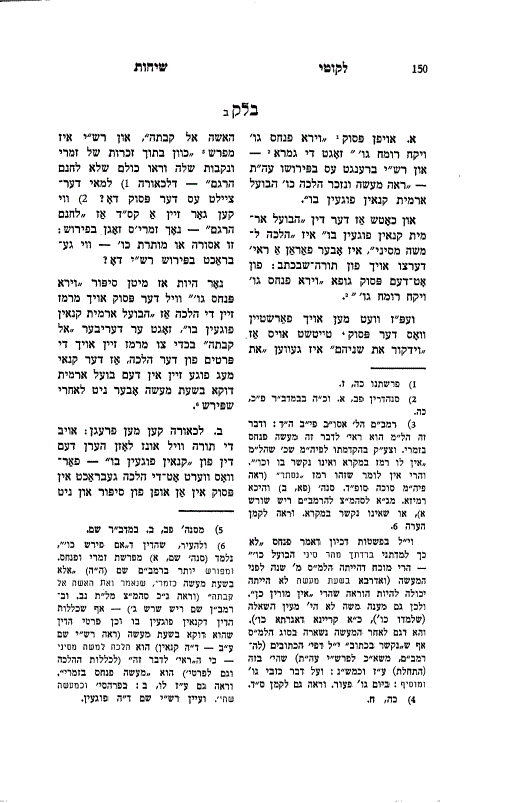
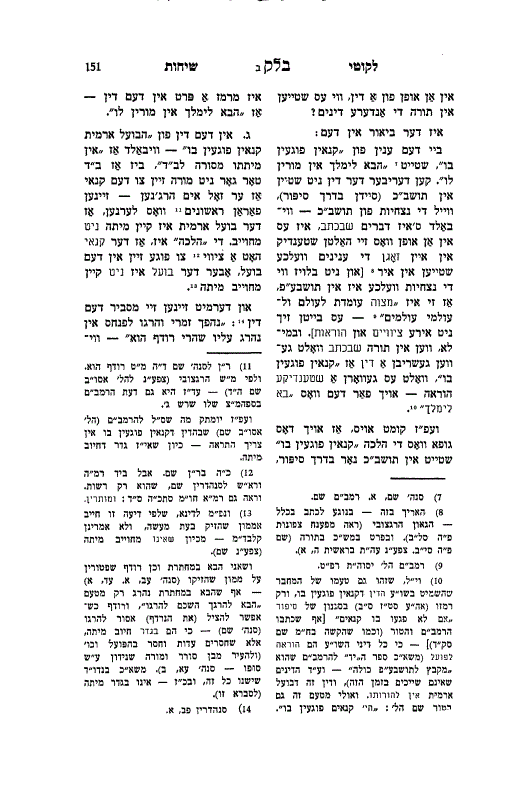
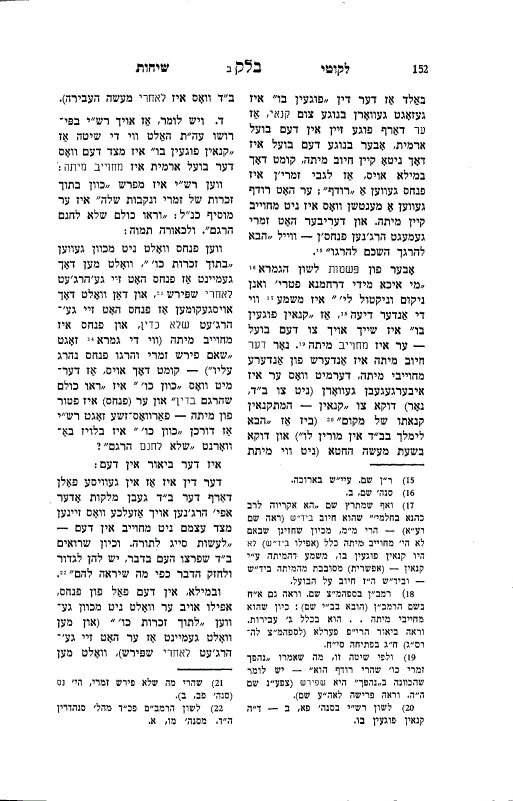
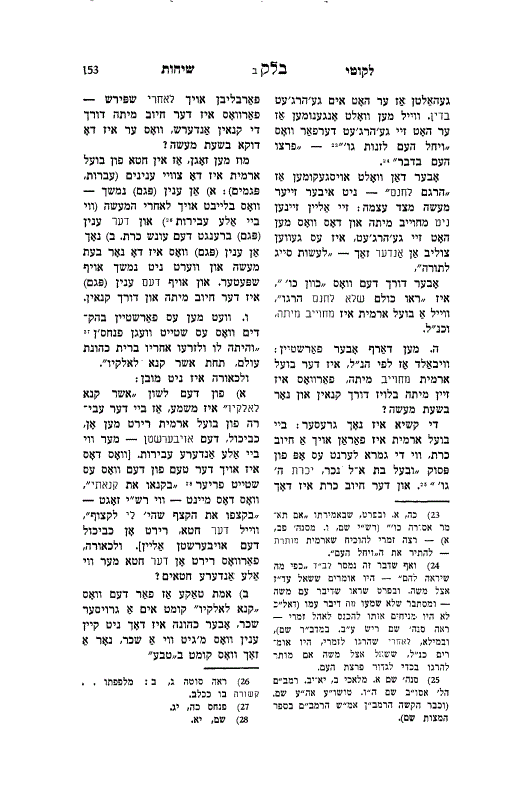
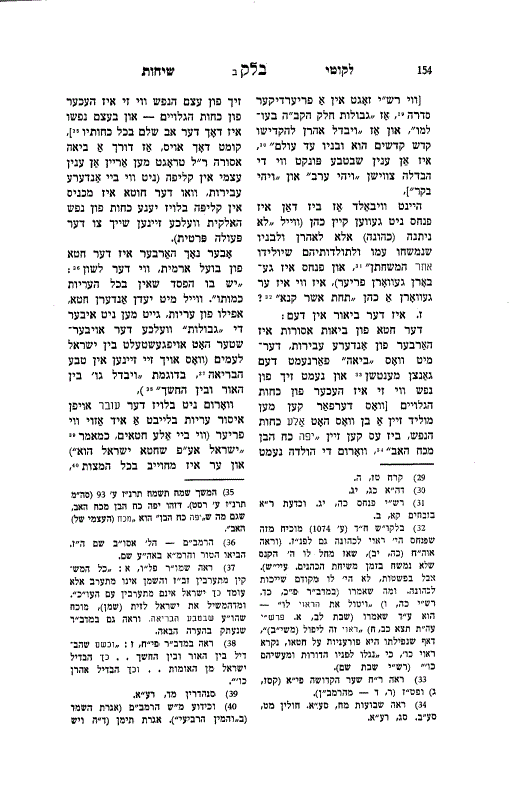
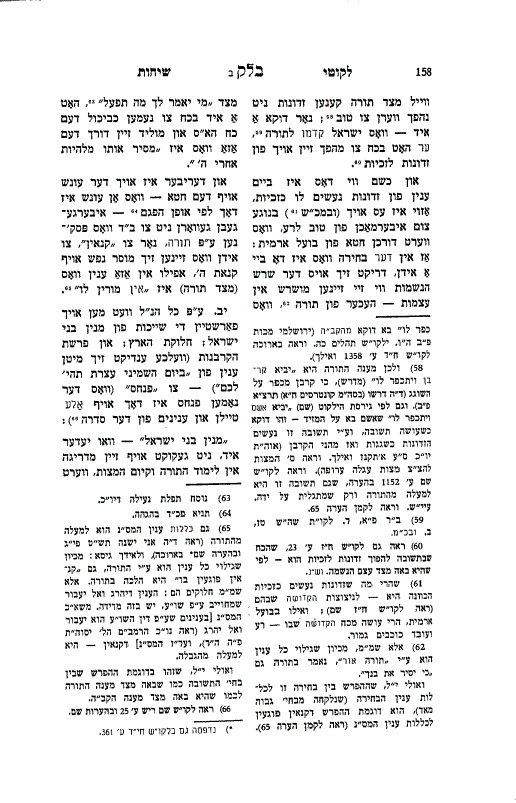
The law is that “one who cohabits with an Aramean woman (a non-Jewish woman), zealots may strike him.” However, this applies only while the act is taking place. If the act has already ended, then if a zealot kills him, the zealot is liable for murder.
This requires explanation. Why is this law limited specifically to the moment of the act? Especially since one who cohabits with a non-Jewish woman incurs a punishment comparable to kareis, whose spiritual consequences remain even after the sin has been completed.
(There are authorities who maintain that the sinner himself is not actually liable to death, but that zealots are merely permitted to kill him. However, it may be suggested that Rashi follows the view that the sinner is indeed deserving of death. This is hinted at in Rashi’s wording, “and everyone saw that he did not kill them without cause.” The implication is that Pinchas did not kill them merely as a deterrent or because they breached communal standards, but because they themselves had become liable to death.)
The explanation is as follows:
Forbidden relationships are more severe than most sins because a person draws the very essence of his life-force and soul into the prohibition.
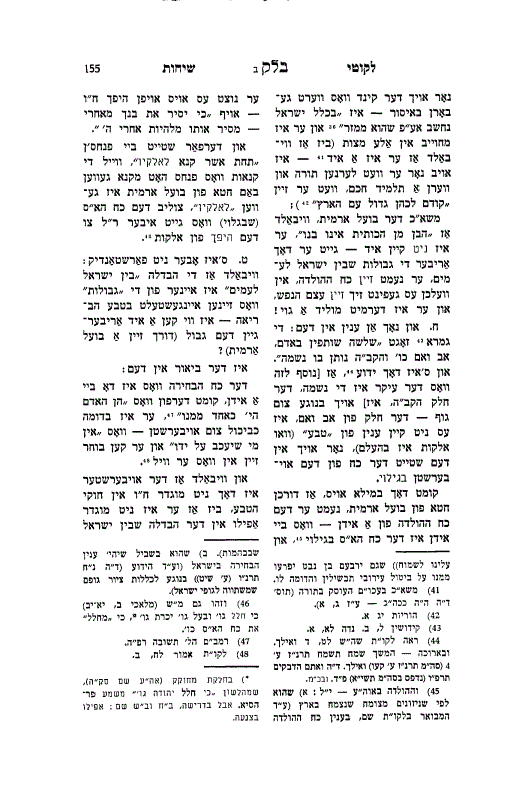
Yet relations with a non-Jewish woman contain an even greater severity. Here, the holiness rooted in the very essence of the Jewish soul is transformed into the side of evil, for the child born from such a union is not Jewish.
This is also reflected in the verse “because he was zealous for his G‑d.” There are three partners in the creation of a child, but the human contribution to procreation contains a revealed expression of Divine creative power. Therefore this sin represents a deeper affront to G‑dliness than other prohibitions.
However, this transformation of holiness into evil occurs only during the act itself. Once the act has ended, the holy energy has already been transferred and absorbed into the realm of impurity.
This differs from other forbidden relationships. In those cases, although the relationship is sinful, the resulting child is still Jewish. Even a mamzer remains a Jew. Therefore the connection to holiness remains. In the case of a non-Jewish woman, however, the transformation is complete.
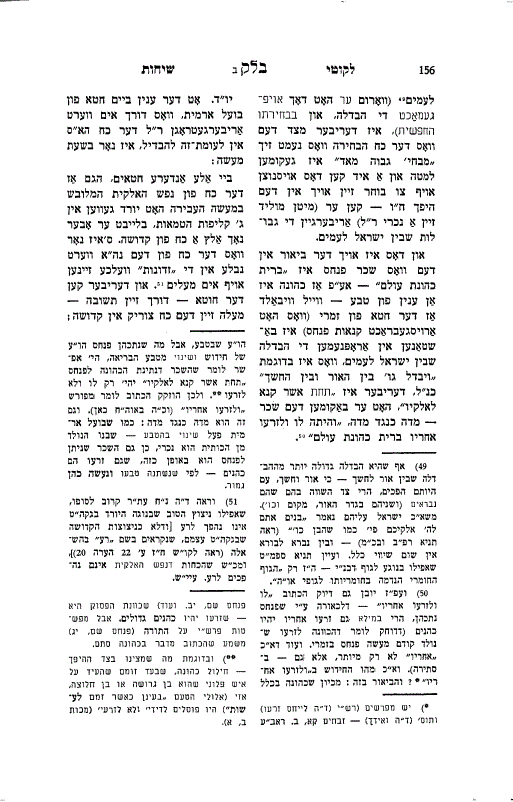
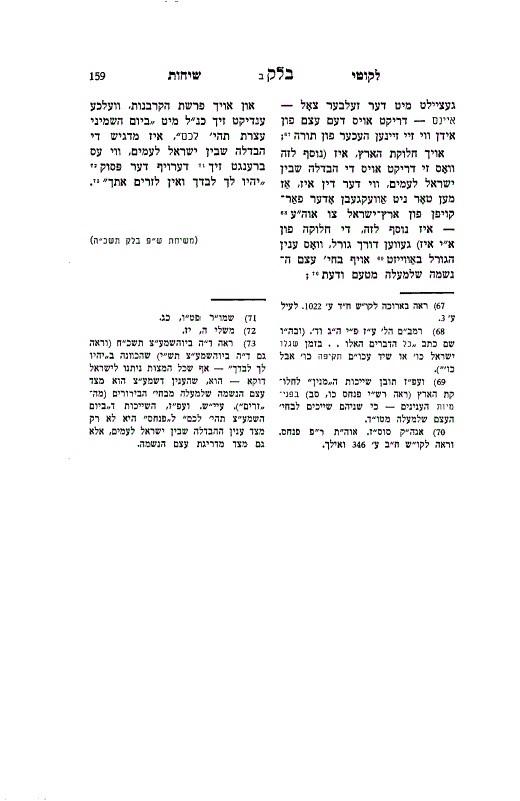
This also explains why Pinchas received the priesthood as a reward. Priesthood is ordinarily an inherited status and not something granted as compensation. Yet because Zimri sought to erase the boundary between holiness and impurity, measure for measure the distinction between the priestly family and the rest of Israel was suspended, and Pinchas was elevated to become a Kohen.
The fact that a human being can violate the boundaries that G‑d established within creation stems from the gift of free choice. Free choice derives from the Infinite One, Who is not limited by any boundaries.
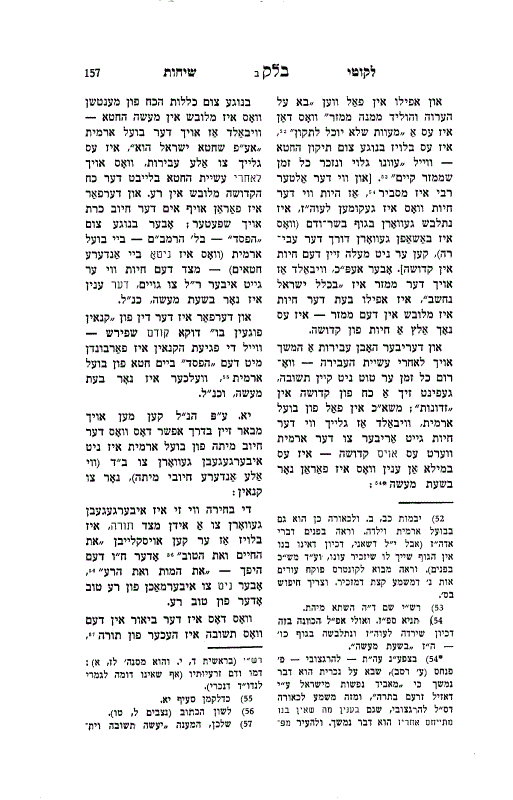
This dimension of free choice is higher than Torah itself. Therefore the Torah does not explicitly command repentance, because the transformation of evil into good (is’hapcha) transcends the normal framework of Torah. Likewise, the Torah does not explicitly command the law of “kana’im pog’in bo.”
Just as the ability to transform evil into good comes from a level beyond Torah, so too the ability to transform holiness into impurity reaches beyond the ordinary structure of Torah. Therefore the law of “kana’im pog’in bo” remains an exceptional category—“a law, but one that is not taught as practical instruction.” It exists within Torah, yet it derives from a dimension that transcends the normal order and guidance of Torah.