Likkutei Sichos, Vol. 8
Parshas Bamidbar – Sicha 2
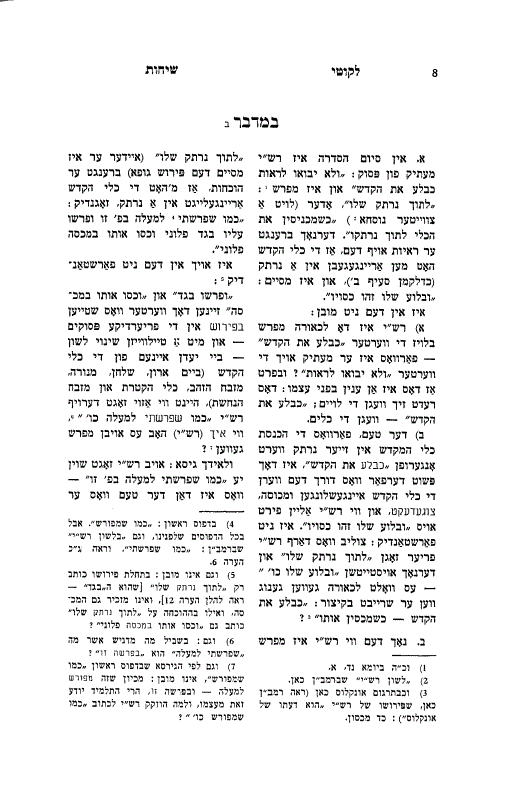
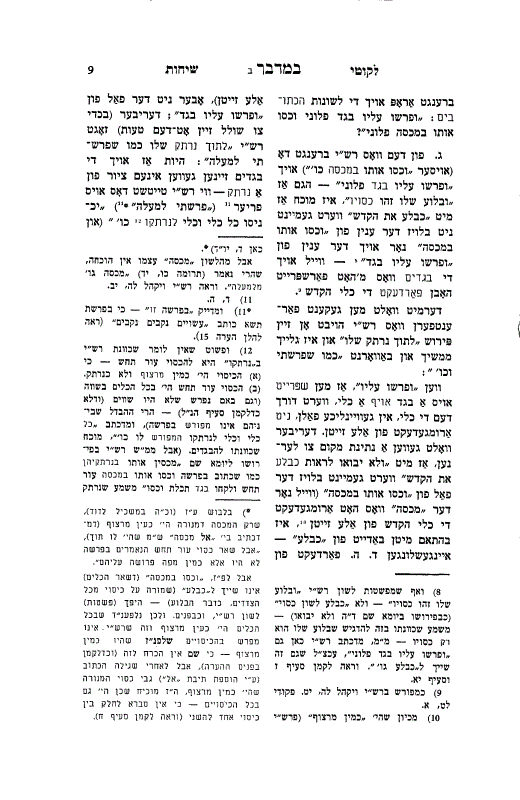
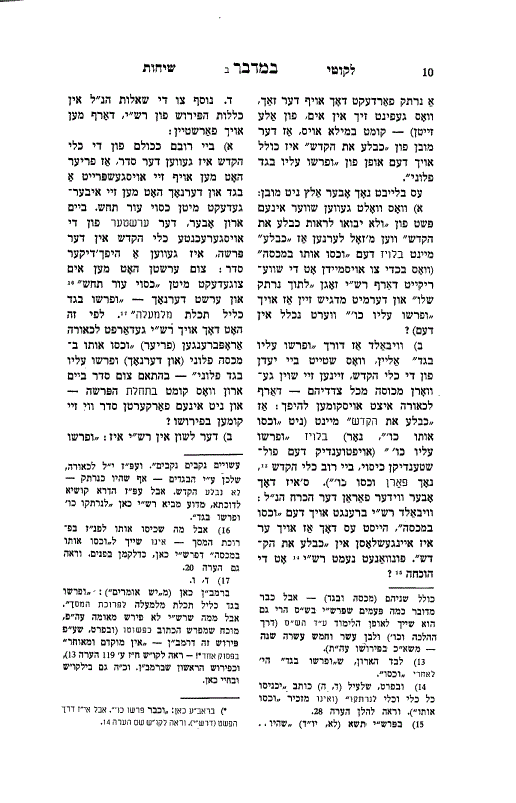
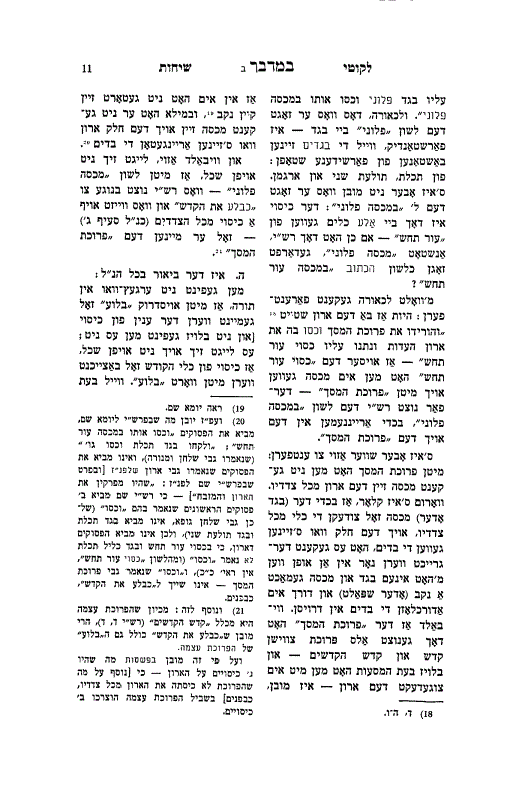
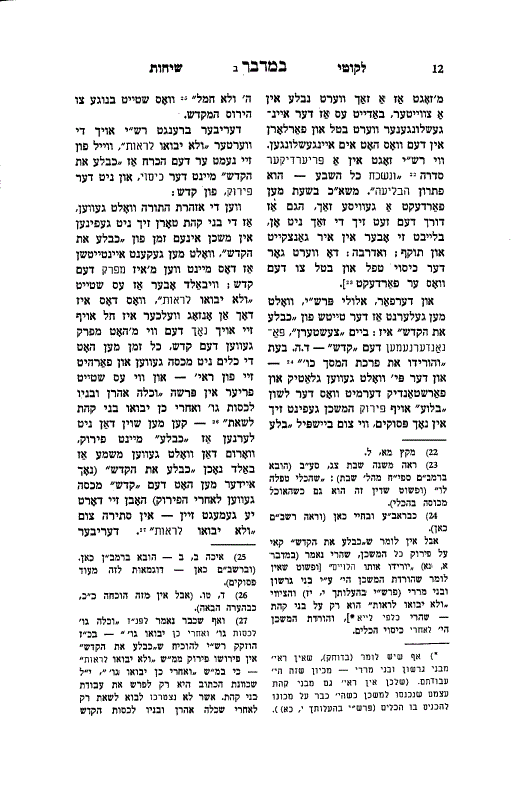
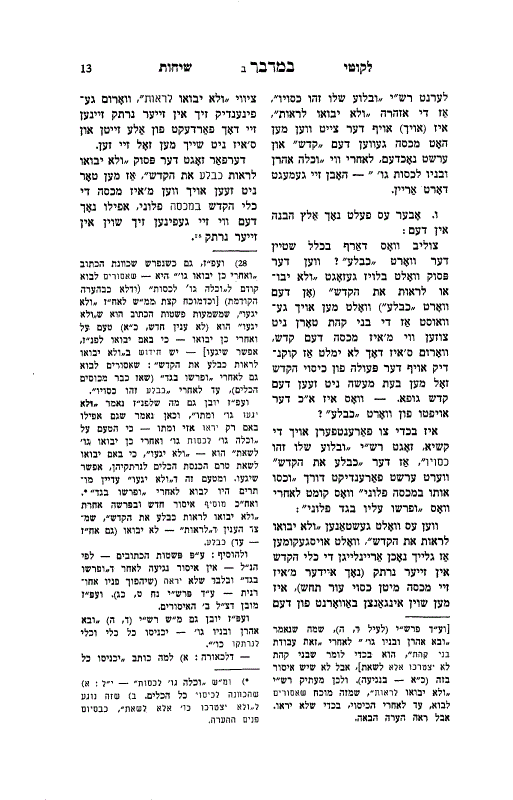
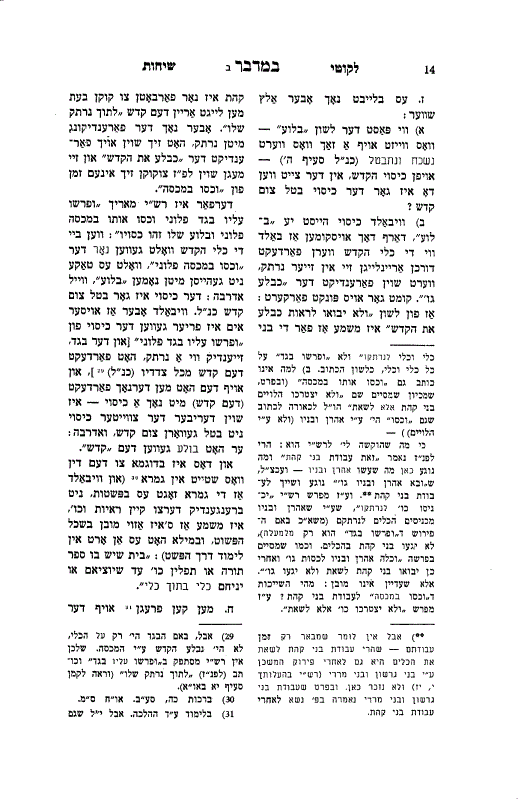
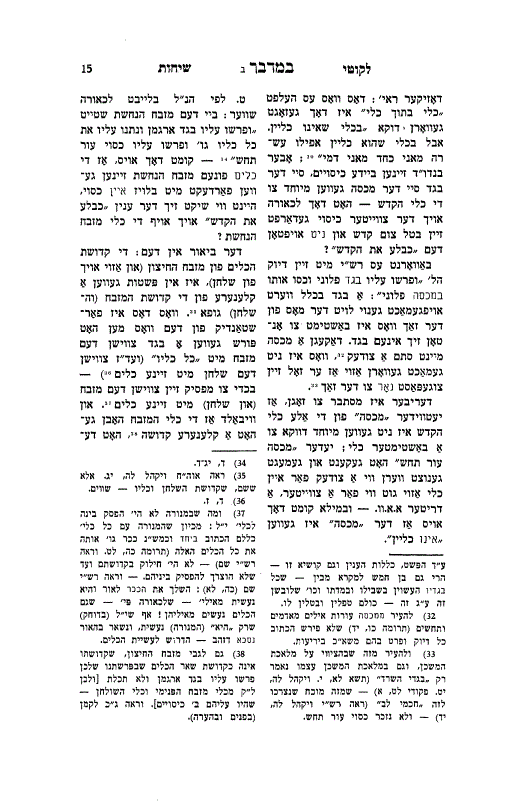
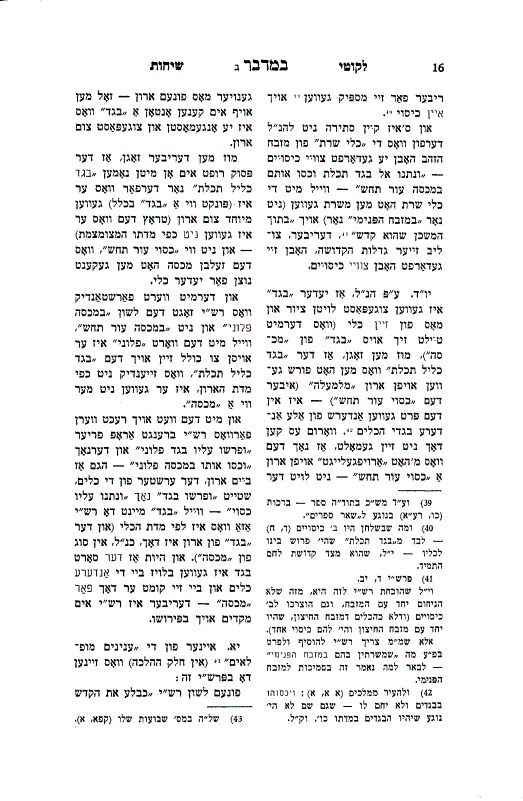
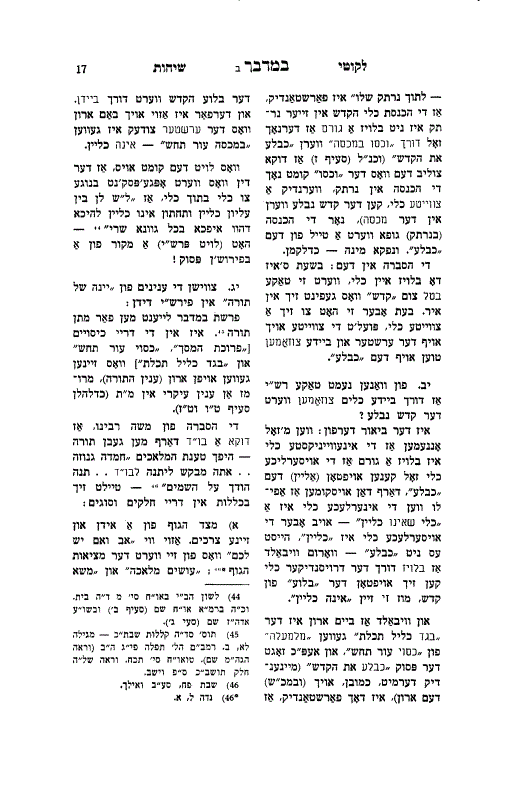
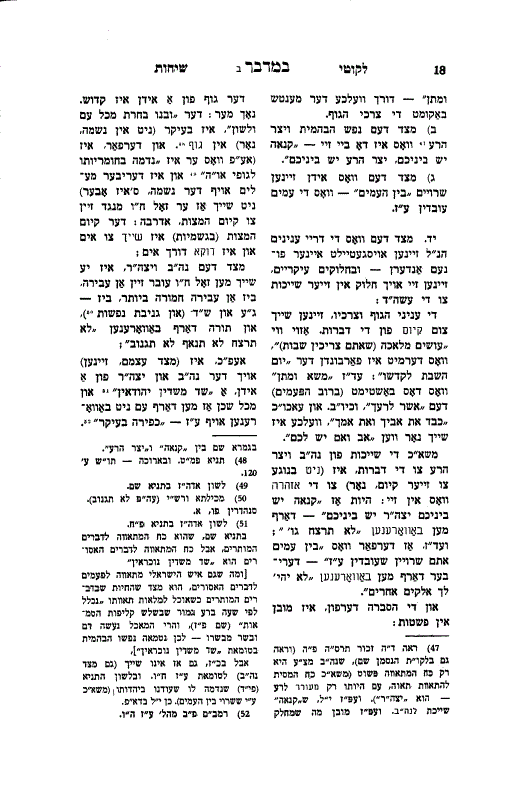
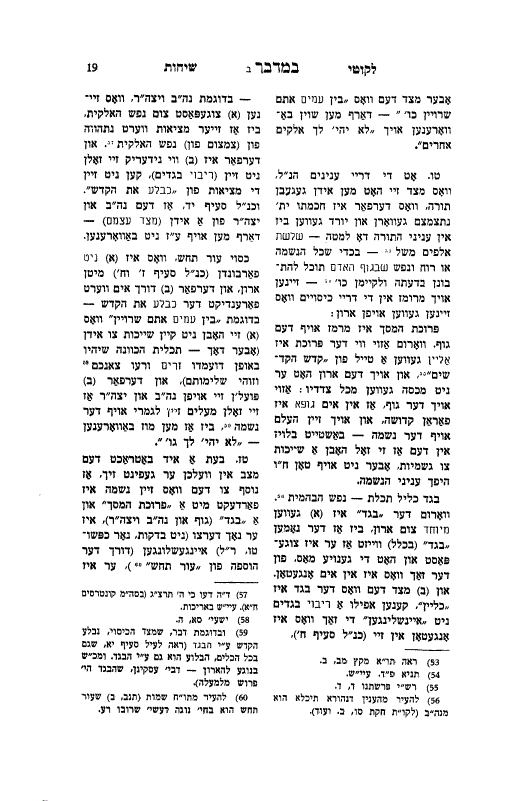
Understanding Rashi: “כבלע את הקודש” — “When the Holy Objects Are Being Covered”
This sicha from Likkutei Sichos is a classic Rashi sicha in which the Rebbe carefully analyzes the precise wording of Rashi and explains why every expression is exact.
The discussion centers around the journeying of the Mishkan in the desert. Whenever the Jewish people traveled from one location to another, the Mishkan had to be dismantled and packed for transport.
The Torah explains that the ones responsible for covering and preparing the holy vessels were Aaron and his sons—the Kohanim. Only after the vessels were completely covered were the Leviim, specifically the בני קהת (Bnei Kehas, the descendants of Kehos), permitted to enter and carry them.
The Leviim were not allowed to look directly at the holy vessels while they were uncovered. First, the Kohanim had to fully cover each vessel, and only afterward could the Bnei Kehas enter to transport them.
The coverings themselves were arranged in layers. Each vessel had its own fitted covering, and in addition there was an outer garment or wrapping placed over it. Many details regarding these coverings will be discussed throughout the sicha.
The Rebbe now turns to a difficult Rashi at the end of Parshas Bamidbar.
The Verse
At the conclusion of the sedrah, the Torah states regarding the בני קהת (Bnei Kehas):
“וְלֹא יָבֹאוּ לִרְאוֹת כְּבַלַּע אֶת הַקֹּדֶשׁ”
“They shall not come to see when the holy objects are being covered.”
(Bamidbar 4:20)
The Bnei Kehas were the ones who carried the vessels of the Mishkan during travel. However, before the vessels were fully covered, they were forbidden from entering.
The unusual expression in the verse is:
“כבלע את הקודש”
“when the holy objects are being swallowed.”
What does “swallowed” mean in this context?
Rashi’s Explanation
Rashi explains:
“לתוך נרתק שלו”
“Into its sheath (covering).”
In other words, each holy vessel was placed into its designated covering. The Torah refers to this process as “כבלע” — being swallowed up — because once the vessel entered its covering, it became concealed from sight.
Rashi continues:
“כשמכניסים את הכלי לתוך נרתקו”
“When they insert the vessel into its sheath.”
The Torah is therefore warning that the Leviim may not enter at the moment the vessels are being covered and enclosed. Only after the covering process is completed may they come in to carry them.
Rashi concludes:
“ובלוע שלו זהו כיסויו”
“Its swallowing is its covering.”
Meaning, the expression “swallowed” refers to the fact that the vessel becomes hidden and covered from view.
The Rebbe’s Questions on Rashi
The Rebbe now raises two powerful questions on this Rashi.
Question 1
Rashi seemingly intends only to explain the words:
“כבלע את הקודש”
“when the holy objects are being swallowed.”
If so, why does Rashi also quote the earlier words from the verse:
“ולא יבואו לראות”
“They shall not come to see”?
Those words discuss the prohibition upon the Leviim—not what the phrase “כבלע את הקודש” means.
Seemingly, these are two separate ideas:
- “ולא יבואו לראות” — “They shall not come to see” refers to the בני קהת, the Leviim, who are forbidden to enter.
- “כבלע את הקודש” — “when the holy objects are being swallowed” refers to the vessels themselves being covered.
So why does Rashi quote both parts together if he is only explaining the latter phrase?
The Rebbe notes that this must indicate that the words “ולא יבואו לראות” are essential to understanding how Rashi interprets “כבלע את הקודש.”
Question 2
The Rebbe next questions the lengthy wording of Rashi.
Why does Rashi elaborate so much?
Rashi says:
“לתוך נרתק שלו”
“Into its sheath,”
and later adds:
“ובלוע שלו זהו כיסויו”
“Its swallowing is its covering.”
But seemingly this is obvious.
Why is the process called “swallowing”?
Because once the vessel is covered, it disappears from sight. The covering “swallows” it up.
If so, Rashi could have simply said:
“כבלע” means “when it is covered.”
Why does Rashi specifically introduce the concept of a “נרתק” — a sheath or fitted cover?
What additional point is Rashi teaching by emphasizing that the vessel is inserted into its own special covering?
Ois Beis
The Rebbe now turns to analyze the second section of Rashi’s explanation. Here too, the Rebbe raises several precise questions on the wording of Rashi.
After Rashi explains the phrase:
“לתוך נרתק שלו”
“into its sheath,”
and before Rashi concludes:
“ובלוע שלו זהו כיסויו”
“its swallowing is its covering,”
Rashi suddenly inserts an entire proof to support the idea that the holy vessels were placed into a sheath or covering.
Rashi says:
“כמו שפירשתי למעלה בפרשה זו”
“As I explained earlier in this parsha,”
where the Torah states:
“ופרשו עליו בגד פלוני”
“They spread over it a certain garment,”
and afterward:
“וכסו אותו במכסה פלוני”
“And they covered it with a certain covering.”
The Two Coverings
At this stage, the understanding is that every vessel of the Mishkan had two coverings.
- The first covering was the fitted inner wrapping placed directly over the vessel itself. This is what Rashi calls the נרתק (nartik) — the sheath or fitted covering.
- Over that was placed an additional outer covering.
Thus, throughout the parsha, the Torah repeatedly describes two stages:
- “ופרשו עליו בגד” — “they spread a garment over it,”
-
followed by:
“וכסו אותו במכסה”
“they covered it with a covering.”
The Rebbe will later analyze these details more deeply. But first, he focuses on the wording of Rashi itself.
The Rebbe’s Question
What does Rashi mean when he says:
“כמו שפירשתי למעלה”
“As I explained earlier”?
Where exactly did Rashi previously explain this?
Rashi is not introducing an explanation of his own here. He is merely quoting verses from earlier in the parsha.
The expressions:
- “ופרשו עליו בגד”
“they spread over it a garment,”
and
- “וכסו אותו במכסה”
“they covered it with a covering,”
are explicit verses in the Torah itself.
Furthermore, the wording changes slightly depending on which vessel is being discussed, but the overall pattern remains the same throughout the parsha.
The Various Holy Vessels
The Torah describes this process regarding all the sacred vessels:
- the ארון (Aron — the Ark),
- the שולחן (Shulchan — the Table),
- the מנורה (Menorah),
- the מזבח הזהב (Golden Altar),
- the כלי הקטורת (the vessels associated with the incense service),
- and the מזבח הנחושת (Copper Altar), also known as the מזבח העולה (the Outer Altar).
The Rebbe notes:
- The מזבח הזהב (Golden Altar) stood inside the Mishkan.
- The מזבח הנחושת (Copper Altar) stood outside in the courtyard.
- The incense service was performed upon the Golden Altar.
All of these vessels were covered with these layered coverings before travel.
Why Does Rashi Say “As I Explained”?
This now becomes difficult.
These verses are not Rashi’s own explanation. They are the Torah’s words themselves.
So why does Rashi say:
“כמו שפירשתי למעלה”
“As I explained earlier above”?
Rashi seemingly did not explain anything earlier. He merely quoted the verses.
Why present this as though it were Rashi’s own interpretation?
And If Rashi Did Explain It…
The Rebbe strengthens the question even further.
If Rashi truly means that he already explained this concept earlier in the parsha, then why does he now repeat the actual wording of the verses?
Why quote again:
“ופרשו עליו בגד פלוני”
“They spread over it a certain garment,”
and
“וכסו אותו במכסה פלוני”
“And they covered it with a certain covering”?
If the explanation was already given earlier, Rashi could simply have written:
“כמו שפירשתי למעלה”
“As I explained earlier.”
Why repeat all the verses describing the coverings?
The Rebbe concludes that these questions indicate that something much deeper is taking place in Rashi.
Rashi is not merely quoting verses casually. Every expression is deliberate, and the Rebbe will soon explain what new understanding Rashi is trying to teach through these words.
Ois Gimmel
The Rebbe now continues analyzing Rashi’s wording in greater depth.
Rashi had quoted the verses:
“ופרשו עליו בגד פלוני”
“They spread over it a certain garment,”
and afterward:
“וכסו אותו במכסה פלוני”
“And they covered it with a certain covering.”
From this, it appears that there were two separate coverings placed upon the holy vessels.
As explained earlier:
- The first covering was the inner garment placed directly upon the vessel itself.
- The second covering was the outer layer, usually made from עור תחשים (tachash leather).
Which Covering Is Called “כבלע את הקודש”?
This now creates a difficulty.
Rashi had explained:
“ובלוע שלו זהו כיסויו”
“Its swallowing is its covering.”
But which covering is Rashi referring to?
At first glance, one might think the expression “swallowed” refers only to the outer covering—the final leather cover—which completely enclosed the vessel from all sides.
After all, the outer covering fully concealed the vessel, fitting the language of:
“כבלע”
“being swallowed up.”
The inner garment, however, might seem different. One could argue that simply spreading a garment over a vessel does not necessarily imply complete enclosure from every side.
If so, perhaps the verse:
“ולא יבואו לראות כבלע את הקודש”
“They shall not come to see when the holy things are being swallowed,”
refers only to the stage of:
“וכסו אותו במכסה”
“They covered it with the outer covering.”
Meaning, perhaps the prohibition only begins once the outer leather covering is being placed upon the vessel.
Rashi’s Chiddush — Even the Inner Covering Is Included
This is why Rashi emphasizes:
“לתוך נרתק שלו”
“Into its sheath.”
Rashi is teaching that even the first covering—the inner garment—was not merely draped loosely over the vessel.
Rather, it was fashioned like a נרתק (nartik), a fitted sheath that enclosed the vessel properly from all sides.
The Rebbe explains that this is what Rashi means when he says:
“כמו שפירשתי למעלה”
“As I explained earlier above.”
Earlier in the parsha, Rashi had already explained that each vessel was placed into its own fitted covering.
Thus, even the first garment-covering was considered a true enclosure.
Accordingly, the phrase:
“כבלע את הקודש”
“when the holy objects are being swallowed up,”
includes not only the outer leather covering, but even the first inner garment-covering as well.
Both stages are included in the prohibition.
Why Does Rashi Need to Teach This?
The Rebbe now asks another question.
Even if this explanation is correct, why is it necessary?
Suppose we had understood the verse more simply:
That “כבלע את הקודש” refers only to the final outer covering—the leather covering which completely enclosed the vessel.
What would be lacking in that interpretation?
After all, the בני קהת (Bnei Kehas) certainly could not enter before the vessels were fully covered anyway.
So why must Rashi stress that even the first inner covering is included?
Why is it important for Rashi to tell us that the first garment was also considered a נרתק (sheath)?
The Opposite Argument
The Rebbe then raises the opposite difficulty.
Once we say that the first garment-covering was itself shaped like a proper sheath and enclosed the vessel from all sides, perhaps we should conclude the exact opposite:
Maybe “כבלע את הקודש” refers only to the first inner covering!
After all, once the inner garment was placed upon the vessel, the vessel was already concealed from sight.
If so, why should the outer covering also be included?
Yet Rashi clearly includes both:
- the garment-covering,
- and the outer leather covering.
How does Rashi know that both are part of the meaning of:
“כבלע את הקודש”?
Perhaps the verse refers only to the inner covering stage.
The Rebbe’s Developing Explanation
So the Rebbe now leaves us with a deeper and more refined set of questions.
Rashi is teaching a major chiddush:
- The first garment-covering was not merely thrown over the vessel.
- It functioned as a fitted sheath—a true נרתק.
- Therefore, even that stage is included in “כבלע את הקודש.”
But this itself creates two difficulties:
- Why is it necessary for Rashi to include the inner covering at all? What would have been wrong if the verse referred only to the outer covering?
- Once the inner covering already fully concealed the vessel, why does Rashi also include the outer covering?
The Rebbe will continue developing this analysis and explain why both coverings are essential to Rashi’s interpretation.
Ois Daled
The Rebbe now raises several additional questions regarding Rashi’s explanation.
Until now, the discussion focused on the two coverings placed upon the holy vessels:
- the inner garment-covering,
- and the outer leather covering made from עור תחשים (tachash skin).
This was the standard order used for nearly all the vessels of the Mishkan.
However, there was one major exception:
The Aron — The Ark
By the ארון (Aron), the order was reversed.
With the Aron:
- first they covered it with the tachash-skin covering,
- and only afterward did they spread over it the outer garment of cloth.
This differs from all the other vessels, where:
- first came the garment-covering,
- and afterward the outer leather covering.
First Question
Why Does Rashi Use the Order of the Other Vessels?
Since the Aron is mentioned first in the Torah’s discussion of the coverings, and since the Aron’s order was unique, the Rebbe asks:
Why does Rashi not follow the order used by the Aron?
Seemingly, Rashi should first have written:
“וכסו אותו במכסה”
“They covered it with a covering,”
and only afterward:
“ופרשו עליו בגד”
“They spread over it a garment.”
That would match the Aron’s order:
- first the leather covering,
- then the garment-covering.
Instead, Rashi presents the order used by the other vessels:
- first the garment,
- then the outer covering.
Why?
Second Question
Why Does Rashi Say “A Certain Cover”?
Rashi says:
“ופרשו עליו בגד פלוני”
“They spread over it a certain garment,”
and:
“וכסו אותו במכסה פלוני”
“And they covered it with a certain covering.”
The Rebbe explains that the expression:
“בגד פלוני”
“a certain garment”
is understandable.
The garments differed from vessel to vessel:
- some were made from תכלת (sky-blue wool),
- others from ארגמן (purple wool),
- others from תולעת שני (crimson wool),
- and so on.
So it makes sense for Rashi to say “a certain garment,” since the materials varied.
But the coverings themselves were seemingly all the same.
The outer covering for all the vessels was made from עור תחשים — tachash skin.
If so, why does Rashi say:
“מכסה פלוני”
“a certain cover”?
What is “certain” about it?
Why not simply say explicitly:
“a covering of tachash skin”?
A Possible Explanation
The Rebbe considers a possible answer.
Perhaps the phrase:
“מכסה פלוני”
“a certain cover”
is hinting to the Aron, which actually had an additional covering besides the tachash skin.
Before placing the tachash covering over the Aron, they first covered it with the פרוכת (Paroches)—the curtain that separated between the Holy and the Holy of Holies.
Thus, perhaps Rashi says “a certain cover” because there was more than one type of covering:
- the Paroches,
- and the tachash-skin covering.
But the Rebbe Rejects This
The Rebbe explains that this answer is difficult.
The Paroches cannot truly be considered a complete covering in the same sense as the other coverings.
Why not?
Because the poles of the Aron—the בדי הארון (carrying poles)—remained inserted into the Ark at all times.
For an ordinary covering to fully enclose the vessel, the covering could either:
- have openings,
- or slits,
- allowing the poles to extend outward.
That works for the ordinary coverings.
But the Paroches was not merely a traveling cover.
The Paroches served as the permanent curtain separating the קדש (Holy Chamber) from the קדש הקדשים (Holy of Holies).
Since it functioned as a sacred partition, one could not simply cut holes into it.
Therefore, the Paroches could not fully enclose the parts of the Aron where the poles extended outward.
Why This Matters
This is important because the verse says:
“כבלע את הקודש”
“when the holy objects are swallowed up.”
The implication of “swallowed up” is that the vessel becomes completely enclosed and hidden.
But the Paroches did not fully envelop the Aron in that manner.
Accordingly, it is difficult to explain that Rashi’s phrase:
“מכסה פלוני”
“a certain covering”
is referring to the Paroches.
The Questions Remain
So the Rebbe now leaves us with two unresolved difficulties:
1. Why does Rashi describe the order as:
- first the garment,
- then the covering,
when the Aron—the first vessel discussed in the Torah—used the opposite order?
2. Why does Rashi say:
“מכסה פלוני”
“a certain covering,”
when seemingly all the coverings were the same tachash-skin covering?
The Rebbe will now begin weaving together the answers to all these questions and uncover the deeper precision in Rashi’s wording.
Ois Hei
Rashi explains the phrase:
“כבלע את הקודש”
“when the holy objects are being swallowed up,”
to mean that the vessels were being covered.
The Rebbe now explains why Rashi was forced to interpret the verse this way, even though the wording itself seems very unusual.
Why Is the Word “Swallowed” Difficult?
The expression:
“בלוע”
“swallowed up,”
does not normally mean “covered.”
Nowhere else in the Torah do we find that the term “בלוע” refers to the idea of a covering.
The word “בלע” — to swallow — means that one thing becomes overwhelmed, absorbed, or consumed within something else.
A covering is very different.
A cover merely conceals an object, but the object itself remains intact and independent underneath the cover.
In fact, the exact opposite is true:
- The covering is secondary to the object it covers.
- The covered object remains the primary thing.
But when something is “swallowed,” the implication is that it loses its separate identity within whatever swallowed it.
The Difference Between “Covering” and “Swallowing”
The Rebbe sharpens the distinction.
When one thing swallows another, the swallowed object becomes nullified within the one swallowing it.
It becomes overwhelmed and effectively disappears.
For example, Rashi earlier explained regarding Pharaoh’s dream, where the thin cows swallowed the fat cows:
“ותשכח כל השבע”
“All the abundance was forgotten.”
That is the meaning of “swallowed” — the original existence becomes overwhelmed and lost.
But this does not fit naturally with the holy vessels of the Mishkan.
Certainly we would not want to describe the sacred vessels as becoming “lost” or “nullified” inside their coverings.
A covering merely hides the object from sight. The vessel itself remains fully intact in all its holiness and importance.
So the language of:
“כבלע”
“being swallowed up,”
seems very difficult if the Torah merely intends to describe covering the vessels.
What Would We Have Thought Without Rashi?
Because of this difficulty, the Rebbe explains that without Rashi, one would naturally have interpreted the verse differently.
One might have learned that:
“כבלע את הקודש”
means:
“when the holy things are being taken apart.”
Meaning:
- the Mishkan is being dismantled,
- the holy area is being disassembled,
- the Paroches is being removed,
- and the sacred setup is being taken down for travel.
That interpretation would actually fit the language of “בלע” much more comfortably.
We even find similar expressions elsewhere.
For example, in Eicha it says:
“בלע ה׳ ולא חמל”
“Hashem destroyed and did not spare.”
There, “בלע” means destruction, dismantling, or consuming.
So one could have reasonably interpreted our verse similarly:
“כבלע את הקודש”
meaning:
“when the holy structure is being taken apart.”
Why Rashi Rejects That Interpretation
This is exactly why Rashi also quotes the earlier words of the verse:
“ולא יבואו לראות”
“They shall not come to see.”
Earlier, the Rebbe asked:
Why does Rashi quote these words at all if he is only explaining “כבלע את הקודש”?
Now the answer becomes clear.
These words are the proof that “כבלע” cannot mean dismantling the Mishkan.
The Critical Proof
If the Torah merely intended to say that the בני קהת (Bnei Kehas) could not be present during the dismantling process, then the verse would simply have prohibited them from being there during that moment.
But the Torah says something stronger:
“ולא יבואו לראות”
“They shall not come to see.”
The issue is not merely their presence.
The issue is visibility.
As long as the vessels remain uncovered and visible, the בני קהת are forbidden from entering.
Now, if “כבלע את הקודש” meant merely “when the Mishkan is being dismantled,” then immediately after the dismantling process ended—but before the coverings were placed on the vessels—the Leviim would already be permitted to enter.
But that cannot be true.
At that stage, the vessels would still be visible.
And the Torah explicitly says:
“They shall not come to see.”
So clearly, the prohibition continues until the vessels are actually covered from sight.
As the Torah states earlier in the parsha:
- first Aaron and his sons fully cover the vessels,
- and only afterward do the בני קהת come to carry them.
Rashi’s Forced Interpretation
This is why Rashi is compelled to interpret:
“כבלע את הקודש”
not as:
“when the holy things are being dismantled,”
but rather as:
“when the holy things are being covered.”
True, it is not the normal meaning of the word “בלע.”
Normally, “swallowed” implies consuming, overwhelming, or nullifying.
But because the Torah emphasizes:
“ולא יבואו לראות”
“They shall not come to see,”
Rashi understands that the verse is speaking about visibility.
Therefore, the prohibition lasts until the vessels are hidden from sight through their coverings.
Why Rashi Quotes “ולא יבואו לראות”
The Rebbe now beautifully resolves the original question.
Why did Rashi quote:
“ולא יבואו לראות”
“They shall not come to see”?
Because those words are the very proof for Rashi’s interpretation.
They force us to understand that:
“כבלע את הקודש”
refers to the covering of the vessels,
even though the expression “swallowed” is unusual for a covering.
Without the words:
“ולא יבואו לראות,”
we might indeed have interpreted “כבלע” to mean dismantling the Mishkan.
But once the Torah emphasizes that the Leviim may not “see,” Rashi concludes that the verse must be speaking about the stage when the vessels become hidden from sight through their coverings.
Ois Vov
The Rebbe now goes even deeper into explaining the double expressions used in both the verse and Rashi.
Even after everything explained previously, there is still something difficult to understand.
Why Does the Torah Need the Word “כבלע”?
The Rebbe asks:
Why does the Torah need to say:
“כבלע את הקודש”
“when the holy things are being swallowed up”?
The expression itself is unusual.
Seemingly, the Torah could simply have written:
“ולא יבואו לראות את הקודש”
“They shall not come to see the holy things.”
And that alone would already tell us that the בני קהת (Bnei Kehas) may not be present while the holy vessels are being covered.
Why?
Because it is impossible to watch the process of covering the vessels without seeing the vessels themselves.
If the Torah forbids seeing the holy vessels, then automatically the Leviim cannot be there during the covering process.
So what additional idea is the Torah teaching through the extra word:
“כבלע”
“being swallowed up”?
Rashi’s Final Words
This also explains why Rashi concludes:
“ובלוע שלו זהו כיסויו”
“Its swallowing is its covering.”
Rashi is teaching that the true fulfillment of:
“כבלע את הקודש”
happens specifically through the final outer covering:
“וכסו אותו במכסה”
“They covered it with the covering.”
Meaning:
The expression “בלוע” does not merely refer to the first inner garment-covering.
Rather, it refers specifically to the second stage—the outer מכסה (covering), generally the עור תחשים (tachash-skin covering).
The Key Point
The Torah is teaching something very precise.
One might have thought that once the vessels were already placed into their first covering—the inner garment-covering, the נרתק (sheath)—the prohibition would already be complete.
After all:
- the vessels were already hidden,
- they were already enclosed,
- and nobody could actually see the holy vessels themselves anymore.
If so, had the Torah merely said:
“ולא יבואו לראות את הקודש”
“They shall not come to see the holy things,”
then immediately after the vessels entered their inner covering, the בני קהת could seemingly already enter.
Because at that point, the vessels themselves were no longer visible.
The Chiddush of “כבלע”
Therefore, the Torah adds:
“כבלע את הקודש”
“when the holy things are being swallowed up.”
This teaches that the prohibition continues even later.
Not only may the Leviim not see the uncovered vessels—
they may not even witness the placement of the outer covering.
Even after the vessels are already enclosed within their inner sheath, they still may not enter while the outer covering is being applied.
The Two Stages of Covering
The Rebbe now clarifies the process:
First Stage
The holy vessels are placed into their נרתק (sheath)—the inner garment-covering.
At this point, the vessels are already concealed from sight.
Second Stage
The outer covering—the מכסה עור תחשים (tachash-skin covering)—is placed over the first covering.
Only now is the process called:
“כבלע את הקודש”
“the holy things being swallowed up.”
And until this final stage is completed, the בני קהת are still forbidden to enter.
Why the Torah Needed This Extra Word
Without the word:
“כבלע”
the Torah’s command would already be fulfilled once the vessels entered the first covering.
Since they were already hidden inside their sheath, nobody could see them anymore.
But the Torah wishes to teach something stricter:
Even when the vessels are already enclosed within their inner covering, the Leviim still may not be present during the application of the outer covering.
That is why the Torah specifically says:
“ולא יבואו לראות כבלע את הקודש”
“They shall not come to see when the holy things are being swallowed up.”
Meaning:
they may not even witness the final stage of concealment, when the outer covering is being added over the inner sheath.
The Precision in Rashi
This is why Rashi carefully emphasizes:
“ובלוע שלו זהו כיסויו”
“Its swallowing is its covering.”
The true state of “בלוע” is completed only with the final outer covering.
And therefore, the prohibition upon the בני קהת remains in force even after the vessels are already inside their first covering.
Ois Zayin
Even after everything explained previously, the Rebbe says there are still two major difficulties that remain.
Earlier, the Rebbe already explained why the Torah uses the expression:
“כבלע את הקודש”
“when the holy things are being swallowed up.”
The Torah wants to teach that the בני קהת (Bnei Kehas) were forbidden not only from seeing the vessels before the first covering, but even during the placement of the second outer covering—the מכסה עור תחשים (tachash-skin covering).
That point is now understood.
But even so, two problems still remain.
First Difficulty
How Can “בלוע” Apply to Holy Vessels?
The Rebbe returns to the earlier question.
The word:
“בלוע”
“swallowed up,”
normally implies something being overwhelmed, nullified, or absorbed to the point that it loses its independent identity.
As explained earlier, “swallowing” suggests that the thing being swallowed becomes secondary or forgotten within the thing swallowing it.
But that seems completely inappropriate regarding the holy vessels of the Mishkan.
Here, the opposite is true.
The coverings are secondary to the holy vessels—not the vessels to the coverings.
The coverings merely serve and protect the קדושה (holiness) of the vessels.
So how can the Torah use the language:
“בלוע”
“swallowed up,”
for the covering of the sacred vessels?
Second Difficulty
Why Isn’t the First Cover Already Called “בלוע”?
The Rebbe now raises a second problem.
Once we say that covering can indeed be called “בלוע,” then seemingly the process should already be complete as soon as the vessels enter their first covering—the נרתק (sheath), the inner garment-covering.
After all, once the vessels are enclosed inside that first covering:
- they are already hidden,
- they are already covered from all sides,
- and they are no longer visible.
So why should the Torah require waiting for the second outer covering?
It would seem that the moment the vessels enter the first covering, they are already considered:
“כבלע את הקודש”
“swallowed up.”
If so, the prohibition should only apply during the beginning of the covering process.
But once the first covering is completed, perhaps the בני קהת should already be permitted to enter—even while the outer tachash covering is still being added.
Why, then, does the Torah continue the prohibition until after the second covering?
The Rebbe’s Explanation
The Rebbe now explains the depth of Rashi’s wording.
This is why Rashi carefully elaborates:
“ופרשו עליו בגד פלוני”
“They spread over it a certain garment,”
and afterward:
“וכסוהו במכסה פלוני”
“And they covered it with a certain covering.”
Then Rashi concludes:
“ובלוע שלו זהו כיסויו”
“Its swallowing is its covering.”
Rashi is teaching that the first covering alone is not called “בלוע.”
Why not?
Because the first covering is directly serving the holy vessel itself.
It remains secondary to the קדושה.
A covering that directly serves the sacred object cannot properly be called something that “swallows” or overwhelms the holy vessel.
The Chiddush of the Second Covering
However, once there is already a first covering surrounding the vessel, and then a second covering is placed over the first covering, the situation changes entirely.
Now the second covering is no longer directly covering the holy vessel itself.
Rather, it is covering the first covering.
At that stage, the holy vessel becomes fully enclosed within layers upon layers of concealment.
Only then does the expression:
“בלוע”
“swallowed up”
become appropriate.
The outer covering can now be described as “swallowing” the holiness within it.
That is why the Torah specifically delays the prohibition until the final outer covering is being placed.
Only then is the process truly considered:
“כבלע את הקודש.”
The Gemara’s Parallel Case
The Rebbe strengthens this idea from a halachic example in the Gemara.
The Gemara states:
“בית שיש בו ספר תורה או תפילין”
“A house containing a Sefer Torah or Tefillin,”
one may not act disrespectfully there:
“עד שיוציאם”
“unless he removes them,”
or:
“יניחם כלי בתוך כלי”
“places them inside one vessel within another vessel.”
Meaning:
- one covering alone is insufficient,
- but when there are two layers—one vessel inside another—the second outer vessel creates a stronger level of concealment.
The second vessel effectively “swallows” the first vessel.
The first vessel remains subordinate to the holiness of the Sefer Torah or Tefillin inside it.
But the second vessel encloses the entire setup from the outside.
Applying This to Our Sicha
The same principle applies here.
The first garment-covering directly serves the holy vessel and therefore is not yet called:
“בלוע.”
But once the outer מכסה (covering) is added over the first covering, then the holy vessel becomes fully enclosed within an additional layer.
Only then is it considered:
“כבלע את הקודש”
“the holy thing being swallowed up.”
And this explains why the בני קהת were forbidden to enter until the second covering was completed.
The first covering alone was not yet considered true “בליעה” — swallowing up.
Only the second outer covering created that status.
Ois Ches
The Rebbe now challenges the proof he previously brought from the Gemara regarding:
“כלי בתוך כלי”
“one vessel inside another vessel.”
Earlier, the Rebbe explained that the outer covering of the Mishkan vessels creates the status of:
“כבלע את הקודש”
“the holy things being swallowed up,”
similar to the halachic concept in the Gemara where placing sacred items inside two vessels creates an additional level of concealment.
But now the Rebbe asks a strong question on that comparison.
The Halachic Rule of “Kli B’soch Kli”
The Gemara states that sacred items such as:
- a ספר תורה (Sefer Torah),
- or תפילין (Tefillin),
may be enclosed inside one vessel within another vessel in order to create a stronger separation and concealment.
However, the halacha contains an important qualification.
This only works when the outer vessel is:
“כלי שאינו כליין”
“a vessel not specifically designated for that object.”
For example:
If one has Tefillin inside their regular Tefillin bag, and then places that bag inside another unrelated container, the second container creates an additional level of concealment.
But if both containers are specifically designated for the Tefillin, then even multiple layers are considered halachically like one vessel.
The Gemara says:
“אפילו עשרה מוני כחד מוני דמי”
“Even ten containers are considered like one container.”
Why?
Because all the layers are serving the sacred object directly.
They are all subordinate to the holiness itself and therefore do not create an independent concealment.
The Rebbe’s Question
Accordingly, the Rebbe now asks:
How can the previous proof apply to our case?
In the Mishkan, both coverings were specifically made for the holy vessels:
- both the inner garment-covering,
- and the outer tachash covering,
were designated for the כלי הקודש (holy vessels).
If so, seemingly the outer covering should also remain secondary to the holy vessel.
And if it is secondary to the holy vessel, then it should not create the status of:
“בלוע”
“swallowed up.”
So how can the Rebbe compare this to the halacha of:
“כלי בתוך כלי”
“one vessel inside another vessel”?
Rashi’s Precise Language
The Rebbe now explains that Rashi himself already answered this question through his exact wording.
Rashi says:
“וכסו אותו במכסה פלוני”
“They covered it with a certain covering.”
The Rebbe emphasizes that Rashi carefully says:
“מכסה פלוני”
“a certain covering,”
instead of describing it as a specifically fitted garment.
This distinction is extremely precise.
The Difference Between a Garment and a Cover
A garment is generally made according to the exact measurements of the object or person it is meant to fit.
It is specifically tailored and designated for that particular item.
But a מכסה (covering) is different.
A cover is not necessarily custom-made for one specific object.
Rather, it is a general covering that can potentially be used for different things.
The Rebbe’s Explanation
Therefore, the Rebbe explains, it is logical to say that the outer tachash coverings were not uniquely designated for one particular vessel.
Rather, the outer coverings could potentially be used interchangeably among the various holy vessels.
One tachash covering was not intrinsically tied to only one specific vessel.
It could theoretically serve:
- this vessel,
- or another vessel,
- or yet another vessel.
Accordingly, the outer מכסה (covering) was considered:
“אינו כליין”
“not specifically designated for this particular object.”
The Chiddush
This now resolves the earlier difficulty.
Because the outer covering was not absolutely bound to one specific holy vessel, it was no longer entirely subordinate to the vessel itself.
Therefore, the outer covering could indeed create the status of:
“בלוע”
“swallowed up.”
Unlike the first garment-covering, which was directly fitted and subordinate to the holy vessel, the outer מכסה functioned as an independent layer of concealment.
And that is precisely why Rashi carefully calls it:
“מכסה פלוני”
“a certain covering.”
Rashi is hinting that this outer covering was not uniquely attached to any one vessel, thereby allowing it to create the halachic and conceptual status of:
“כבלע את הקודש”
“the holy things being swallowed up.”
Ois Tes
Based on everything explained previously, the Rebbe now raises another difficulty.
Until now, the explanation was that the concept of:
“כבלע את הקודש”
“the holy things being swallowed up,”
is accomplished specifically through the second outer covering.
The first covering alone is not sufficient to create the status of “בלוע.” Only after the additional outer covering is added does the Torah consider the holy vessels fully “swallowed up.”
But now the Rebbe points out that this seemingly does not fit all the vessels.
The Difficulty from the Copper Altar
Regarding the מזבח הנחושת (Copper Altar), the outer altar located in the courtyard, the Torah says:
“ופרשו עליו בגד ארגמן”
“They spread over it a purple garment,”
and afterward:
“ונתנו עליו את כל כליו”
“They placed upon it all of its vessels.”
Then the Torah says:
“ופרשו עליו כיסוי עור תחשים”
“And they spread over it a covering of tachash skin.”
Now the problem is obvious.
The vessels of the Copper Altar themselves only received one covering.
The altar received:
- an inner garment-covering,
- and then the outer tachash covering.
But the vessels placed on top of the altar were only enclosed within that single outer wrapping.
If so, how can the concept of:
“כבלע את הקודש”
“being swallowed up”
apply to those vessels?
Earlier, the Rebbe explained that true “בליעה” requires two layers of covering.
But here, the vessels of the Copper Altar seemingly had only one.
The Rebbe’s Explanation
The Rebbe explains that these vessels did not possess the same level of holiness as the altar itself.
The קדושה (sanctity) of the service-vessels associated with the outer altar—and similarly the vessels associated with the שולחן (Table)—was on a lower level than the holiness of the altar and table themselves.
This is evident from the Torah’s procedure itself.
The Torah describes that a garment was spread over the altar first, and only afterward were the vessels placed upon it.
Similarly, by the Shulchan, there was a separation between the table itself and its service-vessels.
This shows that the vessels did not share the exact same level of holiness as the altar or the table.
There was a deliberate interruption separating them.
Why One Cover Was Enough
Since these service-vessels possessed a lesser level of holiness, one covering was sufficient for them.
They did not require the higher level of concealment and enclosure associated with:
“כבלע את הקודש”
in its fullest sense.
Accordingly, there is no contradiction to the earlier explanation.
The vessels of the outer altar and the table could suffice with a single covering because their level of קדושה was lower.
The Question from the Golden Altar
However, the Rebbe points out that this distinction becomes even clearer from another case.
The כלי שרת (service-vessels) of the מזבח הזהב (Golden Altar) did receive two coverings.
The Torah states regarding them:
“ונתנו אל בגד תכלת”
“They placed them into a blue garment,”
and afterward:
“וכסו אותו במכסה עור תחשים”
“They covered it with a covering of tachash skin.”
So even though these too were merely service-vessels, they nevertheless required two coverings.
Why?
The Difference Between the Two Sets of Vessels
The Rebbe explains the distinction.
The service-vessels of the Golden Altar were used not merely for the altar itself, but within the Mishkan proper—in the sacred inner sanctuary.
The מזבח הזהב stood inside the Mishkan, within the area of:
“קודש”
“the Holy.”
Because of the greater holiness associated with these vessels, they required two coverings.
Their higher level of קדושה demanded the fuller state of concealment associated with:
“כבלע את הקודש.”
The Emerging Principle
The Rebbe is now establishing a deeper principle:
- Objects possessing a greater level of holiness required the fuller double-covering process.
- Lesser levels of holiness required only a single covering.
Thus:
- the service-vessels of the outer altar and table sufficed with one covering,
- while the vessels associated with the inner holy sanctuary required two coverings.
And this fits precisely with the Rebbe’s earlier explanation that the complete concept of:
“כבלע את הקודש”
“the holy things being swallowed up,”
is associated specifically with the additional outer covering.
Ois Yud
In this final section, the Rebbe resolves the remaining questions in Rashi’s wording.
Earlier, the Rebbe distinguished between:
- a בגד (garment), which is fitted specifically according to the dimensions and shape of the vessel,
- and a מכסה (covering), which is more general and not precisely tailored to the specific vessel.
Now the Rebbe applies this distinction to the unique case of the ארון (Aron).
The Unique Covering of the Aron
By the Aron, the order was reversed from all the other vessels.
First, the Aron was covered with:
“מכסה עור תחשים”
“a covering of tachash skin,”
and only afterward:
“ופרשו בגד כליל תכלת”
“they spread over it a completely blue garment.”
But this creates a major problem.
If a בגד (garment) is supposed to be precisely fitted to the dimensions of the vessel, how could such a fitted garment be placed over an outer covering that itself was not tightly fitted to the Aron?
Once the tachash covering was already placed over the Aron, the exact dimensions of the Aron were no longer exposed.
So how could a perfectly measured garment still fit properly over it afterward?
The Rebbe’s Chiddush
Therefore, the Rebbe introduces a major chiddush.
The blue garment covering the Aron was fundamentally different from the other garments used for the vessels.
Unlike the other garments, this garment was not truly fitted according to the exact dimensions of the Aron.
Rather, it functioned more like a general covering.
Why Is It Still Called a “Beged”?
If so, why does the Torah still call it:
“בגד כליל תכלת”
“a blue garment”?
The Rebbe explains:
It is called a בגד not because it was carefully fitted to the Aron’s dimensions, but because it was designated exclusively for the Aron.
It belonged specifically to the Aron and was used only for it.
However, in terms of physical structure, it was not tailored exactly to the Aron’s measurements.
Therefore, despite being called a “beged,” it actually resembled a general מכסה (covering).
The Difference from the Tachash Coverings
This now clarifies the distinction.
The ordinary tachash coverings were interchangeable.
One could theoretically use them for different vessels.
They were not uniquely attached to one specific כלי (vessel).
But the blue garment of the Aron was different:
- it was reserved specifically for the Aron,
- yet at the same time,
- it was not fitted precisely to the Aron’s dimensions.
Thus, it occupied a kind of middle category:
- called a בגד because it was designated specifically for the Aron,
- but functioning more like a מכסה because it was not shaped precisely to the Aron’s measurements.
Explaining Rashi’s Language: “מכסה פלוני”
This now explains why Rashi says:
“מכסה פלוני”
“a certain covering,”
instead of simply saying:
“מכסה עור תחשים”
“a tachash-skin covering.”
Rashi intentionally uses the broader expression:
“מכסה פלוני”
in order to include not only the tachash covering, but also the blue garment covering of the Aron.
Because that blue garment was not truly a fitted garment, it also falls into the category of a מכסה (covering).
Why Rashi Mentions “Beged” First
This also resolves another earlier question.
Why does Rashi first mention:
“ופרשו עליו בגד פלוני”
“They spread over it a certain garment,”
before mentioning:
“וכסוהו במכסה פלוני”
“And they covered it with a certain covering,”
even though by the Aron the covering came first and the garment second?
The Rebbe explains:
When Rashi uses the word:
“בגד”
“garment,”
he is referring to the standard type of garment used for the vessels—a fitted covering shaped according to the vessel’s dimensions.
That type of true fitted garment existed only by the other vessels—not by the Aron.
By the Aron, the so-called “beged” was really functioning more like a מכסה.
Therefore, when Rashi first discusses the genuine concept of a בגד—a fitted sheath-like garment—he naturally follows the order found by the other vessels, where the garment came first and the outer covering second.
Since the Aron did not possess this type of fitted garment at all, Rashi does not follow the Aron’s order when presenting the general concept.
The Final Precision in Rashi
The Rebbe thus beautifully resolves all the remaining questions.
Rashi’s wording is extraordinarily exact:
- “בגד” refers to a fitted garment specifically tailored to the vessel.
- “מכסה” refers to a more general covering.
- The Aron’s blue garment, though called a “begד,” actually functioned more like a מכסה.
Therefore Rashi intentionally says:
“מכסה פלוני”
in order to include even that unique covering of the Aron.
And this also explains why Rashi introduces the “beged” before the “michseh,” even though the Aron itself followed the opposite order.
Ois Yud Aleph
Until now, the Rebbe has been carefully explaining the precise meaning of Rashi’s words.
Beginning with Ois Yud Aleph, however, the Rebbe moves into a new stage of the sicha.
Here, the Rebbe derives an actual halachic principle from Rashi’s explanation.
Later, beginning from Ois Yud Gimmel, the Rebbe will enter the realm of פנימיות התורה (the inner dimension of Torah), what Chassidus calls:
“יינה של תורה”
“the wine of Torah.”
But first, the Rebbe develops a remarkable halachic insight directly from Rashi’s wording.
Reviewing the Main Idea
The Rebbe had asked earlier:
Why does the Torah describe the holy vessels as:
“כבלע את הקודש”
“swallowed up”?
“Swallowing” usually implies that one thing becomes absorbed or nullified within another.
But the coverings of the Mishkan were merely serving the holy vessels. The coverings were subordinate to the holiness—not overpowering it.
To explain this, the Rebbe compared the discussion to a halacha regarding תפילין (Tefillin).
The Halacha of Tefillin in a Restroom
A person may not bring Tefillin into a restroom because it is disrespectful to their holiness.
However, if the Tefillin are enclosed within two coverings, the halacha becomes more nuanced.
Two Designated Covers Do Not Help
Suppose the Tefillin are inside:
- a Tefillin bag,
- which itself is inside another bag specifically designated for Tefillin.
Even though there are technically two coverings, this does not help.
Why?
Because both coverings are subordinate to the Tefillin and serve specifically as containers for them.
Since they are designated for the Tefillin, they are considered part of the Tefillin themselves and do not create an independent interruption.
A General Outer Cover Does Help
But suppose the Tefillin are:
- first placed inside their designated Tefillin bag,
- and then placed inside a regular paper bag or shopping bag.
Now the outer covering is not designated specifically for the Tefillin.
That outer layer creates an independent concealment.
In such a case, the Tefillin are considered:
“בלוע”
“swallowed up”
between the two coverings, and the halacha permits bringing them into the restroom.
The Rebbe’s Question
What happens if the order is reversed?
Suppose:
- first the Tefillin are placed into a regular paper bag,
- and only afterward the paper bag is inserted into the designated Tefillin bag.
Would that also work?
The Rebbe notes that the halacha indeed rules that this is also permitted.
As long as there are two coverings and one of them is not designated specifically for the holy object, the status of:
“בלוע”
“swallowed up”
is achieved—even if the non-designated covering is the inner layer rather than the outer layer.
Connecting This to the Mishkan
The Rebbe now applies this directly to the coverings of the Mishkan vessels.
Most of the Vessels
By most vessels, the order was:
First, a fitted garment-covering (“בגד”) was placed directly upon the vessel.
This was specifically tailored for that particular vessel.
Then, an outer tachash-skin covering was added.
This outer covering was more general and not uniquely designated for one specific vessel.
This perfectly parallels the halacha of:
- a designated inner covering,
- plus a non-designated outer covering.
And therefore the vessels become:
“כבלע את הקודש”
“swallowed up.”
The Unique Case of the Aron
But the Aron was different.
There, the order was reversed.
After the Paroches covering, they placed:
- the general tachash covering first,
- and afterward the special blue garment designated for the Aron.
This creates a fascinating halachic implication.
Even though the designated covering was now the outer layer, the Torah still applies the concept of:
“כבלע את הקודש.”
This proves that the halachic status of “בלוע” does not depend on the non-designated covering being specifically the outer layer.
As long as there are two coverings and one of them is non-designated, the combined concealment creates the status of:
“בלוע.”
The Rebbe’s Proof from Rashi
This is why the Rebbe focuses so carefully on Rashi’s wording.
Rashi explains:
“לתוך נרתק שלו”
“into its sheath.”
The נרתק (sheath) refers to the fitted inner covering.
But Rashi already associates this stage with:
“כבלע את הקודש.”
Why?
Because once the vessel enters the first fitted covering, and that covering is destined to receive an additional non-designated covering, the entire process already becomes associated with:
“בלוע.”
The first covering alone would not create the status of “בלוע.”
But once the second covering is later added, both coverings together form the complete concealment.
Accordingly, even the first fitted covering becomes part of the total state of:
“כבלע את הקודש.”
The Halachic Chiddush
This yields the Rebbe’s major halachic insight.
The status of:
“כלי בתוך כלי”
“one vessel inside another vessel”
does not require that the non-designated covering specifically be the outer one.
Even if:
- the non-designated covering is inner,
- and the designated covering is outer,
the combination still creates the status of:
“בלוע.”
And the Rebbe derives this directly from Rashi’s explanation of:
“כבלע את הקודש.”
The Foundation for Ois Yud Beis
The Rebbe now leaves us with a deeper question.
If a fitted covering is normally subordinate to the holy object and not considered an interruption, how can Rashi already associate the fitted sheath itself with:
The Rebbe’s Halachic Insight from “כבלע את הקודש”
According to Menachem Mendel Schneerson, the source for an important halachic principle regarding double coverings of holy objects can be derived from Rashi’s commentary on:
“כבלע את הקודש”
“when the holy things are swallowed up”
(Bamidbar 4:20)
This discussion appears in Likkutei Sichos, particularly in Ois Yud Aleph and Ois Yud Beis.
The Halachic Background — “Kli B’soch Kli”
The Rebbe connects this verse to the halachic concept of:
“כלי בתוך כלי”
“one vessel inside another vessel.”
Certain sacred objects, such as תפילין (Tefillin) or a ספר תורה (Sefer Torah), require double covering in situations demanding additional concealment or separation.
However, halacha distinguishes between:
- a covering specifically designated for the sacred object,
- and a more general, non-designated covering.
Two Designated Covers
If both coverings are designated specifically for the holy object, they are considered subordinate to the object itself and do not create a true separation.
For example:
- a Tefillin bag,
- inside another bag designated specifically for Tefillin,
would still be considered like a single covering.
A Non-Designated Cover Creates Separation
But if one of the coverings is a general, non-designated covering—such as a regular paper bag—it creates an independent concealment.
In such a case, the holy object becomes:
“בלוע”
“swallowed up”
within the two coverings.
The Rebbe’s Halachic Question
The Rebbe raises an important halachic question:
Does the non-designated covering specifically need to be the outer covering?
For example:
- If Tefillin are first placed in their designated bag,
- and then inserted into a regular paper bag,
that clearly qualifies as:
“כלי בתוך כלי.”
But what if the order is reversed?
Suppose:
- the Tefillin are first placed into a regular paper bag,
- and only afterward inserted into the designated Tefillin bag.
Would this still qualify as a valid double covering?
The Proof from the Mishkan Vessels
The Rebbe derives the answer from Rashi’s explanation of:
“כבלע את הקודש.”
Most of the Vessels
Most vessels of the Mishkan were covered in this order:
- First, a fitted garment-covering (“בגד”) specifically tailored for that vessel.
- Then, an outer tachash-skin covering (“מכסה עור תחשים”) which was more general and not uniquely designated for one specific vessel.
This parallels the case where:
- the inner covering is designated,
- and the outer covering is non-designated.
The Unique Case of the Aron
The Aron (Ark), however, followed a different order.
After the Paroches covering, the Aron received:
- the tachash covering first,
- and afterward the blue garment (“בגד כליל תכלת”).
This means:
- the non-designated covering was inner,
- while the more designated covering was outer.
Yet despite this reversal, Rashi still includes the Aron within:
“כבלע את הקודש.”
The Rebbe’s Halachic Proof
From this, the Rebbe derives a major halachic insight:
The status of:
“בלוע”
“swallowed up”
does not depend on whether the non-designated covering is inner or outer.
As long as:
- there are two coverings,
- and one of them is not specifically designated for the holy object,
the combined coverings create the halachic status of:
“כלי בתוך כלי.”
Rashi’s Key Phrase
The Rebbe further emphasizes Rashi’s wording:
“לתוך נרתק שלו”
“into its sheath.”
Rashi already associates the first fitted covering with the process of:
“כבלע את הקודש.”
This teaches that once the object enters a system of double concealment, both coverings together form the state of:
“בלוע.”
The status is created by the combination of the two coverings—not merely by whichever one happens to be outermost.
The Chiddush of the Sicha
The Rebbe thus uncovers an elegant halachic principle hidden within Rashi’s commentary:
A valid “double covering” depends not on the order of the coverings, but on the relationship between them.
When one covering functions as an independent, non-designated concealment, the sacred object is considered:
“בלוע”
“swallowed up”
within the two coverings together.
The Three Reasons Why Torah Belongs to Human Beings
In the deeper dimension of the sicha, Menachem Mendel Schneerson explains Moshe Rabbeinu’s argument to the angels regarding why the Torah must be given specifically to human beings.
Moshe argues that the Torah addresses realities that exist only in the human condition and therefore belongs in this physical world rather than in heaven.
The Rebbe organizes Moshe’s argument into three categories.
1. The Physical Body and Material Life
Human beings possess physical bodies born from physical parents.
People must engage in ordinary worldly activity:
- work,
- business,
- eating,
- sleeping,
- and all the needs of physical existence.
The Torah was given specifically to guide holiness within physical life.
This corresponds to the fact that the Torah must descend into a world of material limitation and physical existence.
2. The Animal Soul and the Yetzer Hara
Human beings also possess an נפש הבהמית (animal soul) and a יצר הרע (evil inclination).
People struggle with:
- jealousy,
- temptation,
- selfishness,
- anger,
- and other inner conflicts.
The Torah was given in order to refine and transform these tendencies.
Angels do not possess these struggles.
Only human beings require commandments and Torah teachings that deal with moral challenge and spiritual refinement.
3. Living Among the Nations and Worldly Influences
Human beings live among nations and cultures that may oppose holiness.
The world contains:
- idolatry,
- spiritual concealment,
- distractions,
- and influences that distance a person from Hashem.
The Torah empowers Jews to remain connected to holiness even within a complex and spiritually challenging world.
The Connection to the Three Coverings of the Aron
The Rebbe explains that these three dimensions correspond to the three coverings placed upon the Aron during travel:
1. The פרוכת המסך (Paroches Hamasach)
The inner curtain separating the Holy from the Holy of Holies.
This represents the concealment involved in descending into the limitations of physical existence itself.
2. The מכסה עור תחשים (Tachash-Skin Covering)
The outer protective skin-covering.
This corresponds to the concealment and coarseness associated with the animal soul and worldly materialism.
3. The בגד כליל תכלת (Blue Wool Garment)
The outer blue garment.
תכלת (blue) symbolizes heavenliness and constant awareness of Hashem.
This represents the power to remain spiritually connected even while existing within the outside world and among the nations.
The Deeper Message
The Rebbe’s deeper point is that the Torah was not given despite these challenges — but specifically because of them.
The purpose of Torah is to transform:
- the physical body,
- the animal soul,
- and the material world itself,
until holiness permeates every level of existence.
That is why the Torah belongs uniquely to human beings living in this world.
Ois Yud Daled
The Rebbe now develops the deeper spiritual meaning of the Torah being given specifically to human beings by connecting it to the structure of the עשרת הדברות (Aseres HaDibros — the Ten Commandments).
The Rebbe explains that the commandments address three different dimensions of human existence, corresponding to the three categories Moshe Rabbeinu used in his argument to the angels.
1. The Physical Body — גוף (Guf)
Certain mitzvos are directed primarily toward the needs and realities of the physical body.
For example:
- keeping Shabbos,
- honoring one’s father and mother,
- and other positive commandments connected with physical life.
Why are these mitzvos necessary?
Because human beings possess physical bodies that:
- work,
- become tired,
- require rest,
- and come into existence through physical parents.
Therefore, the Torah commands:
“זכור את יום השבת לקדשו”
“Remember the Shabbos day to sanctify it,”
because physical labor requires cessation and holiness through rest.
Similarly, the mitzvah of:
“כבד את אביך ואת אמך”
“Honor your father and your mother,”
is specifically relevant to physical beings born through a chain of generations.
Angels do not possess bodies, physical exhaustion, or biological parents. These commandments therefore belong specifically to human beings.
The Rebbe adds an important point:
A Jewish body itself is inherently holy. The גוף (body) of a Jew does not naturally oppose the will of Hashem. Therefore, regarding the body itself, the Torah primarily emphasizes positive mitzvos—guiding the body toward holiness and sanctified action.
2. The Animal Soul and the Yetzer Hara
The second category addresses the:
נפש הבהמית
“animal soul”
and the:
יצר הרע
“evil inclination.”
Here the Torah speaks in the language of prohibition and warning.
The commandments:
- “לא תרצח” — “Do not murder,”
- “לא תנאף” — “Do not commit adultery,”
- “לא תגנוב” — “Do not steal,”
address the darker tendencies and destructive impulses that exist within human beings.
A person can experience:
- jealousy,
- anger,
- selfish desire,
- greed,
- and moral weakness.
Because humans struggle internally, the Torah provides stern prohibitions against behavior that emerges from these impulses.
Angels do not possess such inner conflict. Only human beings require Torah commandments that refine and transform the animal soul.
3. The Influence of the Nations and the Outside World
The third category addresses the influence of the surrounding world and other cultures.
This is reflected in the commandment:
“לא יהיה לך אלהים אחרים”
“You shall not have other gods.”
The Rebbe explains that idolatry does not stem naturally even from the Jewish animal soul itself.
Chazal describe even the “Jewish demon” as not naturally inclined toward idolatry.
Rather, the danger of עבודה זרה (idol worship) emerges from living among nations and cultures that promote beliefs and values opposed to holiness.
Therefore, the Torah specifically warns against foreign gods because Jews live within a world containing external spiritual influences and concealment.
The Torah gives the power to remain faithful to Hashem even while living among nations and cultures that may pull a person away from holiness.
The Deeper Structure of the Torah
The Rebbe explains that the structure of the Aseres HaDibros itself reflects the Torah’s purpose in this world.
The Torah was given specifically in order to:
- sanctify the physical body,
- refine the animal soul,
- and protect the Jew from the negative influence of the outside world.
These realities exist only in human life within the physical world.
And this is precisely Moshe Rabbeinu’s argument to the angels:
The Torah belongs specifically below because only human beings confront these struggles and possess the mission of transforming them into holiness.
Ois Tes Vov
The Rebbe now explains the deeper spiritual meaning behind the three coverings of the Aron (Ark) and how they symbolize the different forms of concealment through which the soul must function in this world.
Each covering represents another layer that hides holiness and challenges the soul’s ability to reveal its connection to Hashem.
1. The פרוכת (Paroches) — The Physical Body
The first covering placed upon the Aron was the:
פרוכת המסך
“the separating curtain.”
The Rebbe explains that this represents the physical גוף (body).
The body naturally directs a person toward physical existence and material involvement:
- eating,
- working,
- sleeping,
- and worldly concerns.
In this sense, the body acts like a curtain that limits the open revelation of the soul.
However, this concealment is not complete.
Just as the פרוכת did not entirely cover the בדי הארון (the poles of the Aron), similarly the body of a Jew does not completely block the light of the soul or the holiness of Torah.
A Jewish body is itself inherently holy and capable of becoming a vessel for godliness.
Thus, although the גוף conceals spirituality, it does not fully sever the connection to holiness.
2. The בגד תכלת (Beged Techeiles) — The Animal Soul
The second covering, the:
בגד כליל תכלת
“blue wool garment,”
represents the:
נפש הבהמית
“animal soul.”
This garment was specially fitted and designated for the Aron.
The Rebbe explains that this symbolizes the unique nature of the animal soul.
Although the animal soul conceals holiness and draws a person toward self-interest and material desire, it nevertheless possesses an inner relationship to holiness.
The animal soul of a Jew ultimately derives from a source connected to holiness and therefore can be refined and transformed.
That is why this covering was specifically fitted to the Aron.
It represents a concealment that still maintains a connection to the holiness beneath it.
Accordingly, it does not truly “swallow” or negate holiness completely.
The symbolism of:
תכלת
“blue,”
also reflects spiritual awareness and connection to heavenliness even within concealment.
3. The מכסה עור תחשים (Tachash-Skin Covering) — External Influences
The outermost covering, the:
מכסה עור תחשים
“tachash-skin covering,”
represents the outside world and the influence of the nations among whom Jews live.
Unlike the fitted blue garment, this covering was not uniquely designated for the Aron.
It could be used for any vessel.
The Rebbe explains that this symbolizes external forces that possess no intrinsic connection to holiness.
These outside influences can potentially conceal holiness entirely and create the deepest form of spiritual concealment.
This is the level associated with:
“בלוע”
“swallowed up.”
Here the danger exists that holiness may become completely hidden within worldly influences and distractions.
The Purpose of Torah
The Rebbe explains that this is precisely why the Torah was given to human beings in this world.
The Torah gives a Jew the wisdom and strength to overcome all three forms of concealment:
- the concealment of the physical body,
- the concealment of the animal soul,
- and the concealment created by the outside world and foreign influences.
Through Torah and mitzvos, a Jew reveals the holiness hidden within every level of existence until even the concealments themselves become transformed into vessels for godliness.
This is the deeper meaning of Moshe Rabbeinu’s argument to the angels:
The Torah belongs specifically below because only within this physical world can these concealments be transformed into holiness.
Ois Tes Zayin
The Rebbe concludes the deeper dimension of the sicha by explaining that the three coverings of the Aron correspond to the three levels of concealment that exist within human life and within the physical world.
These are the very challenges that Moshe Rabbeinu described in his argument to the angels when explaining why the Torah must be given specifically below, in this world.
1. The פרוכת (Paroches) — The Physical Body
The first covering of the Aron was the:
פרוכת המסך
“the separating curtain.”
This represents the concealment created by the physical גוף (body).
The body naturally draws a person into:
- physical existence,
- material concerns,
- eating,
- sleeping,
- work,
- and worldly involvement.
In this sense, the body acts like a curtain hiding the soul’s open revelation.
However, this concealment is not complete.
Just as the פרוכת did not fully conceal the בדי הארון (the poles of the Aron), similarly the body of a Jew does not completely hide holiness.
The גוף itself possesses inherent holiness and can become a כלי (vessel) for godliness.
Therefore, the body conceals holiness but does not oppose it entirely.
2. The בגד תכלת (Blue Garment) — The Animal Soul
The second covering, the:
בגד כליל תכלת
“blue wool garment,”
represents the:
נפש הבהמית
“animal soul.”
This garment was specifically fitted and designated for the Aron.
The Rebbe explains that this reflects the nature of the animal soul itself.
Although the animal soul covers over holiness and pulls a person toward material desires and self-centeredness, it nevertheless remains connected to holiness at its source.
The animal soul of a Jew can therefore be refined and transformed.
This is why the garment was fitted specifically to the Aron.
It symbolizes a concealment that still possesses an inner relationship to the holiness beneath it.
For this reason, it does not completely “swallow” or negate holiness.
The symbolism of:
תכלת
“blue,”
also hints to spiritual awareness and connection to heavenliness even within concealment.
3. The מכסה עור תחשים (Tachash-Skin Covering) — The Outside World
The outermost covering, the:
מכסה עור תחשים
“tachash-skin covering,”
represents the concealment created by the outside world and the influence of the nations.
Unlike the fitted blue garment, this covering was not uniquely designated for the Aron and could be used for other vessels as well.
This symbolizes forces that possess no intrinsic connection to holiness.
These external influences can create a much deeper concealment in which holiness becomes entirely hidden.
This is the deepest level of:
“בלוע”
“swallowed up.”
Here the danger exists that the soul can become absorbed within worldly influences and distractions to the point that holiness is no longer openly visible.
Why the Torah Was Given Specifically Below
The Rebbe explains that this is precisely Moshe Rabbeinu’s argument to the angels.
The Torah was not given despite these concealments — but specifically because of them.
Only human beings possess:
- a physical body,
- an animal soul,
- and exposure to the outside world and its influences.
And therefore only human beings can fulfill the purpose of Torah:
to transform concealment itself into holiness.
The mission of Torah is not to escape the physical world, but to illuminate it.
Not merely to reveal holiness in heaven, but to reveal holiness specifically within darkness, struggle, and concealment.
The Deeper Meaning of “כבלע את הקודש”
The Rebbe concludes that the entire discussion of:
“כבלע את הקודש”
“when the holy things are swallowed up,”
contains a profound spiritual lesson.
The holiness of Torah descends into layers of concealment within this world:
- into the body,
- into the animal soul,
- and into the confusion of the outside world.
Yet the purpose is not for holiness to remain hidden.
Rather, through Torah and mitzvos, every layer of concealment itself becomes transformed into a revelation of godliness.
And this is why the Torah belongs uniquely to human beings living within this world.
Ois Tes Zayin
The Rebbe now concludes the sicha with a powerful lesson connected to the journeys of the Aron and the spiritual journey of every Jew.
When a Jew reflects honestly on his situation in this world, he can easily become discouraged.
The soul descends into multiple layers of concealment.
First, the soul is enclosed within the:
פרוכת המסך
“the separating curtain,”
which represents the physical גוף (body).
Then there is another concealment—the:
בגד כליל תכלת
“blue garment,”
which represents the נפש הבהמית (animal soul) and the יצר הרע (evil inclination).
And beyond these two concealments, there is an even deeper challenge:
מכסה עור תחשים
“the tachash-skin covering.”
This represents the darkness and concealment of גלות (exile), where a Jew lives among nations and cultures that oppose holiness and worship עבודה זרה (idolatry).
A person may therefore begin to feel hopeless.
How can the soul possibly reveal holiness while covered by so many layers of concealment?
The Purpose of the Concealment
The Rebbe explains that precisely this is the lesson before מתן תורה (Matan Torah).
The Torah is not given despite the challenges.
The Torah is given through the challenges.
Specifically through confronting concealment, a Jew reaches a far higher level than would otherwise be possible.
The Journeys of the Aron
This is also the deeper meaning of the journeys of the Aron.
When the Mishkan rested in one location, the Aron remained revealed.
But specifically when the Aron needed to travel and journey to a higher place, it became covered with all three coverings.
The coverings were therefore not a sign of failure or distance from holiness.
On the contrary.
The concealments themselves enabled the journey upward.
Only through descending into concealment does one reach a greater revelation afterward.
Every Journey Leads Higher
The Rebbe explains that this is the pattern of a Jew’s spiritual life.
Every challenge and concealment is ultimately part of a greater מסע (journey).
Through overcoming the concealments of:
- the body,
- the animal soul,
- and the darkness of exile,
a Jew rises continually from one level to another, reaching ever greater spiritual heights.
The Final Journey — “Yardein Yericho”
The Rebbe concludes with the final journey mentioned in the Torah:
“ירדן יריחו”
“Yardein Yericho.”
The word:
“יריחו”
“Yericho,”
is connected to:
“ריח”
“scent” or “fragrance.”
This alludes to Moshiach, about whom the verse says:
“והריחו ביראת ה׳”
“He shall smell with the fear of Hashem.”
Chazal describe Moshiach as:
“מורח ודאין”
“he smells and judges.”
The Rebbe concludes with the prayer that through all the journeys and concealments of exile, we should merit very soon the final redemption through Moshiach צדקנו.