Likkutei Sichos Chelek Beis – Shelach 2
Introduction
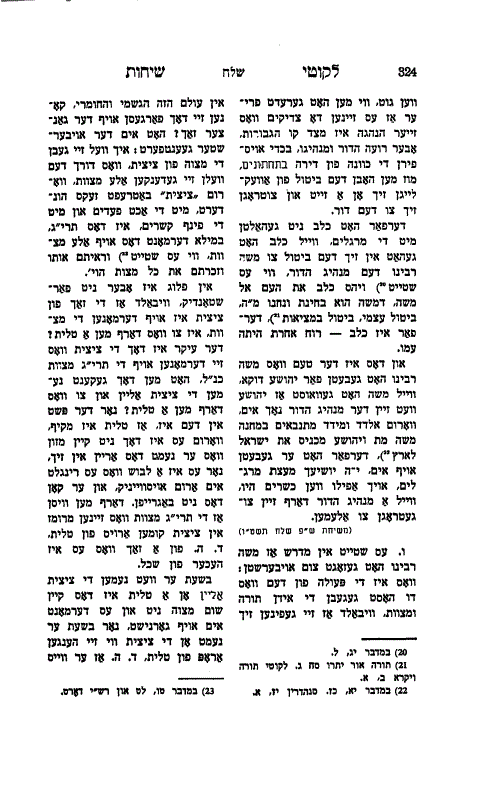
This sicha is from Likkutei Sichos, volume two, the second sicha for Parshas Shelach. At the end of Parshas Shelach, the Torah discusses the mitzvah of tzitzis. The Rebbe explores why tzitzis must be attached to a tallis (a four-cornered garment) and not simply taken by themselves. The Torah says that tzitzis are meant to remind us of all the mitzvos. The numerical value of the word "tzitzis," together with its eight strands and five knots, equals 613—the total number of mitzvos in the Torah. But this reminder only works when the tzitzis are hanging from a tallis, which represents something beyond intellect or reason (seichel). Only then can we truly remember and fulfill all the mitzvos, not just those that make sense to us.
The Rebbe also addresses how this idea explains our conduct in a world full of competition and challenges. Even when it seems irrational or disadvantageous according to worldly standards, we follow Torah honestly—without cheating or lying—because G‑d deals with us in a miraculous way. When we perform mitzvos with a sense that they come from above reason, G‑d provides for us beyond natural limitations.
The sicha opens with a Midrash: Moshe Rabbeinu asked Hashem what benefit there is in giving Torah and mitzvos to Jews if, once they enter the physical world, they might forget everything. Hashem answered that He would give them the mitzvah of tzitzis so they would remember all the mitzvos. The Rebbe asks: Why is it specifically tzitzis that has this power? And why must tzitzis be attached to a tallis?
Saif Aleph
The Midrash says that Moshe Rabbeinu asked Hashem: What is the benefit of giving Jews Torah and mitzvos if, as soon as they enter this physical world, they might forget everything about Torah and mitzvos? Hashem answered that He would give them the mitzvah of tzitzis; through tzitzis they will remember all the mitzvos.
The Rebbe explains: Why is it specifically tzitzis that reminds us of all 613 mitzvos? The answer given is based on gematria (numerical value): The word "tzitzis" equals 600. Adding eight strands and five knots gives you 613—the number of all mitzvos in the Torah. So by looking at tzitzis, you are reminded not to forget any mitzvah.
This is supported by the verse:
וּרְאִיתֶם אֹתוֹ וּזְכַרְתֶּם אֵת כָּל מִצְוֹת ה׳
"And you shall see it and remember all the commandments of Hashem."
This shows that seeing tzitzis serves as a reminder for all mitzvos.
But if that's so—if it's just about seeing or holding tzitzis—why do we need a tallis at all? Why can't we just take hold of some strings called "tzitzis" and have them serve as our reminder? Why does halacha require that tzitzis hang from a four-cornered garment?
Saif Beis
This question leads to a deeper point: If the main thing is being reminded about all 613 mitzvos through tzitzis (because their gematria equals 613), why do we need a tallis? Why isn't it enough just to take hold of some strings called "tzitzis"? Why must they be attached to a garment?
The answer lies in understanding what a tallis represents. A tallis is described as "makif"—it surrounds you. Unlike food, which you ingest and becomes part of your inner self, a garment wraps around you externally; it encircles you but remains outside your essential being. You cannot fully grasp or internalize it—it remains above you.
This teaches us something fundamental about Torah and mitzvos: The fact that there are 613 hints in tzitzis only matters when those strands hang from a tallis—a garment representing something higher than intellect or comprehension (seichel). Mitzvos come from something beyond our understanding; their source is above reason.
If someone were to take just strings without attaching them to a tallis, there would be no mitzvah at all—and no reminder about anything! Only when one wears tzitzis as they hang from a tallis does he fulfill the commandment properly. This means recognizing that Torah and mitzvos originate from something completely beyond human grasp—the Divine will itself.
Saif Gimmel
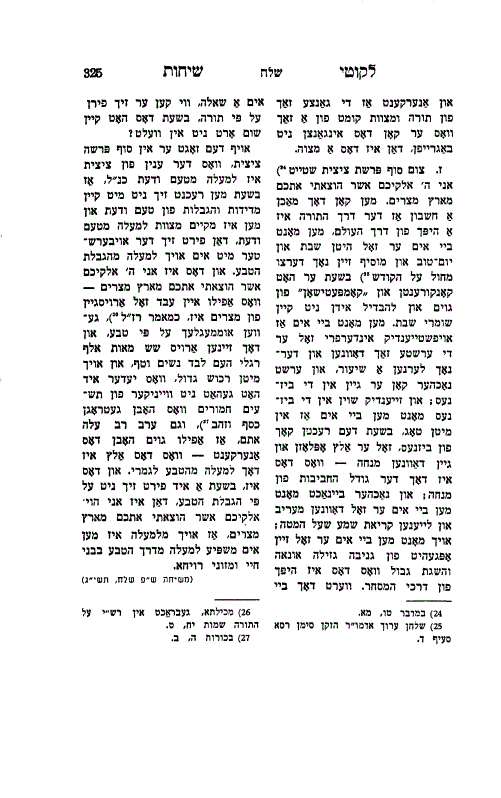
The Rebbe continues: This idea connects directly to another theme at the end of Parshas Shelach—the mention of Yetziyas Mitzrayim (the Exodus from Egypt) in connection with tzitzis:
אֲנִי ה׳ אֱ-לֹקֵיכֶם אֲשֶׁר הוֹצֵאתִי אֶתְכֶם מֵאֶרֶץ מִצְרָיִם
"I am Hashem your G‑d who took you out from the land of Egypt."
Why does this verse appear at the end of parshas Tzitzis? It teaches us that just as G‑d took us out of Egypt in an open, supernatural way—when even one slave could not escape Egypt on his own—so too does He deal with us above nature when we fulfill His commandments above reason.
The Exodus was not merely an escape; it was accompanied by miracles upon miracles: Not only did hundreds of thousands leave Egypt (excluding women and children), but they left with great wealth—and even non-Jews joined them! This was entirely beyond nature.
So too, when Jews fulfill Torah and mitzvos in ways that transcend logic—even when it seems irrational according to worldly standards—G‑d responds by providing for them in ways that transcend natural limitations.
Saif Daled
The Rebbe now addresses how this applies practically in daily life: According to worldly logic, following Torah strictly seems contrary to success in business or life. For example: We demand that Jews keep Shabbos and Yom Tov—even extending Shabbos into weekday time—despite having competitors who do not keep these laws (whether non-Jews or even other Jews). We expect someone to pray first thing every morning before going out to work—even though business pressures may urge otherwise.
Even more so during Mincha (afternoon prayer): In the middle of his busy workday, filled with passion for business dealings, he must drop everything for prayer! This is considered especially precious because it requires tearing oneself away from worldly concerns at their peak—just like Yonah was answered specifically at Mincha time because he prayed then despite being preoccupied.
At night too—we expect him to recite Shema before bed. On top of these spiritual demands come ethical ones: He must refrain from stealing or cheating—even though such behavior may seem necessary for business success according to secular standards.
Saif Hei
This raises an obvious question: How can someone live according to Torah’s path when it seems so incompatible with worldly norms? How can he succeed if he doesn’t cut corners like others do?
The answer lies in what we learned about tzitzis coming from talis—that fulfilling Torah and mitzvos comes from recognizing their source as higher than intellect or rational calculation. When one fulfills these commandments without regard for natural limitations or logical constraints—when he acts “above seichel”—then G‑d reciprocates by providing for him “above nature.”
This is exactly what happened at Yetziyas Mitzrayim: Even though logically no slave could escape Egypt, G‑d took out an entire nation—with wealth—and even brought along multitudes who weren’t originally part of Israel! This was supernatural provision because Jews acted according to G‑d’s will rather than human logic.
Key Points
- Tzitzis serve as a reminder for all 613 mitzvos because their numerical value—including strands and knots—equals 613; but this reminder only works when they are attached to a tallis—a garment representing something higher than intellect.
- The requirement for tzitzis to hang from a tallis teaches us that true fulfillment and remembrance of Torah’s commandments comes only when we recognize their Divine source as being beyond human understanding—not merely rational calculation.
- The mention of Yetziyas Mitzrayim alongside parshas Tzitzis teaches us that just as G‑d redeemed us supernaturally from Egypt, so too does He provide for those who fulfill His will above nature—in ways transcending normal expectations.
- A Jew’s commitment to Torah often appears contrary to worldly logic—such as keeping Shabbos despite business competition or praying during busy work hours—but acting above reason brings down blessings above nature.
- When we perform mitzvos without limiting ourselves by rational considerations—as symbolized by wearing tzitzis on a talis—we merit Divine assistance beyond natural boundaries: children, life, sustenance—all provided generously by G‑d Himself.