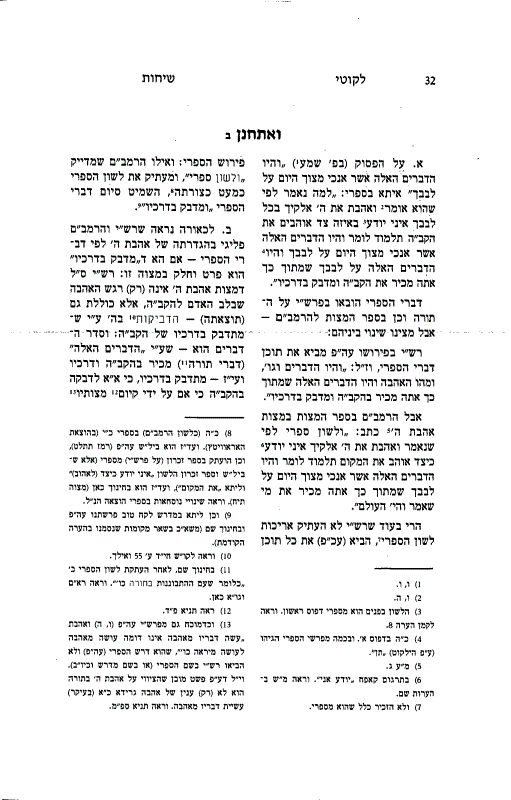
On the verse in the Parsha of Shema, "And these words which I command you today shall be upon your heart," it is stated in the Sifrei: "Why is this said? Because it says, 'And you shall love the L‑rd your G‑d with all your heart,' I do not know in what manner one loves the Holy One, blessed be He. Therefore, it says, 'And these words which I command you today shall be upon your heart,' meaning that through this you recognize the Holy One, blessed be He, and cleave to His ways."
The words of the Sifrei are brought in Rashi's commentary on the Torah and also in the Rambam's Sefer HaMitzvos. However, we find a difference between them:
Rashi, in his commentary on the verse, brings the content of the Sifrei's words, stating: "And these words, etc., and what is the love? That these words should be upon your heart, so that through this you recognize the Holy One, blessed be He, and cleave to His ways."
But the Rambam, in Sefer HaMitzvos regarding the mitzvah of loving G‑d, writes: "And the language of the Sifrei is: Because it says, 'And you shall love the L‑rd your G‑d,' I do not know how one loves the Omnipresent. Therefore, it says, 'And these words which I command you today shall be upon your heart,' meaning that through this you recognize the One who spoke and the world came into being."
Thus, while Rashi does not copy the lengthy language of the Sifrei, he at least brings the entire content of the Sifrei's explanation. In contrast, the Rambam, who is precise in saying "the language of the Sifrei" and almost copies the Sifrei's language verbatim, omits the Sifrei's conclusion "and cleave to His ways."
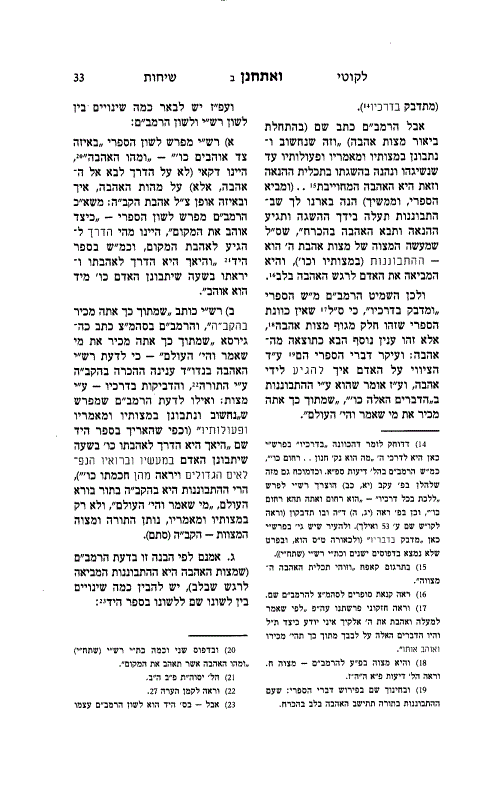
It seems that Rashi and the Rambam disagree on the definition of the love of G‑d according to the Sifrei's words — whether the aspect of "cleaving to His ways" is a detail and part of this mitzvah. Rashi holds that the mitzvah of loving G‑d is not only the emotional love in a person's heart for the Holy One, blessed be He, but also includes (as a result) cleaving to G‑d by adhering to His ways. The order is that through "these words" (words of Torah), one recognizes the Holy One, blessed be He, and His ways, and through this, one cleaves to His ways, for it is impossible to cleave to the Holy One, blessed be He, except through fulfilling His commandments (cleaving to His ways).
However, the Rambam writes there (at the beginning of the explanation of the mitzvah of love) "And this is that we should think and contemplate His commandments, His sayings, and His actions until we grasp Him and enjoy the ultimate pleasure in grasping Him, and this is the obligatory love... (and he brings the Sifrei, and continues) Behold, we have explained to you that through contemplation you will attain understanding, and you will reach enjoyment, and love will inevitably come," indicating that he holds that the act of the mitzvah of loving G‑d is contemplation (on His commandments, etc.), which brings a person to the emotional love in the heart.
Therefore, the Rambam omits the Sifrei's statement "and cleave to His ways," because he holds that the Sifrei does not mean that this is part of the essence of the mitzvah of love, but rather it is an additional matter that results from love. The main point of the Sifrei's words is about the commandment to a person on how to reach love, and it says that it is through contemplation on "these words, etc.," "that through this you recognize the One who spoke and the world came into being."
Based on this, we can explain several differences between Rashi's language and the Rambam's language:
1) Rashi interprets the Sifrei's language "in what manner do we love, etc." as "and what is the love," meaning it refers (not to the way to come to love, but) to the essence of love, how and in what manner the love of the Holy One, blessed be He, should be. In contrast, the Rambam interprets the Sifrei's language as "how does one love the Omnipresent," meaning what is the way to reach the love of the Omnipresent, as he writes in the Mishneh Torah, "And how is the way to love and fear Him? When a person contemplates, etc., immediately he loves."
Rashi writes, "through this you recognize the Holy One, blessed be He," while the Rambam in Sefer HaMitzvos writes according to the version, "through this you recognize the One who spoke and the world came into being." According to Rashi, the love in this context is the recognition of the Holy One, blessed be He, through the Torah, and cleaving to His ways through mitzvos. However, according to the Rambam, who explains that "we think and contemplate His mitzvos, His sayings, and His actions" (as he elaborates in the Mishneh Torah there, "how is the way to love Him, etc., when a person contemplates His deeds and His wondrous and great creations and sees from them His wisdom, etc."), the contemplation is on the Holy One, blessed be He, as the Creator of the world, "the One who spoke and the world came into being," and not only on His mitzvos and sayings, the Giver of the Torah and the Commander of the mitzvos — the Holy One, blessed be He (simply).
However, according to this understanding of the Rambam (that the mitzvah of love is the contemplation that brings to the emotional feeling in the heart), we need to understand several differences between his language there and his language in the Mishneh Torah:
In Sefer HaMitzvos, he writes (as mentioned above), "and this is that we think and contemplate His mitzvos, His sayings, and His actions," which includes contemplation "on His mitzvos and sayings." In the Mishneh Torah, he writes, "when a person contemplates His deeds and His wondrous and great creations and sees from them His wisdom that is beyond measure and without end," mentioning only contemplation on His deeds and creations, and not "on His mitzvos and sayings."
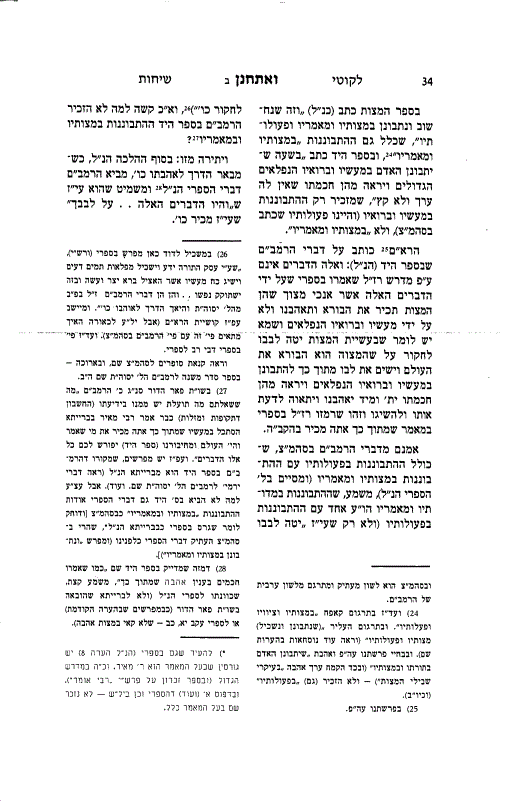
The Ra'avad writes about the Rambam's words in the Mishneh Torah (mentioned above): "And these words are not according to the Midrash of our Sages who said in the Sifrei that through these words which I command you, which are the mitzvos, you recognize the Creator and love Him, and not through His deeds and wondrous creations. Perhaps it can be said that through the performance of the mitzvos, one's heart will incline to investigate that the Commander is the Creator of the world, and he will set his heart through this to contemplate His deeds and wondrous creations and see from them His wisdom, blessed be He, and immediately he will love Him and desire to know Him and comprehend Him. And this is what our Sages hinted at in the Sifrei in the statement that through this you recognize the Holy One, blessed be He."
However, from the Rambam's words in Sefer HaMitzvos, which includes contemplation on His actions along with contemplation on His mitzvos and sayings (and concludes with the language of the Sifrei mentioned above), it implies that contemplation on His mitzvos and sayings is one matter with contemplation on His actions (and not just that through this "one's heart will incline to investigate, etc."), and if so, it is difficult why the Rambam did not mention in the Mishneh Torah the contemplation on His mitzvos and sayings?
Moreover, at the end of the aforementioned halacha, when explaining the way to love Him, etc., the Rambam brings the words of the Sifrei mentioned above and omits that it is through "and these words... upon your heart," through which one recognizes, etc.
There is another change in the Mishneh Torah — an addition in the definition of the mitzvah of love — regarding what is stated in Sefer HaMitzvos:
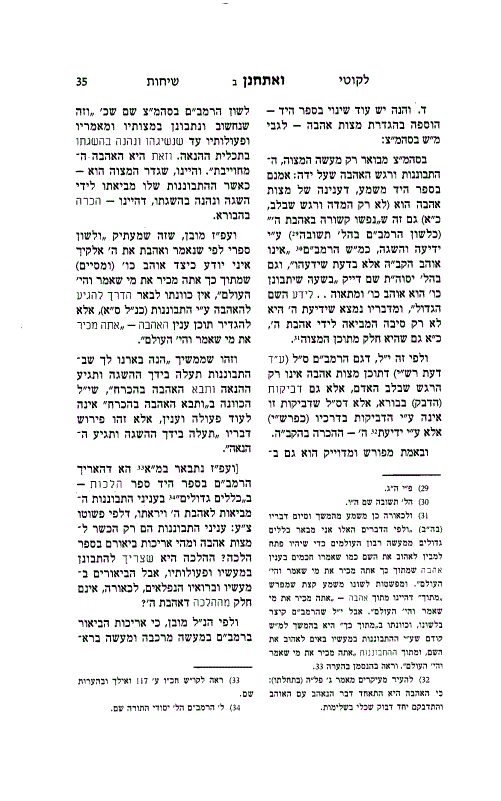
In Sefer HaMitzvos, only the act of the mitzvah is explained, the contemplation and the emotional love that results from it; however, in the Mishneh Torah, it implies that the essence of the mitzvah of love is (not only the measure and emotion in the heart, but also) that "his soul is bound in the love of G‑d" through knowledge and comprehension, as the Rambam writes, "one does not love the Holy One, blessed be He, except through the knowledge with which he knows Him," and also in Hilchos Yesodei HaTorah there he specifies, "when a person contemplates, etc., he loves, etc., and desires... to know the great name," and from his words, it is found that the knowledge of G‑d is not only a cause that brings to the love of G‑d, but also that it is part of the content of the mitzvah.
According to this, it can be said that the Rambam also holds that the content of the mitzvah of love is not only the emotion in the heart of a person, but also cleaving (attachment) to the Creator. However, he holds that this cleaving is not through cleaving to His ways but through the knowledge of G‑d — the recognition of the Holy One, blessed be He.
Indeed, this is explicitly and precisely stated in the Rambam's language in Sefer HaMitzvos there, where he writes, "and this is that we think and contemplate His mitzvos, His sayings, and His actions until we comprehend Him and enjoy His comprehension to the utmost pleasure. And this is the obligatory love." That is, the definition of the mitzvah is — when his contemplation brings him to comprehension and he enjoys his comprehension, that is — recognition of the Creator.
According to this, it is understood that when he quotes, "And the language of the Sifrei, because it says 'And you shall love the L‑rd your G‑d,' I do not know how to love, etc. (and concludes) that through this you recognize the One who spoke and the world came into being," his intention is not to explain the method to achieve love through contemplation (as mentioned earlier), but rather to define the content of the love — "you recognize the One who spoke and the world came into being."
This is why he continues, "Behold, we have explained to you that through contemplation you will achieve comprehension and reach enjoyment, and love will necessarily come." It can be said that the intention of "and love will necessarily come" is not to indicate another action or matter, but this is the explanation of his words "you will achieve comprehension and reach enjoyment."
[According to this, it is explained elsewhere why the Rambam elaborates in the Mishneh Torah, the Book of Laws, on "great principles" regarding contemplation that leads to the love and fear of G‑d. On a simple level, it is puzzling: contemplation is merely a preparation for the mitzvah of love, so why the lengthy explanation in a book of law? The law is that one must contemplate His actions and deeds, but the explanations of His wondrous actions and creations, seemingly, are not part of the law of the love of G‑d?
According to the above, it is understood that the lengthy explanation in the Rambam regarding the Work of the Chariot and the Work of Creation in Hilchos Yesodei HaTorah is not only for contemplation to achieve love of G‑d through it, but it is part of the mitzvah of the love of G‑d itself, whose content is the recognition of the One who spoke and the world came into being.]
However, the reason for the aforementioned change has not yet been explained, that in Sefer HaMitzvos he mentions "and we contemplate His mitzvos and sayings," but in the Mishneh Torah he does not mention this contemplation.
It also requires explanation: in Sefer HaMitzvos there he continues that "this mitzvah also includes that we call upon all people to serve Him and believe in Him, and this is because when you love someone, you speak of his praises, etc., so too when you truly love Him, as you have achieved comprehension of His truth, you will undoubtedly call upon the ignorant and the foolish to know the truth that you have known," and the language of the Sifrei, "And you shall love the L‑rd, love Him upon the creatures like Abraham your father, etc."
And it is puzzling why he did not bring this matter in the Mishneh Torah when he explained the mitzvah of the love of G‑d, and indeed, in general, in the Mishneh Torah he elaborates and details more on the particulars of the mitzvah than in Sefer HaMitzvos, where he writes only the general point and the main principles of the laws of the mitzvah?
And this will be understood by first analyzing the precise language of the Rambam in the Mishneh Torah there when he begins to explain the mitzvah of the love of G‑d: "This honored and awesome G‑d commands to love Him and to fear Him, as it is said, 'And you shall love the L‑rd your G‑d,' and it is said, 'You shall fear the L‑rd your G‑d.'
And seemingly, there are several questions in this matter:
1) Why does the Rambam specifically use "this honored and awesome G‑d," and not the usual language "the honored and awesome name" (as he writes immediately afterward, "to know the great name")? Moreover, this is the language of the verse "to fear this honored and awesome name", "all this is the greatness of His honored and awesome name."
2) From the language of the Rambam, "this honored and awesome G‑d commands to love Him and to fear Him," it implies that the two descriptions "honored and awesome" correspond to the two mitzvos of "to love Him" and "to fear Him," that the fact that G‑d is "honored" brings a person to love Him, and "fear" comes from the fact that G‑d is "awesome" simply. And seemingly, in the aforementioned verse, it is stated (only) "to fear this honored and awesome name," which implies that both descriptions belong to and cause fear?
And it can be said that the explanation of all this is:
Love and fear are two distinct mitzvos. Furthermore, they are two different and even opposite traits. It is obvious that love is an inclination towards closeness to the beloved, while fear and awe create a distance from the awesome one and a nullification before Him. Based on this, we need to understand why the Rambam combines them in the Mishneh Torah as one unit. Seemingly, he should have stated, as with all mitzvos: a positive commandment to love G‑d, as it is stated, "And you shall love the L‑rd your G‑d," and a positive commandment to fear Him, as it is stated, "You shall fear the L‑rd your G‑d."
We must say that the Rambam in the Mishneh Torah speaks of a type of love that is not opposite to fear but is of the same category.
The explanation for this is based on the precise wording of the Rambam in this halacha, where he writes: "And how is the way to love and fear Him? When a person contemplates His wondrous and great deeds and creations and sees from them His wisdom that has no comparison or end, immediately he loves and praises and glorifies and desires a great desire to know the great name, as David said, 'My soul thirsts for G‑d, for the living G‑d.'" From the fact that he adds "and desires a great desire to know the great name, as David said, 'My soul thirsts for G‑d, for the living G‑d,'" it is understood that the main aspect of love here is this "desires a great desire to know the great name." Since he recognizes the greatness of G‑d ("sees from them His wisdom that has no comparison or end"), he feels his distance from G‑d, and this brings him to a thirst and longing.
[Similarly, he writes later at the end of the matter, after explaining the details of the Account of the Chariot and the Account of Creation: When a person contemplates these matters and recognizes all the creations, etc., and sees the wisdom of the Holy One, blessed be He, in all creatures and all creations, it increases his love for the Omnipresent, and his soul thirsts and his flesh longs to love the Omnipresent, blessed be He.]
This means that the definition of love here is not a feeling of attachment and closeness, but rather the desire and thirst, which is the feeling and movement of distance, that he is far from G‑d and desires Him.
This is precise in the Rambam's wording "and desires a great desire to know the great name," for the knowledge of the great name is something unattainable for a human being composed of matter and form, as the Rambam elaborates later in the chapter regarding the level of the angels. Even the lowest level of the ten levels of angels (those who speak with the prophets and appear to them in prophetic visions) "also knows the Creator with a knowledge that human beings composed of matter and form cannot achieve and know like it," and even "the level (among the levels of angels) that has no higher level except for the level of the Holy One, blessed be He," "cannot grasp the truth of the Creator as He is, but its knowledge is limited to grasp and know."
[Moreover, the Rambam elaborates in the first chapter that even Moshe Rabbeinu could not grasp the true essence of His existence as it is. He writes: What did Moshe Rabbeinu seek to grasp when he said, "Show me, I pray You, Your glory"? He sought to know the true essence of the existence of the Holy One, blessed be He. The existence of the Holy One, blessed be He, was distinct in his heart from other existences until he knew the true essence of His existence as it is. And the Holy One, blessed be He, replied that the human mind, which is composed of body and soul, cannot grasp the truth of this matter completely, and He informed him of what no man before him knew and no man after him will know, etc.]
Based on this, it is understood why the Rambam combines love and fear at the beginning of the halacha "a mitzvah to love Him and to fear Him," and similarly when he explains "how is the way to love and fear Him when one contemplates, etc." (in halacha 2) — the contemplation that brings "immediately he loves, etc.," continues with "and when he thinks about these matters themselves, immediately he recoils backward and fears and knows that he is a small, lowly, and dark creature standing with limited and meager understanding before the Perfect of Knowledge," because this fear is complete nullification — nullification of the mind, and it is this that follows the movement of distance felt in the thirst of love — "desires a great desire to know the great name."
This is why the Rambam emphasizes at the very beginning of his words, "This honored and awesome G‑d, it is a mitzvah to love Him and to fear Him, as it is said, 'And you shall love the L‑rd your G‑d,' and it is said, 'You shall fear the L‑rd your G‑d.'" He uses two descriptors, "honored" and "awesome," in relation to love and fear, even though in the verse both are mentioned in connection to fear — "to fear this honored and awesome name." This is because the "mitzvah to love Him" in the Rambam is not essentially different in its nature from the mitzvah of fear. The "love" mentioned by the Rambam here is also related (in its definition and content) to the movement of nullification, etc., that is found in fear, as explained above. Therefore, both are connected to the two descriptors "honored" and "awesome."
Based on this, we learn another significant insight from the Rambam's words: Even though a person's contemplation is "on His wondrous and great deeds and creations, and from them he sees His wisdom, etc.," meaning that a person can know, understand, and grasp something of the Creator, nevertheless, the love is for G‑d as He is beyond human knowledge and comprehension, which is why the love is from afar.
It can be said that the Rambam emphasizes this by beginning with "This honored and awesome G‑d, it is a mitzvah to love Him and to fear Him," and concluding with "as it is said, 'And you shall love the L‑rd your G‑d,'" where he is precise in writing "G‑d" and not "the L‑rd" or similar terms.
In explaining the superiority of the name Havayah over other names, the Rambam writes in his Guide for the Perplexed that "all His exalted names found in the books are derived from actions, and this is not hidden, except for one name, which is Yud-Hei-Vav-Hei, which is a unique name for Him, exalted be He, and therefore it is called the explicit name, meaning it indicates His essence clearly without any association, but His other holy names indicate association because they are derived from actions similar to ours."
He continues, "This name (the explicit name) indicates His essence in a way that no created being shares in that indication, as our sages said, 'My name that is unique to Me,' but the other names all indicate attributes, not on essence alone, but on the possessor of attributes."
He concludes, "All these derived names were only innovated after the creation of the world... as they are all names designated according to the actions found in the world, but when you contemplate His essence, stripped and abstracted from all action, He has no derived name (from action) at all, except for one unique name to indicate His essence."
Therefore, the Rambam wrote "This honored and awesome G‑d, it is a mitzvah to love Him and to fear Him," because the name "G‑d" is the first of His names that indicate the "attributes" of the Holy One, blessed be He, "according to the actions found in the world" [as they appear in the order of the Thirteen Attributes of Mercy, where the first name indicating "the possessor of attributes" (unlike the names "Havayah Havayah") is the name "G‑d"] —
to emphasize that even though contemplation, understanding, and recognition of the Creator pertain only to His actions, or as the Holy One, blessed be He, is "the possessor of attributes," not His essence (which is indicated by the name Havayah, the explicit name, the unique name, and the essential name), nevertheless, the love itself is for His essence, His true existence, which is beyond actions and attributes.
From all the above, the difference in the definition of the mitzvah of loving G‑d between the Sefer HaMitzvos and the Mishneh Torah is understood:
In the Sefer HaMitzvos, the general concept of love is explained, which is why it describes it as the recognition of G‑d, which is a movement of closeness, as emphasized "until we grasp Him and enjoy His comprehension to the utmost delight." Therefore, it includes contemplation "in His mitzvos and His sayings," because they too are included in the recognition of the Creator, as they are His commands and sayings.
Therefore, the Rambam brings there (as mentioned above) that "this mitzvah also includes that we should call all people to His service... When you love someone, you will speak of his praises and extol them, and you will call upon people to love him." This aspect of love pertains to cleaving to G‑d, the closeness inherent in love, for when a person recognizes the Holy One, blessed be He, and draws close to Him, it leads him to call upon others to love Him.
However, in the Mishneh Torah, the intention is to explain and detail the specific aspects of the love and fear of G‑d that follow and result from the knowledge of G‑d (the foundation of foundations) as explained in the first chapter of the Laws of the Foundations of the Torah. Therefore, it details this aspect of the mitzvah of love (which is equivalent to the mitzvah of fear) that pertains to the concept of distance from His true existence.
[And not the contemplation in His mitzvos and sayings, which pertains to closeness — the knowledge and recognition of the Holy One, blessed be He, and similarly, the calling upon people to serve Him and love Him, which is a result of the feeling of closeness and enjoyment from the recognition of the Creator.]
This is because a person cannot "grasp" through the concept of knowledge (for the human intellect cannot grasp His true existence as it is), as explained at length in the first chapter. However, through these two mitzvos, love and fear, a person "connects" to His true existence, as mentioned above, that love is the thirst and desire to know the great name.