
Sicha 2
A.
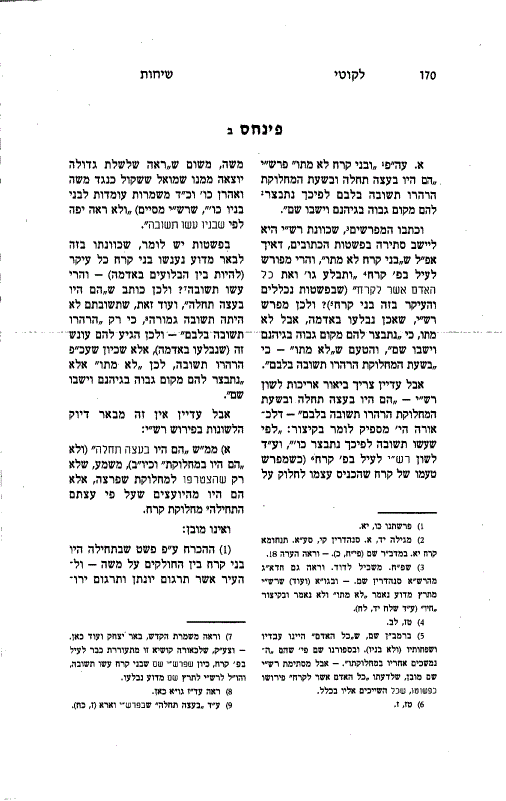
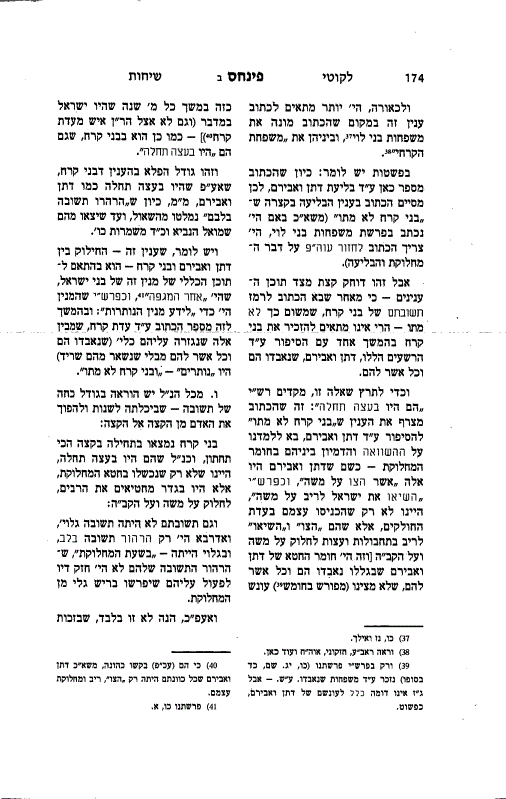
On the verse, “And the sons of Korach did not die,” Rashi comments:
“They were involved in the counsel at first, but at the time of the dispute they contemplated repentance in their hearts. Therefore, a lofty place was secured for them in Gehinnom, and they sat there.”
The commentators explain that Rashi is resolving an apparent contradiction. Earlier, the Torah states that the earth swallowed “all the people belonging to Korach,” which seemingly included Korach’s sons. How, then, can the Torah later say that “the sons of Korach did not die”?
Rashi explains that they were indeed swallowed into the earth, but they did not die. A special elevated place was prepared for them in Gehinnom, where they remained alive because they had contemplated repentance in their hearts.
However, Rashi’s wording requires explanation. Why not simply say that they repented and were therefore saved? Earlier, when discussing Korach’s mistake in relying on his future descendants, Rashi concludes briefly: “His sons repented.”
One could answer that Rashi wishes to explain why they were punished at all. They had participated in the rebellion and their repentance was incomplete, consisting only of an inner thought. Therefore, they were swallowed into the earth. Yet because they did repent to some degree, they did not die.
Still, several questions remain.
First, why does Rashi emphasize that “they were involved in the counsel at first”? This implies that they were not merely participants in the rebellion but among those who helped initiate it. What is Rashi’s source for this, and why is it relevant here?
Second, why stress that they repented “at the time of the dispute” itself? It would seem more logical that their repentance occurred after Moshe’s warning and prediction of the punishment.
Third, the phrase “they contemplated repentance in their hearts” does not necessarily indicate incomplete repentance. It simply describes repentance that remained internal and unexpressed.
B.
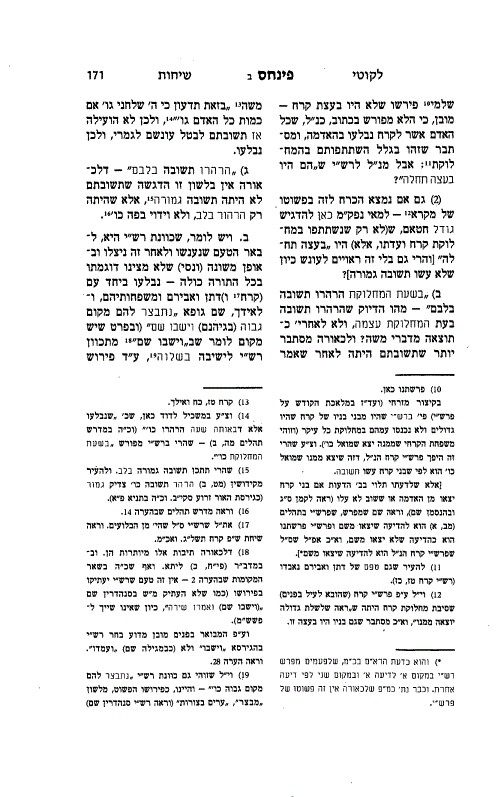
The Rebbe explains that Rashi is addressing the unusual nature of their punishment and salvation.
Korach’s sons were swallowed together with Korach, Dasan, and Aviram. Yet at the very same time, they were granted “a lofty place” within Gehinnom and remained there safely.
This appears contradictory. They were in the earth, yet elevated. They were being punished, yet sitting securely and peacefully.
The explanation is that their conduct itself contained a contradiction.
Outwardly, they still appeared to be part of the rebellion. No one saw them withdraw. Inwardly, however, they had already turned toward repentance.
In his commentary to Tehillim, Rashi writes that they separated themselves from the rebellion. But in his Torah commentary he says only that they “contemplated repentance in their hearts.” This indicates that, according to the simple meaning of the Torah, they did not openly withdraw. Had they done so, they likely would not have been swallowed into the earth.
Their punishment therefore mirrored their behavior. Externally, they shared the fate of Korach’s followers and were swallowed into the ground. Internally, they were distinct, occupying a protected and elevated place.
This was a classic case of measure for measure.
C.
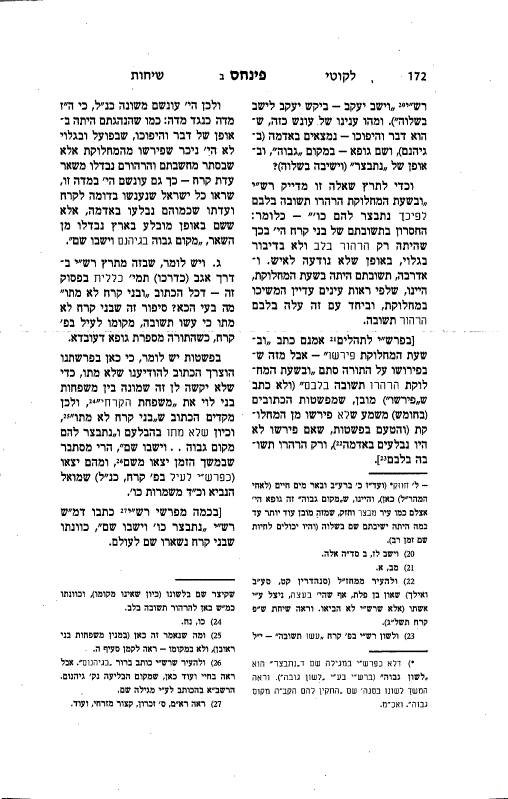
Rashi also helps answer another question: Why is the Torah telling us here that Korach’s sons survived? This information seemingly belongs in Parshas Korach itself.
The simple answer is that in our parshah the Torah lists the families of Levi, including the Korachite family. The Torah therefore informs us that Korach’s sons survived and continued their family line.
Since they did not die, it follows that they eventually emerged from their place of confinement. Earlier, Rashi already noted that from them descended Shmuel HaNavi and the twenty-four priestly divisions.
Some commentators suggest that Korach’s sons remained forever in that elevated place. However, this is difficult. Since Shmuel and many later descendants came from them, they clearly emerged alive.
Furthermore, the Torah already counts the Korachite family during Moshe’s lifetime, proving that they were living normal family lives by then.
Still, why did the Torah not reveal their survival earlier?
Some explain that this was out of respect for Moshe. Since Moshe declared that the rebels would descend alive into the pit, immediately announcing that Korach’s sons survived might seem to diminish his words.
The Rebbe rejects this explanation. Moshe’s statement was fulfilled exactly. They did descend alive into the pit. Their later rescue did not contradict Moshe’s prophecy. On the contrary, since Moshe wanted them to repent, their salvation reflects positively on him.
D.
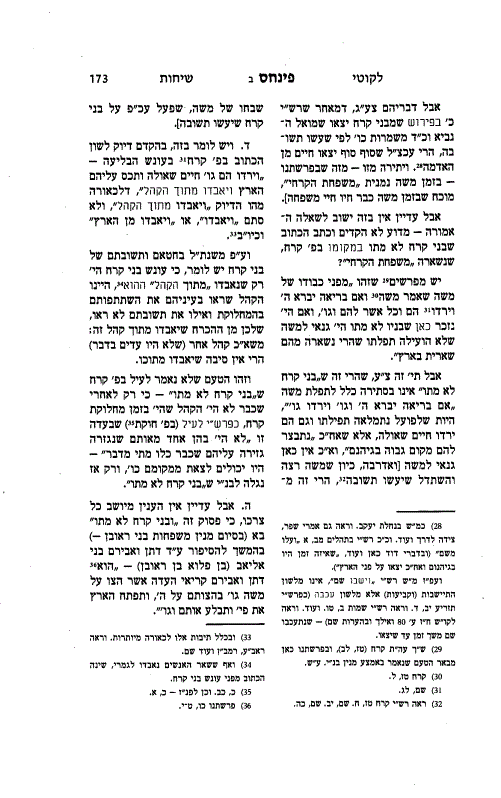
Another clue appears in the verse describing the punishment:
“They descended alive into the pit, the earth covered them, and they were lost from among the congregation.”
Why does the Torah say they were lost “from among the congregation” rather than simply saying they were lost?
The answer is that they disappeared from the particular congregation that had witnessed their participation in the rebellion but had not witnessed their repentance.
To those observers, they had to vanish. However, there was no reason they had to remain hidden forever from future generations who had not witnessed the events.
This explains why their survival was revealed only later. Once the generation of the wilderness had passed away, Korach’s sons could emerge, and it became known that “the sons of Korach did not die.”
E.
Another difficulty remains. The verse about Korach’s sons appears immediately after the Torah recounts the story of Dasan and Aviram.
Would it not have been more appropriate to mention Korach’s sons among the Levite families?
The Rebbe explains that the Torah intentionally places these subjects together. Dasan and Aviram were not merely participants in the rebellion; they actively incited others against Moshe. Rashi explains that they persuaded and encouraged the people to quarrel with him.
This was the particular severity of their sin.
The Torah therefore teaches that Korach’s sons were initially similar. They too were “involved in the counsel at first.” They helped initiate the rebellion.
The wonder is that despite beginning at the same level as Dasan and Aviram, they were saved because they entertained thoughts of repentance.
Not only were they spared, but from them came Shmuel HaNavi and the twenty-four priestly divisions.
This also fits the broader theme of the census conducted “after the plague.” The purpose of the census was to count those who remained. Among the followers of Korach, there were survivors:
“The sons of Korach did not die.”
F. The Lesson
The lesson is the extraordinary power of teshuvah.
Korach’s sons began at a very low spiritual level. They were not merely sinners; they were among those who encouraged others to rebel against Moshe and against Hashem.
Even their repentance was not public. It remained only a thought in the heart. Outwardly, they still appeared to be part of the rebellion.
Yet that single thought of teshuvah transformed everything.
It not only saved them from destruction, but even while undergoing punishment they were granted a place of tranquility and protection.
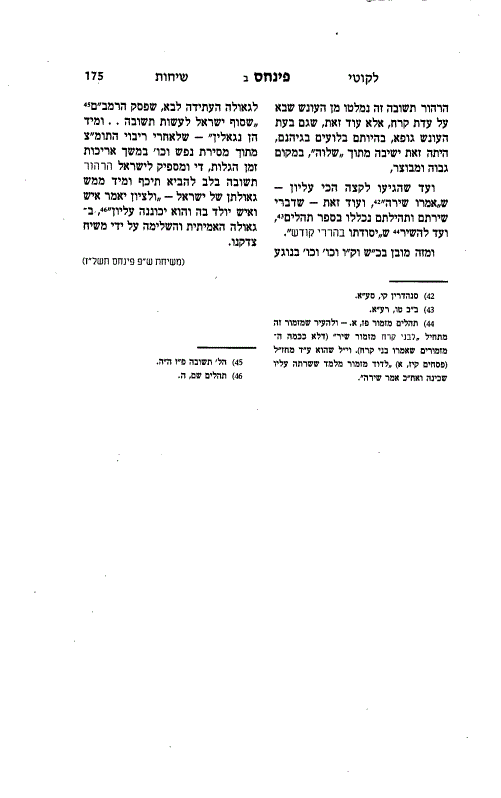
Eventually they reached the highest heights. They sang songs of praise to Hashem, and their words became part of Sefer Tehillim. Among the psalms attributed to the Sons of Korach is:
“Its foundation is in the holy mountains.”
From this we learn an even greater lesson regarding the future redemption.
The Rambam writes:
“Israel will ultimately repent, and immediately they will be redeemed.”
After all the Torah, mitzvos, and self-sacrifice accumulated throughout the long exile, even a sincere thought of teshuvah can bring the redemption immediately.
May we merit the fulfillment of:
“And of Zion it shall be said: This one and that one were born in her, and the Most High Himself will establish her.”
With the true and complete Redemption through Moshiach Tzidkeinu.
Based on a farbrengen of Shabbos Parshas Pinchas, 5737 (1977