

On the verse:
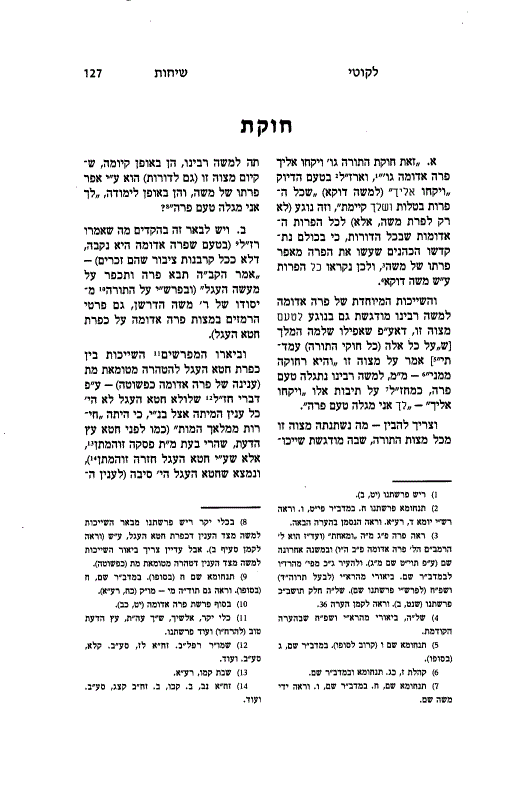
“And they shall take to you a red heifer,”
the Midrash explains that the Red Heifer is associated specifically with Moshe because:
“All the other heifers will eventually cease, but yours remains forever.”
There is a unique connection between Moshe and the mitzvah of the Red Heifer. Similarly, regarding the mystery of the Red Heifer, Hashem told Moshe:
“To you I reveal the reason for the Red Heifer.”
This connection can be understood by first considering the explanation of the Sages concerning the purpose of the Red Heifer.
The Sages teach:
“Let the mother come and atone for the deed of the calf.”
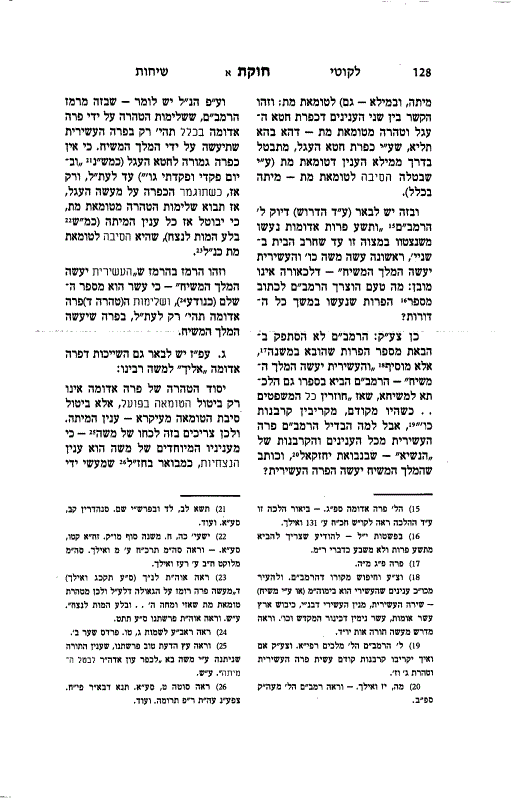
The commentators explain that through the sin of the Golden Calf, the impurity that had been removed at Mount Sinai returned, and death was once again decreed upon the Jewish people.
Accordingly, the Red Heifer atones for the sin of the Golden Calf—the cause of death—and therefore has the power to purify from the impurity of death.
This explains the connection to Moshe.
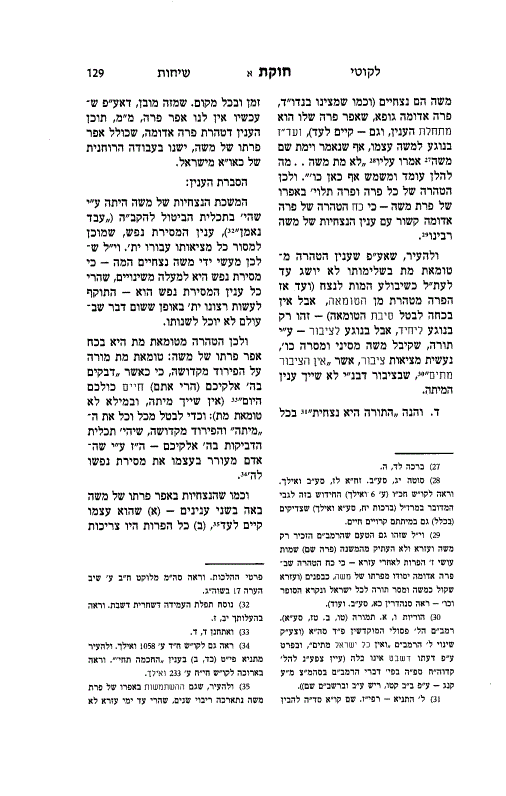
Concerning Moshe, the Sages state:
“The works of Moshe are eternal,”
and
“Moshe did not die.”
The power of the Red Heifer to purify from death derives from the quality of eternity embodied by Moshe Rabbeinu.
One may further suggest that this is why the Rambam records the Mishnah’s statement that:
“Nine red heifers were prepared...”
and then immediately adds:
“And the tenth will be prepared by Melech HaMoshiach.”
The Rambam’s intention may be to allude to the fact that complete purification from the impurity of death—represented by the number ten, the number of perfection—will be achieved only in the future era of Moshiach.
The Spiritual Lesson
The eternity of Moshe is expressed in the service of mesirus nefesh—self-sacrifice.
Self-sacrifice is eternal because it stems from the essence of the soul, a level that is beyond change and fluctuation.
Therefore, purification from the spiritual counterpart of death—separation from holiness—is accomplished through awakening this power of mesirus nefesh.
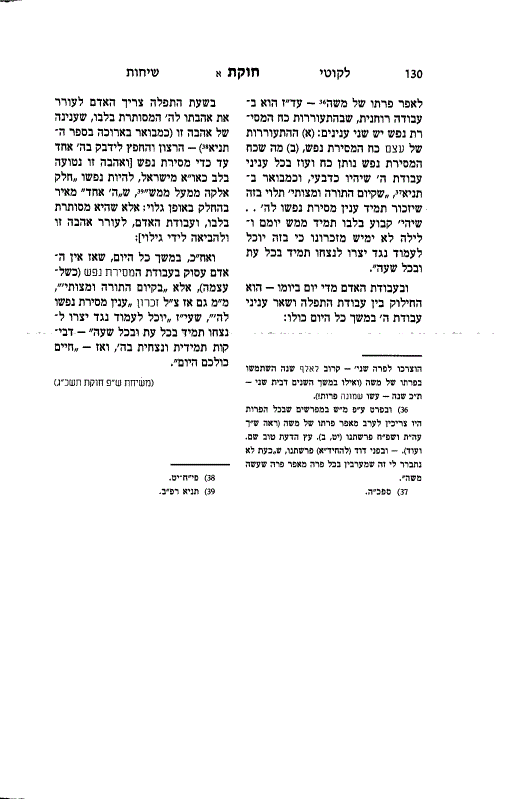
A person must arouse the innermost essence of his soul, the innate willingness to give himself over completely to Hashem.
Moreover, this self-sacrifice should not remain limited to rare moments of inspiration. It must permeate all of a person’s daily service, just as the power of Moshe extended through all the generations and all the Red Heifers.
In practical terms, this is expressed through awakening a deep love for Hashem during the recitation of Krias Shema, a love so powerful that it reaches the level of self-sacrifice.
Then, throughout the day, one should retain a remembrance of that love. By recalling the commitment and self-sacrifice experienced during Shema, a person gains the strength to withstand temptation, overcome the evil inclination, and remain connected to holiness in every aspect of life.
Thus, the eternal power of Moshe continues to provide the strength for purification, enabling every Jew to transcend spiritual death and remain firmly attached to Hashem.