Introduction
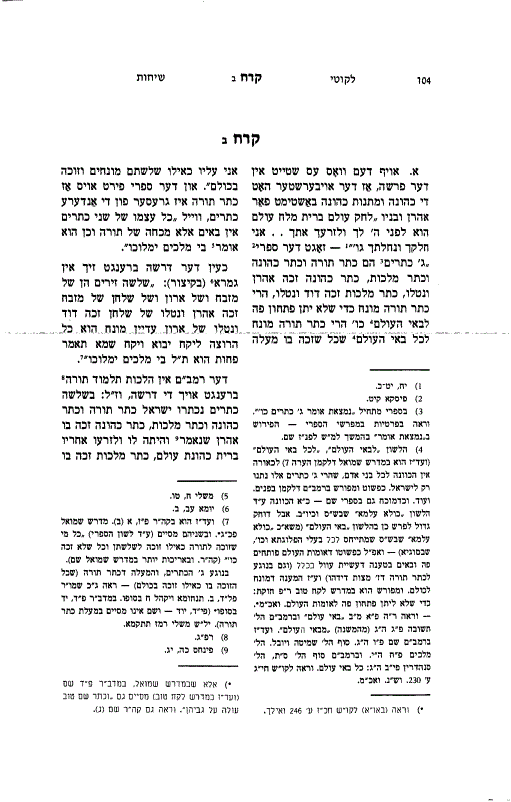
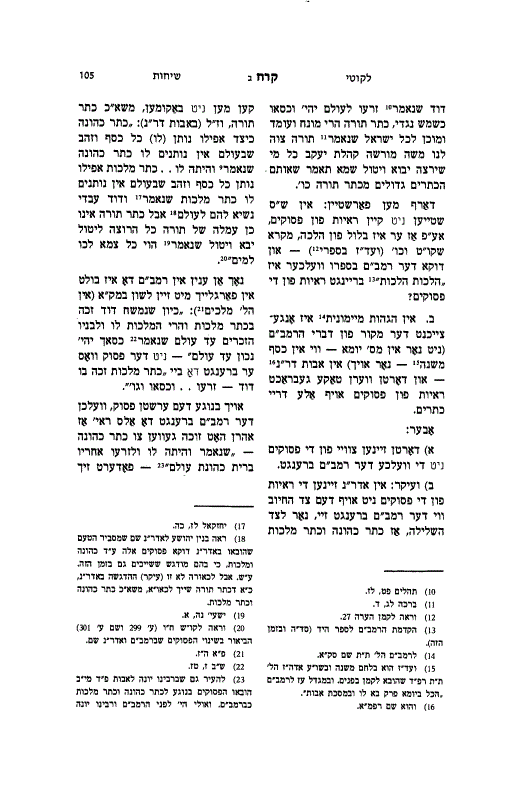
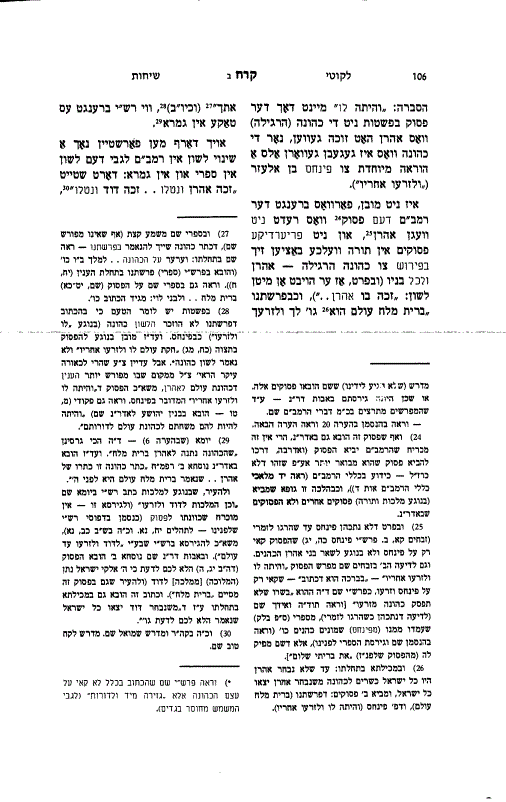
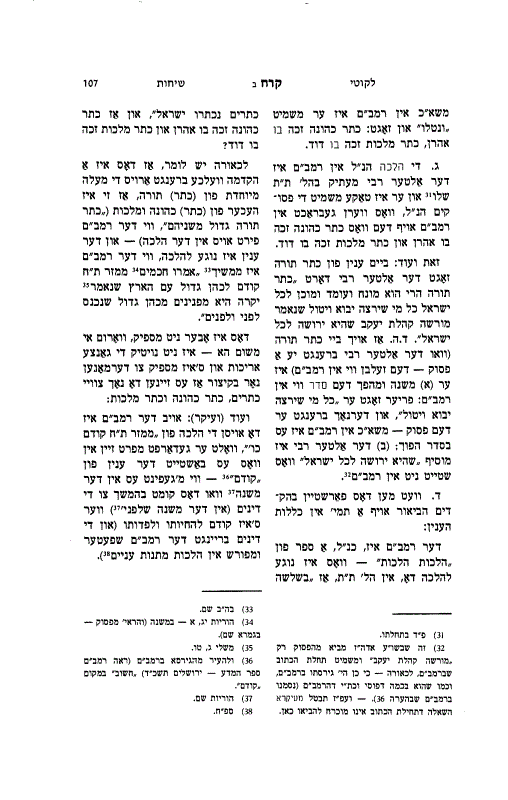
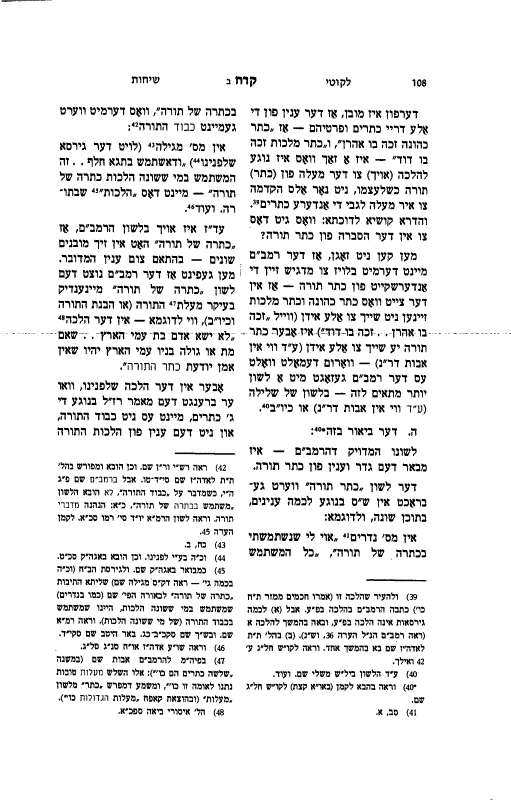
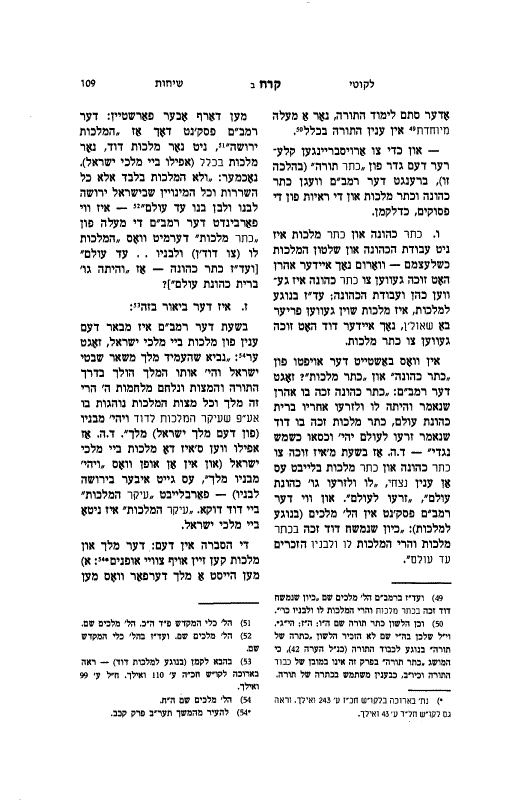
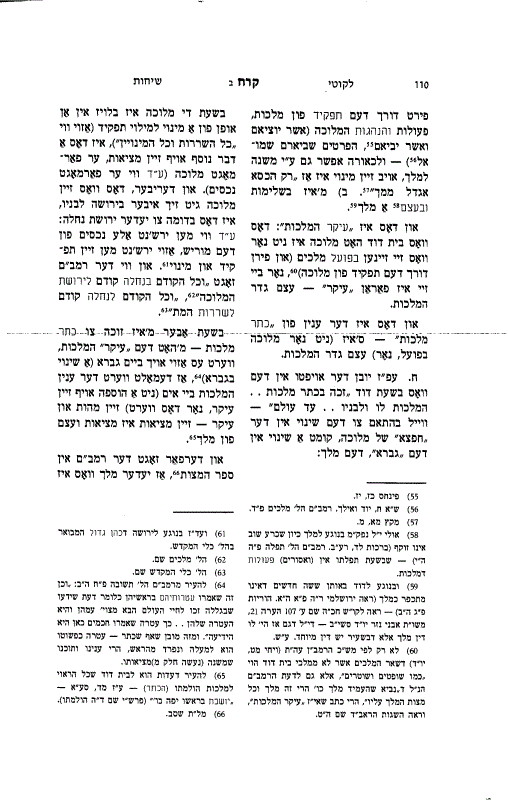
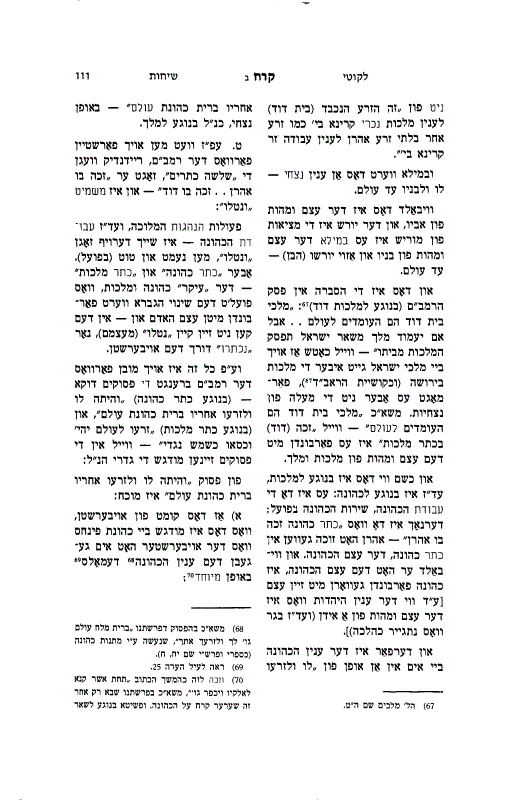
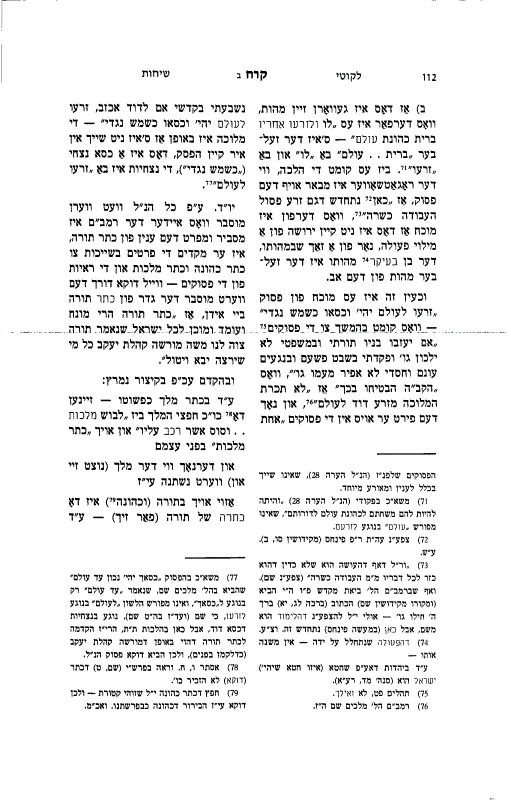
This sicha is a review of Likkutei Sichos volume 28, the second sicha for Parshas Korach. In this sicha, the Rebbe discusses the concept that the priesthood—Kahuna—is an eternal inheritance for Aaron and his descendants. The discussion also explores the idea of three crowns: Keser Kahuna (the crown of priesthood), Keser Malchus (the crown of kingship), and Keser Torah (the crown of Torah).
The Rebbe brings sources from the Rambam, the Sifri, and the Alter Rebbe’s Shulchan Aruch, comparing their different expressions regarding these crowns. The analysis is detailed, focusing on how each source describes the nature and inheritance of these crowns.
The main innovation in the Rebbe’s explanation is that kingship is not just about performing the functions of a king, but about actually becoming a king. The same applies to priesthood: it is not only about doing the tasks of a Kohen, but about being a Kohen in essence. This perspective clarifies many nuances in the language used by various sources and resolves several questions that arise when studying these texts.
The sicha proceeds step by step. It begins with what is stated in our parsha—Parshas Korach—regarding the designation of priesthood for Aaron and his sons, as well as the gifts given to them. The verse says this is an eternal statute, a covenant of salt—meaning an everlasting covenant—for Aaron and his descendants. The Torah emphasizes that this covenant is unique: “The Eternal is your portion and your inheritance,” distinguishing Aaron and his children from all other Jews who receive a portion in Eretz Yisrael.
The Sifri comments on this verse by stating there are three crowns: the crown of Torah, the crown of priesthood, and the crown of kingship. The Sifri explains that Aaron merited and took for himself the crown of priesthood—that one is already taken. Similarly, there are discussions about who receives or can attain each of these crowns.
Saif Aleph
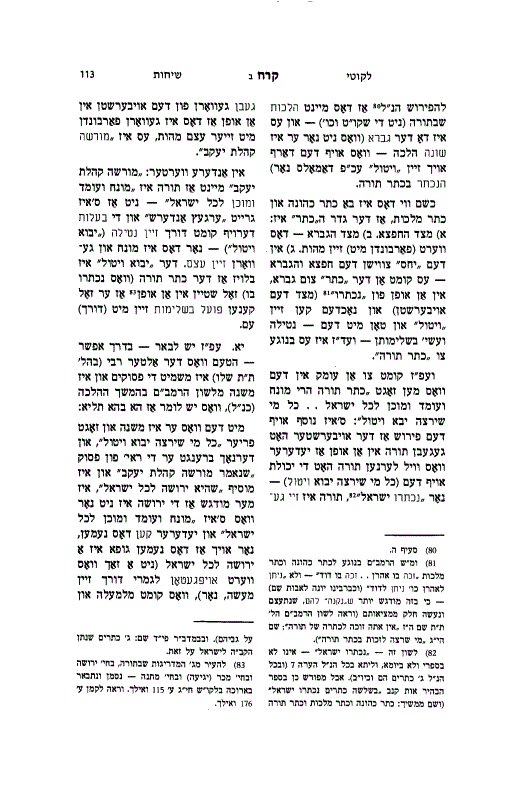
The Sifri teaches that of the three crowns—Kesser Torah, Kesser Kehunah, and Kesser Malchus—two have already been given: the crown of priesthood to Aaron and his descendants, and the crown of kingship to David. These are assigned and taken. But the crown of Torah remains unassigned; it lies available for anyone to claim. This is not limited only to Jews, but potentially extends even to non-Jews regarding their obligations, though certainly for Jews who are commanded in Torah study.
The Sifri emphasizes that no one can claim that the crown of Torah is reserved for someone else or unattainable. The Torah itself was not given exclusively to any individual or group; rather, it is available to all who wish to acquire it. Whoever merits this crown through their own effort receives it directly, without it being granted by another.
Furthermore, the Sifri states that one who attains the crown of Torah is considered as if they have also acquired the other two crowns—priesthood and kingship. In other words, Torah encompasses and elevates a person beyond even those special statuses. The Sifri concludes that the crown of Torah is greater than both Kesser Kehunah and Kesser Malchus because their very existence and authority derive from Torah itself. It is only through Torah that there are priests and kings at all.
This idea is supported by a verse:
בי מלכים ימלוכו
"With me [Torah], kings shall reign."
This means that when one acquires Torah, one acquires everything; all other crowns flow from it, making Torah the greatest of them all.
A similar teaching appears in brief in the Gemara. The Gemara discusses three crowns found on vessels in the Mishkan: on the altar (mizbeach), on the Ark (aron), and on the table (shulchan). Each represents a different crown: Kesser Mizbeach (priesthood), Kesser Shulchan (kingship), and Kesser Aron (Torah). The Gemara explains that Aaron merited priesthood, David merited kingship, but the crown of Torah remains available—anyone who wishes may come and take it.
The Gemara addresses a possible misconception: perhaps because the crown of Torah is unassigned and open to all, it is less significant? The verse cited above refutes this—on the contrary, Torah is what empowers kingship itself.
The Rambam brings this teaching as well. He writes that Israel was crowned with three crowns: Torah, priesthood, and kingship. Priesthood was merited by Aaron—"it shall be for him and his descendants an eternal covenant." Kingship was merited by David—"his descendants will endure forever; his throne will be like the sun before Me," meaning David's kingdom endures eternally.
But regarding Kesser Torah, Rambam says it stands ready for everyone: "The Torah that Moshe commanded us is an inheritance for the congregation of Jacob." Anyone who wishes may come and take it—it belongs equally to all Jews.
Rambam anticipates a question: perhaps since Kesser Torah is available to all, it is less important than priesthood or kingship? He rejects this notion—the verse about kings reigning through Torah proves otherwise. However, Rambam does not quote this last part explicitly in his text.
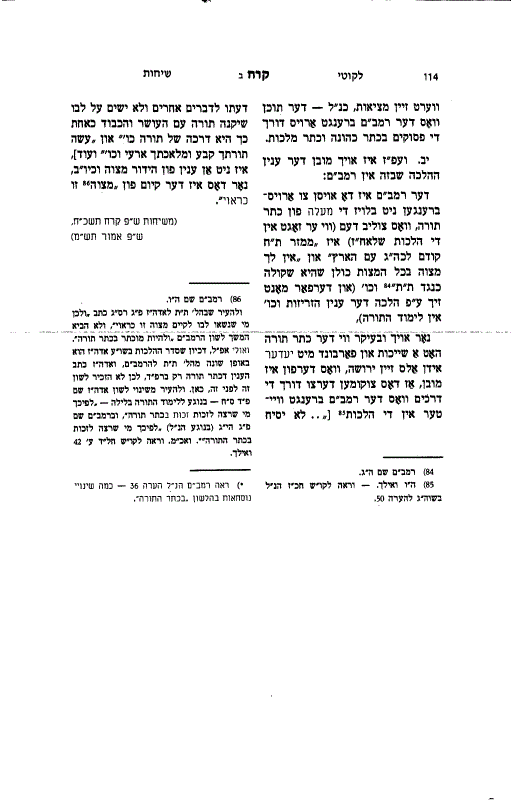
This leads us to a question about Rambam's approach. In both Sifri and Gemara we do not find explicit proof texts establishing that priesthood and kingship are eternal inheritances for Aaron’s and David’s descendants. Yet Rambam brings verses as evidence for their eternity in his legal code—a work focused on halacha rather than midrashic exposition. Why does Rambam feel compelled to cite these verses about eternal inheritance when earlier sources do not?
Saif Beis
Another possible source for the Rambam’s statement is found in Oves der Abnoson, which does bring verses as evidence for all three crowns. However, when we examine this source more closely, it becomes even more puzzling. The Rambam himself does not cite these verses directly, and in fact, the Keser Mishnah—when referencing the Rambam’s words—also points to Oves der Abnoson as a source. In Oves der Abnoson, there are indeed scriptural proofs for each of the three crowns.
Yet this does not fully resolve our question. Firstly, two of the verses cited in Oves der Abnoson are not the same ones that the Rambam brings. This means the Rambam is not simply quoting from there. More importantly, in Oves der Abnoson, the verses are brought to show—on the negative side—that these crowns cannot be acquired by just anyone. For example, regarding keser kehunah (the priesthood) and keser malchus (the monarchy), it states that even if one were to offer all the silver and gold in the world, he would not receive these crowns; they are reserved exclusively for Aaron and David respectively.
The language used is: “Even if he gives all the silver and gold… he will not be given the crown of kehunah; it belongs only to Aaron.” Similarly for malchus: “Even if he gives all his wealth… he will not be given the crown of kingship; it belongs only to David.” The only exception is keser Torah—the crown of Torah—which is available to anyone who exerts effort in Torah study: “All who wish to take it may come and take it,” as it says: הוי כל צמא לכו למים.
“All who are thirsty, come to water.” This verse is cited as proof that Torah is accessible to all. But again, these are different verses than those brought by the Rambam, and their focus is on exclusion rather than inclusion—the impossibility of acquiring kehunah or malchus by any means other than lineage.
This analysis shows that Oves der Abnoson cannot be considered a direct source for the Rambam’s choice of verses or his positive formulation. The Rambam emphasizes what was given to Aaron and David as a permanent inheritance, while Oves der Abnoson stresses what cannot be obtained by outsiders.
There is another noteworthy point when comparing how the Rambam expresses himself here versus elsewhere—in Hilchos Melachim (Laws of Kings). There, regarding kingship, he writes: “Once David was anointed, he merited the crown of kingship; and kingship belongs to him and his male descendants forever.” He then cites a verse: “Your throne shall be established forever.” Yet this is not one of the verses brought by the Rambam here regarding keser malchus.
Similarly, with respect to kehunah (priesthood), in our section here, the Rambam brings as proof a verse from Pinchas: והיתה לו ולזרעו אחריו ברית כהונת עולם. This verse refers specifically to Pinchas receiving an eternal covenant of priesthood after his zealous act against Zimri and Kozbi. This raises a question: why does the Rambam use this verse about Pinchas as evidence for Aaron’s merit? The plain meaning of this verse concerns Pinchas alone—it is a special reward granted uniquely to him and his descendants.
This requires clarification. Why does the Rambam not bring earlier verses from Chumash that refer explicitly to Aaron and all his sons being granted kehunah? Especially since his discussion begins with Aaron as recipient—why cite a verse about Pinchas?
One might suggest using our own parsha’s verse about “an everlasting covenant of salt” with you and your descendants—but instead, both Rashi in Gemara and other sources bring different proofs. The Rebbe notes further nuances in Ha’orah (the footnotes), but for now we focus on what emerges from our section.
There is also a difference between how Rambam phrases things compared with Sifri or Gemara. In those sources it says: “Aaron merited [the crown] and took it,” “David merited [the crown] and took it”—using both ‘merited’ (zoha) and ‘took’ (vinotley). The Rambam omits ‘vinotley’ (“and took”), stating simply: “The crown of kehunah—Aaron merited it; the crown of kingship—David merited it.”
All these textual nuances—the choice of verses, whether they emphasize inclusion or exclusion, which personalities are referenced (Aaron or Pinchas), and differences in phrasing between sources—set up for the Rebbe’s explanation that there is something deeper at play here. The psukim chosen by Rambam are meant to convey more than just technical eligibility; they point toward an essential quality unique to each crown. This will help clarify why these particular verses were selected and address some of the other questions raised above.
Saif Gimmel
The Rebbe now turns to examine how the Alter Rebbe brings down these halachos, highlighting that there are notable differences in his presentation compared to the Rambam. The Rebbe’s earlier question centered on why the Rambam cites certain verses—different from those quoted in the Gemara—and what his intention is in doing so. This comparison aims to show that the Rambam has a unique approach and purpose in quoting these verses, which will become clearer as we proceed.
Looking at the Alter Rebbe’s Hilchos Talmud Torah, we see that when he quotes the Rambam regarding the crowns of priesthood and kingship—keser kehunah and keser malchus—he omits the verses entirely. Unlike the Rambam, who brings specific scriptural sources for Aaron meriting priesthood and David meriting kingship, the Alter Rebbe simply states these facts without citing any verses.
The only place where the Alter Rebbe does bring a verse is in connection with keser Torah. He writes that the crown of Torah was set aside and prepared for every Jew, quoting: תּוֹרָה צִוָּה לָנוּ מֹשֶׁה מוֹרָשָׁה קְהִלַּת יַעֲקֹב. “The Torah that Moses commanded us is an inheritance for the congregation of Jacob.” This highlights that keser Torah is available to all Jews throughout all generations.
The Alter Rebbe also changes the order and structure of how he presents these crowns compared to both the Gemara and Rambam. He emphasizes that keser Torah is unique in being accessible to anyone who desires it, while keser kehunah and keser malchus are hereditary or exclusive.
The Rambam, however, presents things differently. First, he brings a verse to show that Torah belongs to every Jew—“Torah tzivah lanu Moshe morashah kehilas Yaakov”—and then explains that anyone who wants can attain this crown. The Rambam also adds something not found in other sources: he stresses that Torah is an inheritance for all Jews, not just a select group.
This difference suggests there is something deeper at play in how each authority understands and frames keser Torah. The Rebbe points out that if the only goal was to highlight how much greater Torah is than other crowns, it would have sufficed for the Rambam to simply state this superiority without going into detail about each crown or bringing all these verses.
The question then arises: why does the Rambam elaborate on all three crowns? Why does he need to tell us about keser kehunah, keser malchus, and then contrast them with keser Torah? If his intent was merely to show that Torah is superior so we should honor it more, a brief statement would have sufficed.
The answer lies in understanding what makes keser Torah fundamentally different from the other crowns. The other crowns—priesthood and kingship—are tied to specific individuals or families; they are not universally accessible. In contrast, keser Torah, as emphasized by both its scriptural source and by how it’s presented by both Rambam and Alter Rebbe, is open to every Jew at all times.
This distinction has practical halachic implications. For example, when deciding whom to honor first—the mamzer (a person of questionable lineage) who is a scholar or a regular kohen—the law gives precedence to scholarship over hereditary status. The reason isn’t just because there are three crowns; rather, it’s because of what keser Torah represents: universal access through effort and merit rather than birthright.
If it were only about listing three crowns so we’d know which one ranks highest, there would be no need for such detail or for bringing all these verses. Instead, by laying out each crown’s nature and accessibility—or lack thereof—the Rambam clarifies what makes keser Torah unique and why its status affects practical decisions in Jewish law.
The Rebbe further notes that if Rambam’s point was simply about accessibility—that anyone can attain keser Torah, unlike priesthood or kingship—he could have stated this more directly. Instead, by carefully contrasting their natures and bringing scriptural support only for certain points, he signals a deeper message about what it means for something to be called a “crown” in Jewish life.
This leads into an analysis of how “crown” (keser) functions as a concept across different contexts in halacha and aggadah. In some places (such as Nedarim), using “the crown of Torah” refers specifically to benefiting from one’s status as a scholar; elsewhere it refers more broadly to spiritual achievement or communal honor. The precise language used by each authority helps clarify which aspect they wish to emphasize.
The Rebbe concludes this stage by noting that understanding these nuances allows us not only to appreciate why each authority structures their presentation differently but also deepens our appreciation for what it means when we say every Jew can attain “the crown of Torah.” It’s not just about status—it’s about opportunity open equally before all who seek it through dedication and learning.
Saif Daled
The phrase “crown of Torah” can have multiple meanings depending on context. Sometimes, it refers to someone using their Torah knowledge or rabbinic status for personal honor or benefit. In that sense, the “crown of Torah” is about the honor associated with Torah learning. For example, in some versions of the teaching, it says: “One who uses the crown of Torah deserves to pass away.” This refers to someone who exploits the honor of Torah for themselves.
In other places, such as in the Gemara and even in Rambam’s own writings, “crown of Torah” can mean something different—like the understanding or greatness that comes from Torah study. For instance, there is a teaching that one should not marry into a family lacking Torah knowledge because their children may remain ignorant; here, “crown of Torah” means understanding and depth in Torah.
However, when Rambam discusses the three crowns—Torah, priesthood (kehuna), and kingship (malchus)—he is not referring to honor or even just the act of studying Torah. Instead, he is highlighting a unique quality that sets the crown of Torah apart from the other crowns. The Rebbe explains that Rambam brings up the crowns of kehuna and malchus specifically to clarify what he means by “crown of Torah.”
To understand this distinction, we first need to look at what makes the crowns of kehuna and malchus unique. It’s not simply that someone performs priestly service or rules as a king; rather, these crowns represent an inherent status—a transformation where a person becomes a kohen or a king. It’s not just about performing certain actions; it’s about their very identity.
For example, before Aaron was given the crown of kehuna, there were already people serving as priests and performing priestly duties. Similarly, before David received kingship, there were already kings ruling over Israel. The novelty with Aaron and David is that they—and their descendants—were granted an eternal status: kehuna for Aaron’s family and malchus for David’s lineage.
Rambam supports this by quoting verses: regarding kehuna, he cites the verse from Pinchas—“It shall be for him and his descendants after him an eternal covenant of priesthood.” For malchus, he brings a verse about David—“His seed will be forever; his throne will be like the sun before Me.” These verses show that once these crowns are given, they become permanent inheritances for all future generations.
Rambam further rules that once David was anointed as king, his descendants inherit kingship forever—all male descendants are eligible to be king in every generation. The same applies to kehuna: it passes down through Aaron’s lineage eternally.
This raises a question: inheritance isn’t unique to Davidic kingship or Aaronic priesthood. Even among other Jewish kings—the Malchei Yisrael who split off from David’s line—their children also inherited their positions. In fact, Rambam rules that any form of leadership or appointment among Jews is inherited by sons and grandsons indefinitely.
If so, what makes kesser malchus (the crown of kingship) unique? Why does Rambam emphasize its eternal nature as something special if all appointments are inherited?
The answer lies in a crucial distinction between ordinary succession and what happens with Davidic kingship (and similarly with Aaronic priesthood). With other forms of leadership—even among Malchei Yisrael—the inheritance is only functional: they inherit the role or position but not its essence. The main kingship always remains with David’s line; others may rule but do not possess the core identity of “the king.”
The Rebbe explains that when a prophet appoints a king from another tribe who follows Torah and mitzvos and leads Israel properly, he is indeed considered a king—and his son inherits this role. However, even then, the primary kingship remains with David’s dynasty; they alone possess what Rambam calls iker hamalchus—the essential kingship.
This means there are two levels: one where someone acts as king because they fulfill governmental functions (leading wars, governing people), but another where someone is inherently defined as “the king”—this second level belongs exclusively to David’s line.
Thus, when Rambam speaks about kesser malchus being eternal for David and his descendants, he refers not just to inheriting authority but to inheriting an essential identity—the very definition of royalty itself passes down through them. This is what sets kesser malchus apart from all other forms of leadership succession in Israel.
Saif Hei
The discussion here centers on the concept of Malchus—kingship—and specifically what defines the essential kingship, or iker haMalchus. The Rambam teaches that the crown of kingship is not just about holding the position, but about a fundamental transformation in the person who receives it. When David merited the crown of kingship, it became his and his descendants’ forever. However, this is not unique to David alone; rather, it reflects a deeper quality of what true kingship means.
The Rambam points out that even with other forms of monarchy, where succession passes from father to son, this does not necessarily constitute iker haMalchus. In those cases, the kingship is more like an asset or appointment—something external that can be inherited like property. The king is simply someone who holds a position or title, and when he passes away, his children inherit that role as they would any other asset.
However, with David and his descendants, there is a qualitative difference. Here, the inheritance is not just of a job or title; rather, it changes the very essence of the person who inherits. The son becomes a king in his very being—it becomes who he is at his core. This is why Rambam uses language indicating that the son “stands in place of his father”—he doesn’t just possess kingship; he is a king by definition.
This distinction is further clarified by comparing it to keser kehunah—the crown of priesthood. Just as only descendants of Aaron are considered true priests and anyone else is called a stranger (zar), so too only descendants of David are considered true kings regarding this essential form of monarchy. Anyone else remains an outsider to this essence.
This essential quality makes the kingship eternal for David and his children. Since it defines their very being, it cannot be taken away or transferred to someone outside the lineage. This explains why Rambam emphasizes that only with David does this eternal aspect apply.
The same idea applies to kehuna. Aaron was granted not just the role but the essence of priesthood—etzem haKehunah. This essence was then passed down to his descendants as their core identity. Just as being Jewish is an essential status that cannot be lost or given away, so too with priesthood and kingship in these lines.
This also clarifies why Rambam lists three crowns: Torah, priesthood (kehuna), and kingship (malchus). He says Aaron merited priesthood and David merited kingship—not because they simply received positions to pass on, but because they were transformed in essence and thus transmitted that essence to their children.
The crown of Torah differs in that it remains accessible to every Jew. Anyone can acquire it through effort and dedication. The crowns of priesthood and kingship are inherited essences; Torah must be earned individually by each person.
This distinction explains why Rambam brings examples from verses about these crowns: to show how each one operates differently regarding inheritance and personal transformation. The crown of Torah requires diligence (zrizus) in study and commitment beyond mere inheritance.
The halachic requirements for Torah study—such as never diverting one’s mind from Torah, not seeking Torah together with wealth or honor, making Torah study permanent—all reflect that acquiring this crown depends on personal effort rather than lineage.
This is not merely about fulfilling mitzvos properly but about transforming oneself through Torah into something fundamentally different—a bearer of its crown by virtue of one’s own toil and dedication.
Key Points
1. The three crowns discussed in the sicha—Kesser Kahuna (priesthood), Kesser Malchus (kingship), and Kesser Torah (Torah)—represent distinct forms of spiritual status, with priesthood and kingship being hereditary and Torah accessible to all who strive for it.
2. The Sifri and Gemara emphasize that while the crowns of priesthood and kingship have already been assigned to Aaron and David respectively, the crown of Torah remains open for anyone to acquire through personal effort, making it fundamentally different from the other two.
3. The Rambam uniquely brings scriptural proof for the eternal inheritance of priesthood and kingship, highlighting their essential nature as permanent statuses passed down through specific lineages, whereas Torah is described as an inheritance for all Jews.
4. Oves der Abnoson also discusses the three crowns but focuses on their exclusivity or accessibility using different verses than Rambam, emphasizing that only Torah can be acquired by anyone, while priesthood and kingship are unattainable by outsiders regardless of effort or wealth.
5. The Alter Rebbe presents these concepts differently from Rambam, omitting scriptural proofs for priesthood and kingship and focusing instead on the universal accessibility of Torah, underscoring its unique status among the crowns.
6. The concept of a “crown” in halacha is not merely about honor or function but about an essential transformation—being a Kohen or king is an intrinsic identity inherited by lineage, while the crown of Torah is attained through individual merit and dedication.
7. Kingship in David’s line (and similarly priesthood in Aaron’s) is not just a role but a core essence; only their descendants possess the true identity of king or Kohen, whereas others may hold positions without inheriting this essential status.
8. The eternal nature of these crowns means that their essence cannot be transferred outside their respective lineages; this explains why Rambam emphasizes specific verses about everlasting covenants with Aaron and David’s families.
9. In contrast to hereditary crowns, Kesser Torah requires ongoing personal effort—study, diligence, and commitment—to acquire; it is not inherited but earned anew by each individual who seeks it sincerely.
10. This distinction has practical halachic implications: precedence is given to Torah scholarship over hereditary status because Kesser Torah represents an opportunity open to all Jews through toil rather than birthright alone.
11. Ultimately, the Rebbe clarifies that understanding these nuances deepens our appreciation for what it means to attain any crown in Jewish life—highlighting both the unique privileges of lineage-based roles and the universal potential inherent in striving for Torah greatness.