Introduction
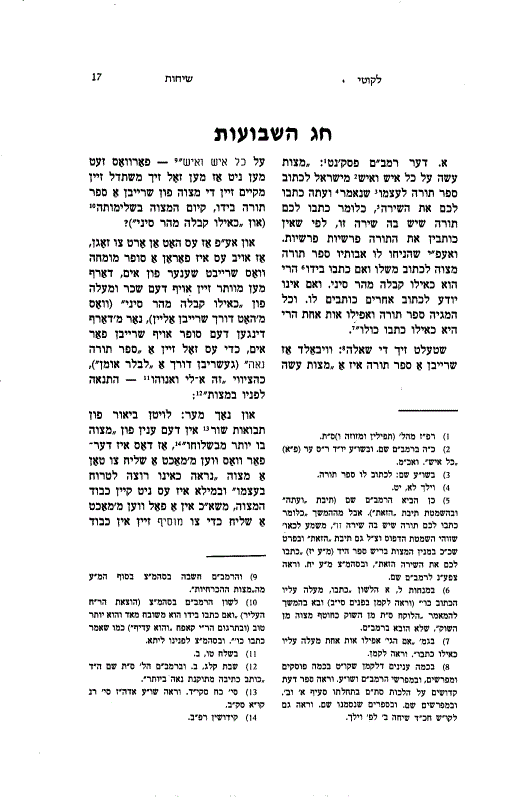
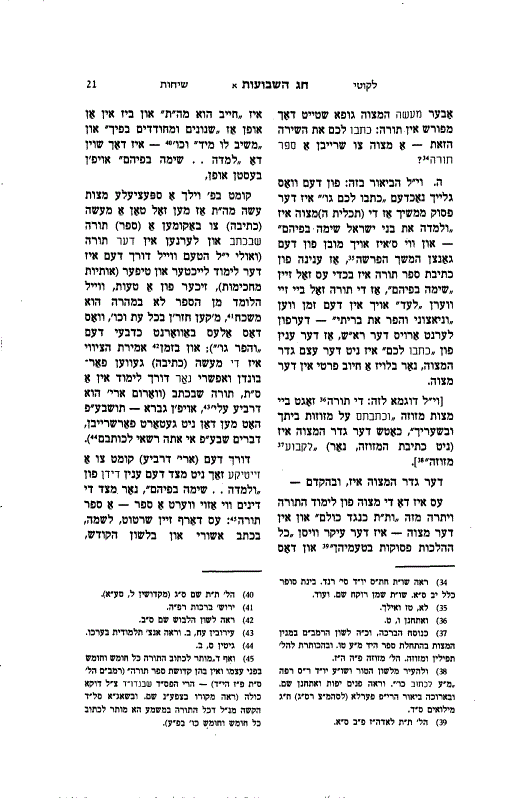
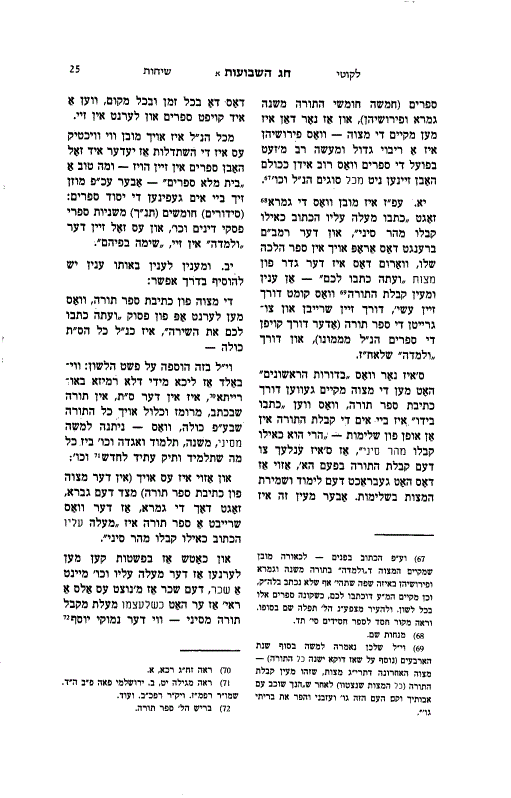
In this review, we will study a sicha from Likkutei Sichos, Chelek Chof-Gimmel (volume 23), the first sicha for Shavuos. This sicha is especially relevant to the mitzvah of writing a Sefer Torah, and addresses why, in our times, most people do not actually fulfill the mitzvah of writing a Torah scroll themselves. The Rebbe explores how the Rambam defines this mitzvah and how it applies today.
The central question is: What is the definition of the mitzvah of writing a Sefer Torah? Is it simply about writing, or does it involve something deeper—such as participating in transmitting Torah? The Rambam explains that when we had only Torah Shebichtav—the Written Torah—the mitzvah was to write an actual scroll with all its halachic requirements: it needed to be written with proper script and on parchment, following all the rules.
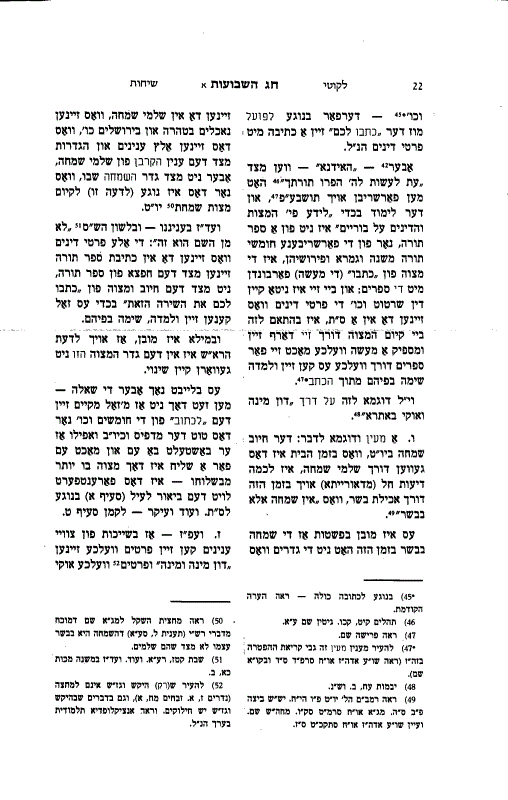
However, once Torah Shebaal Peh—the Oral Torah—began to be recorded and learned from texts, the nature of the mitzvah shifted. According to the Rambam (as will be explained in this sicha), there is a difference between when the main focus was on having a written scroll and now, when learning from printed books is common practice.
Let’s look at how the Rambam presents this mitzvah step by step. In Sefer Torah 7:1, he writes that every Jewish man is obligated in this positive commandment—to write a Sefer Torah for himself. This obligation applies to every individual Jew. The source for this is the verse:
ועתה כתבו לכם את השירה הזאת
"And now, write for yourselves this song."
The Rambam explains that although the verse mentions "this song," it refers not only to Shirat Haazinu but to the entire Torah. Since Shirat Haazinu is part of the Torah and cannot be written alone as a separate scroll, when the Torah commands us to write "the song," it means we must write an entire Sefer Torah that includes it.
The Rambam continues: Even if someone inherited a Sefer Torah from his father, he still has an obligation to write his own. This means that each person should personally fulfill this mitzvah in his own lifetime.
There are two practical ways to fulfill this: If you know how to write a Sefer Torah yourself, you should do so—it’s as if you received it directly from Sinai. If you do not know how to write one yourself, you can commission someone else to write it for you; hiring a scribe also fulfills your obligation.
The Rambam further notes that after writing or acquiring a Sefer Torah, one must also bring it into his house and keep it there—meaning he should acquire and maintain possession of his own Sefer Torah.
Saif Aleph
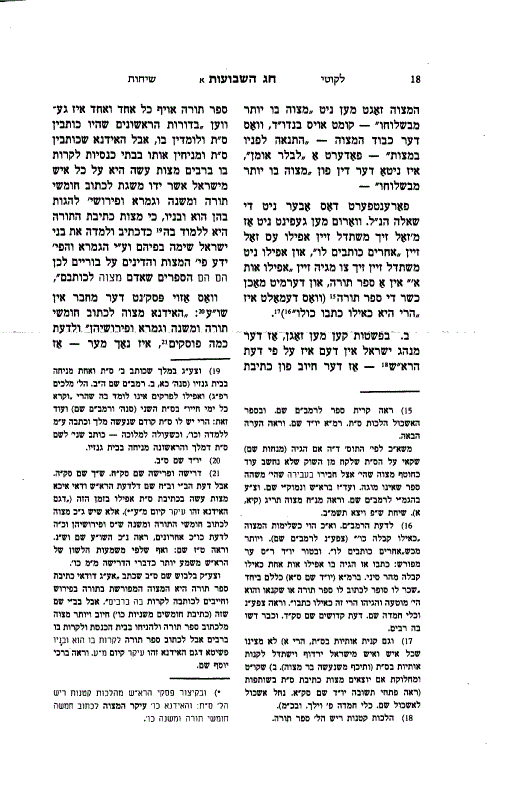
The discussion begins with the question: if the mitzvah is to write a Sefer Torah, why do we not see people actually writing their own Sifrei Torah? The Rebbe explores whether hiring a scribe to write it for you is considered as if you wrote it yourself, and whether this fulfills the mitzvah in its fullest sense.
According to some explanations, there is a concept called mitzvah bo yoter mibishlucho—it is preferable to perform a mitzvah yourself rather than through an agent. The reason is that when you appoint someone else, it appears as though you are unwilling to trouble yourself for the mitzvah, and this diminishes its honor. However, if the reason for appointing an agent is to enhance the mitzvah's honor—for example, hiring a skilled scribe to beautify the Sefer Torah—then the honor lies in having it done by an expert rather than doing it yourself.
This leads to the suggestion that perhaps hiring a scribe is preferable because it results in a more beautiful Sefer Torah. Even so, the Rebbe points out that we do not see people making efforts even to hire scribes for themselves. Nor do we find people taking pains to check over a Sefer Torah after purchase in order to make it kosher, which would be considered as if they wrote it themselves. This raises the question: why is there such little effort invested in fulfilling this mitzvah nowadays?
The Rebbe suggests that perhaps this practice follows the opinion of Rabbeinu Asher (the Rosh), who disagrees with Rambam. According to Rambam, every Jew has an obligation to write a Sefer Torah. The Rosh, however, holds that this obligation applied only in earlier generations when people would write their own Sifrei Torah and use them for personal study. Today, since Sifrei Torah are written primarily for public reading in shul and not for individual study, the mitzvah shifts: one should instead acquire Chumashim and other books of Torah Shebiksav and Shebaal Peh (such as Mishnah and Gemara) with commentaries so that he and his children can learn from them.
The Rosh explains that the essence of the mitzvah is learning Torah—that “this teaching should be placed in their mouths.” Therefore, nowadays, one fulfills the mitzvah by acquiring printed Chumashim, Mishnayos, Gemara, and commentaries so that he can study them and teach his family.
This view is also codified by Rabbi Yosef Karo in Shulchan Aruch: today’s mitzvah is to acquire these books of study rather than writing a Sefer Torah per se. Many authorities agree that nowadays the primary fulfillment of this mitzvah is through purchasing printed sefarim rather than writing an actual Sefer Torah.
However, even with this explanation, there remains a difficulty. Even regarding acquiring sefarim for study purposes, we do not find people making special efforts—such as commissioning or reviewing them personally—to fulfill this mitzvah in its ideal form. If buying sefarim is now how we fulfill “writing” a Sefer Torah according to halacha, why do we not see more care taken with this?
Furthermore, if someone simply buys a sefer without reviewing or checking it at all, it's like grabbing a mitzvah from the marketplace (chotef mitzvah min hashuk)—a less ideal fulfillment. According to some opinions (like Rashi and Nimukei Yosef), even just buying fulfills one's obligation at least minimally; but according to others (like Rama), merely purchasing without involvement does not suffice.
This leads back to our central question: how do we fulfill this mitzvah today according to all opinions? If simply buying printed sefarim without any personal involvement does not fulfill it according to some authorities, what should be done?
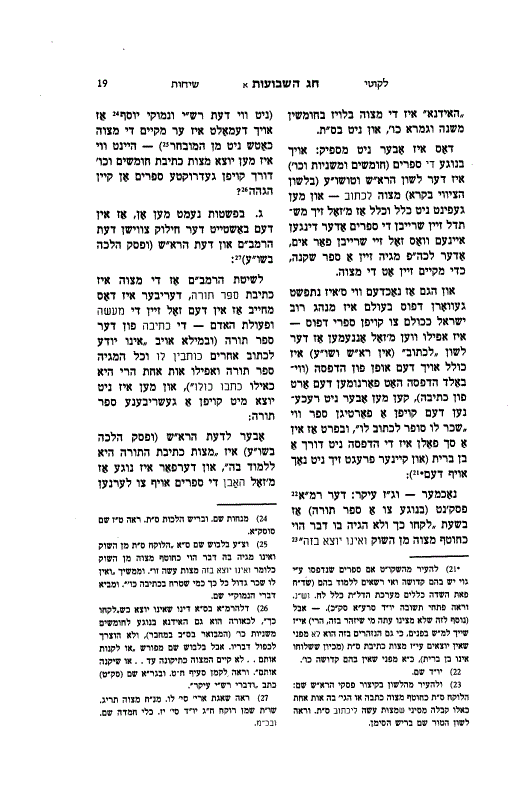
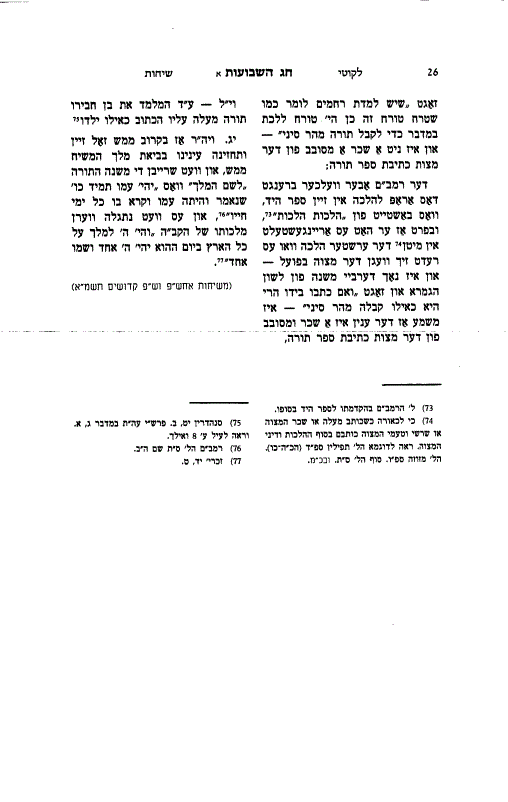
The Rebbe then clarifies that there is a fundamental difference between Rambam’s view and that of Rosh (and Shulchan Aruch). According to Rambam, the core of the mitzvah is writing an actual Sefer Torah—the act itself must be performed by each individual or on his behalf. Therefore, only through direct involvement (writing or correcting even one letter) does one fulfill his obligation; merely buying does not suffice.
By contrast, according to Rosh (and as ruled in Shulchan Aruch), the essence of the mitzvah today lies not in writing but in possessing sefarim from which one can learn. The focus shifts from production (writing) to acquisition (ownership) for purposes of study. Thus, purchasing printed Chumashim or other works suffices without needing personal involvement in their creation or review.
Yet upon closer examination of Rosh’s language and reasoning, it becomes clear he was not introducing an entirely new definition of the mitzvah distinct from Rambam’s original intent. Rather, Rosh’s distinction relates specifically to changing circumstances: what type of books should be written or acquired today so that one can properly study Torah with his family.
Saif Beis
The only difference between the opinions is in what you are required to write, but not in disagreeing with the Rambam’s premise and definition. According to the Rambam, there is no longer a mitzvah to write a Sefer Torah; rather, the mitzvah is to possess one. The Rosh, however, maintains that it is the same mitzvah as described by the Rambam—to write—but now, instead of writing a Sefer Torah, we write Gemara or other texts. This leads us to ask: why don’t we find that everyone writes these texts themselves?
We also need to understand the reasoning behind these two opinions: can you fulfill the mitzvah of writing a Sefer Torah simply by purchasing one, without even reviewing it? According to Rashi and the Beis Yosef, you fulfill your obligation just by buying it; if you write it yourself, there is an additional mitzvah. That’s one view—that you can fulfill your obligation through purchase alone. The Rambam disagrees: if you purchase it but do not review or check it over, you have not fulfilled your obligation. What is at the root of this disagreement—can you just buy it to fulfill your obligation, or must you at least be magiha (review and check) what you acquire?
To understand this further, we must first clarify how the Rosh and Shulchan Aruch could say that nowadays we write Chumashim, Mishnah, and Gemara instead of a Sefer Torah. How could they change a Torah mitzvah? How can a positive commandment of the Torah change from generation to generation—from writing a Sefer Torah as stated explicitly in the Torah, to now saying that writing Chumashim and Gemara fulfills the mitzvah?
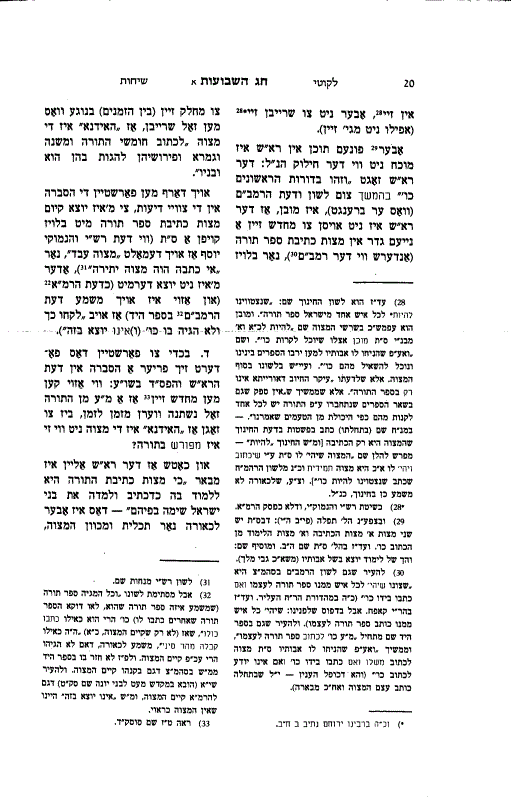
The Rosh explains that the core of the mitzvah is not simply writing for its own sake; rather, it is so that people will study from what is written. As the verse says: teach it to Bnei Yisrael—place these words in their mouths. The goal is for people to learn Torah.
זה הוא את התנאי של המצוות לדעת על זה אבל המצוות האמת, או במעשה, המצוות גופה אבל העקט של המצוות עצמו, שתהתוך מפורש של תוידא אבל זה מאוד ברור בתוידא כיסו ל'חמס השירה זויס כתוב לך את השנג המצוות שרידים על ספק תוידא שיש מצוות שרידים על ספק תוידא היי, אייסי, ביה שלמה רביר וזה אז אנחנו יכולים להגיד את ההתגלגה בזה שבאמת המצוות המעשה, המצוות המעשה מתגלגלת בקוליפיקציה של תוידא וסיבוב אפים שזה המצוות, זה התלמידה ולא כל כך כיסו ביה שלמה רביר וזה זה התלמידה של ראש ושל חנור שיוצא המצוות שהמצוות היום אפני רק עם כיסו ל'חמס השירה אחר כך ביה שלמה רביר וזה כיסו ל'חם גמל שהמצוות שרידים על ספק תוידא זה התגלגל התגלגל זה התגלגל שהמצוות שרידים על ספק תוידא התלמידה של המצוות זה התגלגל גם מהתרגום של כל התמונות של התמונות התגלגל מה הדבר הזה שירות תוידא זה מתרגל שתתגלגל של תוידא שתתגלגל תוידא ושירות תוידא על מנהלת את הביתה שלך ועל מותכם על מותכם מותקים של המדינה התגלגל המצוות זה לא שירות את המצוות או לכוויאת המצוות אבל למצוות את המצוות ועכשיו התוידא אומר שירות כי זה בנושא של איך לקבל ואיך לתאשר אותם והביתה מספיקה שירות מה התגלגל של המצוות והביתה מתחילה שירות שירות זה לא רק שירות שירות שירות שירות שירות Labaneik מאוד בריך ומאוד בריך מי שלו למימי זה שהרבות לדבר על התוידא לרפות התגלגל על הכי הכי מה עוד צריך מה זה תוידא מוסיפה עם המצווה בפרשת הילך קום בפרשת הילך מצווה ספציאלי בפרשת הילך אנחנו נקום בפרשת התוידא אז מן זולטון אמר שאתה צריך לעשות עקב כדי שתקבל ספר תוידא בפרשת התוידא ללמד בתוידא ללמד את התוידא ואולי יש לימר הטעם ואולי הסיבה היא למה אנחנו רוצים לדבר על העקב מהכתוביה אבל דרך זה זה קצת יותר בגלל שהתגלגל מהכתוביה זה קצת יותר כדי לעשות זיכר וככה אתה בטוח שזה לא ספר אבל לומד מן הספר במהיר ומשקח שמי שתלמד מן הספר לא יכול להשכח אז יש הרבה עצובות ואתה יכול לראות את זה בכל זמן שיש לך את הספר אבל זה זה נכון זה נכון זה לא טוב שתגלגל אז אנחנו לא נכון ובזמן עמירס הציוי ובזמן שהציוי היה מדובר כך שהכתוביה היא נמצאת בלי לומד את התוידא ללא תוידא כי זה מה שהם כתובים זה הדבר היחיד ללא תוידא זה היה הדבר היחיד זה לא בגלל שהתוידא נפגש לתוידא לא היה תוידא זה קונספט שזה אור ללא תוידא זאת אומרת, זה לא בגלל שאנחנו נפגשים או לא נפגשים תוידא אבל יש כתוביה ללא תוידא אייפון גברה הוא לא יכול ללמד את תוידא התוידא שהיה כתוב לא יכול להיות כתוב לא יכול להיות כתוב ללא תוידא אז זה מפגש מהתוידא שלא להתויד תראו את הדברים שהם לא יכולים להתויד כי יש לנו הלין שהיא לא יכולה להתויד אבל יש לנו משהו בצורה להתבוד את התויטד כי אנחנו לא יכולים להתבוד אז יש קודם זה לא בגלל עצמנו, כן אבל יש קודם אחרי הדבר שלנו תויטד אבל איך אנחנו יכולים להתבוד איך תויטד תויטד צריך להיות הלין שהיא צריכה להיות בגלל התויטד צריך להיות התויטד בניגיל אז באמת מוז זה זה מה שהכתובים צריכים להיות עם התפקידים של הלוחות אבל עכשיו ומצד כי זה הזמן לעשות כי התויטד התויטד התקליט אנשים לא מבחינים להתבוד את התויטד התויטד גם התויטד נכתב וכדי להצליח להשכח את התויטד והגבירה זה לא מן התויטד אלא מן החומושים אבל זה מן החומושים מן מן החומושים וחומושים זה המצוי אז המצוי המייסד זה התקליל ובזה הוא לא מדבר על דין סרטון חולות הוא לא מדבר על דין סרטון חולות כי זה לא התויטד אלא הלוחות הספציפית של התויטד לא מתייחסות לתויטד לבוקסים שאנחנו מלמדים בהסמלו
So according to this approach—the Rosh and Shulchan Aruch—the actual act of writing was always secondary; what matters most is providing access for learning Torah. In earlier times this meant writing a Sefer Torah because that was all they had available. Today it means providing Chumashim and other Sforim so people can learn.
This also explains why many of the specific laws and requirements that apply when writing a Sefer Torah do not apply when printing or acquiring other Sforim for learning purposes. The halachos about how a Sefer Torah must be written are because of its unique status as an object; when fulfilling the mitzvah through Sforim for learning—Chumashim or Gemara—those details do not apply.
Therefore we see that even according to the Rosh’s view, there was never really a change in the essence of the mitzvah itself. The core mitzvah was always “teach them”—Lamdu Bifiyam—and only its practical expression changed based on what was available in each generation.
However, there remains a question: even if today we fulfill this by acquiring printed Sforim so people can learn from them—why don’t we personally write or commission these books ourselves? Why do we rely on printers? The answer given is that printers produce higher quality books than individuals could by hand; since our goal is effective learning tools rather than ritual objects per se (as with a Sefer Torah), it makes sense to use professional printing.
Furthermore, when it comes to printed Sforim like Chumashim or Gemara today, there isn’t any special requirement for personal involvement in their production—the main thing is making them available for study.
This leads us to an important distinction: when comparing writing a Sefer Torah versus producing other Sforim for learning purposes, some halachos apply only to one but not the other. There are details learned from one area that transfer over (such as ensuring accuracy), but many specifics remain unique.
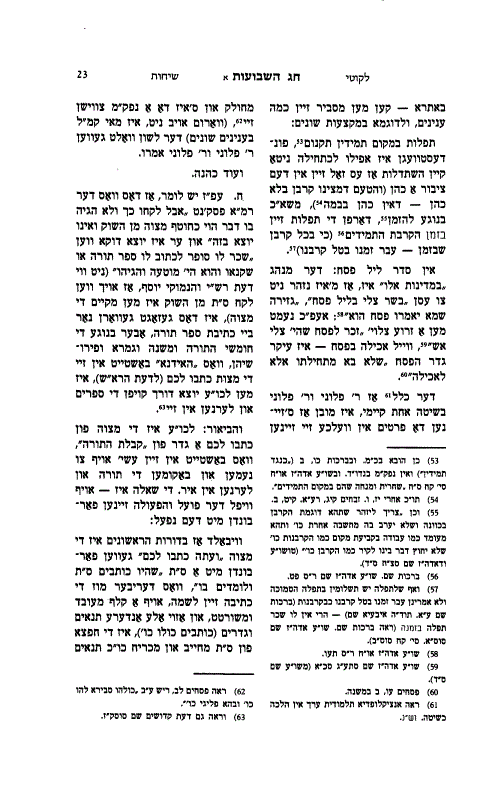
The Rebbe illustrates this with examples from other areas of halacha where something takes on new form but does not carry over every detail from its original context. For instance: tefillah (prayer) was instituted in place of korbanos (sacrifices). Yet while tefillah replaces korbanos conceptually, we do not require every detail—such as having a kohen present during communal prayer—even though kohanim were essential for sacrifices.
Similarly with Pesach night: although eating roasted meat would resemble eating korban Pesach (which had to be roasted), our custom today is specifically not to eat roasted meat on Pesach night so as not to confuse things with korban Pesach itself.
The point here is clear: when something new takes over an old function (like printed Sforim replacing handwritten Sefer Torah), only certain aspects transfer over—mainly those necessary for fulfilling the core purpose—while many technical details remain unique to their original context.
Saif Gimmel
Let’s consider the example of the Pesach offering, which was roasted by fire. At the Seder, we take a roasted piece to remember the Pesach, but when it comes to eating on Pesach, there is a strong association with the mitzvah itself—the heart is drawn to eat it. As long as we are not actually eating it as the Pesach offering, we avoid eating roasted meat, because the essence of the mitzvah on Pesach is tied to eating in that context. Still, for the sake of remembrance, we do take a roasted piece at the Seder. The exact reasoning behind this practice needs further clarification.
Another example: sometimes two rabbis appear to follow one opinion. What does it mean that they share an idea? It’s understood that there are details where they disagree; they don’t agree on everything. There must be some difference between them—otherwise, why would both need to teach? The fact that both express similar views in different contexts shows there are similarities and differences between their teachings. This teaches us that some things are alike and others are distinct, and many such examples exist.
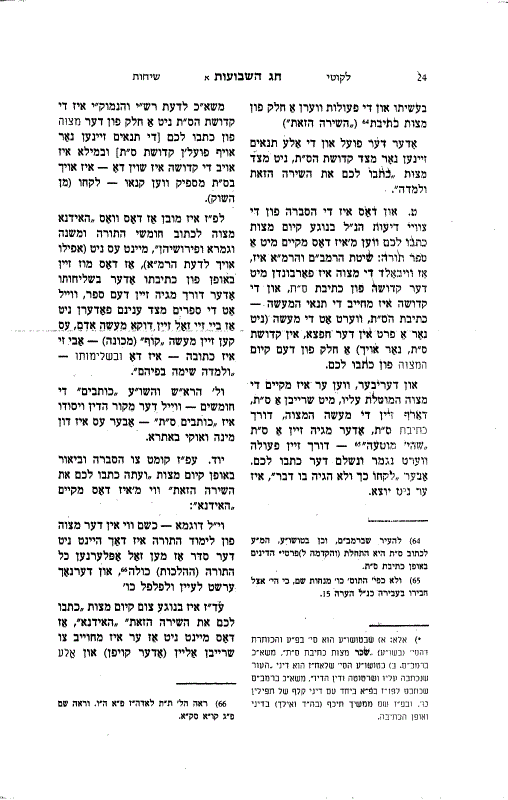
Based on this, we can say that there are additional rules. If someone simply grabs a mitzvah “from the street” without checking or reviewing it properly, he doesn’t truly fulfill his obligation. According to the Rosh—unlike the Ramah, Rav Yosef Karo (the Mechaber), and Rashi—you can’t fulfill your Jewish obligations just by buying something.
There is a Jewish custom: when you search for a book and buy it—even if it contains mistakes—you should look it over. Not like the Rosh and Rav Yosef Karo who hold otherwise; according to them, when you buy a sefer from the marketplace you still fulfill the mitzvah. But according to the Rosh, you must at least review or write it yourself.
This rule was originally set only regarding writing an actual Sefer Torah. Today, however, this is how we fulfill the mitzvah of “write for yourselves”—by acquiring sefarim and learning from them according to the Rosh’s view. According to other opinions, one fulfills his obligation by buying sefarim and studying them.
So today—even according to the Rosh—you don’t necessarily need to write or check over each sefer personally. What’s behind this? For everyone (le-kula alma), the mitzvah of “write for yourselves” is connected with receiving Torah at Sinai (Kabbalas HaTorah). According to all opinions, writing was originally how one received Torah—the act of writing was a way of taking hold of Torah in order to learn from it.
The question then becomes: how much does one’s personal action—writing or acquiring—connect him with learning Torah? In earlier generations, fulfilling this mitzvah was tied directly to writing a Sefer Torah; they would write one and learn from it. That’s why it had to be written specifically for Torah study—with all its lines and requirements—so that its sanctity would obligate us in many details.
To reach that level required various actions; those acts became part of fulfilling “write this song.” Alternatively, perhaps those acts were only related to maintaining sanctity—not directly part of the mitzvah itself. All these conditions stemmed from making a Sefer Torah holy; they weren’t necessarily tied directly to “write for yourselves this song.” Therefore, when not writing an actual Sefer Torah today, those specific acts aren’t required anymore.
This explains why there are two opinions about how we fulfill this mitzvah nowadays: whether fulfillment depends on having an actual Sefer Torah or if other forms suffice.
If fulfilling “write for yourselves” means using an actual Sefer Torah (as in earlier times), then all its requirements—including sanctity and proper writing—become integral parts of the mitzvah itself. Writing isn’t just about creating a holy object; it becomes part of fulfilling God’s commandment.
Therefore, when someone fulfills his obligation by writing a Sefer Torah properly—or at least reviewing one for errors—his action completes and perfects its writing. Simply purchasing without review wouldn’t suffice according to this view.
But according to Rav Yosef Karo (the Mechaber) and others who hold differently: The sanctity of a Sefer Torah isn’t part of “write for yourselves”—all those requirements only serve to make it holy as an object but aren’t essential for fulfilling the mitzvah itself. If holiness already exists (for example by purchase), then even buying from the market suffices for fulfillment.
Accordingly, when today’s authorities say Jews have a mitzvah to write Chumashim (the Five Books), Mishnah, Gemara with commentaries—they do not mean (even according to Ramah) that you must personally write them or send an agent or review every book yourself. These books don’t require direct human action; even if printed mechanically (“by a monkey,” as an expression), as long as they exist in written form so people can learn from them—that suffices.
The reason authorities use language like “writing” Chumashim is because their source is from ksivas Sefer Torah, but practically we apply those laws only where relevant—in our case with printed books just purchasing is enough.
This leads us toward understanding how we fulfill “and now write this song” (ve’ata kisvu lachem es ha-shira ha-zos) nowadays: Just as with learning Torah today we don’t require someone first study all of Torah before delving into analysis and discussion—we begin right away—so too with writing “this song,” one isn’t obligated today to personally write or even buy every single book and commentary before fulfilling his obligation.
Saif Daled
The commentaries on this subject are vast, but the main proof comes from practical reality. We see that most Jews, and almost all Jews, do not include every category or commentary when it comes to this mitzvah. The essential point today is that Torah should be accessible in one’s mouth—that a person should be able to learn and fulfill it. That is the way to properly fulfill the mitzvah.
According to this, we can understand what the Gemara says: if a person writes a Sefer Torah, the Torah considers it as if he received it from Mount Sinai. The Rambam also brings this down in his Sefer Halachos, because this is the very definition of the mitzvah of “write for yourselves”—it is an act of receiving the Torah. Through writing or preparing a Sefer Torah, or even by purchasing seforim with his own money, and then learning from them, a Jew is essentially accepting the Torah anew.
In earlier generations, people fulfilled this mitzvah specifically by writing a Sefer Torah themselves. When someone wrote it with his own hand, he received the Torah in its fullest sense—just like at Mount Sinai. That’s why we say it’s as if he received it directly from Sinai; it parallels the original receiving of the Torah and brought about complete study and observance of mitzvos.
However, something similar applies in all times and places: when a Jew buys seforim and learns from them, he too is considered as if he received the Torah at Matan Torah. From all of this, we also understand how important it is for every Jew to make an effort to have seforim in his home. Ideally, one should have a house full of seforim; at minimum, everyone should possess the basic texts—siddurim (prayer books), chumashim (the Five Books), mishnayos (Mishnah), halachic works—and actually use them for learning.
From one topic to another within this discussion, we can add another point: The mitzvah of writing a Sefer Torah—which we learn from the verse “Now write for yourselves this song”—applies to the entire Sefer Torah. We can further say that since nothing in Torah is without hint or allusion, within every written Sefer Torah there is also an inclusion of all of Torah Shebaal Peh—the Oral Law—which was given to Moshe at Sinai: Mishnah, Talmud, Aggadah—everything that will ever be learned or innovated.
This means that when you write a Sefer Torah or acquire seforim for learning, you are including within yourself all aspects of Torah. The same applies regarding the person who fulfills this mitzvah—it’s as if he receives everything from Sinai.
The Gemara says: one who writes a Sefer Torah—it is counted for him as if he received it at Mount Sinai. At first glance, “it is counted for him” might simply mean he receives reward as though he got it from Sinai—that’s his reward for writing a Sefer Torah.
The Nimukei Yosef explains that this reward demonstrates that just as someone would trouble himself to go into the desert to receive the Torah at Sinai, so too here—by writing or acquiring a Sefer Torah—a person demonstrates similar dedication. It’s not just about reward; rather, his action itself shows that he values receiving the Torah like those who went out into the desert.
The Rambam, however—who brings this law in his halachic work and places it right at the beginning when discussing how to fulfill this mitzvah—changes slightly from the Gemara’s wording. He writes: “If one writes with his own hand—it is as if he received [the Torah] at Sinai.” This implies that receiving “as if from Sinai” isn’t just about reward; rather, through fulfilling this mitzvah itself you are actually considered as having received it anew.
We can compare this idea to what was said earlier regarding teaching your friend’s child: just as teaching him makes you like his parent spiritually, so too here—writing or acquiring a Sefer Torah makes you like someone who stood at Sinai and received it directly.
In summary: The Rebbe makes two key points here. First, when discussing “write for yourselves,” although we’re talking about the Written Law (Torah Shebiksav), it includes within itself all of Oral Law (Torah Shebaal Peh). Second: while some commentaries see “it is counted for him” merely as reward for effort and devotion (proof that he would have gone out into the desert), according to Rambam it means something deeper—the act itself elevates you as though you personally received the entire Torah at Sinai.
May it be Hashem’s will that very soon our eyes will see with our own eyes—the coming of King Mashiach himself—and we will write a new Sefer Torah for him as described in halacha: “It shall be with him and he shall read from it all his days.” Then Hashem’s kingship will be revealed over all creation: “On that day Hashem will be One and His Name One.” This sicha was delivered on Acharon Shel Pesach and Shabbos Parshas Kedoshim 5751 (1991).
Key Points
1. The mitzvah of writing a Sefer Torah, as explained by the Rambam, originally required each Jew to write or commission a Torah scroll for personal study, based on the verse "And now, write for yourselves this song."
2. Over time, as Torah Shebaal Peh (the Oral Law) was recorded and learning shifted to printed texts, authorities such as the Rosh and Shulchan Aruch ruled that the mitzvah is now fulfilled by acquiring Chumashim and other sefarim for study, rather than writing an actual Sefer Torah.
3. The debate between Rambam and Rosh centers on whether the essence of the mitzvah is the act of writing itself or ensuring access to Torah learning; Rambam emphasizes personal involvement in writing or reviewing a Sefer Torah, while Rosh focuses on possessing texts for study.
4. According to many opinions, including Rashi and Beis Yosef, one fulfills the mitzvah even by purchasing sefarim without personal involvement in their production; however, Rambam maintains that some level of direct action—such as reviewing or correcting—is necessary.
5. The shift from writing a Sefer Torah to acquiring printed sefarim does not represent a change in the core mitzvah but rather an adaptation to changing circumstances; the goal remains enabling Torah study for oneself and one’s family.
6. Many technical halachic requirements unique to writing a Sefer Torah do not apply when fulfilling the mitzvah through printed books; only those details necessary for effective Torah learning are relevant today.
7. Analogies from other areas of halacha—such as tefillah replacing korbanos and customs regarding Pesach night—demonstrate that when a new practice replaces an old one, only essential aspects transfer over while technical details may differ.
8. Even today, there is value in personally acquiring sefarim and ensuring they are used for learning; this act connects one with Kabbalas HaTorah (receiving the Torah) in every generation, paralleling standing at Sinai.
9. The mitzvah of “write for yourselves” encompasses all of Torah—including both Written and Oral Law—so acquiring or writing sefarim is considered as if one receives the entire Torah anew from Sinai.
10. According to Rambam, fulfilling this mitzvah is not just about earning reward but actually being elevated spiritually—as if one personally received the Torah at Mount Sinai—through active involvement in making Torah accessible for learning.
11. The ultimate fulfillment will be with the coming of Mashiach, when a new Sefer Torah will be written for him and Hashem’s kingship will be fully revealed to all creation.